



惯性聚合 高效追踪和阅读你感兴趣的博客、新闻、科技资讯
阅读原文 在惯性聚合中打开

推荐订阅源

Threat Intelligence Blog | Flashpoint
爱范儿
爱范儿
H
Help Net Security
Last Week in AI
Last Week in AI
The Cloudflare Blog
博客园 - 三生石上(FineUI控件)
小众软件
小众软件
IT之家
IT之家
aimingoo的专栏
aimingoo的专栏
大猫的无限游戏
大猫的无限游戏
Jina AI
Jina AI
Google DeepMind News
B
Blog
C
Check Point Blog
T
Tailwind CSS Blog
云风的 BLOG
云风的 BLOG
D
Docker
Recent Announcements
Vercel News
Vercel News
博客园 - 聂微东
阮一峰的网络日志
阮一峰的网络日志
MyScale Blog
MyScale Blog
The GitHub Blog
The GitHub Blog
Stack Overflow Blog
Stack Overflow Blog
雷峰网
雷峰网
人人都是产品经理
人人都是产品经理
月光博客
月光博客
F
Fortinet All Blogs
Blog — PlanetScale
Blog — PlanetScale
B
Blog RSS Feed
The Register - Security
V
Visual Studio Blog
F
Full Disclosure
Hugging Face - Blog
Hugging Face - Blog
T
Threat Research - Cisco Blogs
Latest news
Latest news
PCI Perspectives
PCI Perspectives
Cisco Talos Blog
Cisco Talos Blog
博客园 - Franky
D
DataBreaches.Net
A
Arctic Wolf
OSCHINA 社区最新新闻
OSCHINA 社区最新新闻
奇客Solidot–传递最新科技情报
奇客Solidot–传递最新科技情报
G
Google Developers Blog
P
Palo Alto Networks Blog
Engineering at Meta
Engineering at Meta
Microsoft Azure Blog
T
Tenable Blog
L
LINUX DO - 热门话题
Spread Privacy
Spread Privacy

TechSpot

Flagship Rematch: Ryzen 7 5800X3D vs. Core i9-12900K Slack chats and internal data from failed startups are finding a second life in AI training A $5 Bluetooth tracker hidden in a postcard exposed a warship's movements Leakers claim PlayStation 6 could offer at least 3x the performance of the PS5 The Mac Mini is no longer a niche product, it's local AI infrastructure IPv6 traffic reaches parity with IPv4 for the first time, Google data shows Xbox expansion cards are now cheaper than SSDs, and PC users are repurposing them Blue Origin prepares to reuse New Glenn booster in bid to challenge SpaceX Nvidia could bring back the 12GB RTX 3060 as supply issues disrupt GPU roadmap What was the first OS you ever used? SNK revives NeoGeo AES with modern upgrades and HDMI support Valve's Proton 11 beta boosts Linux gaming with better performance and classic game support Researchers warn Microsoft Defender vulnerability is already being exploited A four-day Steam freebie turned into $250,000 for an indie game AMD may relaunch Ryzen 7 5800X3D for AM4's 10th anniversary This humanoid robot can almost run as fast as a human sprinter Two New Jersey men jailed for helping North Korean IT workers infiltrate 100+ companies A $7,000 DIY radar project is taking on hardware that usually costs over $100,000 Metro 2039 is going darker than ever, launching this winter on PC and consoles Gemini arrives on macOS with a dedicated desktop app AI infrastructure boom pushes AMD, Intel and Arm to new valuation heights New self-healing material can repair itself over 1,000 times, extend the lifespan of cars and aircraft Japan's bullet train to debut high-tech private cabins, for an added fee Memory card and flash drive pricing surges 120%, with some models spiking 260% Open-source tool decrypts all private data collected by Windows Recall on Copilot PCs The 2026 PC and Console Gaming Report shows most revenue now comes from games outside the Top 20 PureMac is a new open-source macOS cleanup and app removal tool Your Airbnb host might actually be AI Steam might soon display 30-day price history for game deals Intel brings 18A process to budget laptops with new Core Series 3 CPUs How Intel Got Into Trouble: We Test the Last Decade of Intel Flagship CPUs Microsoft counters MacBook Neo with free Game Pass and Office bundle on Windows laptops Popular WordPress plugins backdoored after ownership change, putting thousands of websites at risk Spotify launches physical book sales, expands audiobook features Intel Nova Lake-S is coming after Ryzen APUs with a 16-core iGPU for gamers on a budget Alienware launches $350 QD-OLED monitor with lower brightness to cut costs Recordly brings Screen Studio-style recordings to a free, open-source app Meta doubles down on custom AI chips with Broadcom deal through 2029 Someone finally got an RTX 5090 running on a Mac – no hacks required Will AI agents need to buy their own software licenses? Microsoft sure hopes so Duolingo stops evaluating workers based on how much AI they use Nvidia warranty payouts surged 1,000% last year, not that they can't afford it Nvidia says it's not buying a PC maker, but the idea didn't seem crazy Netgear becomes first router brand exempt from FCC foreign-made ban Google adds Rust to Pixel 10 modem to block attacks at one of Android's weakest points Clicking "reject cookies" might not actually do anything DaVinci Resolve 21 beta adds photo editing and deeper AI integration Malware campaign lures users with fake Windows Update website Apple is testing four smart glasses designs as it prepares to challenge Meta Ray-Bans Amazon purchases Globalstar for $11.6B to expand its low Earth orbit satellite network Capcom's Pragmata earns strong early reviews ahead of release Microsoft is removing 32GB size limit for FAT32 volumes, this time for real Missouri town ousts half of its city council after $6 billion AI data center approval External GPUs were always second best. CopprLink may change that Google will demote websites that hijack your browser's back button Japan finds a way to recover 90% of lithium from old EV batteries Man who vandalized Sam Altman's home claimed AI would end humanity, charged with attempted murder New terahertz technique lets engineers see inside running processors in real time Microsoft just made its Surface laptops a lot more expensive Shipping records suggest Valve will launch the Steam Controller before the Steam Machine This 3D-printed 15-fan side panel drops CPU temps by 20 degrees Rockstar Games hit with ransom demand after third-party data breach Blu-ray lives on as Verbatim and I-O Data pledge support with new drives and discs The software that landed Apollo 11 on the moon is now free online Metal Gear Solid movie is back on track with new directors Anti-data center vote in Wisconsin puts future AI projects on notice Mozilla says Microsoft is using Copilot and Edge to tighten its grip on Windows Gmail encryption goes mobile, but email itself remains the weak link France starts moving government systems from Windows to Linux xAI sues Colorado over AI law, calling it a threat to free speech Florida launches probe into OpenAI as company eyes massive IPO South Korea moves to curb the meteoritic rise of DRAM and PC hardware prices Keychron shares 3D keyboard blueprints on GitHub, opening hardware to modders Nvidia's mythical N1 SoC surfaces on a real motherboard, and it's packing 128GB of LPDDR5X Tesla is working on a smaller, cheaper electric SUV DDR5 prices drop nearly 30%, but memory costs are still far from normal Amazon laid off 30,000 workers while CEO Andy Jassy got a 30% pay bump FBI recovers "deleted" Signal messages through iPhone notifications PC market posts modest growth in early 2026 despite memory shortages and economic strain TikTok star Khaby Lame's $975 million deal is raising serious red flags VeraCrypt, WireGuard among projects disrupted by Microsoft account suspensions Microsoft OneDrive users report mysterious spam files that won't go away Intel tops $300 billion market cap for the first time since the dot-com boom The cables powering the internet are under the ocean – and under threat A version of Windows 10 released a decade ago is now eligible for additional security patches Iran-linked hackers are now targeting industrial controllers in US infrastructure Hackers are turning home routers into tools to spy on Microsoft 365 users A weird macOS bug is blocking new network connections after 49 days of uptime NIH study identifies experimental opioid with strong pain relief and lower addiction risk SanDisk's new 2TB SD card costs $2,000, and it's not even the fastest option Ohio man pleads guilty in first case under federal law banning AI deepfakes John Deere will pay $99 million in right-to-repair lawsuit, but admits nothing Tech layoffs are piling up: 80,000 jobs cut in early 2026, and AI is getting the blame Greece to ban social media for children under 15 starting next year New report revives theory that cryptographer Adam Back could be Bitcoin creator Satoshi Nakamoto Anthropic just lost another round in its fight with the Pentagon Some Windows 3.1 apps were simply "too evil" for Windows 95 to support, says Microsoft veteran AMD confirms Ryzen 9 9950X3D2 priced at $899 German police identify REvil and GandCrab mastermind now living in Russia After Wi-Fi 7's Speed Push, Wi-Fi 8 Is Turning to Reliability
Midjourney wants to scan your body with half a million ultrasonic sensors, at a spa
Skye Jacobs · 2026-06-19 · via TechSpot

Serving tech enthusiasts for over 25 years.
TechSpot means tech analysis and advice you can trust.

Looking ahead: Midjourney built its name on AI-generated images. Now, it is talking about something far more ambitious: scanning the human body. In a post this week, the company outlined plans for a body-scanning system built around ultrasonic sensing and large-scale data capture. The idea is to generate detailed, three-dimensional images of the body in under a minute, with performance the company says could rival MRI scans but without the same discomfort.

The concept is still largely theoretical, but the company describes a system built around an enormous number of tiny sensors working in tandem. A person would pass through a scanning chamber where ultrasonic signals are directed at the body from all sides, capturing internal data from multiple angles at once. Midjourney describes the setup as a softly lit, pool-like space where people descend through a ring of sensors that operate on echolocation principles to build a detailed internal image of the body.

At full scale, the company envisions a ring containing roughly half a million sensors, each about the size of a grain of sand. Together, they would generate a constant stream of ultrasonic signals, producing what Midjourney says could amount to terabytes of data every second.

That volume of information is central to the company's approach. "You want as much data as you can get about your health as quickly and as cheaply as possible," the company wrote. "In other words, you want a technology optimized for getting as many megabytes per second per dollar of information about your body."

Collecting that much data, however, is only part of the problem. Turning it into something usable is another matter entirely. Midjourney acknowledges it still has to solve what it calls a 'major computational task': turning noisy, overlapping ultrasonic signals into clear, stable images.
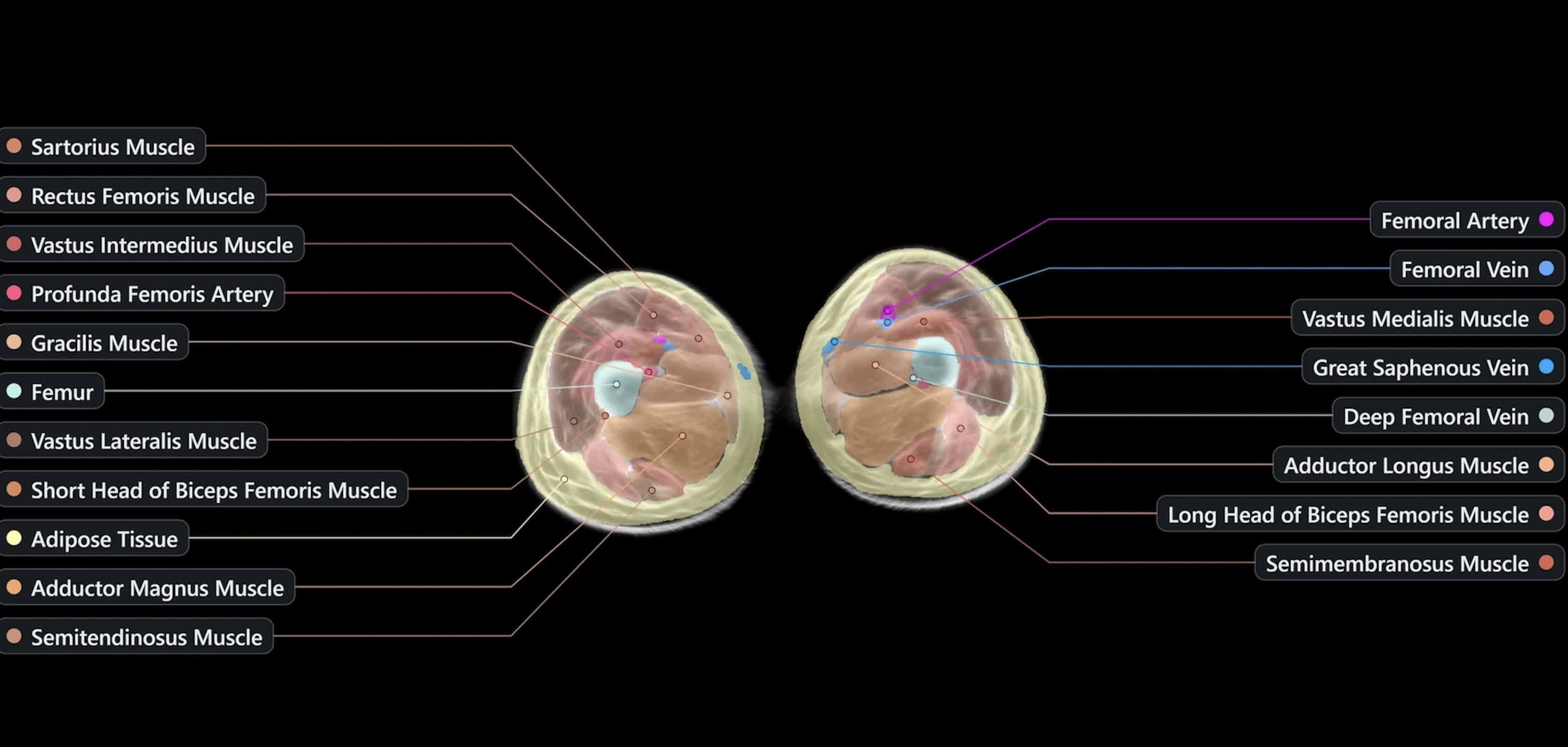
That challenge remains unsolved, and the company has not said how close it is to overcoming it.

What makes the proposal more unusual is how Midjourney plans to use the technology. Rather than limiting it to hospitals or diagnostic labs, the company is building a consumer-facing concept around it. Its first location, called the Midjourney Spa, is expected to open in downtown San Francisco before the end of next year.

The setting is meant to feel more like a high-end wellness space than a medical facility, with features like hot tubs, cold plunges, and private rooms. Inside those rooms, the scanning system would operate quietly in the background. Midjourney describes them as "cozy rooms with pools of golden light which softly scan your body."

"The scans are a side-effect," the company wrote. "You barely think of them when going to the spa. But suddenly, you have a huge library of data about your health."

That framing suggests a shift away from one-off scans and toward continuous or repeated imaging that is built into a routine experience. It also raises practical questions about how such data would be handled, particularly given its volume and sensitivity.

Midjourney says it intends to send early test data from the scanner to the FDA, aiming to secure regulatory approval for future devices with increased capabilities. At the same time, it is already looking beyond a single location, with plans to expand to additional cities starting in 2028.

For now, many details remain unclear, including how far along the technology actually is. But the direction is clear enough: Midjourney wants to go from making images for screens to imaging what's inside people, using dense arrays of sensors and heavy-duty data processing to do it.