





Serving tech enthusiasts for over 25 years.
TechSpot means tech analysis and advice you can trust.
The big picture: In a university lab in Adelaide, Australia, a group of engineers has developed something rare in semiconductor testing – a technique that can observe a processor's internal workings while it's running. Using terahertz radiation rather than traditional electrical probes, the team has shown how to map transistor activity in real time, a potential leap forward in chip diagnostics and fabrication QA.
The work, reported by IEEE Spectrum, revolves around modifying a standard laboratory instrument, the vector network analyzer (VNA), to operate far beyond its usual range. A VNA typically generates a microwave signal with "a known frequency and phase," but the Adelaide researchers extended its reach into the terahertz domain. The amplified wave is aimed at a powered microchip via a focusing lens, where it interacts with the chip's transistor during its switching cycle.
Each transistor's activity alters the returning terahertz signal, creating minute shifts in amplitude and phase. Those changes are captured and "down-converted" back to microwaves by the analyzer's receiver for comparison against the original signal. "We had to hack the receiver to make it work in the terahertz domain," explained researcher Withawat Withayachumnankul, noting that the detector was designed only for microwave frequencies.
To push the method further, the team relied on a homodyne quadrature receiver – unusual in semiconductor testing but crucial here. Withayachumnankul said the detector was "critical" because it's "the only device that can detect the small differences between the two frequencies." That precision is essential: in this setup, the terahertz waves are physically larger than the individual transistors they probe, so any deviation in the return signal is faint and easily lost amid noise from the VNA's oscillator.
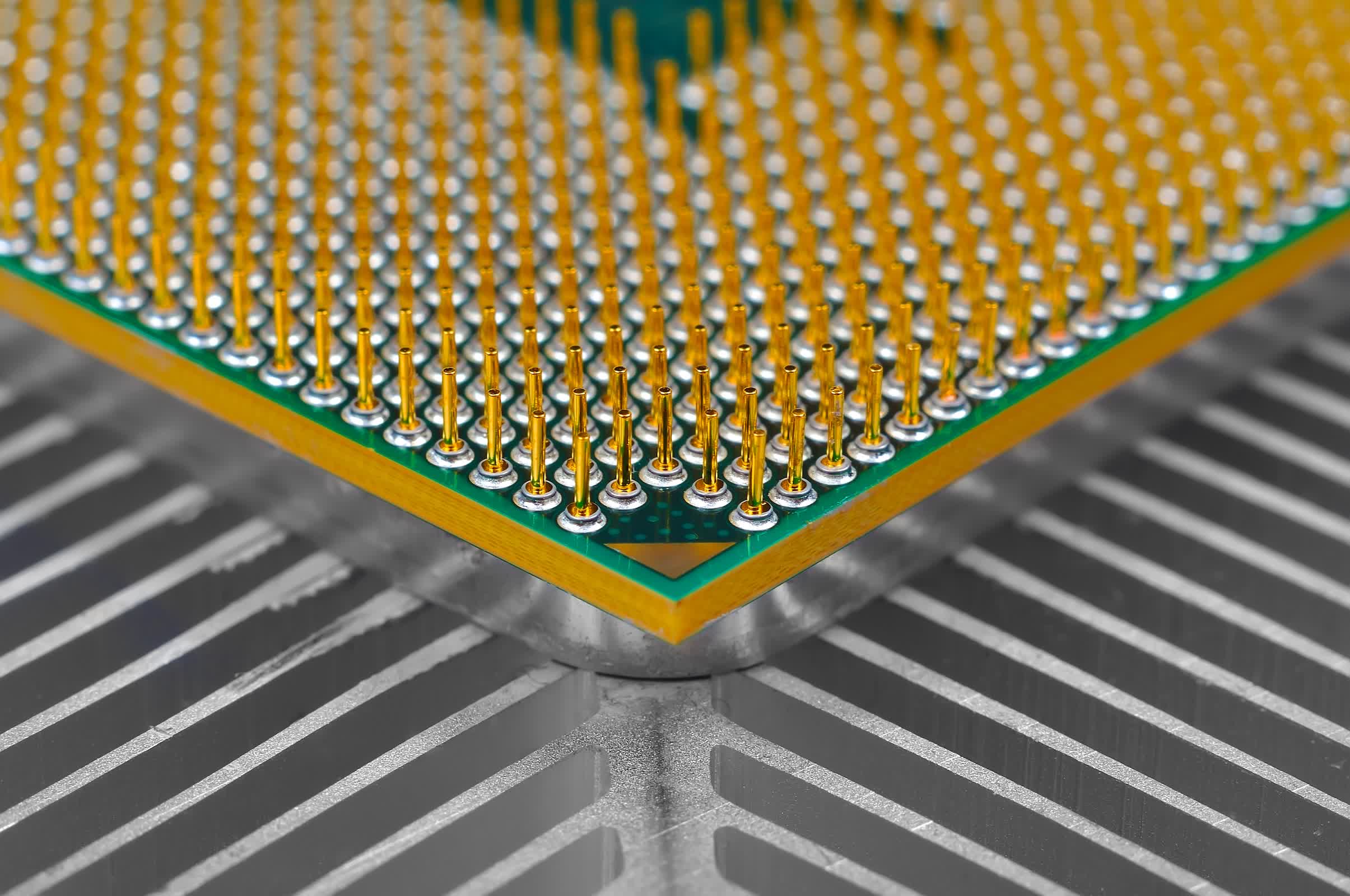
The payoff is that for the first time, engineers can potentially observe transistor-level behavior inside an operating processor without invasive instrumentation. No existing diagnostic tool, electrical or optical, can deliver the same live insight into active transistor states, which could transform how chipmakers debug and validate next-generation CPUs.
However, there are hurdles before commercial adoption. When measured with terahertz radiation, complex processors such as 3D-stacked architectures introduce complications. If the upper layers are opaque, the radiation cannot determine which layer of the chip it's sampling. Improving the VNA's sensitivity or engineering new terahertz optics may be necessary to handle densely packed chips.
There's a darker implication here. The same transparency that enables engineers to study chips might also appeal to attackers hoping to observe computation in real time. Current encryption methods offer little protection against such an attack because processors must decrypt data before it can be handled internally, raising a potential security concern – though it's still viewed as a remote possibility.
For now, the Adelaide team's terahertz-based method stands as one of the first methods to reveal the hidden operations of silicon in motion – a glimpse at what semiconductor testing might look like when instruments see beyond mere voltage and current.
此内容由惯性聚合(RSS阅读器)自动聚合整理,仅供阅读参考。 原文来自 — 版权归原作者所有。