



惯性聚合 高效追踪和阅读你感兴趣的博客、新闻、科技资讯
阅读原文 在惯性聚合中打开

推荐订阅源

Hugging Face - Blog
Hugging Face - Blog
Recent Announcements
V
Visual Studio Blog
博客园 - 叶小钗
H
Help Net Security
aimingoo的专栏
aimingoo的专栏
宝玉的分享
宝玉的分享
U
Unit 42
钛媒体:引领未来商业与生活新知
钛媒体:引领未来商业与生活新知
F
Fortinet All Blogs
V
V2EX
Stack Overflow Blog
Stack Overflow Blog
WordPress大学
WordPress大学
D
DataBreaches.Net
J
Java Code Geeks
H
Hackread – Cybersecurity News, Data Breaches, AI and More
A
About on SuperTechFans
酷 壳 – CoolShell
酷 壳 – CoolShell
量子位
C
Check Point Blog
奇客Solidot–传递最新科技情报
奇客Solidot–传递最新科技情报
小众软件
小众软件
Microsoft Azure Blog
M
MIT News - Artificial intelligence

TechSpot

Flagship Rematch: Ryzen 7 5800X3D vs. Core i9-12900K Slack chats and internal data from failed startups are finding a second life in AI training A $5 Bluetooth tracker hidden in a postcard exposed a warship's movements Leakers claim PlayStation 6 could offer at least 3x the performance of the PS5 The Mac Mini is no longer a niche product, it's local AI infrastructure IPv6 traffic reaches parity with IPv4 for the first time, Google data shows Xbox expansion cards are now cheaper than SSDs, and PC users are repurposing them Blue Origin prepares to reuse New Glenn booster in bid to challenge SpaceX Nvidia could bring back the 12GB RTX 3060 as supply issues disrupt GPU roadmap What was the first OS you ever used? SNK revives NeoGeo AES with modern upgrades and HDMI support Valve's Proton 11 beta boosts Linux gaming with better performance and classic game support Researchers warn Microsoft Defender vulnerability is already being exploited A four-day Steam freebie turned into $250,000 for an indie game AMD may relaunch Ryzen 7 5800X3D for AM4's 10th anniversary This humanoid robot can almost run as fast as a human sprinter Two New Jersey men jailed for helping North Korean IT workers infiltrate 100+ companies A $7,000 DIY radar project is taking on hardware that usually costs over $100,000 Metro 2039 is going darker than ever, launching this winter on PC and consoles Gemini arrives on macOS with a dedicated desktop app AI infrastructure boom pushes AMD, Intel and Arm to new valuation heights New self-healing material can repair itself over 1,000 times, extend the lifespan of cars and aircraft Japan's bullet train to debut high-tech private cabins, for an added fee Memory card and flash drive pricing surges 120%, with some models spiking 260% Open-source tool decrypts all private data collected by Windows Recall on Copilot PCs The 2026 PC and Console Gaming Report shows most revenue now comes from games outside the Top 20 PureMac is a new open-source macOS cleanup and app removal tool Your Airbnb host might actually be AI Steam might soon display 30-day price history for game deals Intel brings 18A process to budget laptops with new Core Series 3 CPUs
Snap says its $2,195 Specs are AR glasses for the post-sm...
Rob Thubron · 2026-06-17 · via TechSpot

Serving tech enthusiasts for over 25 years.
TechSpot means tech analysis and advice you can trust.

What just happened? Snap has unveiled Specs, a pair of standalone augmented reality glasses priced at a stunning $2,195. The launch marks the company's first attempt to sell AR glasses to a wider consumer audience, as CEO Evan Spiegel continues to argue that wearable displays could eventually become a major platform beyond smartphones.

Introduced at AWE 2026 in Long Beach, Specs are now available for pre-order with a $200 refundable deposit and are expected to ship this fall in the US, UK, and France.

Snap describes Specs as a "wearable computer" rather than another set of camera glasses or AI earbuds with lenses attached. The frames are fully standalone, with no tether or puck, and are built from Swiss TR90 polymer. The 47 mm version weighs 132 grams, while the 52 mm version weighs 136 grams.

The glasses are powered by two Qualcomm Snapdragon processors: one for computer vision and one for running Snap's Lenses.
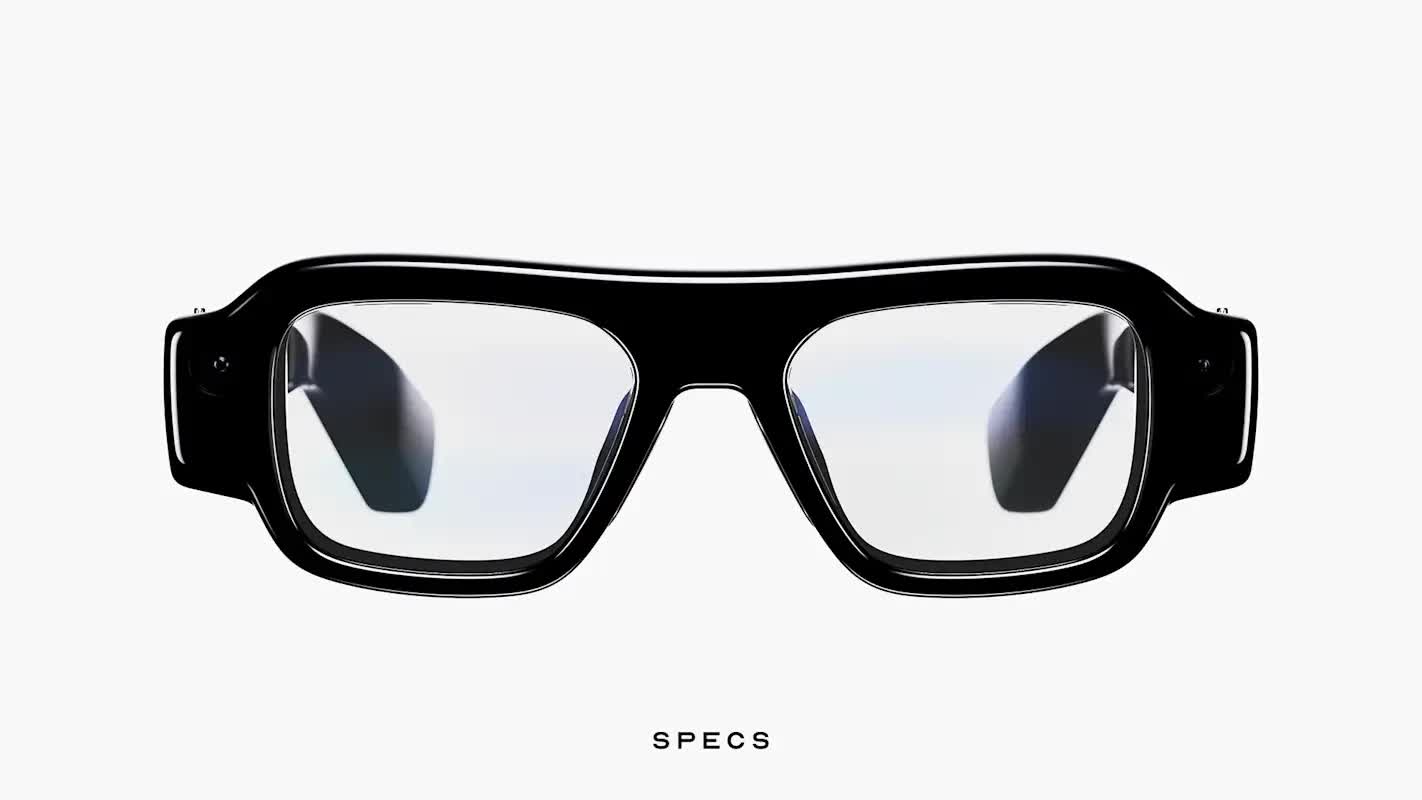
The display system uses Snap's liquid crystal on silicon technology, with a 51-degree field of view and 16 million colors. Snap claims 7-millisecond motion-to-photon latency and up to four hours of mixed-use battery life, with the case adding four more charges.

Snap is promising a slew of uses for its glasses, including directions overlaid onto streets, AI help that can see what the user sees, virtual workspaces, shared games, education tools, and floating entertainment screens. The company says developers have already built hundreds of Lenses for the platform.

Spiegel is also trying to differentiate Specs from Meta's Ray-Bans and other smart glasses. He called them "a new type of computer, a see-through computer," adding that the device can bring computing into the world around the user.

Spiegel might see that as justifying the price, but it's hard to imagine the public will agree with him. Meta's Ray-Ban smart glasses cost a fraction as much, though they lack true AR displays.

Privacy has been an issue for glasses with cameras and AI assistance. Snap says Specs use on-device processing where possible and include an LED indicator when recording.

Snap will be hoping history doesn't repeat itself. In 2017, it was reported that the company overestimated demand for its original Spectacles, leaving it with around $40 million in unsold inventory.
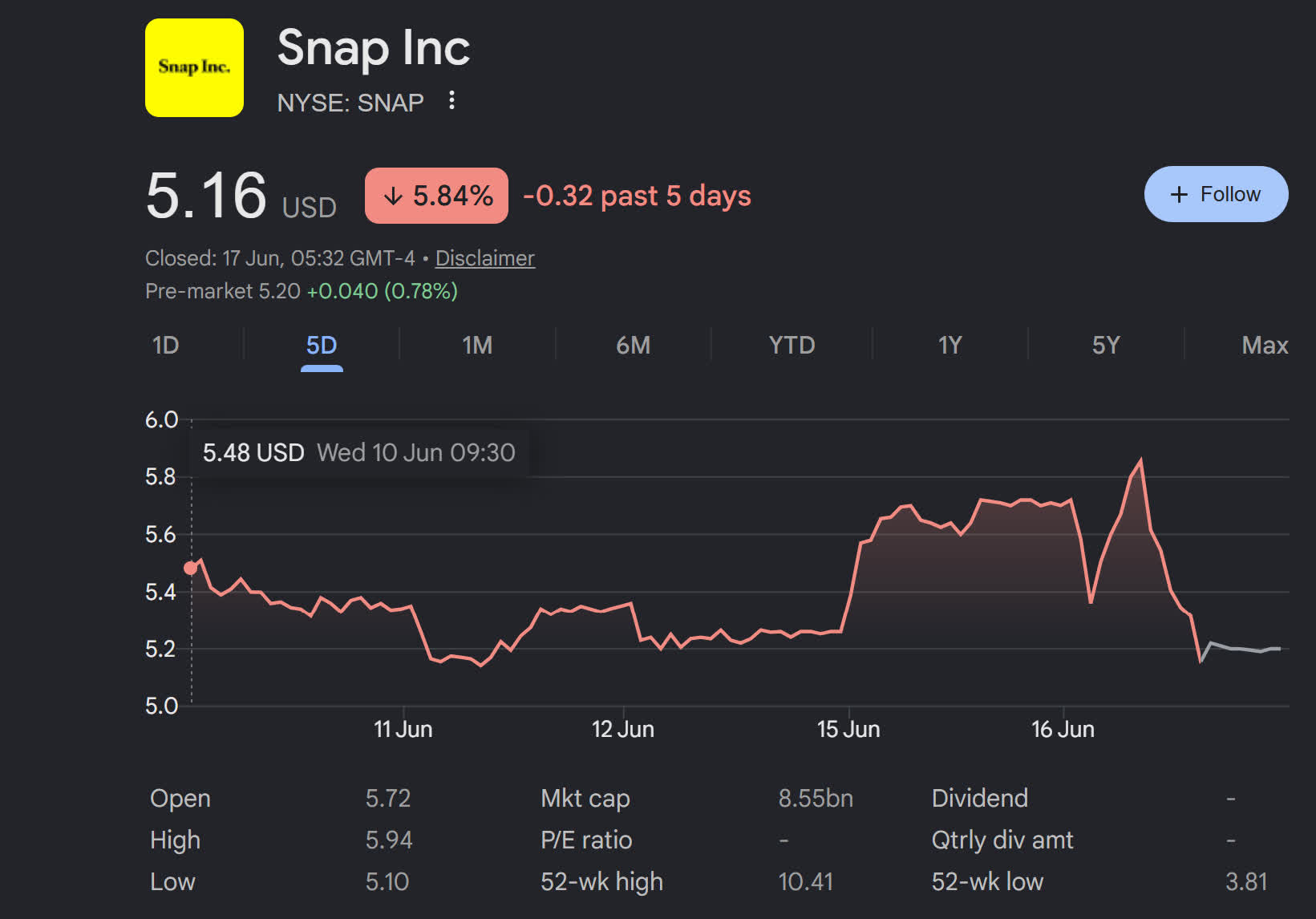
Snap Inc.'s five-day share price

Snap shares jumped 8.56% ahead of Spiegel's AWE keynote, showing at least some investor optimism before the reveal, though it has since fallen to slightly below its previous level.