







Serving tech enthusiasts for over 25 years.
TechSpot means tech analysis and advice you can trust.
The big picture: Open-source hardware projects rarely stray into territory dominated by six-figure, defense-grade systems, but a new radar design is attempting to do exactly that. Developed by Moroccan electronics engineer Nawfal Motii, the Aeris-10 is positioned as a fully documented phased-array radar platform with capabilities that, on paper, approach those of commercial systems typically priced well into the hundreds of thousands of dollars.
Rather than presenting a stripped-down proof of concept, Motii has published a complete, buildable system. The Aeris-10 repository includes schematics, PCB layouts, firmware, and a graphical control interface, effectively exposing the entire stack – from signal processing to user interaction. The project is available on GitHub.
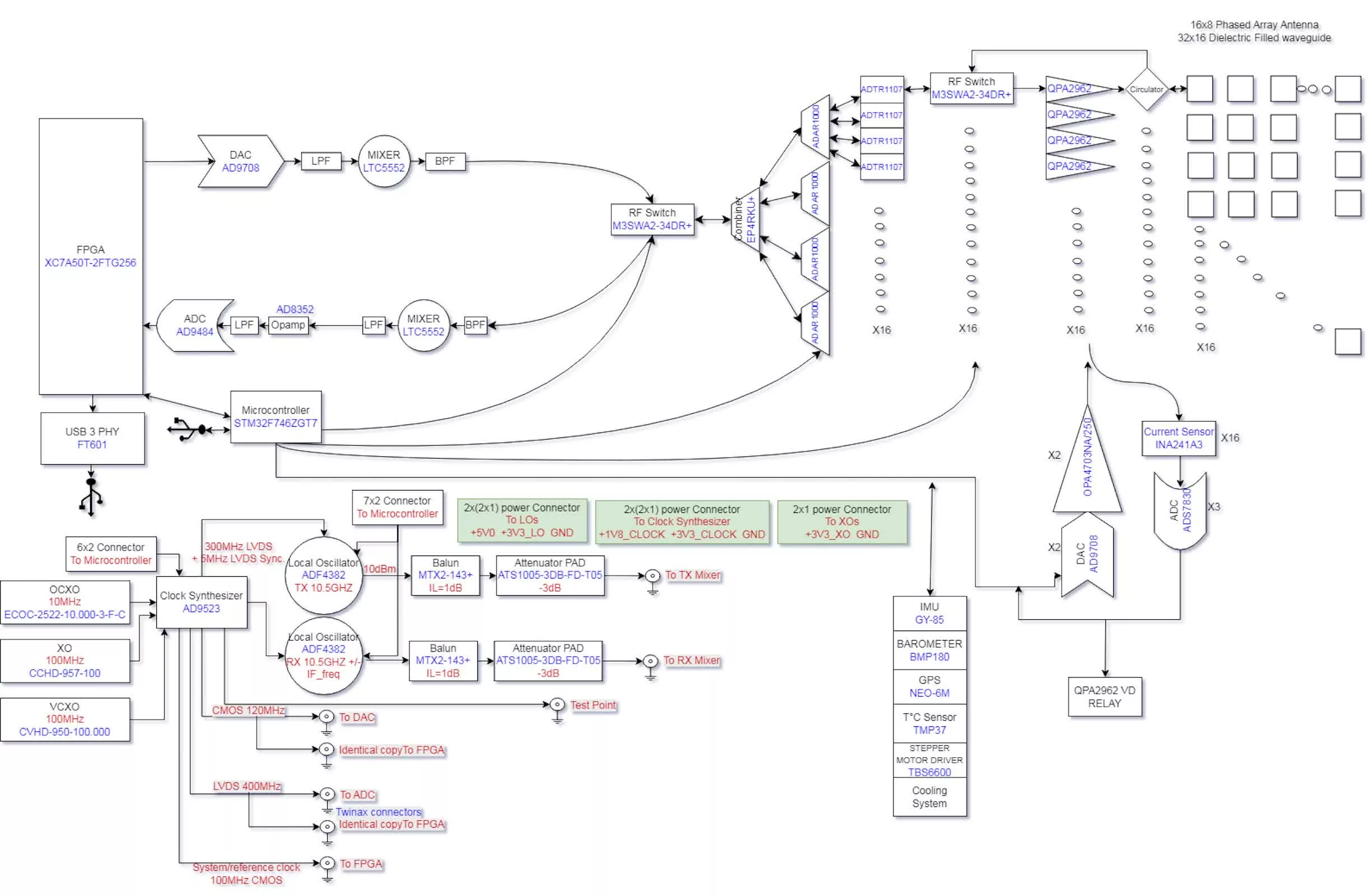
An FPGA-based signal processing pipeline built around the XCA7A50T is the core of the system. This handles computationally intensive operations such as fast Fourier transforms, moving target indication, Doppler-based velocity estimation, and constant false alarm rate (CFAR) detection. These are not trivial inclusions; they place the Aeris-10 firmly in the category of modern radar architectures rather than experimental builds.
Supporting this is an STM32F746xx microcontroller, which coordinates peripheral subsystems including frequency synthesizers, analog-to-digital and digital-to-analog converters, GPS, environmental sensors, motor control, and thermal management.
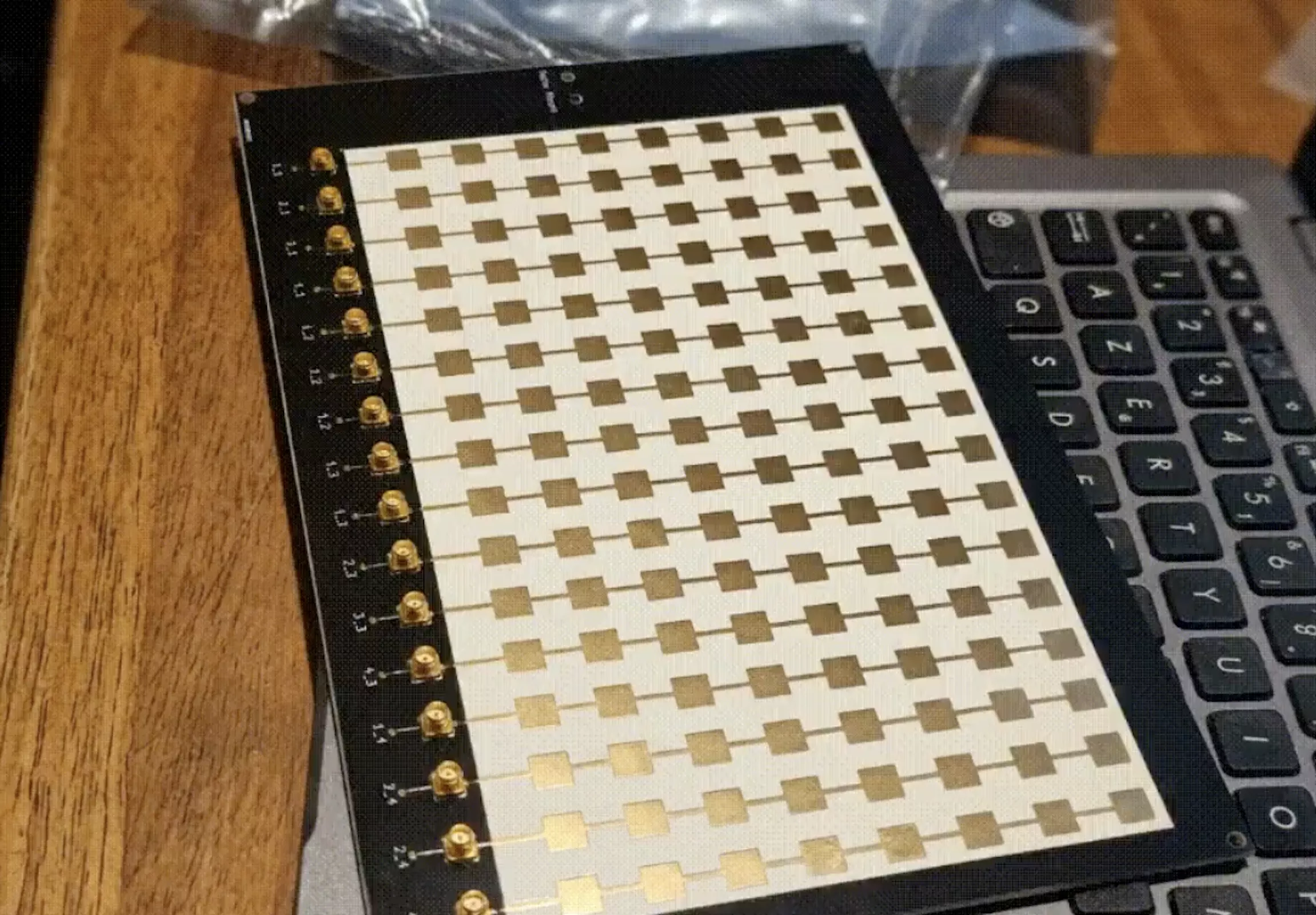
The hardware design extends to two distinct configurations.
The Aeris-10 10N Nexus version targets shorter-range applications, reaching up to 3 kilometers using an 8x16 patch antenna array. The higher-end 10E Extended model scales that architecture significantly, employing a 32x16 slotted waveguide array to achieve a range of up to 20 kilometers.
Both variants incorporate phased-array capabilities with ±45-degree control in both elevation and azimuth, a feature set that is typically reserved for far more expensive systems.
Cost is where the project stands out most. Estimates place the bill of materials at roughly $5,000 for the 10N and $7,200 for the 10E. Even allowing for component pricing variability, those figures sit far below those of commercial phased-array radar systems, which commonly range from $120,000 to $200,000, with higher-end long-range units exceeding those thresholds.
Motii frames the project as a response to both cost and accessibility barriers. Military surplus radar units, while cheaper, tend to be outdated and difficult to maintain. He also notes that even small teams attempting to build radar systems face steep upfront costs, with testing equipment alone potentially reaching $50,000.
The open-source approach does not eliminate all barriers. Building a system like the Aeris-10 still requires significant expertise in RF engineering, embedded systems, and mechanical design.
Recognizing this, Motii has partnered with Crowd Supply, a platform known for vetting fully realized hardware projects, with a campaign launch targeted for the third quarter of 2026. The platform's model – accepting only completed designs with working prototypes – suggests the project has moved beyond the conceptual stage.
The licensing framework has also evolved alongside the project. Initially released under the MIT license, the design was later reissued under the CERN-OHL-PT license to better address the realities of open hardware, where physical replication and modification introduce legal complexities not covered by traditional software licenses.
Regulatory considerations remain a constraint. Radar systems operate across frequency bands that are tightly controlled in most jurisdictions, and any attempt to build or operate such a device would require careful attention to local laws.
Still, the Aeris-10 represents an unusual convergence of open-source philosophy and high-end RF engineering. By publishing a complete phased-array radar design with modern signal-processing capabilities, Nawfal Motii has effectively challenged the assumption that such systems must remain inaccessible to non-specialized institutions or large corporations.
此内容由惯性聚合(RSS阅读器)自动聚合整理,仅供阅读参考。 原文来自 — 版权归原作者所有。