


Serving tech enthusiasts for over 25 years.
TechSpot means tech analysis and advice you can trust.
The takeaway: Streaming services and game publishers are facing an audience that no longer behaves like a traditional subscriber base. Instead of sticking with a single platform or paying upfront for content, younger users are moving in and out of services based on what they want at a given moment. The findings come from a report by Dentsu and IGN Entertainment.
One of the clearest signals in the data is how Gen Z approaches streaming. The report finds that 59% of users in that group subscribe to and unsubscribe from platforms specifically to watch a single show or film. In effect, streaming subscriptions have become temporary access points rather than ongoing commitments. The report concludes that "platform loyalty is effectively dead," reflecting how easy it has become to cycle through services as content libraries fragment.
That behavior is less about dissatisfaction and more about how the technology itself is structured. Subscription systems, built to generate recurring revenue, now allow users to join and leave with minimal friction. As a result, the balance of control has shifted toward the viewer.
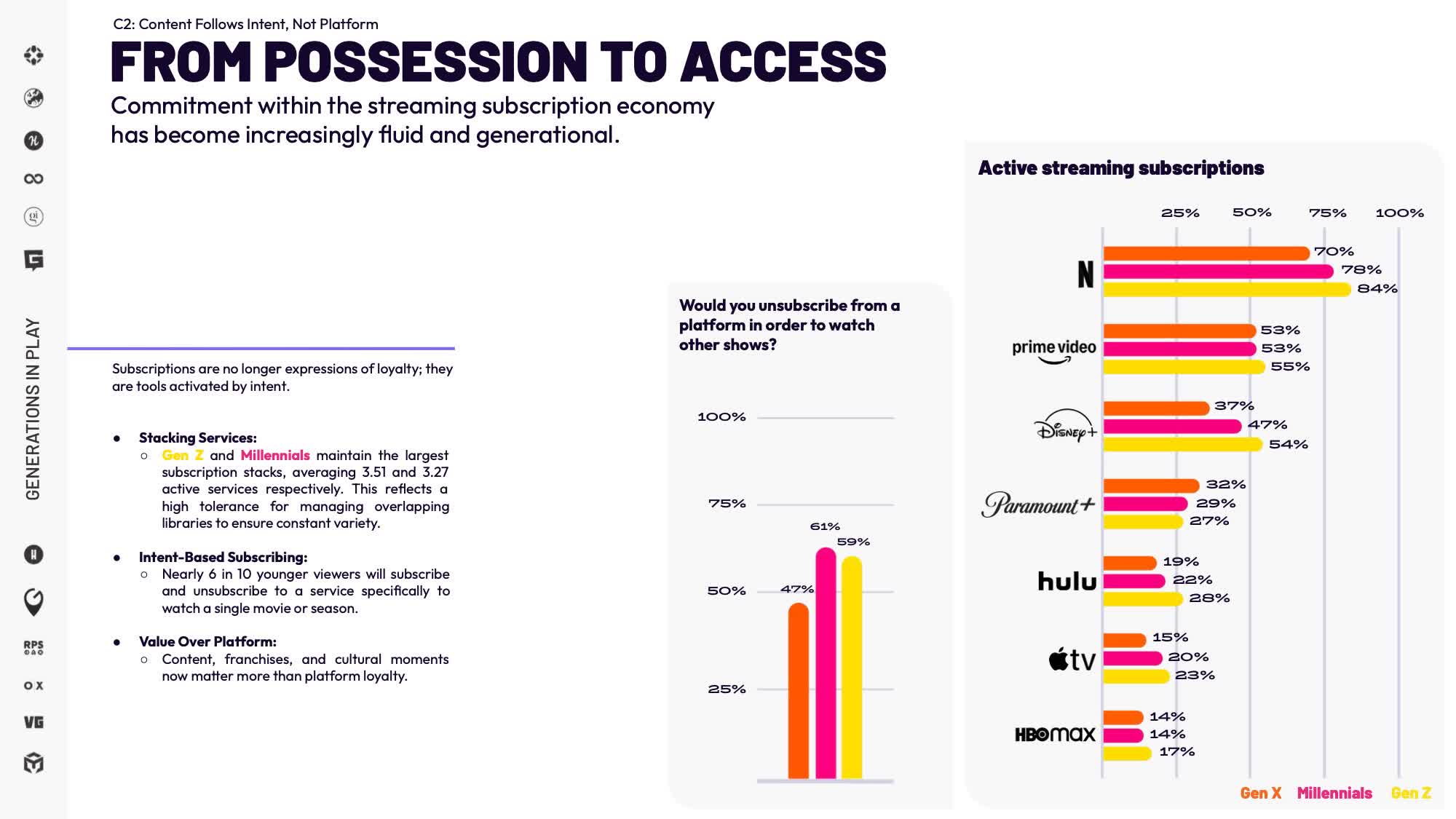
The same dynamic is playing out in gaming. According to the report, 62% of Gen Z users are unwilling to pay full price for video games. Instead, they are gravitating toward subscription models and free-to-play ecosystems that lower the barrier to entry.
For publishers, that changes how revenue is generated. Brent Koning, Dentsu's global head of gaming, framed it as a question of what happens after a player gains access. "The question publishers should be asking is, how do we convert access into commitment?" he told Variety. "Subscriptions and free-to-play have become the regular front door nowadays, but what happens after players come through that door is where the new business models lie. Season passes, in-world status, virtual goods… these are the new rules of monetization."
In that model, games operate less like standalone products and more like ongoing services. Revenue depends on sustained engagement rather than a single purchase. The report notes that 71% of Gen Z users have stopped buying physical music, and 70% no longer purchase physical copies of TV shows or movies.
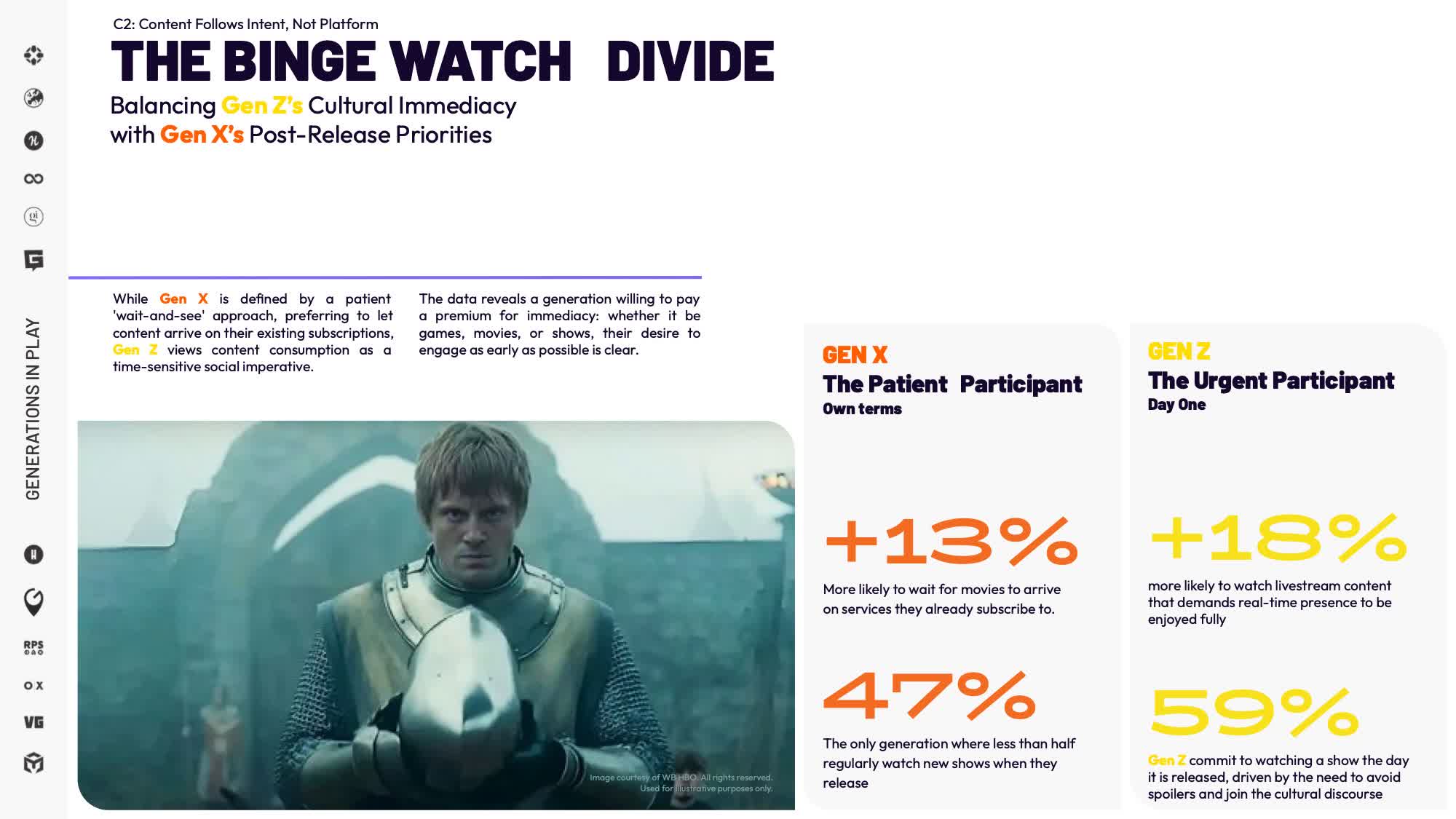
Despite the shift to digital, the data highlights one area where younger audiences still show up in person. Gen Z is 13% more likely than older groups to attend opening weekend screenings in theaters, suggesting that shared, event-driven experiences still carry weight.
The findings suggest that simply increasing content volume may not solve retention challenges. Instead, long-term engagement appears to depend on recognizable intellectual property that can extend across formats.
Koning pointed to franchises with sustained appeal as a key factor. "The shift here isn't necessarily about just creating more, new or original content, because we know that loyalty actually centers on IP that has longevity," he said. "Stranger Things, Game of Thrones, The Walking Dead… these are sagas that keep audiences engaged and coming back for more. But we're also seeing that when IP transitions between formats, it brings audiences with it – so those sagas can be borrowed too."
That ability to move franchises across platforms – film, television, and games – has become more important as companies try to hold attention in an environment where users are quick to move on.
The systems designed to lock users in – subscriptions, digital storefronts, and platform ecosystems – are now enabling more flexible behavior. For Gen Z, access matters more than ownership, and engagement is increasingly shaped by convenience rather than loyalty.
此内容由惯性聚合(RSS阅读器)自动聚合整理,仅供阅读参考。 原文来自 — 版权归原作者所有。