
惯性聚合 高效追踪和阅读你感兴趣的博客、新闻、科技资讯
阅读原文 在惯性聚合中打开

推荐订阅源

酷 壳 – CoolShell
酷 壳 – CoolShell
G
Google Developers Blog
V
V2EX
美团技术团队
H
Help Net Security
月光博客
月光博客
爱范儿
爱范儿
Engineering at Meta
Engineering at Meta
The Cloudflare Blog
U
Unit 42
大猫的无限游戏
大猫的无限游戏
Recent Announcements
A
About on SuperTechFans
博客园 - Franky
The GitHub Blog
The GitHub Blog
N
Netflix TechBlog - Medium
人人都是产品经理
人人都是产品经理
博客园 - 司徒正美
MyScale Blog
MyScale Blog
B
Blog
雷峰网
雷峰网
Y
Y Combinator Blog
云风的 BLOG
云风的 BLOG
T
The Blog of Author Tim Ferriss

TechSpot

Flagship Rematch: Ryzen 7 5800X3D vs. Core i9-12900K Slack chats and internal data from failed startups are finding a second life in AI training A $5 Bluetooth tracker hidden in a postcard exposed a warship's movements Leakers claim PlayStation 6 could offer at least 3x the performance of the PS5 The Mac Mini is no longer a niche product, it's local AI infrastructure IPv6 traffic reaches parity with IPv4 for the first time, Google data shows Xbox expansion cards are now cheaper than SSDs, and PC users are repurposing them Blue Origin prepares to reuse New Glenn booster in bid to challenge SpaceX Nvidia could bring back the 12GB RTX 3060 as supply issues disrupt GPU roadmap What was the first OS you ever used? SNK revives NeoGeo AES with modern upgrades and HDMI support Valve's Proton 11 beta boosts Linux gaming with better performance and classic game support Researchers warn Microsoft Defender vulnerability is already being exploited A four-day Steam freebie turned into $250,000 for an indie game AMD may relaunch Ryzen 7 5800X3D for AM4's 10th anniversary This humanoid robot can almost run as fast as a human sprinter Two New Jersey men jailed for helping North Korean IT workers infiltrate 100+ companies A $7,000 DIY radar project is taking on hardware that usually costs over $100,000 Metro 2039 is going darker than ever, launching this winter on PC and consoles Gemini arrives on macOS with a dedicated desktop app AI infrastructure boom pushes AMD, Intel and Arm to new valuation heights New self-healing material can repair itself over 1,000 times, extend the lifespan of cars and aircraft Japan's bullet train to debut high-tech private cabins, for an added fee Memory card and flash drive pricing surges 120%, with some models spiking 260% Open-source tool decrypts all private data collected by Windows Recall on Copilot PCs The 2026 PC and Console Gaming Report shows most revenue now comes from games outside the Top 20 PureMac is a new open-source macOS cleanup and app removal tool Your Airbnb host might actually be AI Steam might soon display 30-day price history for game deals Intel brings 18A process to budget laptops with new Core Series 3 CPUs
A student halted multiple Taiwan bullet trains by spoofin...
Rob Thubron · 2026-05-07 · via TechSpot

Serving tech enthusiasts for over 25 years.
TechSpot means tech analysis and advice you can trust.

WTF?! What would it take to stop several high-speed bullet trains? In Taiwan, a student managed to bring some of them to a halt using just a radio kit. The 23-year-old was arrested for his unwise actions and is now out on bail.

Taiwan High Speed Rail (THSR) told local media that on April 5, a 48-minute stoppage affected four trains – though some outlets say it was three trains. The disruption was caused by a General Alarm signal that triggered emergency response protocols instructing the trains to stop manually.

The signal is normally activated by station staff using specialized equipment, but in this instance, a 23-year-old student, identified only as Lin, was responsible.

Reports say Lin used software-defined radio (SDR) equipment bought online to analyze THSRC signals, download the data to a computer, decode the TETRA (Terrestrial Trunked Radio) parameters, and program the codes into handheld radios that impersonated legitimate beacons. He then sent a general alarm signal to THSRC's control center in Taoyuan from his residence in Taichung.

Police say a 21-year-old accomplice provided Lin with some of the THSR parameters that enabled the attack.
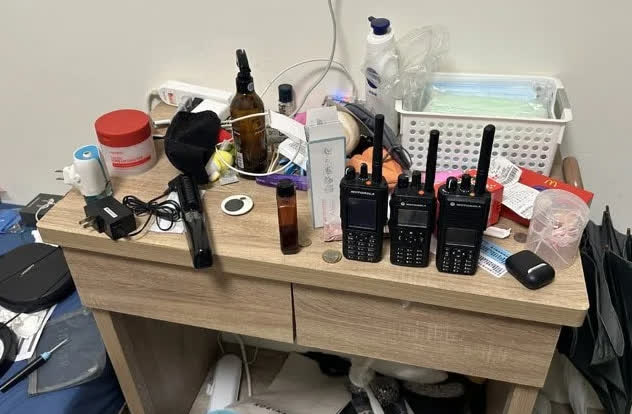
The radios found at Lin's residence

THSR checked its equipment after the alarm and found that no authorized radio had been stolen or misused, pointing investigators toward signal cloning. Police reportedly reviewed CCTV footage and TETRA network logs before searching Lin's home and workplace on April 28.

Authorities seized a laptop, smartphones, an SDR device, and multiple handheld radios. Reports differ on the exact number of radios recovered, ranging from seven to 11, but investigators say Lin had access to frequencies used not only by THSR but also by the New Taipei City Fire Department and the Taoyuan International Airport MRT Line.

The case has prompted Taiwan's Ministry of Transportation and Communications to order a review of railway communications security. Lawmakers asked whether radio replacement cycles, maintenance procedures, and security protocols were being updated regularly enough, especially after claims that the system had been in use for 19 years and that Lin bypassed several layers of verification.

Lin was released on NT$100,000 ($3,280) bail after questioning. His lawyer reportedly claimed the April 5 transmission was accidental, though prosecutors appear unconvinced. He could face charges related to endangering public transportation and illegal radio interference, with potential penalties that include a lengthy prison sentence if convicted.