


惯性聚合 高效追踪和阅读你感兴趣的博客、新闻、科技资讯
阅读原文 在惯性聚合中打开

推荐订阅源

量子位
博客园_首页
罗磊的独立博客
云风的 BLOG
云风的 BLOG
J
Java Code Geeks
Last Week in AI
Last Week in AI
D
DataBreaches.Net
Jina AI
Jina AI
博客园 - Franky
大猫的无限游戏
大猫的无限游戏
Apple Machine Learning Research
V
V2EX
D
Docker
MongoDB | Blog
MongoDB | Blog
B
Blog RSS Feed
让小产品的独立变现更简单 - ezindie.com
宝玉的分享
宝玉的分享
Engineering at Meta
Engineering at Meta
The Cloudflare Blog
博客园 - 三生石上(FineUI控件)
有赞技术团队
有赞技术团队
人人都是产品经理
人人都是产品经理
H
Help Net Security
T
The Blog of Author Tim Ferriss

Latest from Live Science

Naked mole rats wage bloody wars of succession to choose a new queen — but one colony did something scientists… Can the US be trusted with the moon? A law scholar raises concerns after Artemis II Lyrid meteor shower 2026: See spring's first rain of 'shooting stars' peak in moonless skies $3 million prize goes to duo whose research led to first sickle cell CRISPR therapy 700-year-old mummy from Bolivia contains earliest confirmed evidence of strep throat bacteria in the Americas New pain-relief opioid could be much less addictive than morphine, rodent study finds Experimental drug doubles one-year survival in pancreatic cancer Science news this week: Physicists witness faster-than-light darkness pinpricks, humans are still evolving, and some… Archaeologists discover perfectly circular ancient Egyptian temple that may have been used for sacred water rituals Some polar bears are adapting to their melting habitat. Will it be enough to save the iconic species? 2 supermassive black holes may collide 100 years from now ‪—‬ and Earth would feel it Anglo-Saxon burial holds an older sister cradling her little brother after they both died 1,400 years ago, possibly of… Colorado River may have pooled and spilled over to form the Grand Canyon, solving a long-standing mystery ‪—‬… 'We all screamed when it happened': Bright-green fireball meteor caught exploding over famous Viking raid site… Northern lights may be visible from several US states Friday and Saturday as giant hole opens up in sun Hackers used AI to steal hundreds of millions of Mexican government and private citizen records in one of the largest… The first black hole ever discovered is spewing 'dancing jets' at half the speed of light Stephen Hawking's black hole information paradox could be solved — if the universe has 7 dimensions 'Something's missing': Most thorough-ever study of the cosmos proves we still can't explain how the… 'Human evolution didn't slow down; we were just missing the signal': Large DNA study reveals natural selection led to more redheads and less male-pattern baldness Artemis II quiz: Is your knowledge of NASA New study confirms lobsters feel pain, driving scientists to call for a ban on boiling them alive This humanoid robot does all your housework for you ‪—‬ and its makers say it Ancient process that created rare earth elements discovered — and it could help us locate desperately needed deposits Strange mammal ancestor laid huge, leathery eggs —‬ and it was key to surviving the world 73 moon landings? NASA Diagnostic dilemma: A woman heard voices telling her she had a brain tumor ‪—‬ and scans confirmed she did Triassic croc relative from Ghost Ranch, New Mexico finally identified after nearly 80 years in museum basement There were Physicists witness pinpricks of darkness moving faster than the speed of light ‪—‬ without breaking the laws of relativity
Science news this week: Atlantic current edges closer to ...
ben.turner@f · 2026-04-25 · via Latest from Live Science
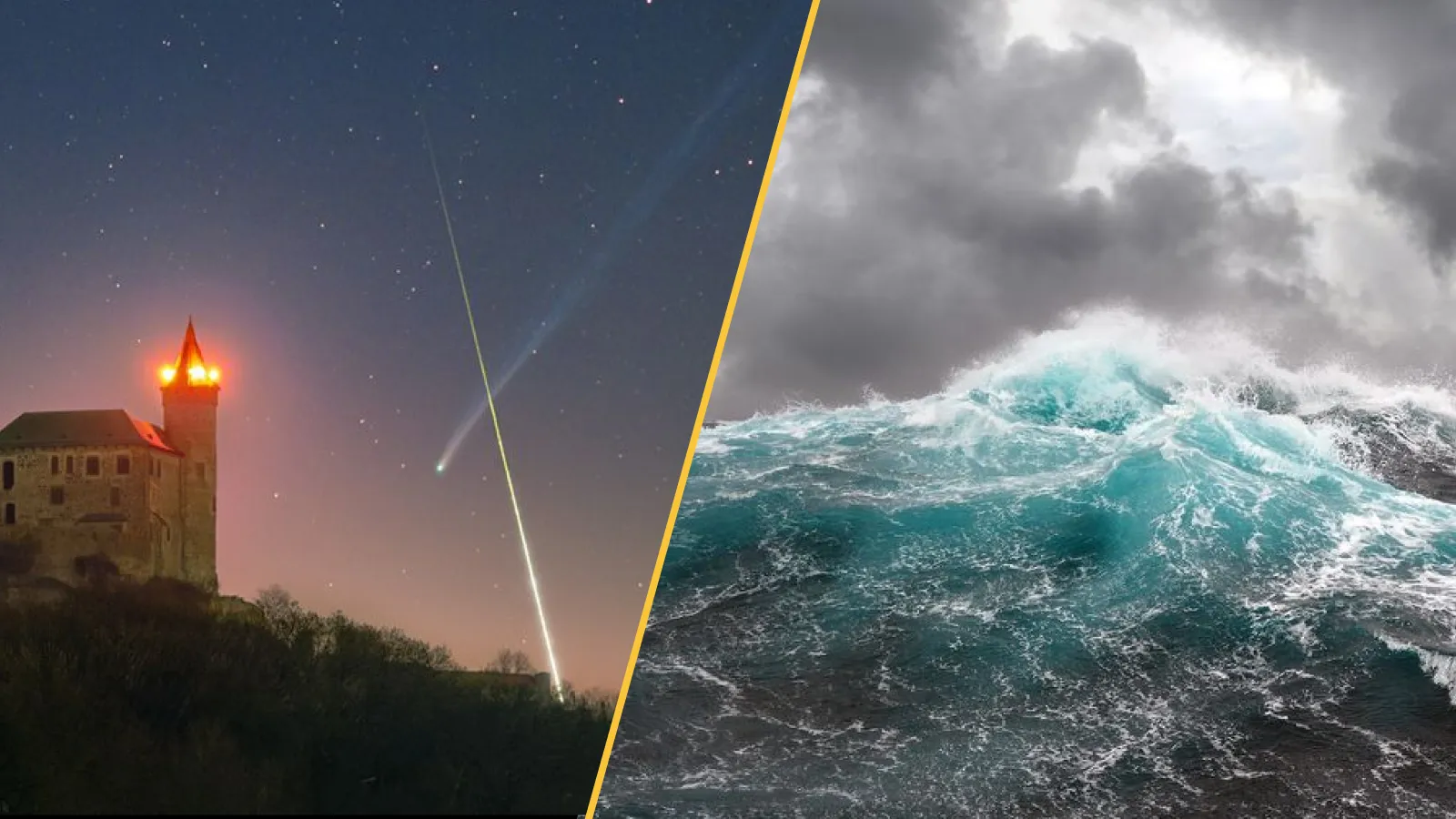
A comet and fireball make an X in the sky next to a castle, and waves heave and foam on a stormy sea.
The AMOC moves closer to collapse, scientists create artificial neurons, the "Iliad" is found inside and Egyptian mummy, and researchers search for treatments for brain-eating amoebas (Image credit: Petr Horálek/Josef Kujal | andrej67 via Getty images)

We celebrated Earth Day this week, and the science news was filled with troubling implications for the pale blue dot we call home.

Topping the list was a new study that suggests the collapse of a vital Atlantic Ocean current is much closer than we thought. The Atlantic Meridional Overturning Circulation recycles vast quantities of carbon and keeps Western Europe and the U.S. East Coast warm. Yet many studies suggest the current's collapse is imminent, and the new research used fresh data and a novel analysis to find that we could be underestimating just how close the threat is. One team of scientists has even suggested the extreme measure of building a giant dam across the Bering strait to fend off the current's collapse.

In other concerning developments, new satellite images show that oil spills are wreaking untold ecological havoc in the Persian Gulf and El Niño could be here by May.

Scientists invent artificial neurons

Scientists invent artificial neurons that 'talk' to real brain cells, paving way to better brain implants
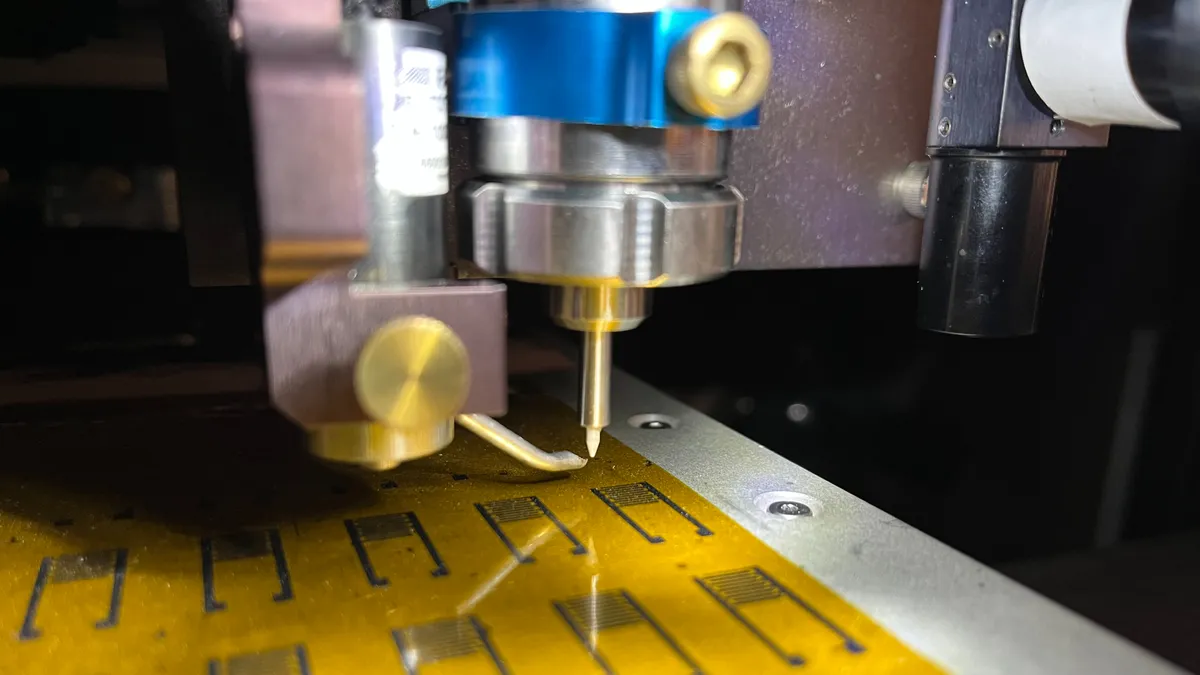
A close up of a metal machine with a long needle pointing to a yellow shiny sheet with brass pieces on it.

To make the artificial neurons, the researchers use an aerosol jet printer to deposit electronic inks onto a flexible polymer substrate. (Image credit: Northwestern University/Amanda B. Morris)

Tiny, artificial neurons that can communicate with real brain cells could lay the groundwork for more advanced computers and computer-brain interfaces. A new study we reported on this week used inks laced with flakes of semiconductors and conductors printed onto a polymer substrate to create neurons.

These artificial neurons produced electrical spiking patterns that closely resembled those in human brains, while the flexibility of the polymer enabled a complex and evolving artificial neural architecture to take shape.

When placed next to mouse neurons in the lab, the artificial neurons caused the real neurons to fire at the same pace — strongly suggesting that the two could communicate the same signals. Although a lot of work remains, the finding could be the first step toward creating computers with human-like neural structures.

Get the world’s most fascinating discoveries delivered straight to your inbox.

Discover more health news

Gene therapy improves hearing in 90% of patients with inherited deafness in largest trial of its kind

Diagnostic dilemma: A teen's classic diabetes symptoms didn't improve with treatment — revealing she also had a much rarer syndrome

'A landmark moment for the field': FDA approves first-ever gene therapy for inherited deafness

Life's Little Mysteries

Why are some constellations visible for only part of the year?

A glowing orange night sky is full of stars overlooking a winter landscape with a large tree in the left of the image

The Orion constellation can be clearly seen in the winter in the Northern Hemisphere. In the Southern Hemisphere, it's high in the night sky during the summer, but it appears upside down. (Image credit: wenbin via Getty Images)

Why are some stars constant fixtures in the night sky and others shift in and out of view with the passing of the seasons? It has to do with Earth's own characteristic wobble.

If you enjoyed this, sign up for our Life's Little Mysteries newsletter

Mummy found with the "Iliad"

Egyptian mummy has part of the 'Iliad' in its abdomen, archaeologists discover
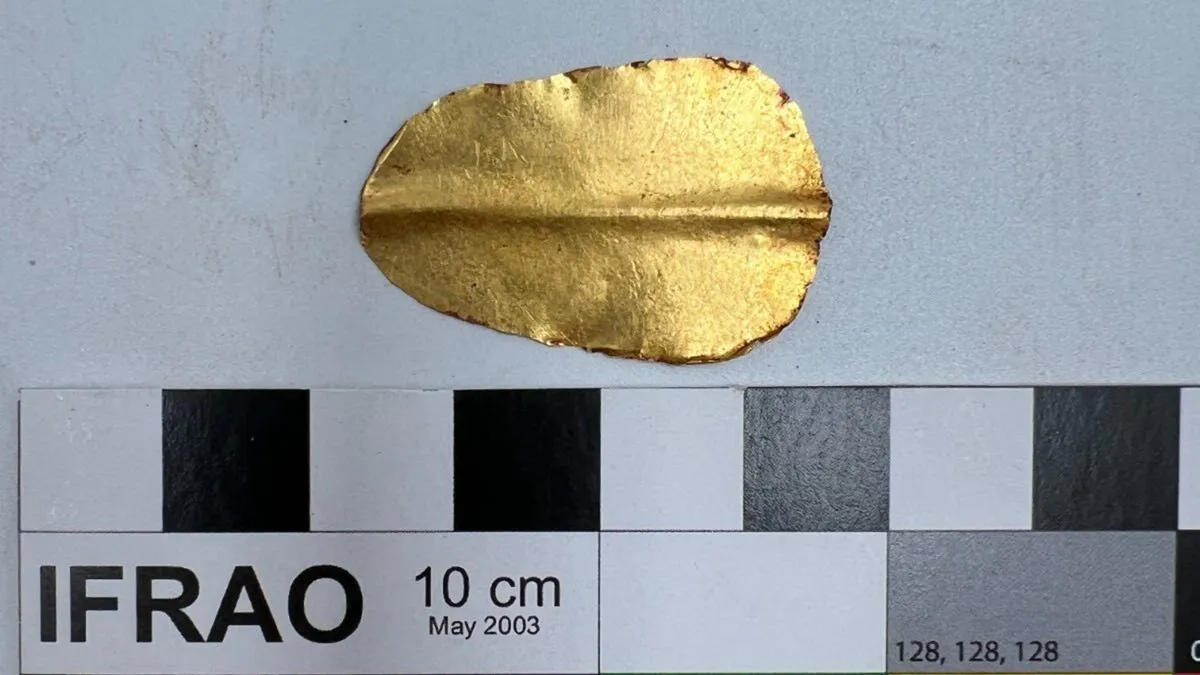
A close up of a gold tongue against a white background with a ruler next to it.

One of the gold tongues found inside a mummy at the archaeological site of Oxyrhynchus in Egypt. (Image credit: Courtesy of the Egyptian Ministry of Tourism and Antiquities)

Ever had a book you just couldn't put down? A Roman-era mummy in Egypt may have you beat, having been found with part of Homer's epic poem the "Iliad" inside its abdomen.

The mummy dates to between 30 B.C. and A.D. 641, when the Romans controlled Egypt, and was found within a cemetery in the modern-day town of Al-Bahnasa, which was known as Oxyrhynchus in ancient times.

Little is known about the ancient bookworm, aside from him being an adult man, but he was discovered at the same cemetery as dozens of other mummies with golden tongues, which ancient Egyptians believed granted them the power to speak with the gods in the afterlife.

Discover more archaeology news

Neanderthal toddlers grew faster than modern humans, probably because of the harsh environment they evolved in

DNA study of nearly 200 Indigenous genomes reveals unknown Asian 'ghost' population contributed to American ancestry

700-year-old mummy from Bolivia contains earliest confirmed evidence of strep throat bacteria in the Americas

Also in science news this week

NASA shuts off another Voyager 1 instrument as humanity's most distant spacecraft prepares for risky 'Big Bang' maneuver to save power

Bruce the parrot is missing his upper beak —‬ but that hasn't stopped him from becoming an undefeated jousting champion

'Kraken' octopus that lived at the time of the dinosaurs was a 62-foot-long apex predator of the ocean

Artemis II heat shield aced its blistering reentry, ghostly underwater photo reveals

Artemis moon landing could face long delay while NASA waits for next-generation spacesuits

Advanced AI-powered table-tennis-playing robot can match up to the professionals — watch it in action

Science long read

'Brain-eating' amoebas are nearly always fatal. New treatments may change that.
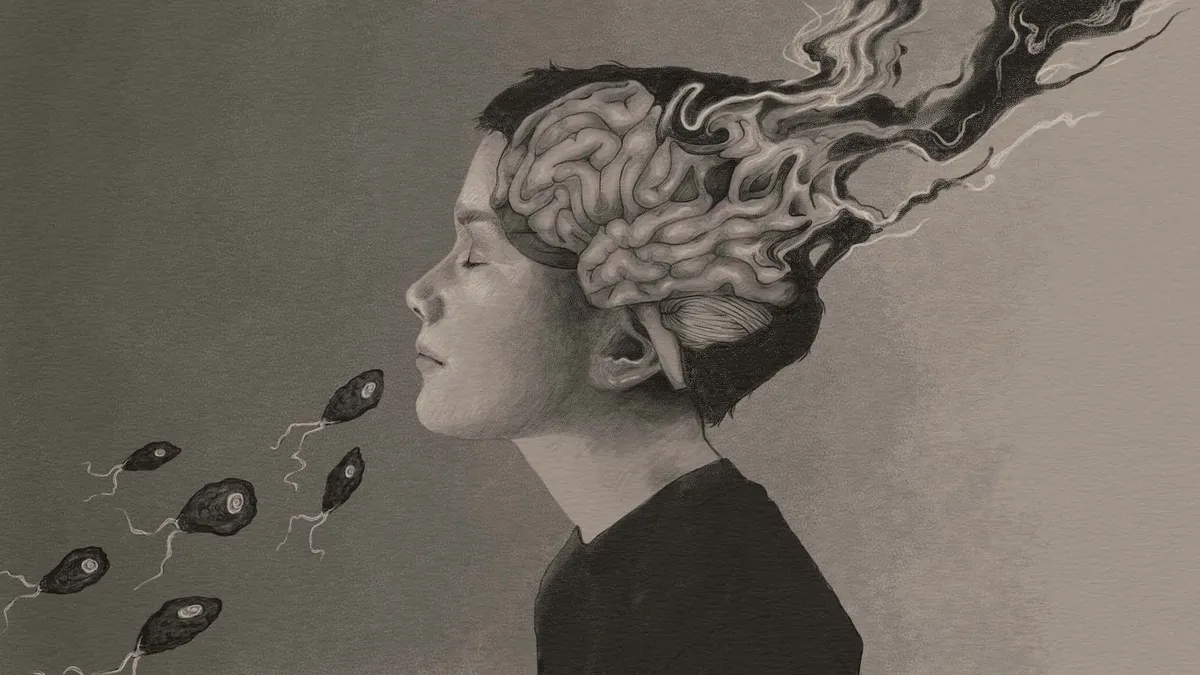
A pencil drawing showing brain eating amoebas entering a boy's nose, and an artistic representation of the boy's brain breaking down

New research suggests polar bears could be more adaptable to changes in climate than expected. (Image credit: Marilyn Perkins for Live Science)

Brain-eating amoebas are comparatively rare infections, yet they are almost always fatal. Thriving in warm fresh water, they charge into the body like "a bull in a china shop," destroying brain tissue on a massive scale. As climate change heats waters, possibly expanding these microorganisms' range, Live Science reported on the race to create groundbreaking treatments to kill them.

Something for the weekend

If you're looking for things to keep you busy over the weekend, here are some of the best interviews and quizzes published this week.

'The chances of you living 50 years are very small': Theoretical physicist explains why humanity likely won't survive to see all the forces unified [Interview]

'Strong, undeniable public examples of something positive': Astronaut Chris Hadfield on why Artemis II hit him hard, and why we need to send a guitar to the moon [Interview]

Earth quiz: What do you know about our planet's most amazing features? [Quiz]

Science news in pictures

'What are the odds': Superbright comet and exploding fireball meteor form near-perfect X over European castle
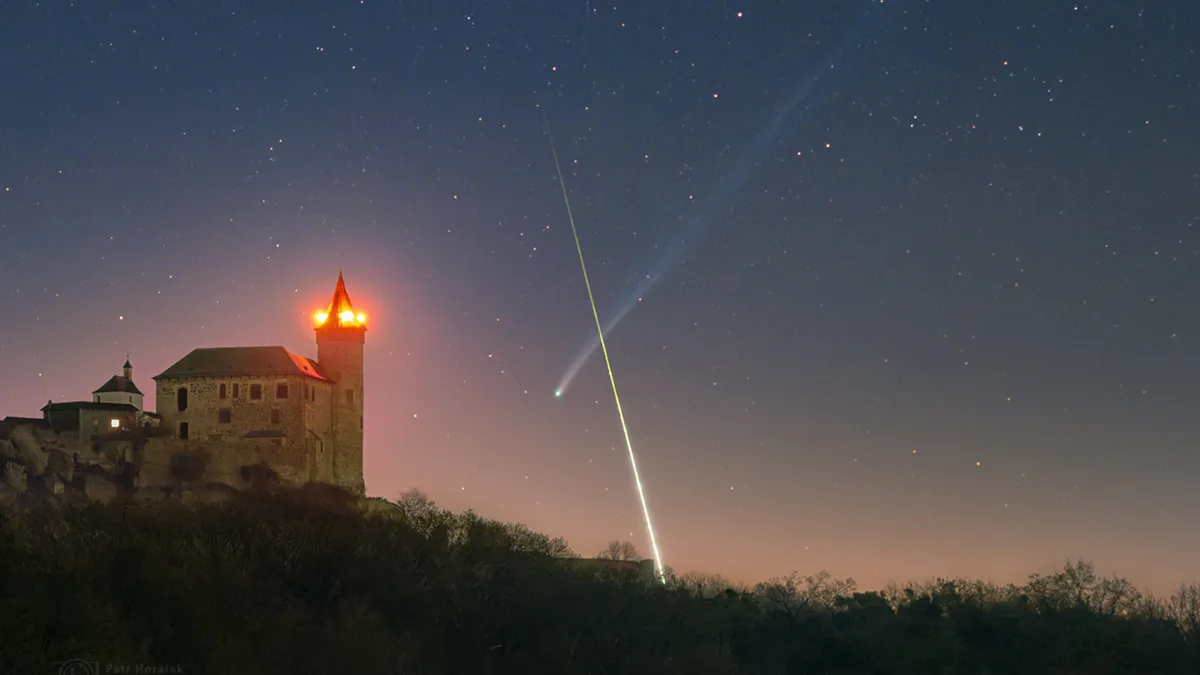
A timelapse image showing a bright streak of light crossing in front of a comet's long tail to form an X-like shape in the night sky. A medieval castle is illuminated in the foreground.

A green fireball lit up the skies of Lindisfarne Castle in the United Kingdom. (Image credit: Petr Horálek/Josef Kujal)

Photographers Petr Horálek and Josef Kujal captured this extraordinary cosmic coincidence on April 18 in the skies over the ruins of the 15th-century Kunětická Hora Castle in the Czech Republic, with the "Great Comet of 2026" contender crossing paths with a fireball meteor in the sky to form a giant X. Don't tell Elon Musk.

Follow Live Science on social media

Want more science news? Follow our Live Science WhatsApp Channel for the latest discoveries as they happen. It's the best way to get our expert reporting on the go, but if you don't use WhatsApp we're also on Facebook, X (formerly Twitter), Flipboard, Instagram, TikTok, Bluesky and LinkedIn.

Ben Turner is a U.K. based writer and editor at Live Science. He covers physics and astronomy, tech and climate change. He graduated from University College London with a degree in particle physics before training as a journalist. When he's not writing, Ben enjoys reading literature, playing the guitar and embarrassing himself with chess.

You must confirm your public display name before commenting

Please logout and then login again, you will then be prompted to enter your display name.