
惯性聚合 高效追踪和阅读你感兴趣的博客、新闻、科技资讯
阅读原文 在惯性聚合中打开

推荐订阅源

雷峰网
雷峰网
博客园 - 聂微东
酷 壳 – CoolShell
酷 壳 – CoolShell
宝玉的分享
宝玉的分享
奇客Solidot–传递最新科技情报
奇客Solidot–传递最新科技情报
罗磊的独立博客
Hugging Face - Blog
Hugging Face - Blog
T
Tailwind CSS Blog
OSCHINA 社区最新新闻
OSCHINA 社区最新新闻
IT之家
IT之家
博客园_首页
博客园 - 三生石上(FineUI控件)
博客园 - 叶小钗
Apple Machine Learning Research
freeCodeCamp Programming Tutorials: Python, JavaScript, Git & More
量子位
钛媒体:引领未来商业与生活新知
钛媒体:引领未来商业与生活新知
人人都是产品经理
人人都是产品经理
美团技术团队
小众软件
小众软件
Jina AI
Jina AI
S
SegmentFault 最新的问题
博客园 - Franky
让小产品的独立变现更简单 - ezindie.com

Latest from Live Science

Naked mole rats wage bloody wars of succession to choose a new queen — but one colony did something scientists… Can the US be trusted with the moon? A law scholar raises concerns after Artemis II Lyrid meteor shower 2026: See spring's first rain of 'shooting stars' peak in moonless skies $3 million prize goes to duo whose research led to first sickle cell CRISPR therapy 700-year-old mummy from Bolivia contains earliest confirmed evidence of strep throat bacteria in the Americas New pain-relief opioid could be much less addictive than morphine, rodent study finds Experimental drug doubles one-year survival in pancreatic cancer Science news this week: Physicists witness faster-than-light darkness pinpricks, humans are still evolving, and some… Archaeologists discover perfectly circular ancient Egyptian temple that may have been used for sacred water rituals Some polar bears are adapting to their melting habitat. Will it be enough to save the iconic species? 2 supermassive black holes may collide 100 years from now ‪—‬ and Earth would feel it Anglo-Saxon burial holds an older sister cradling her little brother after they both died 1,400 years ago, possibly of… Colorado River may have pooled and spilled over to form the Grand Canyon, solving a long-standing mystery ‪—‬… 'We all screamed when it happened': Bright-green fireball meteor caught exploding over famous Viking raid site… Northern lights may be visible from several US states Friday and Saturday as giant hole opens up in sun Hackers used AI to steal hundreds of millions of Mexican government and private citizen records in one of the largest… The first black hole ever discovered is spewing 'dancing jets' at half the speed of light Stephen Hawking's black hole information paradox could be solved — if the universe has 7 dimensions 'Something's missing': Most thorough-ever study of the cosmos proves we still can't explain how the… 'Human evolution didn't slow down; we were just missing the signal': Large DNA study reveals natural selection led to more redheads and less male-pattern baldness Artemis II quiz: Is your knowledge of NASA New study confirms lobsters feel pain, driving scientists to call for a ban on boiling them alive This humanoid robot does all your housework for you ‪—‬ and its makers say it Ancient process that created rare earth elements discovered — and it could help us locate desperately needed deposits Strange mammal ancestor laid huge, leathery eggs —‬ and it was key to surviving the world 73 moon landings? NASA Diagnostic dilemma: A woman heard voices telling her she had a brain tumor ‪—‬ and scans confirmed she did Triassic croc relative from Ghost Ranch, New Mexico finally identified after nearly 80 years in museum basement There were Physicists witness pinpricks of darkness moving faster than the speed of light ‪—‬ without breaking the laws of relativity
'Insect apocalypse' is already fueling malnutrition in so...
Joanna Thomp · 2026-05-12 · via Latest from Live Science

Insects are disappearing, and they are leaving global food security gaps in their wake. Over the past three decades, bugs have been declining at an alarming rate across the globe — up to 1% per year, by some estimates. The drop has been so intense that some scientists have dubbed it an "insect apocalypse."

Because many insects pollinate crops, lower insect abundance has hurt everything from ecosystem health to crop yields. But historically, such consequences have been tough for scientists to measure directly. Now, in a new paper published May 6 in the journal Nature, researchers have quantified the impact of insect pollinator declines on human health for the first time.

The finding was stark: Insect pollinators were responsible for an estimated 44% of the villagers' farming income and over 20% of their intake of some essential nutrients, including vitamin A, vitamin E and folate. As fewer and less-diverse pollinators visited the crops, people's income and dietary health declined.

"Over half of the children in our study were too short for their age, which is largely driven by poor diets that depend upon insect pollinated vegetables, legumes and fruits," study co-author Naomi Saville, a researcher at the University College London Institute for Global Health and a study co-author, said in a statement.
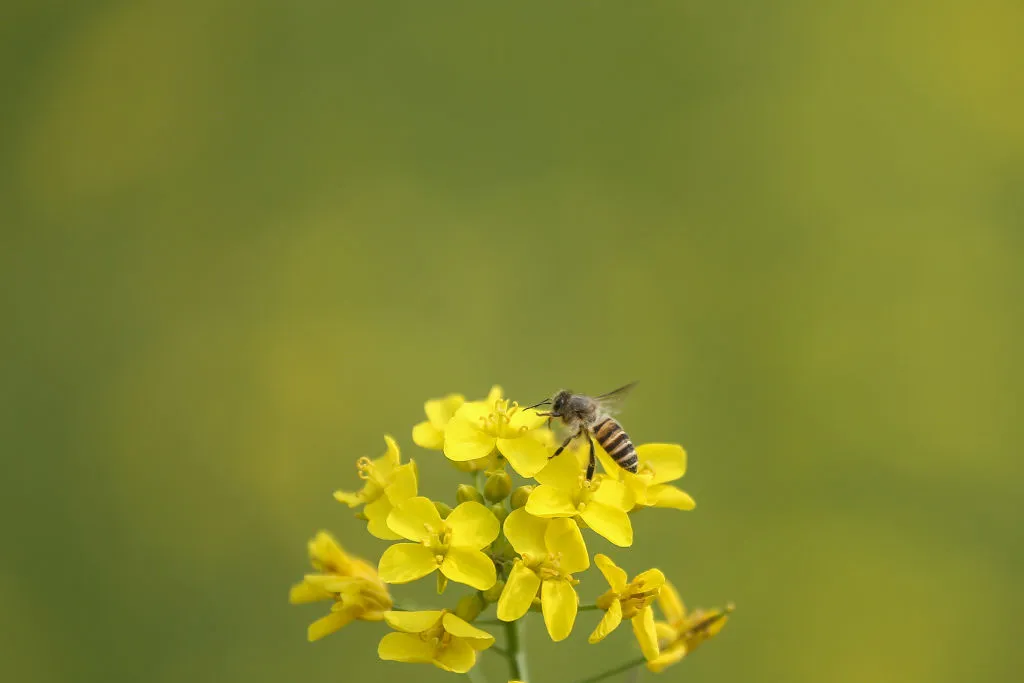
A close up of a yellow and black striped bee on a blossom of small yellow flowers.

Insects like bees play a pivotal role in boosting crop yields, so their global decline is bad news for food security.

(Image credit: NurPhoto via Getty Images)

When Saville's team extrapolated their data into a future with even fewer pollinators, the impacts were more pronounced. If no agricultural practices changed, they predicted a 7% loss of vitamin A and folate intake for the villagers by 2030. Deficiencies in these nutrients can lead to vision loss and birth defects.

Although the researchers only studied farming communities in Nepal, the new results offer a glimpse into the hidden burden of pollinator loss worldwide. Roughly 2 billion people rely primarily on smallholder farming like the villages in the study. About three-quarters of global crops need insect pollination to thrive, and a few crops ‪—‬ like coffee, almonds and chocolate ‪—‬ are totally reliant on pollinating insects to survive. If current trends continue, it could jeopardize many farmers' ability to grow food on a meaningful scale, the study authors said.

Get the world’s most fascinating discoveries delivered straight to your inbox.

But the new study also found ways to counteract this downward spiral. According to the team's models, simple interventions ‪— like planting native wildflowers near farms, keeping wild bees and reducing pesticide usage ‪— can help boost pollinator numbers. Such measures could increase farming income above current levels by up to 30% and boost vitamin A and folate intake by 5% and 9%, respectively.

"Biodiversity is not a luxury," study co-author Thomas Timberlake, an ecologist at the University of York in England, said in a statement. "It is fundamental to our health, nutrition and livelihoods."

Why Trust Live Science

Timberlake, T. P., Sapkota, S., Saville, N. M., Cirtwill, A. R., Baral, S. C., Bhusal, D. R., Devkota, K., Giri, S., Harris-Fry, H. A., Joshi, D., Kortsch, S., Myers, S. S., Roslin, T., Smith, M. R., & Memmott, J. (2026). Pollinators support the nutrition and income of vulnerable communities. Nature. https://doi.org/10.1038/s41586-026-10421-x