



惯性聚合 高效追踪和阅读你感兴趣的博客、新闻、科技资讯
阅读原文 在惯性聚合中打开

推荐订阅源

Hacker News: Ask HN
Hacker News: Ask HN
Recent Commits to openclaw:main
cs.CV updates on arXiv.org
C
Check Point Blog
S
Security Affairs
Hacker News - Newest:
Hacker News - Newest: "LLM"
S
Secure Thoughts
Recorded Future
Recorded Future
cs.AI updates on arXiv.org
T
The Blog of Author Tim Ferriss
B
Blog
C
Cybersecurity and Infrastructure Security Agency CISA
Google DeepMind News
CTFtime.org: upcoming CTF events
A
Arctic Wolf
T
The Exploit Database - CXSecurity.com
Stack Overflow Blog
Stack Overflow Blog
T
Threat Research - Cisco Blogs
GbyAI
GbyAI
AWS News Blog
AWS News Blog
MongoDB | Blog
MongoDB | Blog
Y
Y Combinator Blog
Google Online Security Blog
T
Troy Hunt's Blog
I
InfoQ
L
LINUX DO - 热门话题
WordPress大学
WordPress大学
C
Cisco Blogs
G
GRAHAM CLULEY
The Register - Security
A
About on SuperTechFans
让小产品的独立变现更简单 - ezindie.com
Schneier on Security
Project Zero
Project Zero
H
Hackread – Cybersecurity News, Data Breaches, AI and More
P
Privacy & Cybersecurity Law Blog
Cloudbric
Cloudbric
H
Hacker News: Front Page
小众软件
小众软件
雷峰网
雷峰网
The Hacker News
The Hacker News
www.infosecurity-magazine.com
T
Tor Project blog
博客园 - 聂微东
N
Netflix TechBlog - Medium
V
Vulnerabilities – Threatpost
The GitHub Blog
The GitHub Blog
腾讯CDC
P
Palo Alto Networks Blog
Scott Helme
Scott Helme

Latest from Live Science

Naked mole rats wage bloody wars of succession to choose a new queen — but one colony did something scientists… Can the US be trusted with the moon? A law scholar raises concerns after Artemis II Lyrid meteor shower 2026: See spring's first rain of 'shooting stars' peak in moonless skies $3 million prize goes to duo whose research led to first sickle cell CRISPR therapy 700-year-old mummy from Bolivia contains earliest confirmed evidence of strep throat bacteria in the Americas New pain-relief opioid could be much less addictive than morphine, rodent study finds Experimental drug doubles one-year survival in pancreatic cancer Science news this week: Physicists witness faster-than-light darkness pinpricks, humans are still evolving, and some… Archaeologists discover perfectly circular ancient Egyptian temple that may have been used for sacred water rituals Some polar bears are adapting to their melting habitat. Will it be enough to save the iconic species? 2 supermassive black holes may collide 100 years from now ‪—‬ and Earth would feel it Anglo-Saxon burial holds an older sister cradling her little brother after they both died 1,400 years ago, possibly of… Colorado River may have pooled and spilled over to form the Grand Canyon, solving a long-standing mystery ‪—‬… 'We all screamed when it happened': Bright-green fireball meteor caught exploding over famous Viking raid site… Northern lights may be visible from several US states Friday and Saturday as giant hole opens up in sun Hackers used AI to steal hundreds of millions of Mexican government and private citizen records in one of the largest… The first black hole ever discovered is spewing 'dancing jets' at half the speed of light Stephen Hawking's black hole information paradox could be solved — if the universe has 7 dimensions 'Something's missing': Most thorough-ever study of the cosmos proves we still can't explain how the… 'Human evolution didn't slow down; we were just missing the signal': Large DNA study reveals natural selection led to more redheads and less male-pattern baldness Artemis II quiz: Is your knowledge of NASA New study confirms lobsters feel pain, driving scientists to call for a ban on boiling them alive This humanoid robot does all your housework for you ‪—‬ and its makers say it Ancient process that created rare earth elements discovered — and it could help us locate desperately needed deposits Strange mammal ancestor laid huge, leathery eggs —‬ and it was key to surviving the world 73 moon landings? NASA Diagnostic dilemma: A woman heard voices telling her she had a brain tumor ‪—‬ and scans confirmed she did Triassic croc relative from Ghost Ranch, New Mexico finally identified after nearly 80 years in museum basement There were Physicists witness pinpricks of darkness moving faster than the speed of light ‪—‬ without breaking the laws of relativity Mini lake meets snowy rim of Canada's oldest ice mass — Earth from space Stone Age tombs in Scotland reveal 'webs of descent' among male relatives 'Oslo patient' likely cured of HIV after getting stem cell transplant from his brother, who is genetically… Antiseptic-tolerant germs spread through the air in hospitals, early study hints Homo erectus' tools include stunning geodes and fossils, possibly as a way to connect with the cosmos, study finds 'Really, really weird': Physicists entangle two moving atoms for the first time, validating 'spooky'… www.livescience.com Sperm quality is at its peak in the summer, study finds Scientists are trying to build a vaccine that works against almost any respiratory pathogen  — here's… Idol of Pomos: A 5,000-year-old fertility figurine from Cyprus that wears a miniature version of herself on a necklace Human ancestors butchered and ate elephants 1.8 million years ago, helping to fuel their large brains Ancient Egyptian stone monument depicting a Roman emperor as a pharaoh discovered in Luxor 'Human minds shouldn't have to go through' this: Artemis II crew recalls unreal moment when Earth disappeared — Space photo of the week Does the moon look the same from everywhere on Earth? I found a new meteor shower — and it comes from an asteroid getting baked to bits by the sun AI for breakup texts? How 'sycophantic' chatbots are messing with our ability to handle difficult social… Science news this week: Artemis II splashes down, the world's fattest parrot bounces back, and the Shroud of Turin… 10 Artemis II photos that define humanity's return to the moon Do the microbes in your gut influence what foods you like? 'I'm at a loss for words': Artemis II mission comes home to joy and cheers after historic 10-day mission There are 'reasons to be confident' about faulty Artemis II heat shield ahead of 25,000 mph reentry, space… The moon is green and brown? Why scientists are already excited about Artemis II's historic lunar photos 'I've seen the movies. What a horrible way to die': What it's like to be sucked into a tornado and… 'More questions than answers': Experts baffled by Alaskan mammal-eating orcas spotted near Seattle Changing 'just one DNA letter' in female mice triggers growth of male genitalia Aoshima: Japan's tiny 'Cat Island' where felines hugely outnumber humans 'Welcome home, Integrity': Artemis II crew return to Earth after 'bullseye landing' caps historic… AI war games almost always escalate to nuclear strikes, simulation shows Ancient Korean society practiced human sacrifice and high inbreeding, researchers find There's an issue with the Artemis II heat shield, but NASA isn't worried. Here's why. Chimpanzees in Uganda are locked in a deadly 'civil war' after their group split apart — and scientists… James Webb telescope spots 'stingray' galaxy system that could solve the mystery of 'little red… 'RIP, Comet MAPS': Watch the superbright sungrazer become a 'headless wonder' after being ripped… Scientists create new type of encryption that protects video files against quantum computing attacks Western states face above-normal wildfire threats this summer. New maps reveal which areas are most at risk. Science history: Doctor hypothesizes that 'transmissible proteins' can cause disease, contradicting a 'central dogma' of molecular biology — April 9, 1982 Keratin may act as a 'brake' for skin inflammation, pointing to potential treatments 'No one knows what they are': Researchers discover new type of cell that's seen only during pregnancy 16th-century silver coin discovered near Strait of Magellan marks the spot of a doomed Spanish colony How to see Comet PanSTARRS as it brightens in the night sky this week Diagnostic dilemma: Woman's 'biologically implausible' infection led her to sneeze 'worms' out… 'In every continent where humans are present, water bankruptcy is manifesting itself': Exiled Iranian scientist Kaveh Madani on our desperate need to preserve our most precious resource California declared war on smog in the 1970s. The knock-on effects were huge. 'They are literally everywhere': The shocking story of how forever chemicals polluted the world DNA reveals ancestry of man buried in Stone Age monument in Spain, but his religion remains a mystery 'So much magic': Artemis II shares first images from the far side of the moon, including new… AI 'mirages' mean tools used to analyze medical scans could fabricate their findings World's fattest parrot — on the verge of extinction 30 years ago — has record-breaking breeding season It's one of the best toothbrushes we have tested (and it's not Oral-B) Physicists moved volatile antimatter by truck for the first time ever — paving the way for groundbreaking new… Deadly, vivid-green mass sprawls across South African reservoir — Earth from space The Artemis II astronauts have just flown farther from Earth than any humans in history Artemis II moon flyby begins: How to watch and what to know AI-written code can beat humans at biomedical analysis, some studies find. What does that mean for the field? 'A cure on the horizon': Are we finally close to ending type 1 diabetes? 'They could spend 4 or 5 hours per day underwater': How humans adapted to the most challenging environments We went to Finland to hear about the new 'sand battery' that will turn stored renewable energy back into power… The hungriest black holes in the universe are running out of food, survey of 8,000 cosmic monsters reveals Beadnet dress: A 4,500-year-old ancient Egyptian funeral 'gown' that was in vogue during the Old Kingdom 'This generation's moment': How the Artemis missions will reframe humanity's relationship with the… Antarctica hides huge caches of gold, silver, copper and iron. As the ice melts, countries may race to harvest them. NASA telescope uncovers new mystery in supernova first spotted by Chinese astronomers 2,000 years ago —‬ Space… Diabetes rates are lower in high-altitude environments ‪‪—‬ and scientists may have discovered why Shroud of Turin, claimed to be Jesus' burial cloth, contaminated with carrot and red coral DNA What happened to the Minoan civilization? I've witnessed nearly 100 rocket launches. Artemis II was like nothing I've ever experienced. Science news this week: Artemis II lifts off, diabetes cured in mice, and smog in China shapes Arctic storms Fossil site in China reveals bevy of complex creatures lived prior to the Cambrian explosion, including a… Cheap, decades-old transplant drug delays full onset of type 1 diabetes Octopus quiz: Are you a sucker for cephalopod science?
Happy 100th birthday, David Attenborough! 13 surprising facts about the famous naturalist
Kenna Hughes · 2026-05-07 · via Latest from Live Science

British broadcaster Sir David Attenborough has frolicked with gorillas, tracked ancient fish, introduced viewers to flying pterosaurs, and warned millions that the natural world is running out of time. For more than 70 years, his calm and unmistakable voice has guided audiences through some of Earth's most spectacular ecosystems, including the deep ocean, tropical rainforests and frozen poles.

On May 8, 2026, Attenborough turns 100. The milestone highlights an extraordinary life in communicating the science of planet Earth ‪—‬ a career that began at the BBC in the early 1950s, helped define modern wildlife filmmaking, and eventually made Attenborough one of the world's most recognizable advocates for conservation and climate action.

To mark Attenborough's 100th birthday, here are 13 surprising facts about the broadcaster who changed how we see life on Earth.


1. He's still making nature films as he turns 100.

Attenborough is still closely involved in natural history broadcasting. His 2025 feature-length documentary, "Ocean with David Attenborough," was timed around major international ocean events, including World Oceans Day (June 8) and the 2025 United Nations Ocean Conference, and focuses on marine ecosystems and the solutions that will safeguard them for future generations.

2. He helped shape British TV before becoming the face of wildlife documentaries.

Long before the popular "Planet Earth" and "The Blue Planet," Attenborough was a powerful figure behind the camera. In 1965, he was appointed controller (a type of editorial position) of BBC Two, then a young TV channel still defining its identity. Under his leadership, BBC Two became known for its ambitious cultural and educational programming, including series such as "Monty Python's Flying Circus," "Civilisation" and "The Ascent of Man." Attenborough stepped down from this role in 1972 to develop his own series, "Life on Earth."

3. He's the reason tennis balls are brightly colored.

During his time as BBC Two controller, Attenborough was in charge of introducing color on television, beating Germany to the first-ever color broadcasts in Europe. Shortly after the first Wimbledon color broadcast in 1967, Attenborough pushed for the tournament to change its balls from traditional white to bright yellow for easier visibility — a change that eventually stuck.

Get the world’s most fascinating discoveries delivered straight to your inbox.

4. His brother played John Hammond in "Jurassic Park."
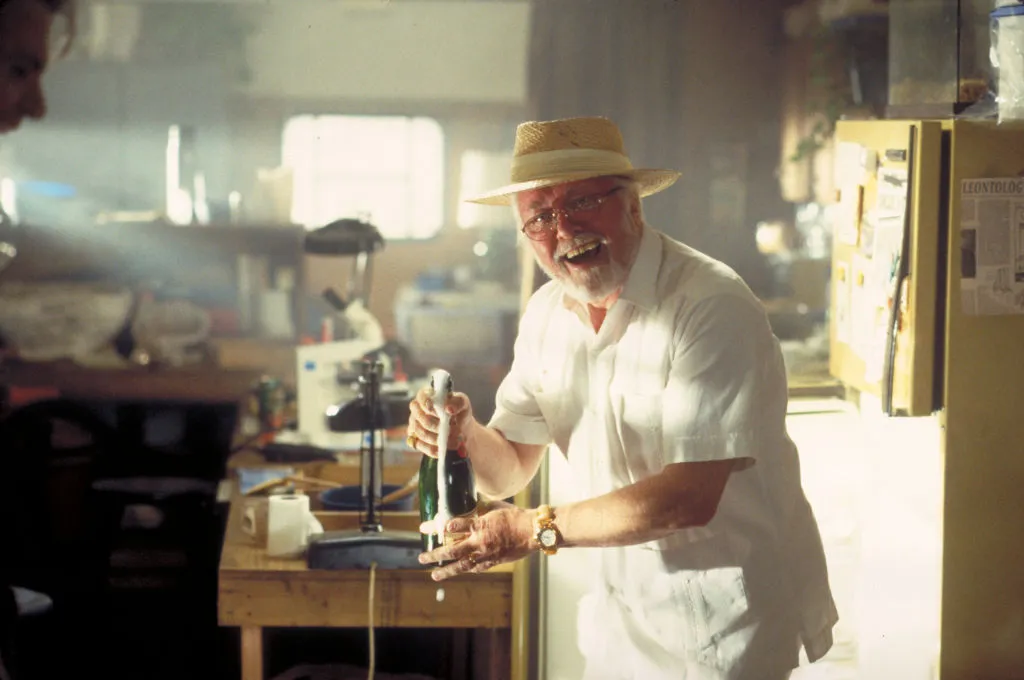
English actor Richard Attenborough as entrepreneur John Hammond in a scene from the film "Jurassic Park."

British actor Richard Attenborough as entrepreneur John Hammond in a scene from the 1993 film "Jurassic Park."

(Image credit: Murray Close via Getty Images)

David Attenborough is not the only famous Attenborough. His older brother was Richard Attenborough, the Oscar-winning actor and director who is most famous for playing John Hammond, the eccentric billionaire behind the dinosaur theme park in Steven Spielberg's 1993 blockbuster "Jurassic Park." Richard Attenborough, who was also known for directing the award-winning 1982 film "Gandhi," was the oldest of the three Attenborough brothers; David was the middle child, and their younger brother, John, became a motor-industry executive. David is the only surviving sibling.

5. More than 50 organisms have been named after him.

Attenborough's name lives on not just in television but also in science. The exact number is difficult to calculate, but more than 50 organisms have been named in his honor, ranging from living frogs, plants, fish and insects to extinct marine reptiles. They include Nepenthes attenboroughii (a carnivorous pitcher plant), Pristimantis attenboroughi (rubber frog), Attenborosaurus (a genus of plesiosaurs, extinct prehistoric marine reptiles), Microleo attenboroughi (an extinct prehistoric marsupial lion) and many more.

6. He doesn't like rats.

Attenborough has remained unperturbed by encounters with mountain gorillas, venomous snakes and countless other dangerous wild animals, but rats are another matter. He has spoken openly about his dislike of them, tracing the aversion to one night in the Solomon Islands, when, during a thunderstorm, he discovered rats running across his bed and the floor of his hut. Even so, he has stressed that rats, like all animals, deserve respect.

7. He was rejected from the first BBC job he applied for.

David Attenborough

David Attenborough smiling in 1965.

(Image credit: Mirrorpix / Contributor / Getty Images)

Attenborough's first attempt to join the BBC did not go well. In 1950, when he was 24 years old, he applied to become a radio talk show producer and was rejected. He later joined the broadcaster as a trainee producer in 1952, which marked the beginning of a BBC career that would define nature broadcasting for generations.

8. He never passed his driving test and still doesn't drive.

Despite a lifetime of filming in remote rainforests, deserts, islands and polar regions, Attenborough never passed his driving test. He has said he doesn't like driving ‪—‬ a surprising detail for someone whose career is so closely related to travel.

9. His parents took in two Jewish refugees during World War II.

During World War II, Attenborough's parents fostered Irene and Helga Bejach, two Jewish sisters who had fled Nazi Germany shortly before the war began in 1939. The girls lived with the Attenborough family in Leicester for seven years before moving to New York to join a relative. Decades later, Attenborough hosted a reunion for the sisters' descendants.

10. He tries to write back to fans.

Sir David Attenborough

Sir David Attenborough mentioned he receives around 70 letters from fans a day.

(Image credit: John Phillips/Getty Images)

Attenborough receives huge amounts of fan mail, but he tries to reply when he can. In a 2021 BBC Radio 1 interview, he said he receives as many as 70 letters a day and asked correspondents to include a self-addressed, stamped envelope if they wanted a response.

11. He served in the Royal Navy.

Before becoming a broadcaster, Attenborough completed national service in the Royal Navy. He was called up in 1947 and was posted to an aircraft carrier. After leaving the Navy, he worked in publishing, editing children's science textbooks. Though it was an early hint of the educational mission that would later define his TV career, he soon tired of the work.

12. His first BBC program was about a "living fossil."
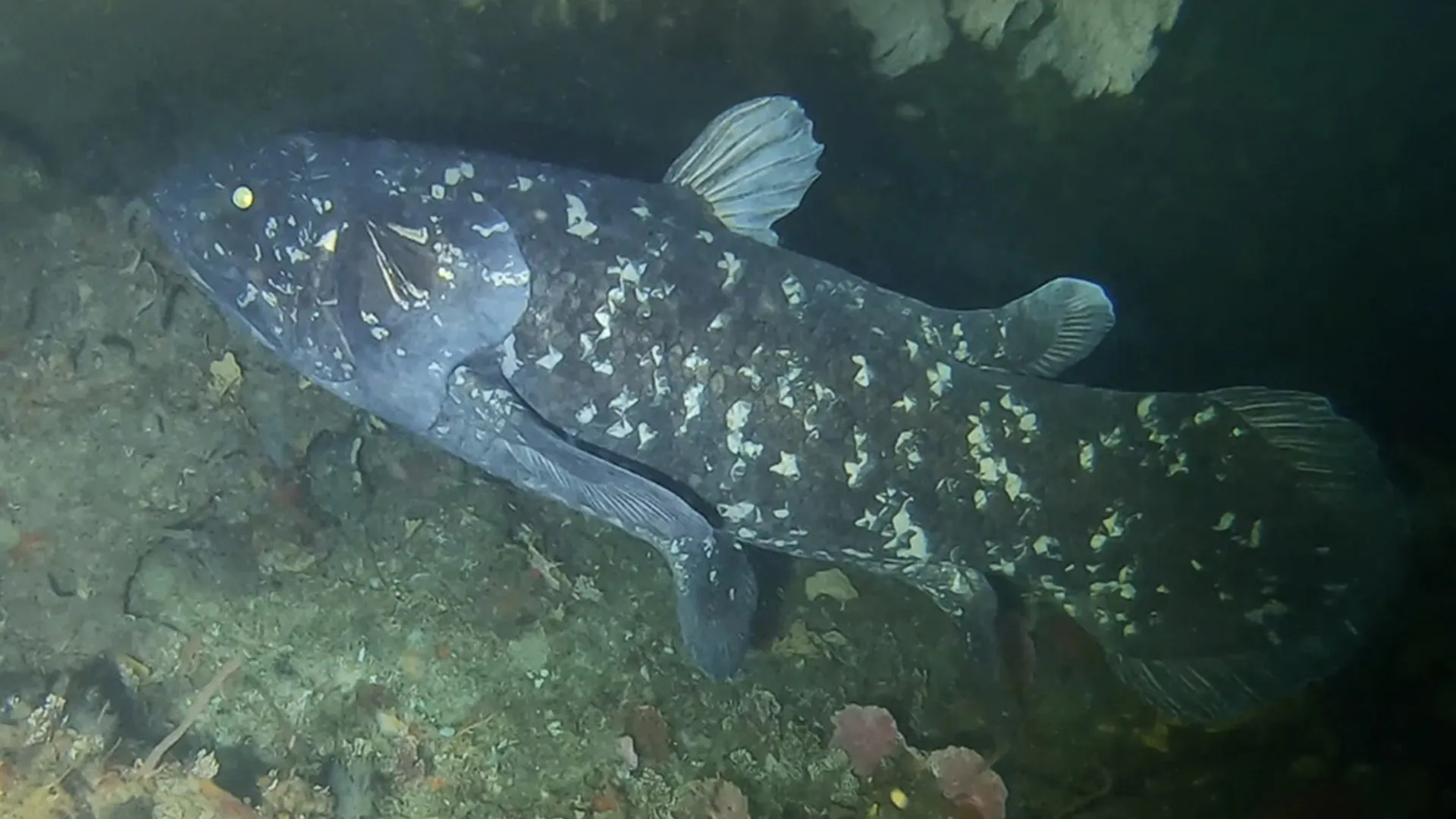
Coelacanth in ocean.

The coelacanth was once thought to be extinct.

(Image credit: Bruce Henderson)

Attenborough's first BBC program as a trainee producer was "Coelacanth," a broadcast in 1952. The program focused on the rediscovery of the coelacanth, a deep-sea fish once thought to be closely linked to the ancestors of land vertebrates. Scientists now know lungfish are the closest living relatives of tetrapods, the four-limbed vertebrates that include amphibians, reptiles, birds and mammals.

The "Coelacanth" program told the story of a remarkable fish that scientists had known only from fossils and believed had vanished with the nonavian dinosaurs around 66 million years ago. That changed in 1938, when a trawler working in South Africa hauled up a strange, steel-blue fish with fleshy, limb-like fins. The rediscovery stunned scientists and made the coelacanth one of the most famous "living fossils" on Earth.

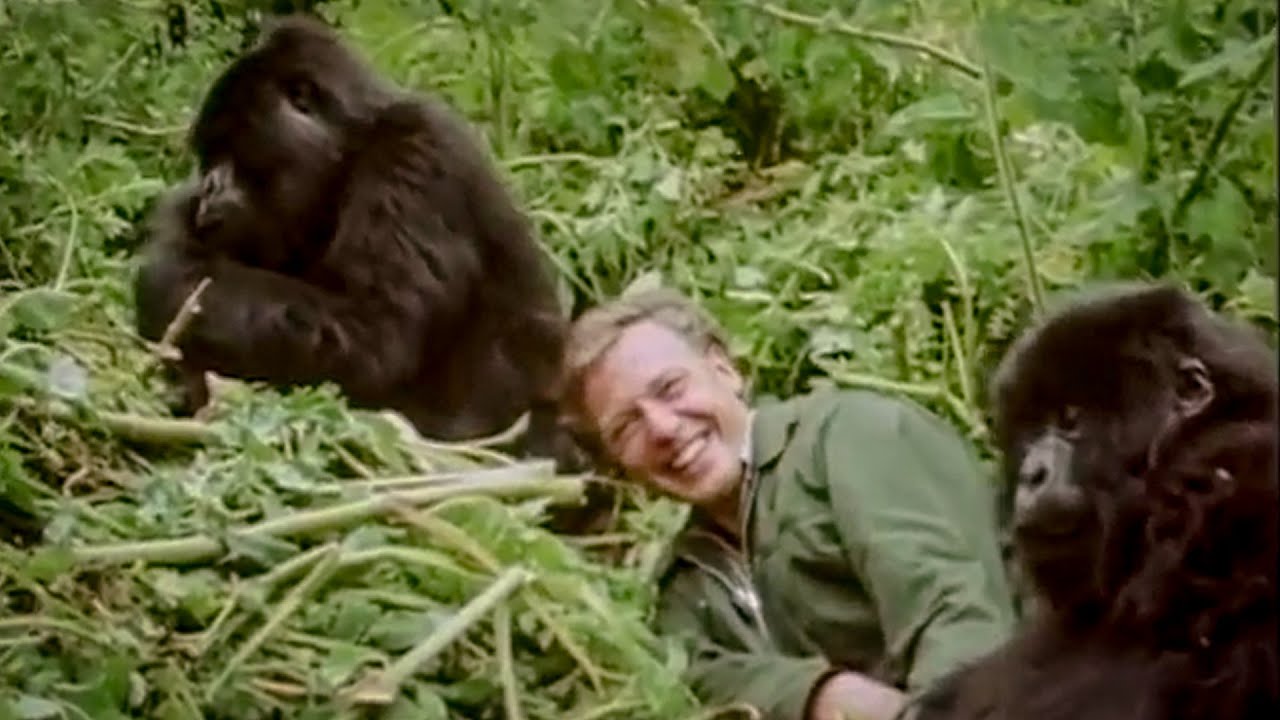
13. Baby mountain gorillas attempted to steal his shoes.

David Attenborough Plays with Cute Baby Gorillas | BBC Earth - YouTube David Attenborough Plays with Cute Baby Gorillas | BBC Earth - YouTube
Watch On

One of Attenborough's most famous animal encounters happened in Rwanda while he was filming "Life on Earth" in 1979. As he sat among mountain gorillas, two young gorillas began tugging at his shoes. Attenborough later described the moment as "bliss." The scene remains one of the defining images of his career, unscripted and full of wonder.


How much do you know about our blue planet? Test your terran knowledge with our Earth quiz!