


惯性聚合 高效追踪和阅读你感兴趣的博客、新闻、科技资讯
阅读原文 在惯性聚合中打开

推荐订阅源

T
Tailwind CSS Blog
MyScale Blog
MyScale Blog
博客园 - Franky
酷 壳 – CoolShell
酷 壳 – CoolShell
WordPress大学
WordPress大学
有赞技术团队
有赞技术团队
雷峰网
雷峰网
罗磊的独立博客
小众软件
小众软件
OSCHINA 社区最新新闻
OSCHINA 社区最新新闻
让小产品的独立变现更简单 - ezindie.com
V
V2EX
奇客Solidot–传递最新科技情报
奇客Solidot–传递最新科技情报
The Cloudflare Blog
Hugging Face - Blog
Hugging Face - Blog
博客园 - 【当耐特】
博客园 - 司徒正美
Last Week in AI
Last Week in AI
月光博客
月光博客
阮一峰的网络日志
阮一峰的网络日志
美团技术团队
钛媒体:引领未来商业与生活新知
钛媒体:引领未来商业与生活新知
量子位
宝玉的分享
宝玉的分享

Latest from Live Science

Naked mole rats wage bloody wars of succession to choose a new queen — but one colony did something scientists… Can the US be trusted with the moon? A law scholar raises concerns after Artemis II Lyrid meteor shower 2026: See spring's first rain of 'shooting stars' peak in moonless skies $3 million prize goes to duo whose research led to first sickle cell CRISPR therapy 700-year-old mummy from Bolivia contains earliest confirmed evidence of strep throat bacteria in the Americas New pain-relief opioid could be much less addictive than morphine, rodent study finds Experimental drug doubles one-year survival in pancreatic cancer Science news this week: Physicists witness faster-than-light darkness pinpricks, humans are still evolving, and some… Archaeologists discover perfectly circular ancient Egyptian temple that may have been used for sacred water rituals Some polar bears are adapting to their melting habitat. Will it be enough to save the iconic species? 2 supermassive black holes may collide 100 years from now ‪—‬ and Earth would feel it Anglo-Saxon burial holds an older sister cradling her little brother after they both died 1,400 years ago, possibly of… Colorado River may have pooled and spilled over to form the Grand Canyon, solving a long-standing mystery ‪—‬… 'We all screamed when it happened': Bright-green fireball meteor caught exploding over famous Viking raid site… Northern lights may be visible from several US states Friday and Saturday as giant hole opens up in sun Hackers used AI to steal hundreds of millions of Mexican government and private citizen records in one of the largest… The first black hole ever discovered is spewing 'dancing jets' at half the speed of light Stephen Hawking's black hole information paradox could be solved — if the universe has 7 dimensions 'Something's missing': Most thorough-ever study of the cosmos proves we still can't explain how the… 'Human evolution didn't slow down; we were just missing the signal': Large DNA study reveals natural selection led to more redheads and less male-pattern baldness Artemis II quiz: Is your knowledge of NASA New study confirms lobsters feel pain, driving scientists to call for a ban on boiling them alive This humanoid robot does all your housework for you ‪—‬ and its makers say it Ancient process that created rare earth elements discovered — and it could help us locate desperately needed deposits Strange mammal ancestor laid huge, leathery eggs —‬ and it was key to surviving the world 73 moon landings? NASA Diagnostic dilemma: A woman heard voices telling her she had a brain tumor ‪—‬ and scans confirmed she did Triassic croc relative from Ghost Ranch, New Mexico finally identified after nearly 80 years in museum basement There were Physicists witness pinpricks of darkness moving faster than the speed of light ‪—‬ without breaking the laws of relativity
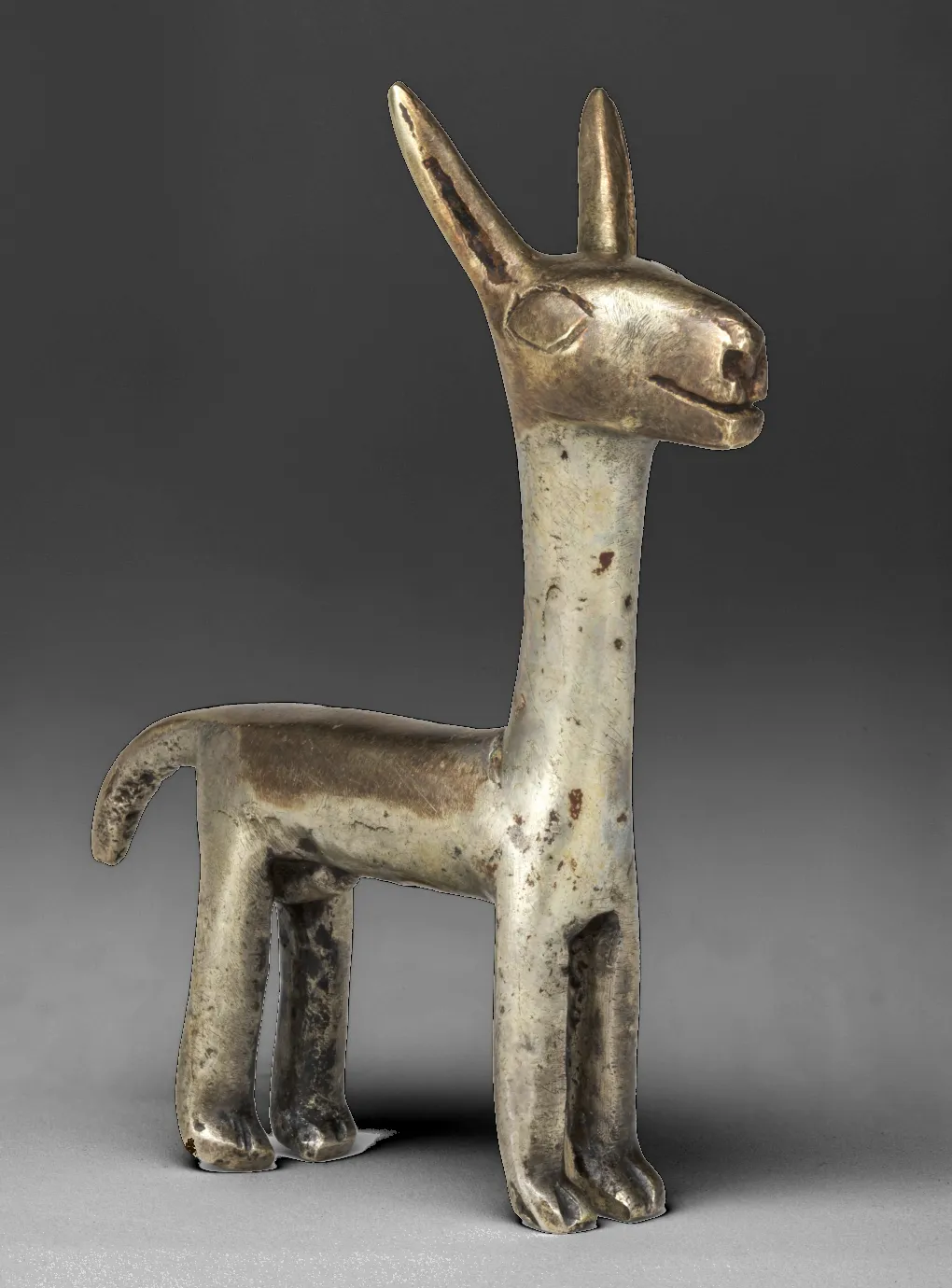
Miniature camelid effigy: A silver llama with a wry smile...
kkillgrove@l · 2026-04-27 · via Latest from Live Science

silver llama figurine

This silver llama figurine reveals the animal's importance in the Inca Empire. (Image credit: Gift and Bequest of Alice K. Bache, 1974, 1977; Metropolitan Museum of Art (Public Domain))

QUICK FACTS

Name: Miniature camelid effigy

What it is: A silver-alloy llama figurine

Where it is from: South America

When it was made: 1400 to 1535

This figurine of a small male camelid was made by the Inca as a "huaca" — a sacred being, site or object revered by their society. The quadruped was probably intended to be a llama (Lama glama), but it may represent the other camelid species domesticated by Andean people: the alpaca (Lama pacos or Vicugna pacos).

The Inca raised llamas and alpacas for a wide variety of purposes. They were used to carry goods long distances, and people ate the animals' meat, wove clothes from their wool, turned their bones into musical instruments, sewed hides to make shoes, collected their droppings for fuel and fertilizer, and consumed their fat for medicinal purposes. Llamas were also key to some ancient rituals.

This figurine may have been created for the Inca ritual called "capac hucha," a Quechua term meaning "royal obligation," according to The Met. This annual celebration in Cuzco, which was founded around the 12th century as the capital of the Inca Empire, involved sacrifices of llamas, maize and children to mark important events such as a drought, the death of a ruler, or the expansion of the empire.

MORE ASTONISHING ARTIFACTS

Among the artifacts that archaeologists have discovered at capac hucha sites are metal and shell figurines, some of which had been "dressed" with textiles and feathers and were thought to have been imbued with sacred power. And one of the three "Children of Llullaillaco" — Inca child mummies discovered in 1999 — was buried with 11 camelid figurines made from silver, gold and shell, revealing the importance of llama effigies in death.

The close association between llamas and the Inca can even be seen in contemporary cinema. In Disney's "The Emperor's New Groove" (2000), a ruler named Kuzco is transformed into a llama that looks more than a bit like the 600-year-old miniature camelid effigy.

For more stunning archaeological discoveries, check out our Astonishing Artifacts archives.

Get the world’s most fascinating discoveries delivered straight to your inbox.

Kristina Killgrove is a staff writer at Live Science with a focus on archaeology and paleoanthropology news. Her articles have also appeared in venues such as Forbes, Smithsonian, and Mental Floss. Kristina holds a Ph.D. in biological anthropology and an M.A. in classical archaeology from the University of North Carolina, as well as a B.A. in Latin from the University of Virginia, and she was formerly a university professor and researcher. She has received awards from the Society for American Archaeology and the American Anthropological Association for her science writing.

You must confirm your public display name before commenting

Please logout and then login again, you will then be prompted to enter your display name.