



惯性聚合 高效追踪和阅读你感兴趣的博客、新闻、科技资讯
阅读原文 在惯性聚合中打开

推荐订阅源

Y
Y Combinator Blog
宝玉的分享
宝玉的分享
月光博客
月光博客
小众软件
小众软件
Jina AI
Jina AI
WordPress大学
WordPress大学
奇客Solidot–传递最新科技情报
奇客Solidot–传递最新科技情报
T
Tailwind CSS Blog
钛媒体:引领未来商业与生活新知
钛媒体:引领未来商业与生活新知
博客园 - 【当耐特】
博客园 - 三生石上(FineUI控件)
博客园 - 司徒正美
大猫的无限游戏
大猫的无限游戏
The Cloudflare Blog
G
Google Developers Blog
M
MIT News - Artificial intelligence
N
Netflix TechBlog - Medium
云风的 BLOG
云风的 BLOG
MyScale Blog
MyScale Blog
让小产品的独立变现更简单 - ezindie.com
爱范儿
爱范儿
U
Unit 42
freeCodeCamp Programming Tutorials: Python, JavaScript, Git & More
Blog — PlanetScale
Blog — PlanetScale

Latest from Live Science

Naked mole rats wage bloody wars of succession to choose a new queen — but one colony did something scientists… Can the US be trusted with the moon? A law scholar raises concerns after Artemis II Lyrid meteor shower 2026: See spring's first rain of 'shooting stars' peak in moonless skies $3 million prize goes to duo whose research led to first sickle cell CRISPR therapy 700-year-old mummy from Bolivia contains earliest confirmed evidence of strep throat bacteria in the Americas New pain-relief opioid could be much less addictive than morphine, rodent study finds Experimental drug doubles one-year survival in pancreatic cancer Science news this week: Physicists witness faster-than-light darkness pinpricks, humans are still evolving, and some… Archaeologists discover perfectly circular ancient Egyptian temple that may have been used for sacred water rituals Some polar bears are adapting to their melting habitat. Will it be enough to save the iconic species? 2 supermassive black holes may collide 100 years from now ‪—‬ and Earth would feel it Anglo-Saxon burial holds an older sister cradling her little brother after they both died 1,400 years ago, possibly of… Colorado River may have pooled and spilled over to form the Grand Canyon, solving a long-standing mystery ‪—‬… 'We all screamed when it happened': Bright-green fireball meteor caught exploding over famous Viking raid site… Northern lights may be visible from several US states Friday and Saturday as giant hole opens up in sun Hackers used AI to steal hundreds of millions of Mexican government and private citizen records in one of the largest… The first black hole ever discovered is spewing 'dancing jets' at half the speed of light Stephen Hawking's black hole information paradox could be solved — if the universe has 7 dimensions 'Something's missing': Most thorough-ever study of the cosmos proves we still can't explain how the… 'Human evolution didn't slow down; we were just missing the signal': Large DNA study reveals natural selection led to more redheads and less male-pattern baldness Artemis II quiz: Is your knowledge of NASA New study confirms lobsters feel pain, driving scientists to call for a ban on boiling them alive This humanoid robot does all your housework for you ‪—‬ and its makers say it Ancient process that created rare earth elements discovered — and it could help us locate desperately needed deposits Strange mammal ancestor laid huge, leathery eggs —‬ and it was key to surviving the world 73 moon landings? NASA Diagnostic dilemma: A woman heard voices telling her she had a brain tumor ‪—‬ and scans confirmed she did Triassic croc relative from Ghost Ranch, New Mexico finally identified after nearly 80 years in museum basement There were Physicists witness pinpricks of darkness moving faster than the speed of light ‪—‬ without breaking the laws of relativity
'A landmark moment for the field': FDA approves first-eve...
Nicoletta La · 2026-04-24 · via Latest from Live Science
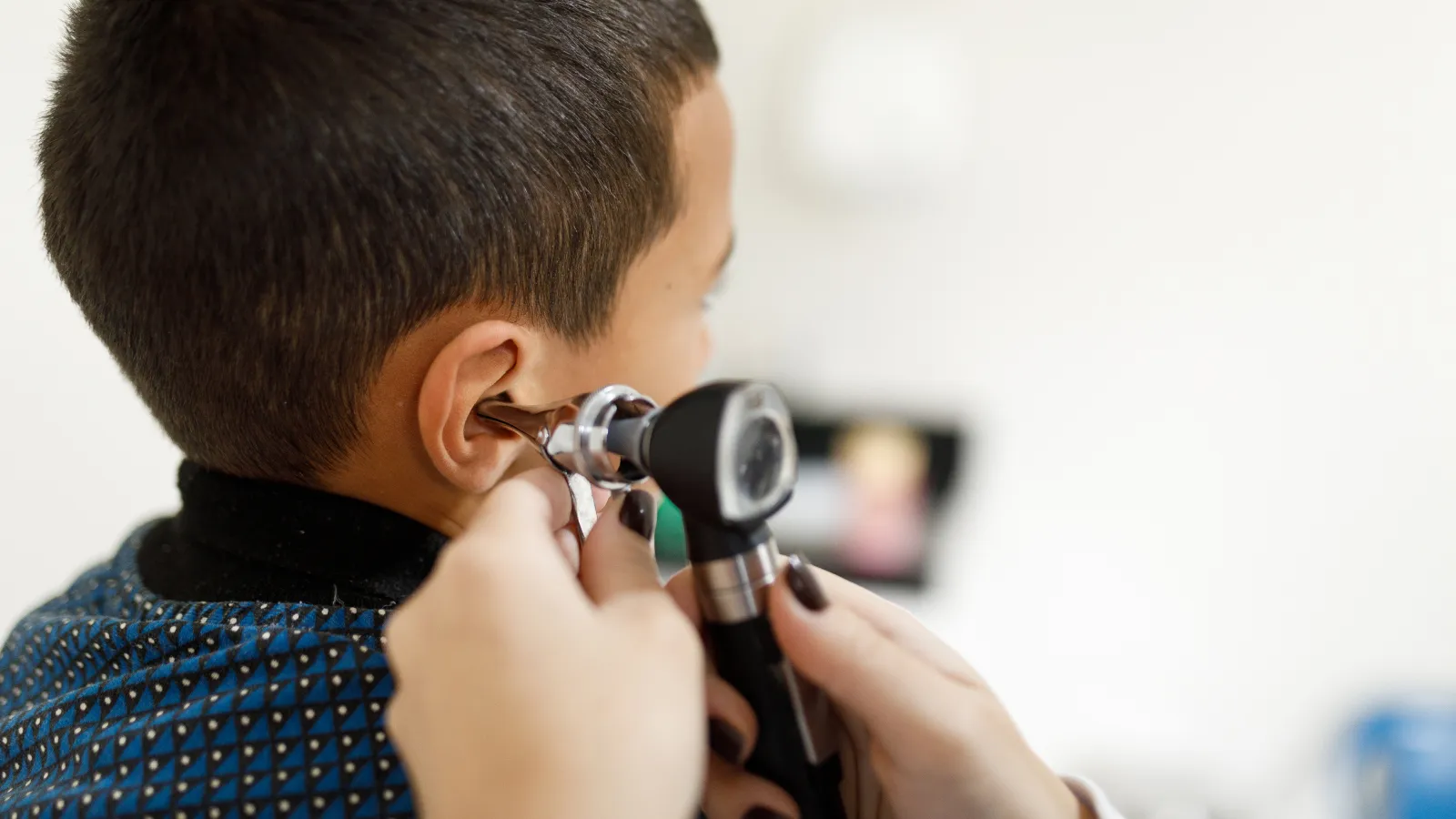
Doctor checking little boy's ears with an otoscope
The company Regeneron announced that its gene therapy for deafness has been cleared by the U.S. Food and Drug Administration. (Image credit: Capuski/Getty Images)

The U.S. Food and Drug Administration (FDA) has approved the first-ever gene therapy for inherited deafness.

The therapy, called Otarmeni, is approved to treat a form of hearing loss caused by mutations in the OTOF gene, which codes for a protein called otoferlin. Cells in the inner ear need otoferlin to translate vibrations into signals that can be interpreted by the brain. When people carry two defective copies of the OTOF gene — one from each parent — this line of communication between the inner ear and brain is cut, resulting in severe-to-profound hearing loss.

Some participants improved to the point that they could hear whispers, while all the participants who responded to the therapy reached a level of hearing that does not typically require cochlear implantation — meaning the use of a device to bypass the inner ear and restore some hearing. Many people with this form of hearing loss get cochlear implants, but the implants don't perfectly replicate natural hearing and require maintenance over time.

Based on the trial results, Otarmeni was approved for both children and adults with OTOF-related hearing loss, the therapy's maker Regeneron announced Thursday (April 23). The company has said that the treatment itself will be free to patients in the U.S., not including out-of-pocket administration costs that might be dictated by a patient's doctor and insurance.

"The FDA approval of this gene therapy is a landmark moment for the field and, most importantly, for patients," said Zheng-Yi Chen, an associate scientist at the Eaton-Peabody Laboratories at Mass Eye and Ear and an associate professor at Harvard Medical School. Chen has been involved in a trial of a similar gene therapy for OTOF-related deafness in China.

Chen said the data from the trial "convincingly demonstrate both safety and efficacy." The approval process was very fast, he added, taking less than three years from when the first patient was dosed in 2023. (Otarmeni was approved through a special FDA "fast track" process, in part because there were no existing treatments for OTOF-related hearing loss that address its underlying cause.)

Get the world’s most fascinating discoveries delivered straight to your inbox.

The speed "underscores both the robust clinical results and the urgent, unmet medical need for children with OTOF-mediated congenital hearing loss," Chen told Live Science. "We are incredibly encouraged by this milestone, which will serve as a catalyst to accelerate the development of future genetic therapies for hearing loss."

RELATED STORIES

OTOF-related hearing loss affects about 50 newborns per year in the U.S. The new therapy is approved for those with two defective copies of the OTOF gene and no history of using a cochlear implant in the ear intended for treatment. Installing these implants damages the inner ear, so a gene therapy is unlikely to work; but those who have only one cochlear implant can get the gene therapy in the opposite ear.

Patients seeking the therapy must also have intact outer hair cells, which are special cells in the ear that act as amplifiers, increasing the movement of the eardrum in response to sound.

An international trial testing Otarmeni is still ongoing and is recruiting children under 18 in the U.S., United Kingdom, Spain, Germany and Japan.

"I've witnessed firsthand my trial participant responding to their mother’s voice, dancing to music and interacting with the world, and these moments are now possible for more children born with this specific form of hearing loss," Dr. A. Eliot Shearer, an otolaryngologist at Boston Children’s Hospital, associate professor at Harvard Medical School and trial runner, said in the Regeneron statement.

Disclaimer

This article is for informational purposes only and is not meant to offer medical advice.

Nicoletta Lanese is the health channel editor at Live Science and was previously a news editor and staff writer at the site. She is a recipient of the 2026 AHCJ International Health Study Fellowship, with a project focused on antibiotic stewardship practices in Japan and the U.S. They hold a graduate certificate in science communication from UC Santa Cruz and degrees in neuroscience and dance from the University of Florida. Beyond Live Science, Lanese's work has appeared in The Scientist, Science News, the Mercury News, Mongabay and Stanford Medicine Magazine, among other outlets. Based in NYC, she also remains involved in dance and performs in local choreographers' work.

You must confirm your public display name before commenting

Please logout and then login again, you will then be prompted to enter your display name.