





MAHARASHTRA, INDIA — In clinics and labs around the world, scientists are uncovering a consequence of air pollution that received little attention for decades: Polluted air not only damages the lungs and heart but also harms the brain.
Large studies conducted in Asia, the United States and Europe have linked long-term exposure to air pollution with a higher risk of depression, anxiety and cognitive decline, while lab- and animal-based studies hint at possible mechanisms driving this effect. Research suggests pollution may also increase the risk of schizophrenia and bipolar disorder, and even suicide risk.
Roughly 99% of the global population breathes air with pollution levels exceeding the World Health Organization's air-quality guidelines, with the most polluted air often found in low- and middle-income countries. In India, where pollution levels are among the highest in the world, these findings may help to explain mental health symptoms that many people have silently experienced for years, scientists told Live Science.
Pollution's mental toll
Areas of India with long-term exposure to high pollution have provided some of the strongest evidence of this link.
A 2025 analysis surveyed 359 people in northern India, finding that residents of communities living within 3 miles (5 kilometers) of coal-fired thermal power plants were more likely to report stress, anxiety and depression than those living farther from these power plants. Women, in particular, were affected.

Rukmini Manjare says persistent stress and anxiety caused by the mounting air pollution have forced her to stop working in the sugarcane fields where she once spent much of her day.
(Image credit: Sanket Jain)
Notably, people's overall exposure to air pollution sources is also shaped by gender roles. Household air pollution is common in rural homes in India because biomass fuels, such as firewood, dried cow dung cakes, and crop residues, are used for cooking or heating water. In an analysis of nearly 30,000 adults ages 60 and above across India, those using these solid fuels were more likely to report depressive symptoms than those using cleaner cooking methods like electricity or liquefied gas, even after accounting for factors such as economic status, education, health, and living conditions. Women often spend several hours near traditional cooking stoves or other smoke sources each day, thereby intensifying their exposure over that of men who aren't tasked with cooking. A similar pattern has been observed in other Asia-Pacific countries.
That's borne out by the experience of Rukmini Manjare, 54, who lives in Bubnal village in the Indian state of Maharashtra. For many years, she worked outside in the sugarcane fields, where the burning of husks produces a smoky haze.
But unlike the men in her family, she also spends hours cooking over a traditional stove. A decade ago, she started feeling restless and anxious whenever pollution levels spiked.
Recently, Manjare's family tried to reduce her smoke exposure by installing a solar water heater. But smoke from nearby homes still drifts into her house.
"Almost every family uses the traditional stove for at least two hours in the morning daily," she told Live Science.
Worldwide problem
Manjare's experience is a common one across the Indian subcontinent, where nearly the entire population of 1.4 billion people breathes air that exceeds safe pollution limits. In 2023, for instance, the country's average fine particulate pollution, called PM2.5, was about 41 micrograms per cubic meter — more than eight times the level the World Health Organization has deemed safe.
Evidence from other population studies points in a similar direction. In a February analysis of almost 35,000 adults from 12 Indian states, scientists examined the effects of long-term exposure to PM2.5. These tiny particles measure 2.5 micrometers or smaller, meaning they can penetrate deep into the lungs. Living in areas with higher fine-particulate pollution levels, on average, was associated with greater odds of having been diagnosed with depression or anxiety.
This analysis looked at both the average pollution levels in different areas and the composition of that pollution, examining how specific components of PM2.5 were associated with mental health outcomes. Some components of the air pollution — such as carbon-rich molecules and secondary inorganic aerosols, like sulfates, ammonium and nitrates — showed stronger associations with depression and anxiety than others did. Those components better predicted mental health outcomes than total pollutant concentrations alone did.
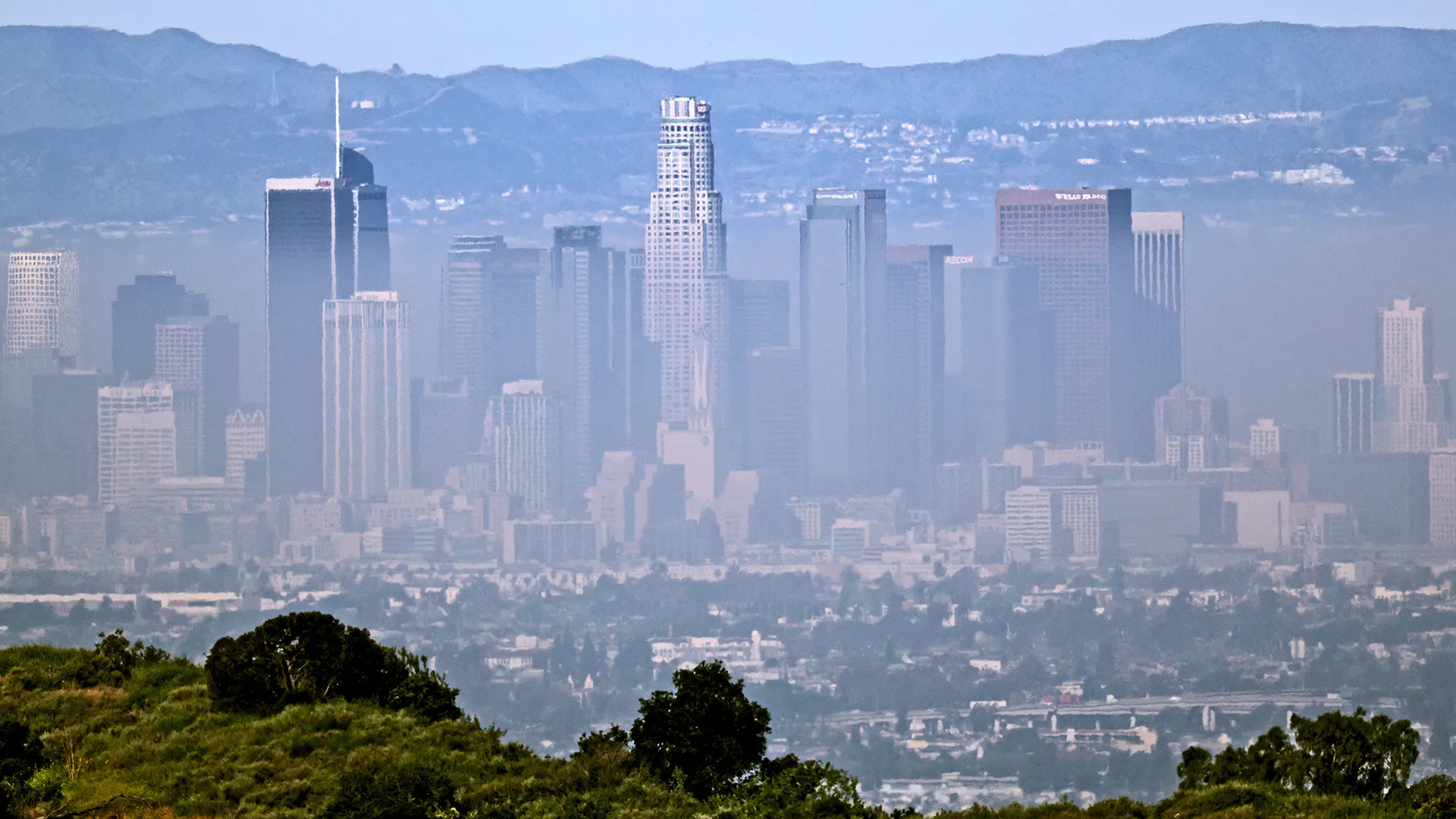
Smog is seen covering the city of Los Angeles. While pollution levels are exceptionally high in India, 99% of the world's population faces levels that exceed those deemed safe by the World Health Organization.
(Image credit: Raul Roa via Getty Images)
Treating air pollution as a single, uniform pollutant may therefore "underestimate its mental-health impacts, particularly in countries such as India, where pollution sources and chemical composition vary widely by region and season," said study senior author Sagnik Dey, head of the Centre for Atmospheric Sciences at the Indian Institute of Technology Delhi.
The mental health effects build up over long periods, making them easy to overlook at the individual level. But when millions of people are exposed over decades, "these small effects can add up to a substantial mental health burden at the population level," Dey told Live Science.
India's data on pollution reflects a global pattern. In a December 2025 analysis of health records from 23.7 million older adults in the United States, long-term exposure to PM2.5 was associated with a higher risk of late-life depression. This link persisted even after accounting for factors such as income and education, which can also influence mental health. Similar patterns have been observed in Europe.
When pollution becomes personal
While population-level data identifies broad trends, they may conceal how disabling the symptoms can be for individual people.
Manjare told Live Science that her symptoms of anxiety have worsened over the past decade. Now even minor worries trigger physical symptoms. "Whenever I feel stressed and anxious, my blood pressure shoots up," she said. "I cannot handle even a minute of stress anymore."
The episodes are often accompanied by severe pain in her legs and neck. At times, the only relief comes from a pain-relief injection at the local clinic. "I have now gotten used to it," she said.
Over time, Manjare began noticing a pattern. On days when the air looks hazy and gray and a smell of smoke lingers, her breathing feels a little heavier than usual. On those days, she feels unusually dull and anxious. "There's this sense of constant worry, which I find it difficult to explain," she said.
Part of that anxiety comes from anticipating an episode of pain. But she also says the anxiety emerges on the hazy days before any physical symptoms start.
These changes have taken a toll. She rarely feels like eating. "I love cooking food for everyone, but most of the time, I don't feel like eating it myself," Manjare said. The persistent stress eventually forced her to stop working in the sugarcane fields.
Manjare's worsening symptoms coincide with rising levels of air pollution in the region. Several traditional brick-making kilns operate nearby, and with sugarcane planting nurseries proliferating, farmers frequently burn farm residue, adding another layer of pollution. Vehicles and nearby industries add to this mix, as does smoke from household stoves, where firewood and plastic seedling trays are burned daily to heat water for bathing.
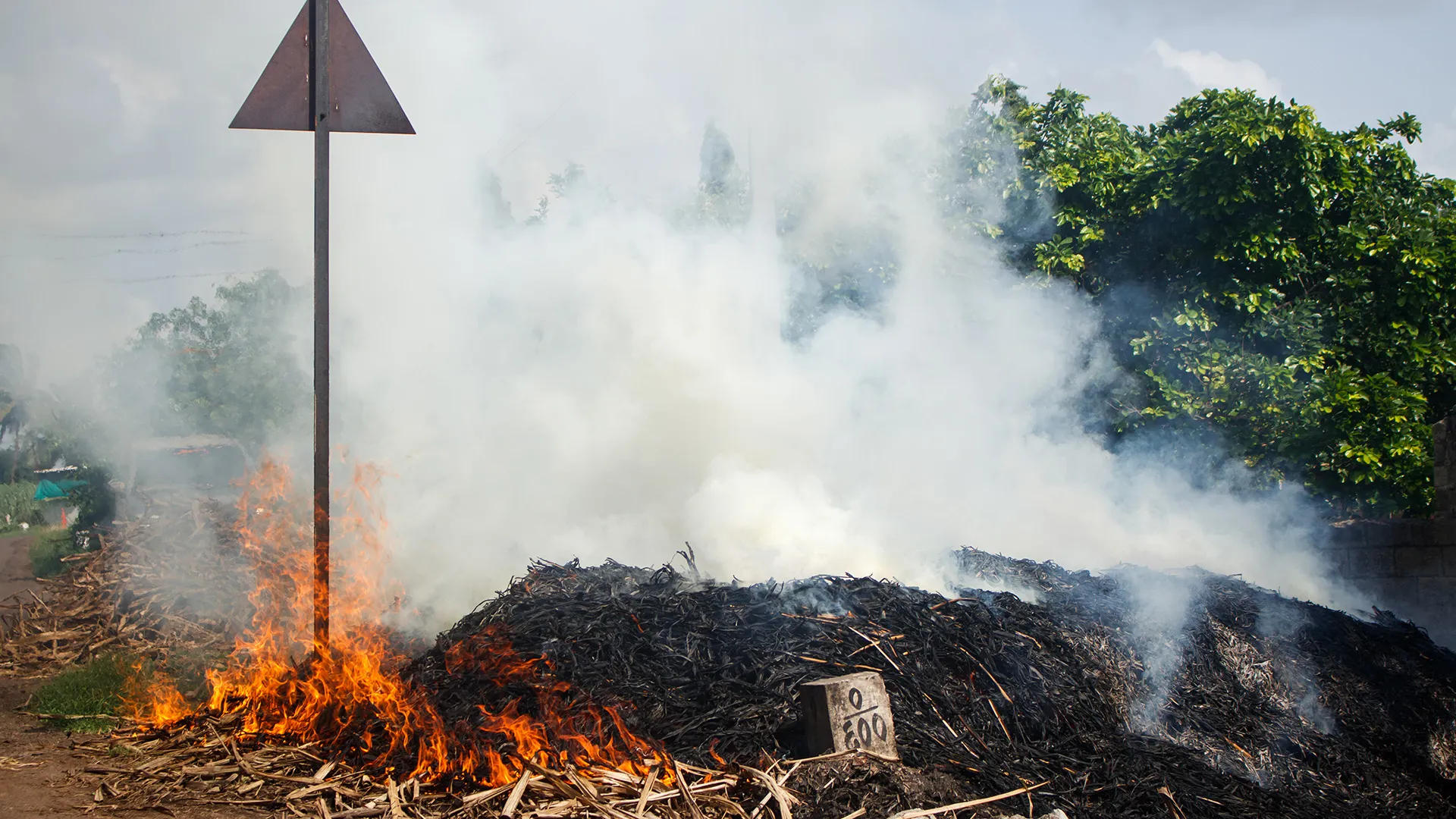
Dense smoke from burning sugarcane residue releases toxic pollutants into the air. New research links such air pollution with mental health impacts.
(Image credit: Sanket Jain)
The pollution is visible in everyday life. "If you leave white clothes outside to dry, they turn dark within an hour." On some days, soot settles so quickly inside the house that she sweeps the floor every hour.
After years of living in these conditions, Manjare can often sense when pollution levels have risen, even without checking air-quality readings. "I immediately experience elevated blood pressure, a constant feeling of helplessness, and I stop stepping out of the house," she said.
Around 12 miles (20 kilometers) away, in Jambhali, Maharashtra, more than 100 sugar cane nurseries fill the air with smoke and fine particles — and residents Lalita Koli, 63, and Krishnabai Koli, 65, report similar symptoms.
Koli spent six years working in the sugarcane fields, but she quit because the anxiety, physical symptoms and sense of dread became too much for her.
On heavily polluted days, Koli feels dizzy and develops full-body pain.

Lalita Koli says rising air pollution in the village has contributed to feelings of stress and anxiety.
(Image credit: Sanket Jain)
After years of living in these conditions, Manjare can often sense when pollution levels have risen, even without checking air-quality readings. "I immediately experience elevated blood pressure, a constant feeling of helplessness, and I stop stepping out of the house," she said.
Around 12 miles (20 kilometers) away, in Jambhali, Maharashtra, more than 100 sugar cane nurseries fill the air with smoke and fine particles — and residents Lalita Koli, 63, and Krishnabai Koli, 65, report similar symptoms.
Koli spent six years working in the sugarcane fields, but she quit because the anxiety, physical symptoms and sense of dread became too much for her.
On heavily polluted days, Koli feels dizzy and develops full-body pain.
"Sometimes I feel like I will die any moment," she said. "I sit and cry, but it's very difficult to explain what is happening to me."
Pollution and the brain at the cellular level
Several biological pathways may help to explain what Manjare and others like her are experiencing. Payel Kundu, a doctoral researcher at the Indian Institute of Technology Delhi, who co-authored the study with Dey, noted that one of the key mechanisms is likely neuroinflammation, a process in which the brain's immune system becomes activated.
PM2.5 is small enough to enter the bloodstream and reach the brain by crossing the blood-brain barrier. The particles can travel directly from the nose to the brain along the olfactory nerve, and they may also indirectly affect the brain via the gut-brain axis, the communication network linking the digestive system and the brain, Kundu told Live Science.
Laboratory studies suggest that when brain cells are directly exposed to fine particulate pollution, they incur damage that impairs their function and triggers cell death. Cell and animal-based studies find that brain tissue responds to pollution by activating its immune defenses, while also producing unstable molecules that damage cells — an effect known as oxidative stress.
While many cell-based studies of inflammation and pollution focus on neurodegenerative diseases or developmental disorders, studies also link neuroinflammation with anxiety and depression.

Krishnabai Koli says years of working in nearby sugarcane nurseries and persistent air pollution have taken a toll on her mental and physical health.
(Image credit: Sanket Jain)
Certain components of fine particulate pollution, such as carbon-rich particles and secondary inorganic aerosols, seem key to activating the immune and inflammatory pathways in the brain, Kundu said.
PM2.5 may also disrupt the signaling of brain chemicals involved in mood, such as dopamine and norepinephrine. In addition, fine particulate pollution can also interfere with a key component of the body's stress-response system, known as the hypothalamic-pituitary-adrenal axis.
Animal experiments are beginning to show a causal link between polluted air, neuroinflammation and mental health problems. In one study, mice exposed to higher levels of fine particulate pollution — around 185 micrograms per cubic meter showed more depression-like behavior than mice exposed to only 58 micrograms per cubic meter. The high-pollution group moved and explored their surroundings less, and in a water-based stress test, they spent more time floating without trying to escape. In another study, mice exposed to real-world fine particulate pollution for four, six and eight weeks developed depression-like behaviors, alongside changes in inflammatory signaling and in certain signaling pathways involved in neuron growth and function.
Air pollution can also affect mental health indirectly. Wei Jie Seow, an assistant professor at the Saw Swee Hock School of Public Health at the National University of Singapore, said polluted air is already known to contribute to heart and lung diseases. Those physical health problems are closely linked with higher rates of depression and other mental health challenges.
"So part of the mental-health effect may actually be mediated through declining physical health," Seow told Live Science. In a study of more than 17,000 adults ages 45 and older in China, her team found that ozone was tied to the largest increase in depressive symptoms among the pollutants examined.
Ozone, a reactive gas formed when sunlight interacts with pollutants from vehicles and industrial manufacturing, has been linked to inflammation and an increased risk of cardiovascular disease. Cardiovascular conditions, in turn, are associated with a higher risk of depression, suggesting one way such pollution affects mental health.
Despite the growing evidence, scientists say many questions remain. Yang Liu, a professor of environmental health at Emory University in Atlanta whose research has linked air pollution to the risk of depression, said the next step is to better understand how PM2.5 affects depression risk by conducting long-term studies that track people over time while also measuring pollution exposure and signs of brain inflammation.
Another gap lies in understanding how these risks unfold across different populations and environments. Future research needs to focus on long-term studies that follow people over time, especially in low- and middle-income countries, Dey suggested.
It may also need to look beyond pollution. Air pollution rarely occurs in isolation; it often coincides with other environmental pressures, such as extreme heat, noise and social stress, Dey noted. Understanding how these overlapping stressors interact is crucial for designing effective interventions and policies.
No easy solutions
While scientists are still uncovering exactly how polluted air affects the brain, many say the most obvious solution is to clean the air.
"If we reduce pollution at the source, we reduce exposure for everyone simultaneously, including vulnerable populations who may not have the means to protect themselves individually," Seow said.
Population-level policies that curb emissions from transportation, industry and power generation are therefore critical, researchers say. Liu noted that studies have linked improvements air quality with better mental health outcomes, so as air quality improves, so does mental health.
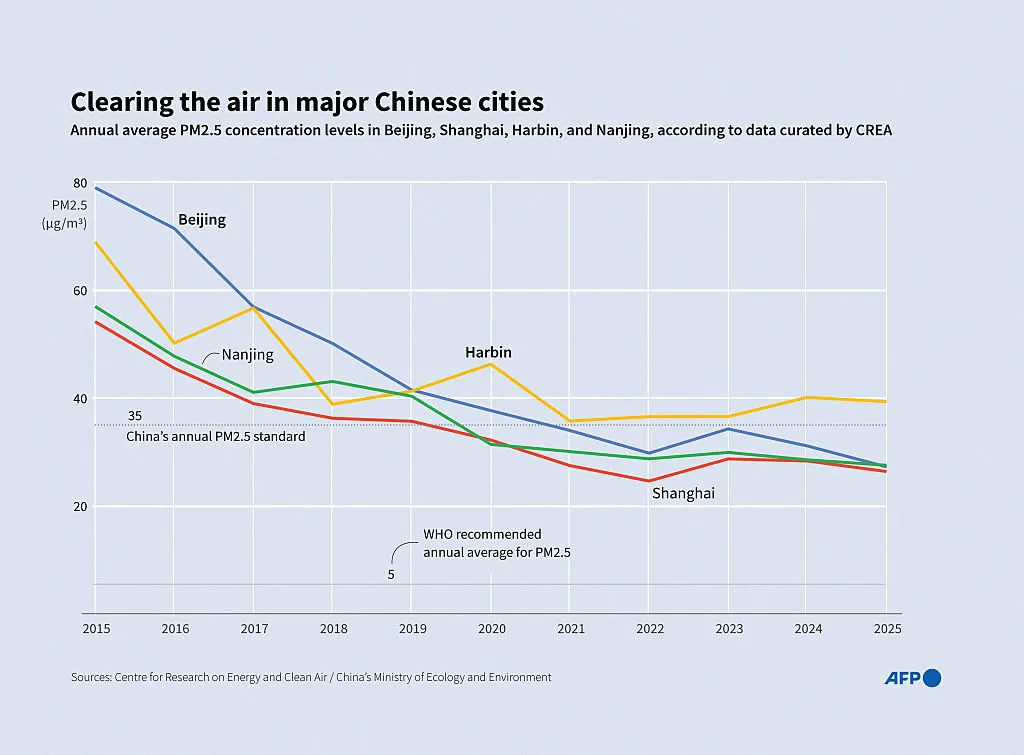
Air pollution has dropped across several cities in China over the past decade. Some data shows that when the air quality improves, so do mental health outcomes.
(Image credit: JANIS LATVELS,JOHN SAEKI via Getty Images)
Some scientists say solutions should focus not just on reducing overall pollution levels but also zero in on especially harmful particulates. "Not all PM2.5 particles are equally harmful, so targeted interventions may be more effective than strategies that focus only on reducing overall PM2.5 levels," Dey said.
Reducing emissions of sulfur dioxide, nitrogen oxides and ammonia could limit the formation of secondary particles such as sulfates, nitrates and ammonium, which are more strongly associated with mental health outcomes, Dey said. Cutting emissions from traffic and reducing the burning of biomass for fuel could also reduce exposure to carbon-rich particles, he added.
At the same time, individual and community-level measures can help. Expanding green space and limiting heavy traffic near homes could improve both air quality and psychological well-being, Liu suggested.
Measures such as improving indoor air filtration and avoiding high-exposure environments on heavily polluted days, where possible, also may help, Seow said.
For Manjare, the problem is not just the polluted air, but how easily it goes unseen. “If we could show how pollution levels rise through the day, from daily activities as well as sources like industry, traffic, and crop burning, people would understand how serious it is,” she said.
Editor's Note: This story was supported by Earth Journalism Network as part of the Following the Fumes cross-border collaboration