





惯性聚合 高效追踪和阅读你感兴趣的博客、新闻、科技资讯
阅读原文 在惯性聚合中打开

推荐订阅源

T
Tailwind CSS Blog
大猫的无限游戏
大猫的无限游戏
L
LINUX DO - 热门话题
让小产品的独立变现更简单 - ezindie.com
雷峰网
雷峰网
aimingoo的专栏
aimingoo的专栏
博客园_首页
MongoDB | Blog
MongoDB | Blog
V
V2EX
GbyAI
GbyAI
量子位
Microsoft Azure Blog
有赞技术团队
有赞技术团队
G
Google Developers Blog
云风的 BLOG
云风的 BLOG
B
Blog
Microsoft Security Blog
S
SegmentFault 最新的问题
O
OpenAI News
N
News and Events Feed by Topic
博客园 - Franky
爱范儿
爱范儿
Forbes - Security
Forbes - Security
freeCodeCamp Programming Tutorials: Python, JavaScript, Git & More
V2EX - 技术
V2EX - 技术
Application and Cybersecurity Blog
N
News and Events Feed by Topic
N
News | PayPal Newsroom
Schneier on Security
Cloudbric
Cloudbric
Security Archives - TechRepublic
cs.AI updates on arXiv.org
Recent Commits to openclaw:main
人人都是产品经理
人人都是产品经理
P
Privacy International News Feed
Cyber Security Advisories - MS-ISAC
B
Blog RSS Feed
阮一峰的网络日志
阮一峰的网络日志
D
DataBreaches.Net
Last Week in AI
Last Week in AI
罗磊的独立博客
Spread Privacy
Spread Privacy
Recent Announcements
The Cloudflare Blog
Google DeepMind News
AWS News Blog
AWS News Blog
The Register - Security
Y
Y Combinator Blog
J
Java Code Geeks
I
Intezer

Latest from Live Science

Naked mole rats wage bloody wars of succession to choose a new queen — but one colony did something scientists… Can the US be trusted with the moon? A law scholar raises concerns after Artemis II Lyrid meteor shower 2026: See spring's first rain of 'shooting stars' peak in moonless skies $3 million prize goes to duo whose research led to first sickle cell CRISPR therapy 700-year-old mummy from Bolivia contains earliest confirmed evidence of strep throat bacteria in the Americas New pain-relief opioid could be much less addictive than morphine, rodent study finds Experimental drug doubles one-year survival in pancreatic cancer Science news this week: Physicists witness faster-than-light darkness pinpricks, humans are still evolving, and some… Archaeologists discover perfectly circular ancient Egyptian temple that may have been used for sacred water rituals Some polar bears are adapting to their melting habitat. Will it be enough to save the iconic species? 2 supermassive black holes may collide 100 years from now ‪—‬ and Earth would feel it Anglo-Saxon burial holds an older sister cradling her little brother after they both died 1,400 years ago, possibly of… Colorado River may have pooled and spilled over to form the Grand Canyon, solving a long-standing mystery ‪—‬… 'We all screamed when it happened': Bright-green fireball meteor caught exploding over famous Viking raid site… Northern lights may be visible from several US states Friday and Saturday as giant hole opens up in sun Hackers used AI to steal hundreds of millions of Mexican government and private citizen records in one of the largest… The first black hole ever discovered is spewing 'dancing jets' at half the speed of light Stephen Hawking's black hole information paradox could be solved — if the universe has 7 dimensions 'Something's missing': Most thorough-ever study of the cosmos proves we still can't explain how the… 'Human evolution didn't slow down; we were just missing the signal': Large DNA study reveals natural selection led to more redheads and less male-pattern baldness Artemis II quiz: Is your knowledge of NASA New study confirms lobsters feel pain, driving scientists to call for a ban on boiling them alive This humanoid robot does all your housework for you ‪—‬ and its makers say it Ancient process that created rare earth elements discovered — and it could help us locate desperately needed deposits Strange mammal ancestor laid huge, leathery eggs —‬ and it was key to surviving the world 73 moon landings? NASA Diagnostic dilemma: A woman heard voices telling her she had a brain tumor ‪—‬ and scans confirmed she did Triassic croc relative from Ghost Ranch, New Mexico finally identified after nearly 80 years in museum basement There were Physicists witness pinpricks of darkness moving faster than the speed of light ‪—‬ without breaking the laws of relativity Mini lake meets snowy rim of Canada's oldest ice mass — Earth from space Stone Age tombs in Scotland reveal 'webs of descent' among male relatives 'Oslo patient' likely cured of HIV after getting stem cell transplant from his brother, who is genetically… Antiseptic-tolerant germs spread through the air in hospitals, early study hints Homo erectus' tools include stunning geodes and fossils, possibly as a way to connect with the cosmos, study finds 'Really, really weird': Physicists entangle two moving atoms for the first time, validating 'spooky'… www.livescience.com Sperm quality is at its peak in the summer, study finds Scientists are trying to build a vaccine that works against almost any respiratory pathogen  — here's… Idol of Pomos: A 5,000-year-old fertility figurine from Cyprus that wears a miniature version of herself on a necklace Human ancestors butchered and ate elephants 1.8 million years ago, helping to fuel their large brains Ancient Egyptian stone monument depicting a Roman emperor as a pharaoh discovered in Luxor 'Human minds shouldn't have to go through' this: Artemis II crew recalls unreal moment when Earth disappeared — Space photo of the week Does the moon look the same from everywhere on Earth? I found a new meteor shower — and it comes from an asteroid getting baked to bits by the sun AI for breakup texts? How 'sycophantic' chatbots are messing with our ability to handle difficult social… Science news this week: Artemis II splashes down, the world's fattest parrot bounces back, and the Shroud of Turin… 10 Artemis II photos that define humanity's return to the moon Do the microbes in your gut influence what foods you like? 'I'm at a loss for words': Artemis II mission comes home to joy and cheers after historic 10-day mission There are 'reasons to be confident' about faulty Artemis II heat shield ahead of 25,000 mph reentry, space… The moon is green and brown? Why scientists are already excited about Artemis II's historic lunar photos 'I've seen the movies. What a horrible way to die': What it's like to be sucked into a tornado and… 'More questions than answers': Experts baffled by Alaskan mammal-eating orcas spotted near Seattle Changing 'just one DNA letter' in female mice triggers growth of male genitalia Aoshima: Japan's tiny 'Cat Island' where felines hugely outnumber humans 'Welcome home, Integrity': Artemis II crew return to Earth after 'bullseye landing' caps historic… AI war games almost always escalate to nuclear strikes, simulation shows Ancient Korean society practiced human sacrifice and high inbreeding, researchers find There's an issue with the Artemis II heat shield, but NASA isn't worried. Here's why. Chimpanzees in Uganda are locked in a deadly 'civil war' after their group split apart — and scientists… James Webb telescope spots 'stingray' galaxy system that could solve the mystery of 'little red… 'RIP, Comet MAPS': Watch the superbright sungrazer become a 'headless wonder' after being ripped… Scientists create new type of encryption that protects video files against quantum computing attacks Western states face above-normal wildfire threats this summer. New maps reveal which areas are most at risk. Science history: Doctor hypothesizes that 'transmissible proteins' can cause disease, contradicting a 'central dogma' of molecular biology — April 9, 1982 Keratin may act as a 'brake' for skin inflammation, pointing to potential treatments 'No one knows what they are': Researchers discover new type of cell that's seen only during pregnancy 16th-century silver coin discovered near Strait of Magellan marks the spot of a doomed Spanish colony How to see Comet PanSTARRS as it brightens in the night sky this week Diagnostic dilemma: Woman's 'biologically implausible' infection led her to sneeze 'worms' out… 'In every continent where humans are present, water bankruptcy is manifesting itself': Exiled Iranian scientist Kaveh Madani on our desperate need to preserve our most precious resource California declared war on smog in the 1970s. The knock-on effects were huge. 'They are literally everywhere': The shocking story of how forever chemicals polluted the world DNA reveals ancestry of man buried in Stone Age monument in Spain, but his religion remains a mystery 'So much magic': Artemis II shares first images from the far side of the moon, including new… AI 'mirages' mean tools used to analyze medical scans could fabricate their findings World's fattest parrot — on the verge of extinction 30 years ago — has record-breaking breeding season It's one of the best toothbrushes we have tested (and it's not Oral-B) Physicists moved volatile antimatter by truck for the first time ever — paving the way for groundbreaking new… Deadly, vivid-green mass sprawls across South African reservoir — Earth from space The Artemis II astronauts have just flown farther from Earth than any humans in history Artemis II moon flyby begins: How to watch and what to know AI-written code can beat humans at biomedical analysis, some studies find. What does that mean for the field? 'A cure on the horizon': Are we finally close to ending type 1 diabetes? 'They could spend 4 or 5 hours per day underwater': How humans adapted to the most challenging environments We went to Finland to hear about the new 'sand battery' that will turn stored renewable energy back into power… The hungriest black holes in the universe are running out of food, survey of 8,000 cosmic monsters reveals Beadnet dress: A 4,500-year-old ancient Egyptian funeral 'gown' that was in vogue during the Old Kingdom 'This generation's moment': How the Artemis missions will reframe humanity's relationship with the… Antarctica hides huge caches of gold, silver, copper and iron. As the ice melts, countries may race to harvest them. NASA telescope uncovers new mystery in supernova first spotted by Chinese astronomers 2,000 years ago —‬ Space… Diabetes rates are lower in high-altitude environments ‪‪—‬ and scientists may have discovered why Shroud of Turin, claimed to be Jesus' burial cloth, contaminated with carrot and red coral DNA What happened to the Minoan civilization? I've witnessed nearly 100 rocket launches. Artemis II was like nothing I've ever experienced. Science news this week: Artemis II lifts off, diabetes cured in mice, and smog in China shapes Arctic storms Fossil site in China reveals bevy of complex creatures lived prior to the Cambrian explosion, including a… Cheap, decades-old transplant drug delays full onset of type 1 diabetes Octopus quiz: Are you a sucker for cephalopod science?
'Brain-eating' amoebas are nearly always fatal. New treatments may change that.
Stephanie Pa · 2026-04-25 · via Latest from Live Science
A pencil drawing showing brain eating amoebas entering a boy's nose, and an artistic representation of the boy's brain breaking down
New drugs may help patients with life-threatening "brain-eating" amoeba infections. (Image credit: Marilyn Perkins for Live Science)

On a hot Saturday in San Antonio over 10 years ago, an 8-year-old boy was rushed to the hospital after days of fever, headache, vomiting and sensitivity to light. The child's mother, who lived near the Texas-Mexico border, had taken him to a series of clinics in Mexico, but his condition had worsened. The child was now unconscious and unresponsive to sound, light or other stimuli.

Doctors put the child on a ventilator and began a breakneck effort to find out what was wrong. What they discovered, swimming in the boy's cerebrospinal fluid, was an organism that left little room for hope: Naegleria fowleri, more popularly known as a "brain-eating amoeba."

But Conrad had recently read that a new drug option, miltefosine, had been approved as an experimental treatment for N. fowleri infections. He added it to the boy's drug regimen, which already included other antimicrobial and anti-inflammatory medications.

"It's the kitchen sink," Conrad told Live Science. "It's a bad disease, and you just hit them with everything you can think of."

The child's prognosis was grim. He had been sick for five days before arriving in San Antonio, and most people who contract an infection with N. fowleri die about five days after symptoms start. According to the Centers for Disease Control and Prevention (CDC), there were 157 confirmed human cases of N. fowleri infection in the United States between 1962 and 2022. Four survived.

Elsewhere in the world, the numbers are similar. It's rare to become ill from an infection with this amoeba — and it's very, very rare to survive. But the few recent survivors may owe their recovery to miltefosine, the most recently recommended new medication for primary amebic meningoencephalitis (PAM), the disease caused by the amoeba. New drugs may be on the horizon as well. The question is whether they can reach patients before the damage is done.

Get the world’s most fascinating discoveries delivered straight to your inbox.

'A bull in a china shop'

N. fowleri thrives in warm fresh water around 80 degrees Fahrenheit (26.6 degrees Celsius) or warmer, although it might manage to hang on in cooler temperatures, too, according to the CDC. It infects people purely by accident, when water is forced up the nose, driving the amoeba through a lacy bone called the cribriform plate to the olfactory nerve, which acts as a highway to the brain.
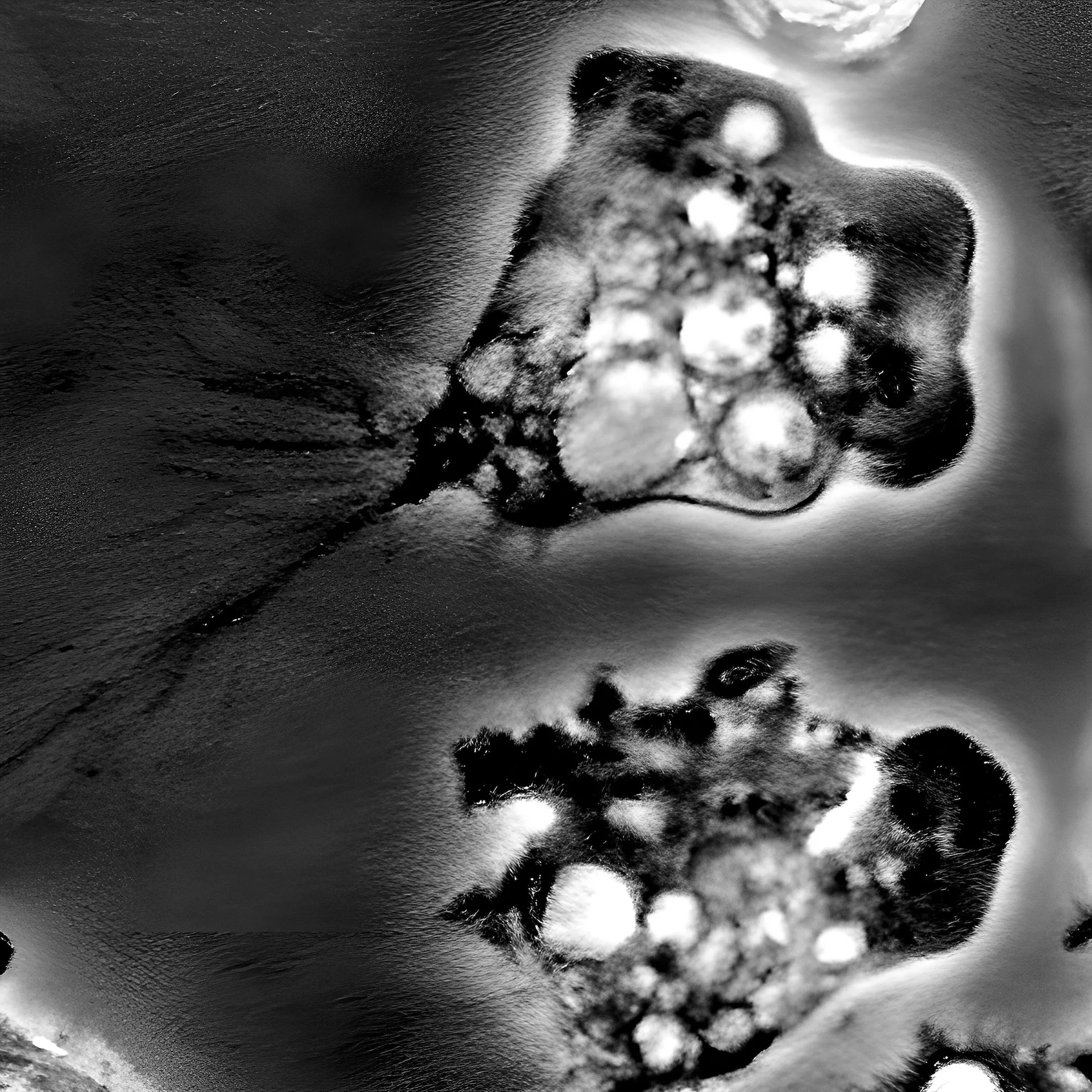
A microscope image of N. fowleri

A image of N. fowleri under the microscope. (Image credit: BSIP SA via Alamy Stock Photo)

Immunocompromised people are at higher risk, said Dr. Juan Fernando Ortiz, a neurology resident at Corewell Health in Grand Rapids, Michigan, who wrote a journal article about treating the infections. Boys under age 14 make up a disproportionate number of cases, according to the CDC, perhaps because they're more likely than other groups to do things that push water up the nose, like jumping and diving. Most cases involve natural bodies of water, but cases have rarely been linked to treated water, such as in splash pads. In a few cases, people have gotten infected by using tap water in neti pots to rinse their sinuses.

The child Conrad and his colleagues were treating in August of 2013 had a tragically typical story of infection. He had spent the summer with his mother at an informal camp on the banks of the Rio Grande, where there was no running water. People bathed in the river, and the child enjoyed splashing in the shallows there.

Most likely, that's where he encountered the amoeba, which Conrad and his team now had to kill — before it could wreak more havoc than the child could survive.

The safest approach for people wondering whether they're at risk … is just to assume that Naegleria fowleri amoebae are in all fresh water

Dr. Julia Haston, medical epidemiologist with the CDC's Waterborne Disease Prevention Branch.

PAM kills by massive destruction of brain tissue. The amoeba itself does some of the destruction directly, giving it the "brain-eating" moniker, but much of the brain damage is actually caused by the body's aggressive immune response to an intruder in the control system, Conrad explained. Parasites that evolve to live inside a body usually have ways of tamping down their host's immune response so they don't lose their meal ticket, Conrad said. But because N. fowleri has no need for a host, it has none of those adaptations. "It's a bull in a china shop," Conrad said.

Fortunately, there are only between zero and six N. fowleri infections in the U.S. each year, and there is no evidence that infections are becoming more common, said Dr. Julia Haston, a medical epidemiologist with the CDC's Waterborne Disease Prevention Branch. Although most cases occur in Texas, Florida and other Southern states, there have been more cases than usual in the northern U.S. in recent years, perhaps because climate change is warming waterways to the temperatures that the amoebas favor, Haston said, and a 2021 study found cases increasing in the Midwest as far north as Minnesota.

"The safest approach for people wondering whether they're at risk … is just to assume that Naegleria fowleri amoebae are in all fresh water," Haston said. "Lakes, rivers, any naturally occurring freshwater body."

Young boy is shown splashing water in a lake. He has his eyes closed as he splashed. Woodland is shown in the background behind the lake

N. fowleri infections are often acquired by young boys jumping into freshwater bodies. (Image credit: EvgeniiAnd via Getty Images)

A Hail Mary works

To battle the amoeba that was attacking the San Antonio patient's brain, Conrad and his team pulled out a then-novel treatment, miltefosine. The drug, an antimicrobial originally used to treat leishmaniasis, an illness caused by a tropical parasite — had shown promise against N. fowleri in studies, so the CDC had been distributing it for PAM cases. Miltefosine penetrates the blood-brain barrier and is relatively well tolerated by patients, Ortiz said. That's important, as many antiparasitic drugs also damage human cells, he added.

The doctors ordered the drug from the CDC. (Today, it's available commercially under the brand name Impavido.) It arrived 14 hours after the child was admitted.

The child lived.

But he was not unscarred. When the boy left the hospital, he could breathe on his own but not do much else. After months of rehabilitation, he regained some of his abilities, but his family still had to help him with basic self-care, Conrad said.

That same summer, however, a 13-year-old girl in Arkansas contracted the amoeba while swimming in an artificial pond. She received quick treatment, including miltefosine, and recovered. After six months of rehab, she had no lingering neurological effects from this brush with death, according to a 2015 case report describing her treatment.

She and the Texas boy were the first U.S. survivors of PAM since 1978. In 2016, a 16-year-old boy in Florida contracted PAM and received miltefosine; he also recovered fully.

However, not all PAM patients who have received miltefosine have survived. Even with the new drug, PAM has a fatality rate of over 97%, according to the CDC.

Each summer, a handful of new PAM cases pop up around the country, and doctors are continually working to improve their treatment. They're increasingly exploring strategies like cooling patients' body temperature to around 95 F (35 C), Conrad said, which some studies suggest might improve recovery from brain trauma.
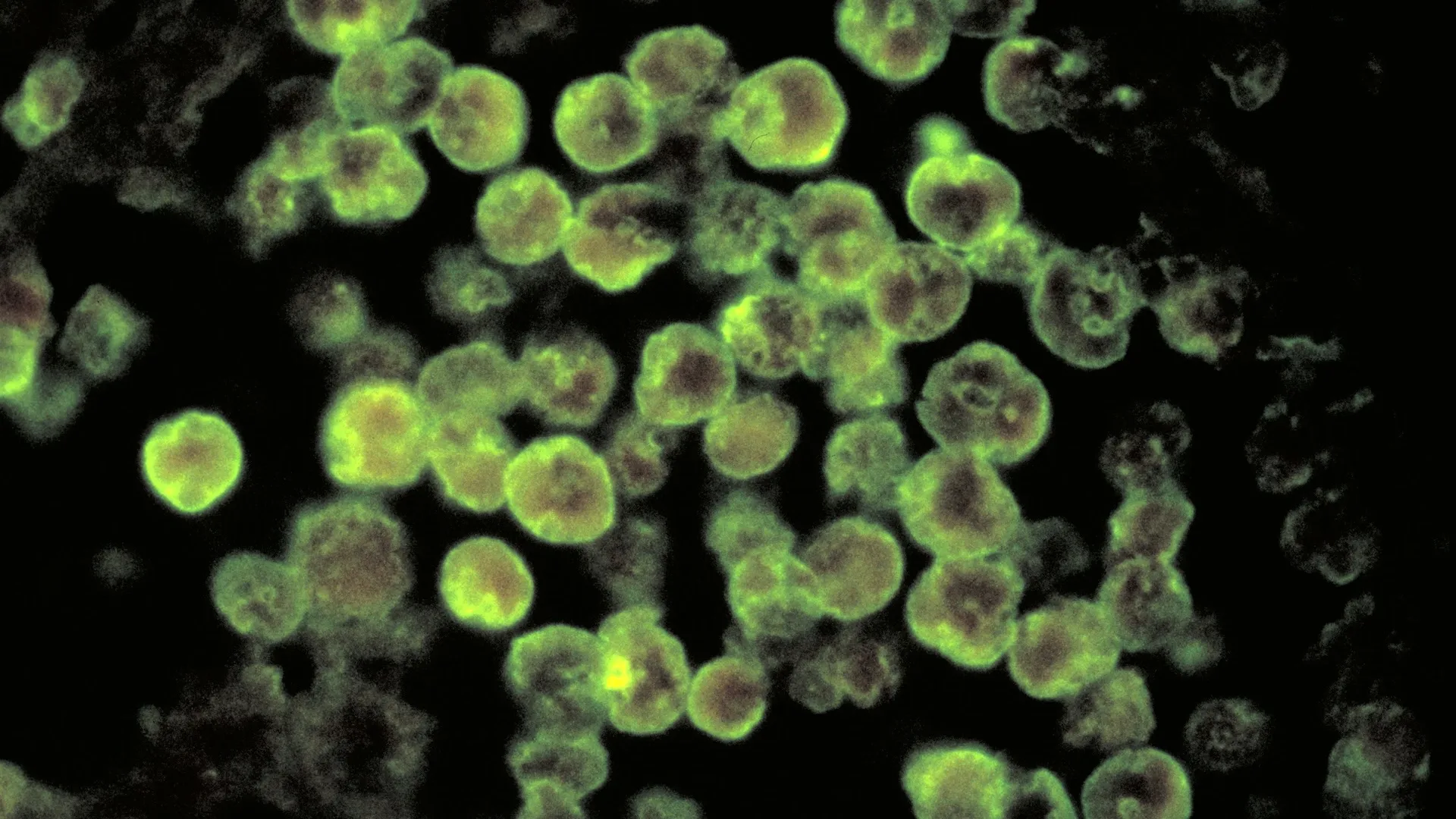
A fluorescence microscopy image of green glowing circles, the histopathologic characteristics associated with a case of amoebic meningoencephalitis due to Naegleria fowleri

A microscopic image of amoebic meningoencephalitis caused by N. fowleri. (Image credit: Smith Collection/Gado via Getty Images)

There may be new pharmaceuticals on the horizon, too. Miltefosine can have toxic side effects on the kidneys and liver and isn't available in developing countries, said Jacob Lorenzo-Morales, a senior lecturer in parasitology and the director of the University of La Laguna Institute of Tropical Diseases and Public Health of the Canary Islands.

So Lorenzo-Morales and his team are looking for alternatives. One of the most promising is nitroxoline, an antibiotic used in Europe to treat urinary tract infections. Lorenzo-Morales and his team reported in the journal Antibiotics in August 2023 that in lab dishes, low concentrations of nitroxoline induced cell death in N. fowleri, without causing toxic effects on host cells. This drug has also been used to successfully treat one patient infected with a different brain-eating amoeba, Balamuthia mandrillaris.

Now, they're conducting animal studies and hope to present positive results at next year's international Free-Living Amoebae Meeting, a biannual meeting of amoeba researchers. Nitroxoline is already widely available worldwide, Lorenzo-Morales said, and because it is already approved for use, extensive clinical trials won't be necessary; doctors can begin using the medication off-label.

New alternatives

There are also efforts to find new medications that work against PAM. Some researchers are interested in developing mRNA vaccines against N. fowleri infection, with a 2024 study in the journal Scientific Reports using modeling of the amoeba's surface features to suggest what such a vaccine might look like. (The authors of that study did not respond to requests for an interview with Live Science.)

If it's too late, it doesn't matter which drug is used; the patient will usually not survive.

Julia Walochnik, professor of tropical medicine at the Medical University of Vienna

Lorenzo-Morales and his colleagues are also investigating the effects of a pigment called elatol, which is extracted from red algae. "We have isolated some key compounds from red algae that are very active against different free-living amoebas, including Naegleria, at concentrations that are even lower than the current treatments," he said.

However, the researchers are currently doing those tests in lab dishes. Moving testing to people will require funding from pharmaceutical companies. That can be difficult, Lorenzo-Morales said, because companies don't see a lot of potential for profit from a "rare" disease like PAM. However, he said, PAM still goes unrecognized far too often, he said, which may mean the potential market is bigger than pharmaceutical executives believe.

A race against time

Perhaps the most immediate hope for today's patients is simply recognizing the disease faster. The time to save someone with PAM is short, said Julia Walochnik, a professor of tropical medicine at the Medical University of Vienna who studies amoebic diseases. "If it's too late, it doesn't matter which drug is used; the patient will usually not survive," she told Live Science.

RELATED STORIES

The late onset of treatment might be one reason why Conrad's 8-year-old patient sustained such serious brain damage while the other youth treated around the same time recovered more fully.

The test for the amoeba is simple: Take a sample of the fluid surrounding the brain and spinal cord and look for swimming single-celled organisms. But doctors may not think to order the test in time, because PAM looks like meningitis caused by much more common viruses and bacteria. Families of children who have died of the disease are increasingly working to raise awareness, which could hopefully spur quicker diagnosis and treatment. For instance, the Jordan Smelski Foundation for Amoeba Awareness, started by the parents of an 11-year-old boy who died of PAM in 2014, hosts educational events for doctors and the public.

Awareness is making a difference, Lorenzo-Morales said. "Every time we have been involved in a clinical case in the last four to five years, the diagnosis has been fast," he said. "That didn’t happen before."

Editor's Note: This story was originally published on July 26, 2024.


What do you know about the brain? Test your knowledge with our brain quiz.

Stephanie Pappas is a contributing writer for Live Science, covering topics ranging from geoscience to archaeology to the human brain and behavior. She was previously a senior writer for Live Science but is now a freelancer based in Denver, Colorado, and regularly contributes to Scientific American and The Monitor, the monthly magazine of the American Psychological Association. Stephanie received a bachelor's degree in psychology from the University of South Carolina and a graduate certificate in science communication from the University of California, Santa Cruz. 

You must confirm your public display name before commenting

Please logout and then login again, you will then be prompted to enter your display name.