






Scientists may have detected more than 10,000 never-before-seen exoplanets in a single survey, potentially tripling the number of known alien worlds in one fell swoop. The record-breaking haul was possible thanks to a new algorithm that helped researchers analyze more than 80 million stars — revealing subtle clues that would otherwise be "impossible" for us to see.
Since the first alien planet was spotted in 1995, the number of exoplanet discoveries has slowly risen in line with new technologies, such as the James Webb Space Telescope, which are better equipped to spot these weird alien worlds. In September 2025, astronomers revealed that the number of confirmed exoplanets had surpassed 6,000, and nearly 300 have been added to the list since then, according to NASA.
Using a machine learning algorithm, the team analyzed the light curves of precisely 83,717,159 stars captured by NASA's Transiting Exoplanet Survey Satellite (TESS), a car-sized space telescope that has been circling Earth since 2018. By looking for subtle dips in the stars' brightness, astronomers can tell when a planet has likely passed in front of, or transited, its home star.
This revealed more than 11,000 exoplanet candidates, of which 10,052 had never been seen before. (Other scientists had previously identified the rest, but they are not yet confirmed as exoplanets.) Around 87% of the candidates were spotted transiting twice or more, allowing the researchers to calculate the planets' orbital periods, which range from 0.5 to 27 days, according to StellarCatalog.com.
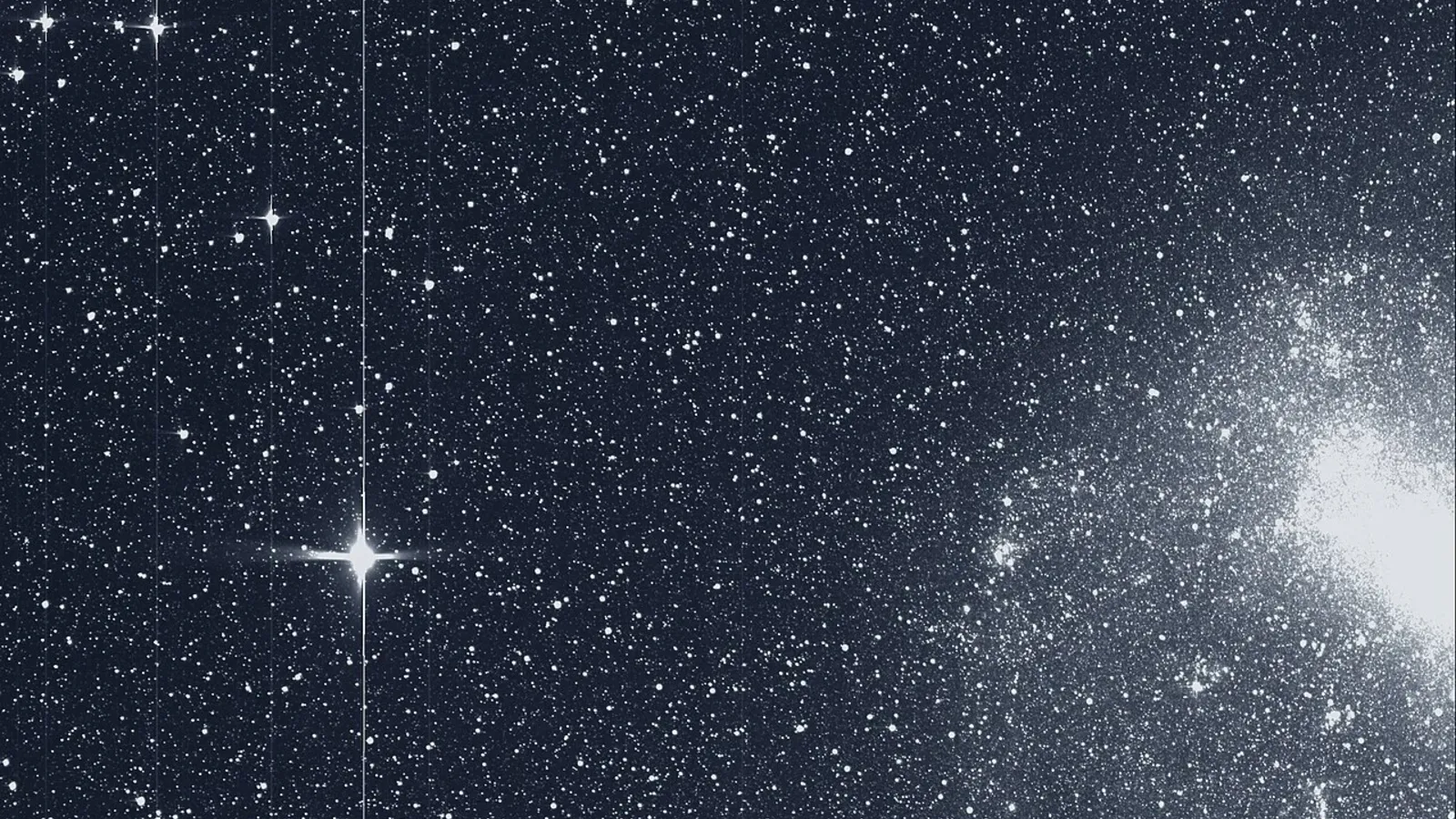
TESS is designed to look for objects transiting in front of distant stars. This wide-field image was one of the first it captured, shortly after its launch in 2018.
(Image credit: NASA/MIT/TESS)
But the researchers didn't stop there. To test the validity of their model, they attempted to confirm one of the new candidates themselves.
Using one of the 21-foot (6.5 meters) Magellan telescopes in Chile's Atacama Desert, the team identified a "hot Jupiter" exoplanet, dubbed TIC 183374187 b, that orbits a star around 3,950 light-years from Earth — right where the algorithm predicted.
The confirmation of TIC 183374187 b hints that at least a few of the other exoplanet candidates will also end up being confirmed. However, first these planets must be verified by independent surveys and studied in greater detail, which can take months or years to do properly.
Finding "impossible" planets
TESS was specifically designed to detect transiting objects, and it has already discovered 882 confirmed exoplanets — roughly 14% of the current total — so it may seem strange that no one has seen most of the new candidates until now. However, there is a good reason why.
Most researchers prioritize analyzing the light curves of the brightest stars in the TESS dataset, because transit events for these stars are much more noticeable and easier to confirm. But there are many more faint stars that end up being captured in the telescope's wide-field photos.
In the new study, the researchers looked at every star — up to 16 magnitudes dimmer than the normal threshold for a transit study — from TESS' first wide-field image. The researchers call this idea the T16 project.
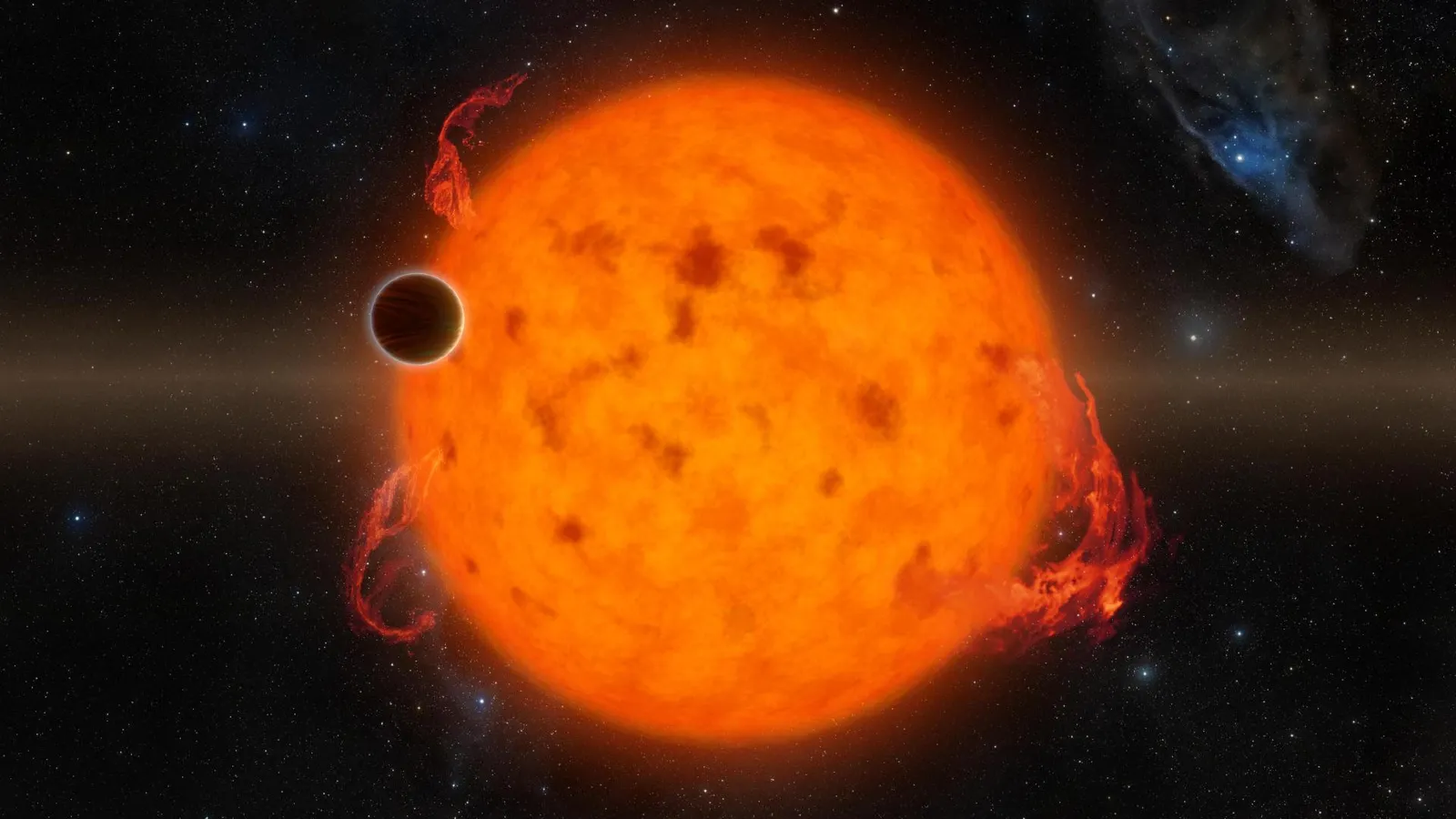
The machine learning algorithm utilized in the new study looked for subtle fluctuations in the light curves of faint stars, which can be caused by planets "transiting" alien suns.
(Image credit: NASA/JPL)
The extreme dimness of these light curves makes it extraordinarily hard to spot potential transit events, which is why they are normally overlooked. To overcome this hurdle, the team created a machine learning algorithm that learned to distinguish subtle clues that a transit had potentially occurred. (Machine learning is a subset of artificial intelligence where computers learn from data to make predictions, rather than being explicitly programmed.)
A computer program also allowed the team to analyze the enormous dataset, which would "be impossible" for humans to sort through on their own, Universe Today reported.
"This work shows that large-scale, machine-learning-assisted transit searches can significantly expand the census of transiting planet candidates, particularly around faint stars," researchers wrote in the paper.
Unfortunately, the brief orbital periods of the exoplanet candidates hint that they are probably too close to their home stars to support life as we know it. (This is because more distant planets orbit their stars less often and are less likely to align with an observer for a transit.)
Article Sources
Roth, J. T., Hartman, J. D., Bakos, G. Á., Yee, S. W., Bouma, L. G., Galarza, J. Y., Teske, J. K., Butler, R. P., Crane, J. D., Shectman, S., Osip, D., Vissapragada, S., Beletsky, Y., Kanodia, S., & Gaibor, Y. (2026). The T16 Planet Hunt: 10,000 New Planet Candidates from TESS Cycle 1 and the Confirmation of a Hot Jupiter around TIC 183374187*. The Astrophysical Journal Supplement Series, 284(1), 19. https://doi.org/10.3847/1538-4365/ae5b6c