


惯性聚合 高效追踪和阅读你感兴趣的博客、新闻、科技资讯
阅读原文 在惯性聚合中打开

推荐订阅源

C
Check Point Blog
J
Java Code Geeks
H
Hackread – Cybersecurity News, Data Breaches, AI and More
D
Docker
腾讯CDC
The GitHub Blog
The GitHub Blog
大猫的无限游戏
大猫的无限游戏
Microsoft Security Blog
GbyAI
GbyAI
Stack Overflow Blog
Stack Overflow Blog
博客园 - 司徒正美
T
The Blog of Author Tim Ferriss
Vercel News
Vercel News
P
Proofpoint News Feed
雷峰网
雷峰网
博客园_首页
B
Blog RSS Feed
Microsoft Azure Blog
爱范儿
爱范儿
V
V2EX
F
Fortinet All Blogs
酷 壳 – CoolShell
酷 壳 – CoolShell
MyScale Blog
MyScale Blog
S
SegmentFault 最新的问题

Latest from Live Science

Naked mole rats wage bloody wars of succession to choose a new queen — but one colony did something scientists… Can the US be trusted with the moon? A law scholar raises concerns after Artemis II Lyrid meteor shower 2026: See spring's first rain of 'shooting stars' peak in moonless skies $3 million prize goes to duo whose research led to first sickle cell CRISPR therapy 700-year-old mummy from Bolivia contains earliest confirmed evidence of strep throat bacteria in the Americas New pain-relief opioid could be much less addictive than morphine, rodent study finds Experimental drug doubles one-year survival in pancreatic cancer Science news this week: Physicists witness faster-than-light darkness pinpricks, humans are still evolving, and some… Archaeologists discover perfectly circular ancient Egyptian temple that may have been used for sacred water rituals Some polar bears are adapting to their melting habitat. Will it be enough to save the iconic species? 2 supermassive black holes may collide 100 years from now ‪—‬ and Earth would feel it Anglo-Saxon burial holds an older sister cradling her little brother after they both died 1,400 years ago, possibly of… Colorado River may have pooled and spilled over to form the Grand Canyon, solving a long-standing mystery ‪—‬… 'We all screamed when it happened': Bright-green fireball meteor caught exploding over famous Viking raid site… Northern lights may be visible from several US states Friday and Saturday as giant hole opens up in sun Hackers used AI to steal hundreds of millions of Mexican government and private citizen records in one of the largest… The first black hole ever discovered is spewing 'dancing jets' at half the speed of light Stephen Hawking's black hole information paradox could be solved — if the universe has 7 dimensions 'Something's missing': Most thorough-ever study of the cosmos proves we still can't explain how the… 'Human evolution didn't slow down; we were just missing the signal': Large DNA study reveals natural selection led to more redheads and less male-pattern baldness Artemis II quiz: Is your knowledge of NASA New study confirms lobsters feel pain, driving scientists to call for a ban on boiling them alive This humanoid robot does all your housework for you ‪—‬ and its makers say it Ancient process that created rare earth elements discovered — and it could help us locate desperately needed deposits Strange mammal ancestor laid huge, leathery eggs —‬ and it was key to surviving the world 73 moon landings? NASA Diagnostic dilemma: A woman heard voices telling her she had a brain tumor ‪—‬ and scans confirmed she did Triassic croc relative from Ghost Ranch, New Mexico finally identified after nearly 80 years in museum basement There were Physicists witness pinpricks of darkness moving faster than the speed of light ‪—‬ without breaking the laws of relativity
Largest-ever 3D map of the universe shows 47 million gala...
Jamie Carter · 2026-04-19 · via Latest from Live Science
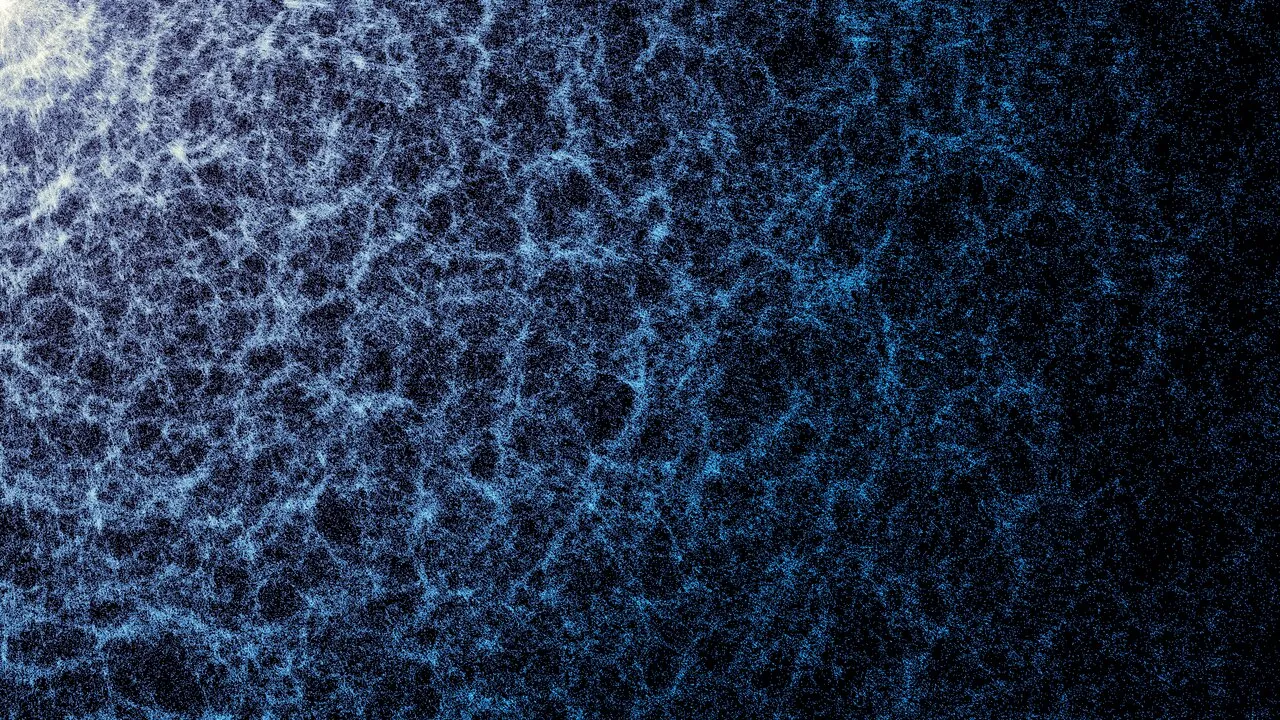
A blue and white map against a dark background. The denser areas indicate regions where galaxies and galaxy clusters have clumped together to form the strands of the cosmic web.
A small portion of DESI's year-five map of the large-scale structure of the universe. (Image credit: DESI Collaboration and DESI Member Institutions/DOE/KPNO/NOIRLab/NSF/AURA/R. ProctorImage Processing: M. Zamani (NSF NOIRLab))

Quick facts

What it is: The largest 3D map of the universe ever created

Where it is: The universe, as seen from Earth

When it was shared: April 17, 2026

This snapshot is just a small part of one of the most comprehensive and spectacular views yet of the universe — a web-like structure formed by millions of galaxies, stretching back to near the dawn of time.
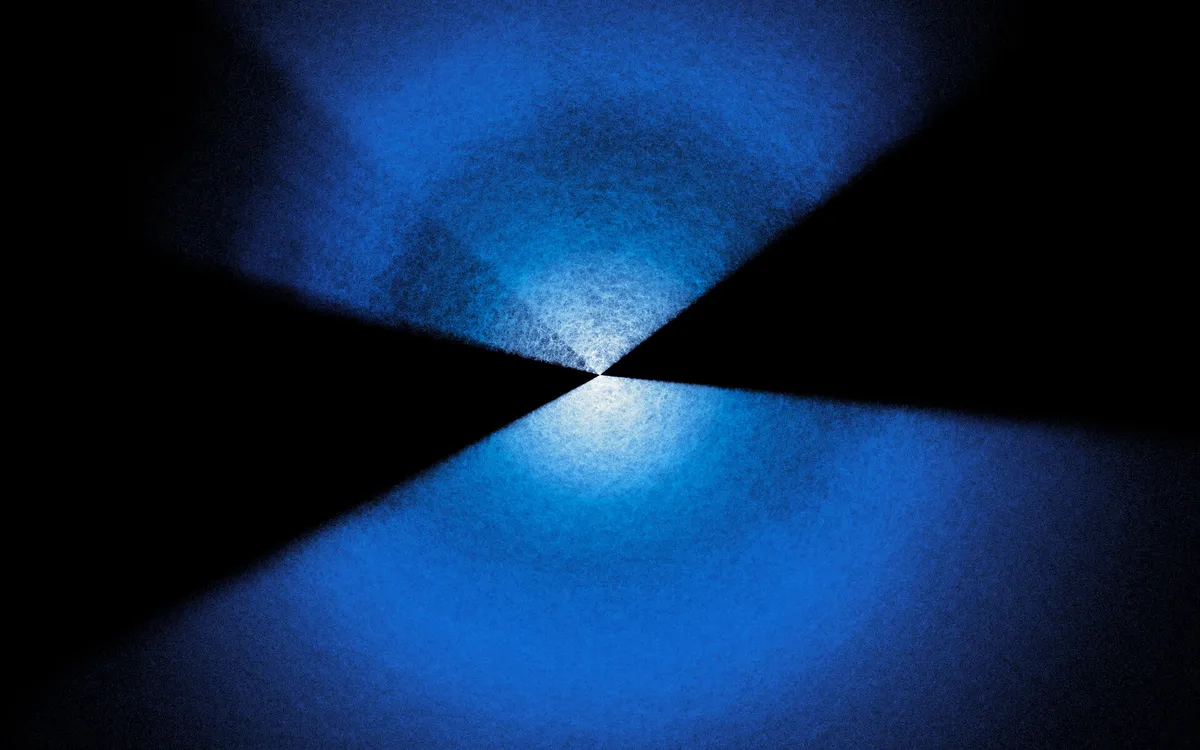
An hourglass shaped image of blue and white light against a black background

The full DESI map of the cosmic web, showing roughly 47 million galaxies. (Image credit: DESI Collaboration and DESI Member Institutions/ DOE/ KPNO/ NOIRLab/ NSF/ AURA/ R. Proctor)

The five-year survey was supposed to gather data on 34 million galaxies and quasars (the bright cores of distant young galaxies). In practice, it detected over 47 million, along with more than 20 million nearby stars in the Milky Way. A visualization published alongside DESI's map shows how it has grown over those five years.

Some of the light captured in this image took billions of years to reach Kitt Peak, so it allows scientists to look back in time to reconstruct how the universe evolved. The result is a three-dimensional view that not only shows where galaxies are but also how they have moved and clustered over time.

Beyond its visual impact, the image plays a crucial role in probing mysterious dark energy, the name physicists have given to a force that appears to be driving the universe's accelerated expansion. It makes up roughly 70% of the universe, and its nature and distribution are among the biggest questions in physics.

By comparing the distribution of galaxies across different epochs, researchers can track how dark energy has influenced the structure of the universe over the past 11 billion years. Early DESI data has already hinted that dark energy may evolve through cosmic history ‪—‬ a breakthrough that would fundamentally reshape scientists' understanding of the universe and its ultimate fate.

Get the world’s most fascinating discoveries delivered straight to your inbox.

The image is the result of a massive international collaboration. More than 900 researchers from over 70 institutions contributed to the project, which was led by Lawrence Berkeley National Laboratory and funded by the U.S. Department of Energy Office of Science.

DESI will continue observing the sky through 2028, expanding its map by about 20%. Future observations will target fainter and more distant galaxies, as well as harder-to-observe regions near the Milky Way (where stars get in the way) and in the southern sky (which requires the telescope to peer through more of Earth's atmosphere). The first results from the full dataset are anticipated in 2027.


See more Space Photos of the Week

Jamie Carter is a Cardiff, U.K.-based freelance science journalist and a regular contributor to Live Science. He is the author of A Stargazing Program For Beginners and co-author of The Eclipse Effect, and leads international stargazing and eclipse-chasing tours. His work appears regularly in Space.com, Forbes, New Scientist, BBC Sky at Night, Sky & Telescope, and other major science and astronomy publications. He is also the editor of WhenIsTheNextEclipse.com.

You must confirm your public display name before commenting

Please logout and then login again, you will then be prompted to enter your display name.