惯性聚合 高效追踪和阅读你感兴趣的博客、新闻、科技资讯
阅读原文 在惯性聚合中打开

推荐订阅源

大猫的无限游戏
大猫的无限游戏
Webroot Blog
Webroot Blog
cs.AI updates on arXiv.org
T
Threat Research - Cisco Blogs
V2EX - 技术
V2EX - 技术
L
LINUX DO - 热门话题
Google DeepMind News
Recorded Future
Recorded Future
S
Schneier on Security
I
InfoQ
Cyber Security Advisories - MS-ISAC
cs.CV updates on arXiv.org
The GitHub Blog
The GitHub Blog
S
Security @ Cisco Blogs
O
OpenAI News
W
WeLiveSecurity
Vercel News
Vercel News
阮一峰的网络日志
阮一峰的网络日志
Simon Willison's Weblog
人人都是产品经理
人人都是产品经理
Cloudbric
Cloudbric
The Last Watchdog
The Last Watchdog
The Hacker News
The Hacker News
Google Online Security Blog
OSCHINA 社区最新新闻
OSCHINA 社区最新新闻
GbyAI
GbyAI
NISL@THU
NISL@THU
T
Tailwind CSS Blog
V
Visual Studio Blog
PCI Perspectives
PCI Perspectives
K
KPMG report finds enterprise disconnect between AI and its ROI | CIO
Jina AI
Jina AI
D
DataBreaches.Net
B
Blog RSS Feed
N
News and Events Feed by Topic
N
News and Events Feed by Topic
H
Heimdal Security Blog
cs.CL updates on arXiv.org
腾讯CDC
Latest news
Latest news
V
Vulnerabilities – Threatpost
Hacker News: Ask HN
Hacker News: Ask HN
WordPress大学
WordPress大学
V
V2EX
aimingoo的专栏
aimingoo的专栏
博客园 - 司徒正美
Apple Machine Learning Research
D
Darknet – Hacking Tools, Hacker News & Cyber Security
The Register - Security
Help Net Security
Help Net Security

Latest from Live Science

Naked mole rats wage bloody wars of succession to choose a new queen — but one colony did something scientists… Can the US be trusted with the moon? A law scholar raises concerns after Artemis II Lyrid meteor shower 2026: See spring's first rain of 'shooting stars' peak in moonless skies $3 million prize goes to duo whose research led to first sickle cell CRISPR therapy 700-year-old mummy from Bolivia contains earliest confirmed evidence of strep throat bacteria in the Americas New pain-relief opioid could be much less addictive than morphine, rodent study finds Experimental drug doubles one-year survival in pancreatic cancer Science news this week: Physicists witness faster-than-light darkness pinpricks, humans are still evolving, and some… Archaeologists discover perfectly circular ancient Egyptian temple that may have been used for sacred water rituals Some polar bears are adapting to their melting habitat. Will it be enough to save the iconic species? 2 supermassive black holes may collide 100 years from now ‪—‬ and Earth would feel it Anglo-Saxon burial holds an older sister cradling her little brother after they both died 1,400 years ago, possibly of… Colorado River may have pooled and spilled over to form the Grand Canyon, solving a long-standing mystery ‪—‬… 'We all screamed when it happened': Bright-green fireball meteor caught exploding over famous Viking raid site… Northern lights may be visible from several US states Friday and Saturday as giant hole opens up in sun Hackers used AI to steal hundreds of millions of Mexican government and private citizen records in one of the largest… The first black hole ever discovered is spewing 'dancing jets' at half the speed of light Stephen Hawking's black hole information paradox could be solved — if the universe has 7 dimensions 'Something's missing': Most thorough-ever study of the cosmos proves we still can't explain how the… 'Human evolution didn't slow down; we were just missing the signal': Large DNA study reveals natural selection led to more redheads and less male-pattern baldness Artemis II quiz: Is your knowledge of NASA New study confirms lobsters feel pain, driving scientists to call for a ban on boiling them alive This humanoid robot does all your housework for you ‪—‬ and its makers say it Ancient process that created rare earth elements discovered — and it could help us locate desperately needed deposits Strange mammal ancestor laid huge, leathery eggs —‬ and it was key to surviving the world 73 moon landings? NASA Diagnostic dilemma: A woman heard voices telling her she had a brain tumor ‪—‬ and scans confirmed she did Triassic croc relative from Ghost Ranch, New Mexico finally identified after nearly 80 years in museum basement There were Physicists witness pinpricks of darkness moving faster than the speed of light ‪—‬ without breaking the laws of relativity Mini lake meets snowy rim of Canada's oldest ice mass — Earth from space Stone Age tombs in Scotland reveal 'webs of descent' among male relatives 'Oslo patient' likely cured of HIV after getting stem cell transplant from his brother, who is genetically… Antiseptic-tolerant germs spread through the air in hospitals, early study hints Homo erectus' tools include stunning geodes and fossils, possibly as a way to connect with the cosmos, study finds 'Really, really weird': Physicists entangle two moving atoms for the first time, validating 'spooky'… www.livescience.com Sperm quality is at its peak in the summer, study finds Scientists are trying to build a vaccine that works against almost any respiratory pathogen  — here's… Idol of Pomos: A 5,000-year-old fertility figurine from Cyprus that wears a miniature version of herself on a necklace Human ancestors butchered and ate elephants 1.8 million years ago, helping to fuel their large brains Ancient Egyptian stone monument depicting a Roman emperor as a pharaoh discovered in Luxor 'Human minds shouldn't have to go through' this: Artemis II crew recalls unreal moment when Earth disappeared — Space photo of the week Does the moon look the same from everywhere on Earth? I found a new meteor shower — and it comes from an asteroid getting baked to bits by the sun AI for breakup texts? How 'sycophantic' chatbots are messing with our ability to handle difficult social… Science news this week: Artemis II splashes down, the world's fattest parrot bounces back, and the Shroud of Turin… 10 Artemis II photos that define humanity's return to the moon Do the microbes in your gut influence what foods you like? 'I'm at a loss for words': Artemis II mission comes home to joy and cheers after historic 10-day mission There are 'reasons to be confident' about faulty Artemis II heat shield ahead of 25,000 mph reentry, space… The moon is green and brown? Why scientists are already excited about Artemis II's historic lunar photos 'I've seen the movies. What a horrible way to die': What it's like to be sucked into a tornado and… 'More questions than answers': Experts baffled by Alaskan mammal-eating orcas spotted near Seattle Changing 'just one DNA letter' in female mice triggers growth of male genitalia Aoshima: Japan's tiny 'Cat Island' where felines hugely outnumber humans 'Welcome home, Integrity': Artemis II crew return to Earth after 'bullseye landing' caps historic… AI war games almost always escalate to nuclear strikes, simulation shows Ancient Korean society practiced human sacrifice and high inbreeding, researchers find There's an issue with the Artemis II heat shield, but NASA isn't worried. Here's why. Chimpanzees in Uganda are locked in a deadly 'civil war' after their group split apart — and scientists… James Webb telescope spots 'stingray' galaxy system that could solve the mystery of 'little red… 'RIP, Comet MAPS': Watch the superbright sungrazer become a 'headless wonder' after being ripped… Scientists create new type of encryption that protects video files against quantum computing attacks Western states face above-normal wildfire threats this summer. New maps reveal which areas are most at risk. Science history: Doctor hypothesizes that 'transmissible proteins' can cause disease, contradicting a 'central dogma' of molecular biology — April 9, 1982 Keratin may act as a 'brake' for skin inflammation, pointing to potential treatments 'No one knows what they are': Researchers discover new type of cell that's seen only during pregnancy 16th-century silver coin discovered near Strait of Magellan marks the spot of a doomed Spanish colony How to see Comet PanSTARRS as it brightens in the night sky this week Diagnostic dilemma: Woman's 'biologically implausible' infection led her to sneeze 'worms' out… 'In every continent where humans are present, water bankruptcy is manifesting itself': Exiled Iranian scientist Kaveh Madani on our desperate need to preserve our most precious resource California declared war on smog in the 1970s. The knock-on effects were huge. 'They are literally everywhere': The shocking story of how forever chemicals polluted the world DNA reveals ancestry of man buried in Stone Age monument in Spain, but his religion remains a mystery 'So much magic': Artemis II shares first images from the far side of the moon, including new… AI 'mirages' mean tools used to analyze medical scans could fabricate their findings World's fattest parrot — on the verge of extinction 30 years ago — has record-breaking breeding season It's one of the best toothbrushes we have tested (and it's not Oral-B) Physicists moved volatile antimatter by truck for the first time ever — paving the way for groundbreaking new… Deadly, vivid-green mass sprawls across South African reservoir — Earth from space The Artemis II astronauts have just flown farther from Earth than any humans in history Artemis II moon flyby begins: How to watch and what to know AI-written code can beat humans at biomedical analysis, some studies find. What does that mean for the field? 'A cure on the horizon': Are we finally close to ending type 1 diabetes? 'They could spend 4 or 5 hours per day underwater': How humans adapted to the most challenging environments We went to Finland to hear about the new 'sand battery' that will turn stored renewable energy back into power… The hungriest black holes in the universe are running out of food, survey of 8,000 cosmic monsters reveals Beadnet dress: A 4,500-year-old ancient Egyptian funeral 'gown' that was in vogue during the Old Kingdom 'This generation's moment': How the Artemis missions will reframe humanity's relationship with the… Antarctica hides huge caches of gold, silver, copper and iron. As the ice melts, countries may race to harvest them. NASA telescope uncovers new mystery in supernova first spotted by Chinese astronomers 2,000 years ago —‬ Space… Diabetes rates are lower in high-altitude environments ‪‪—‬ and scientists may have discovered why Shroud of Turin, claimed to be Jesus' burial cloth, contaminated with carrot and red coral DNA What happened to the Minoan civilization? I've witnessed nearly 100 rocket launches. Artemis II was like nothing I've ever experienced. Science news this week: Artemis II lifts off, diabetes cured in mice, and smog in China shapes Arctic storms Fossil site in China reveals bevy of complex creatures lived prior to the Cambrian explosion, including a… Cheap, decades-old transplant drug delays full onset of type 1 diabetes Octopus quiz: Are you a sucker for cephalopod science?
DwarfLab Dwarf Mini smart telescope review
Jamie Carter · 2026-04-28 · via Latest from Live Science

The DwarfLab Dwarf Mini delivers surprisingly capable astrophotography in an exceptionally small package, but its true value lies in its urban usability. With automated alignment and in-app stacking, it captures the moon, the sun and bright deep-sky objects in minutes. While its 2MP sensor limits image quality, it excels in light-polluted cities, making it ideal for beginners, educators and anyone traveling to dark skies.

Pros

  • +

    Compact and lightweight design

  • +

    Automated alignment and stacking

  • +

    Excellent solar and lunar imaging

  • +

    Stellar Studio image processing

Cons

  • -

    Limited image resolution

  • -

    Tripod not included

  • -

    Planetary images are disappointing

  • -

    Four-hour battery life

Why you can trust Live Science Our expert reviewers spend hours testing and comparing products and services so you can choose the best ones for you. Find out more about how we test.

The DwarfLab Dwarf Mini is a compact, beginner-friendly smart telescope that takes direct aim at competitors like the ZWO Seestar S30. It’s essentially a very small 1.2-inch/30 mm refractor telescope controlled by a smartphone, but instead of the user looking through an eyepiece, it takes images of the night sky.

It does that with an image sensor, using its onboard computer and software to first automatically align itself with the night sky to identify objects, and then capture short-exposure images which it stacks into a single, ever-improving image. Impressively, this enables it to capture star clusters, galaxies and even faint nebulae from the middle of a city — something no optical telescope will get you a view of in such a light-polluted environment.

Specifications

Image resolution: 2 MP
Aperture: 1.18 inches (30 mm)
Focal length: 150 mm
Storage: 64 GB
Field of view: 2.45 x 2.14 degrees (telephoto)
Mount: Alt-azimuth and EQ mode
Battery: 4 hours
Weight: 1.8 lbs (840 g)

The Dwarf Mini is smaller, lighter and more affordable than its competitors, so not surprisingly, it comes with one significant drawback: it produces only 2 MP images. But these are still plenty good enough for viewing on a smartphone and sharing online, and despite its basic resolution, it adds equatorial (EQ) tracking — an advanced mode, typically found in larger or pricier instruments, that allows the Dwarf Mini to follow Earth’s rotation during longer exposures, reducing star trails and enhancing images.

It may be mostly about the compact design and affordable price, but the Dwarf Mini is adaptable and future-proof enough to appeal to a wide range of amateur astronomers who are in search of a simple-to-use imaging tool.


DwarfLab Dwarf Mini review

DwarfLab Dwarf Mini: Design

Image

1

of

3
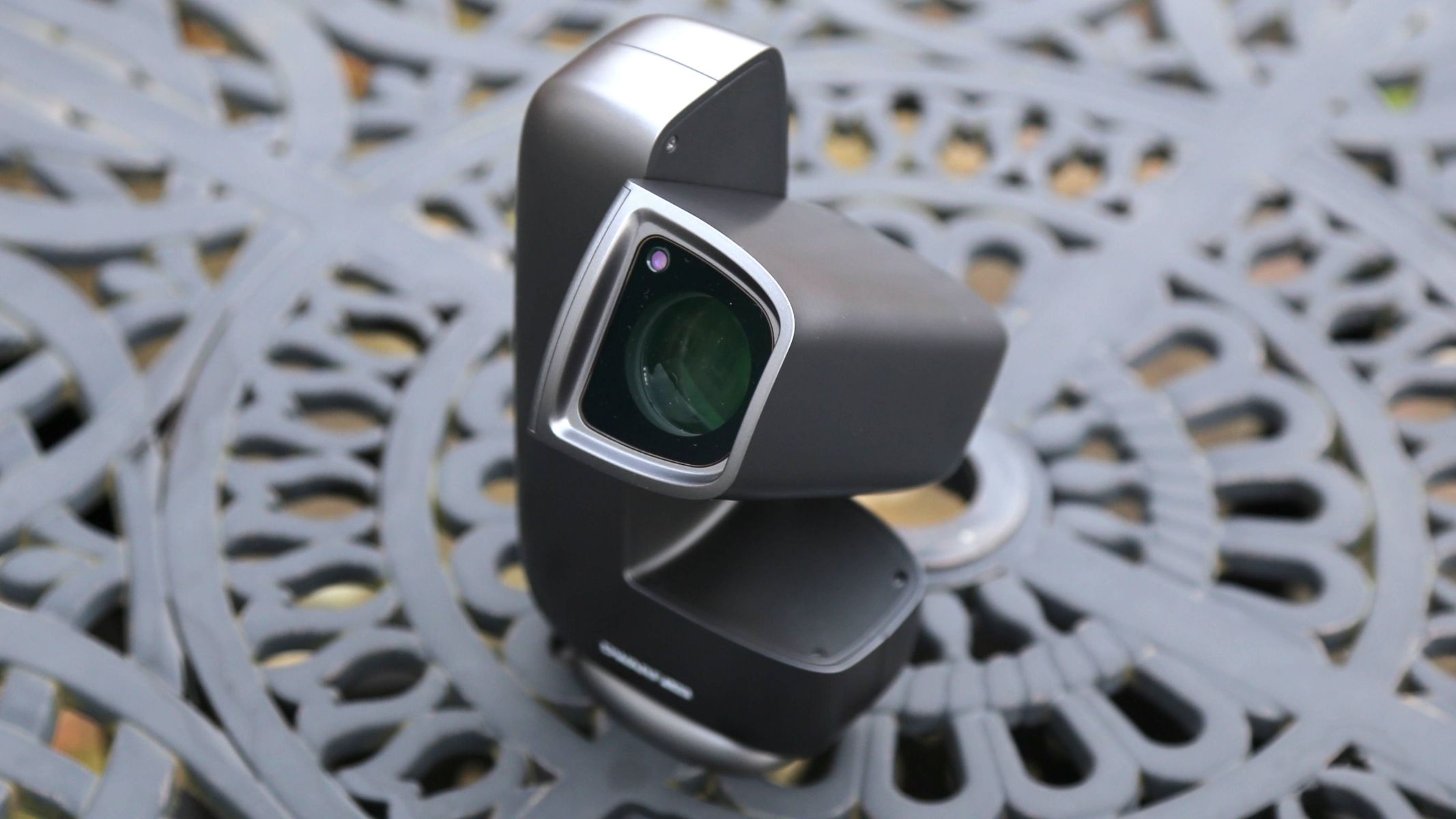
DWARFLAB Dwarf Mini on a metal garden table
The Dwarf Mini is a 1.2-inch/30 mm refractor telescope.(Image credit: Jamie Carter)
  • Pocket-sized form factor
  • Optional EQ alignment for longer exposures
  • Motorized internal filter wheel

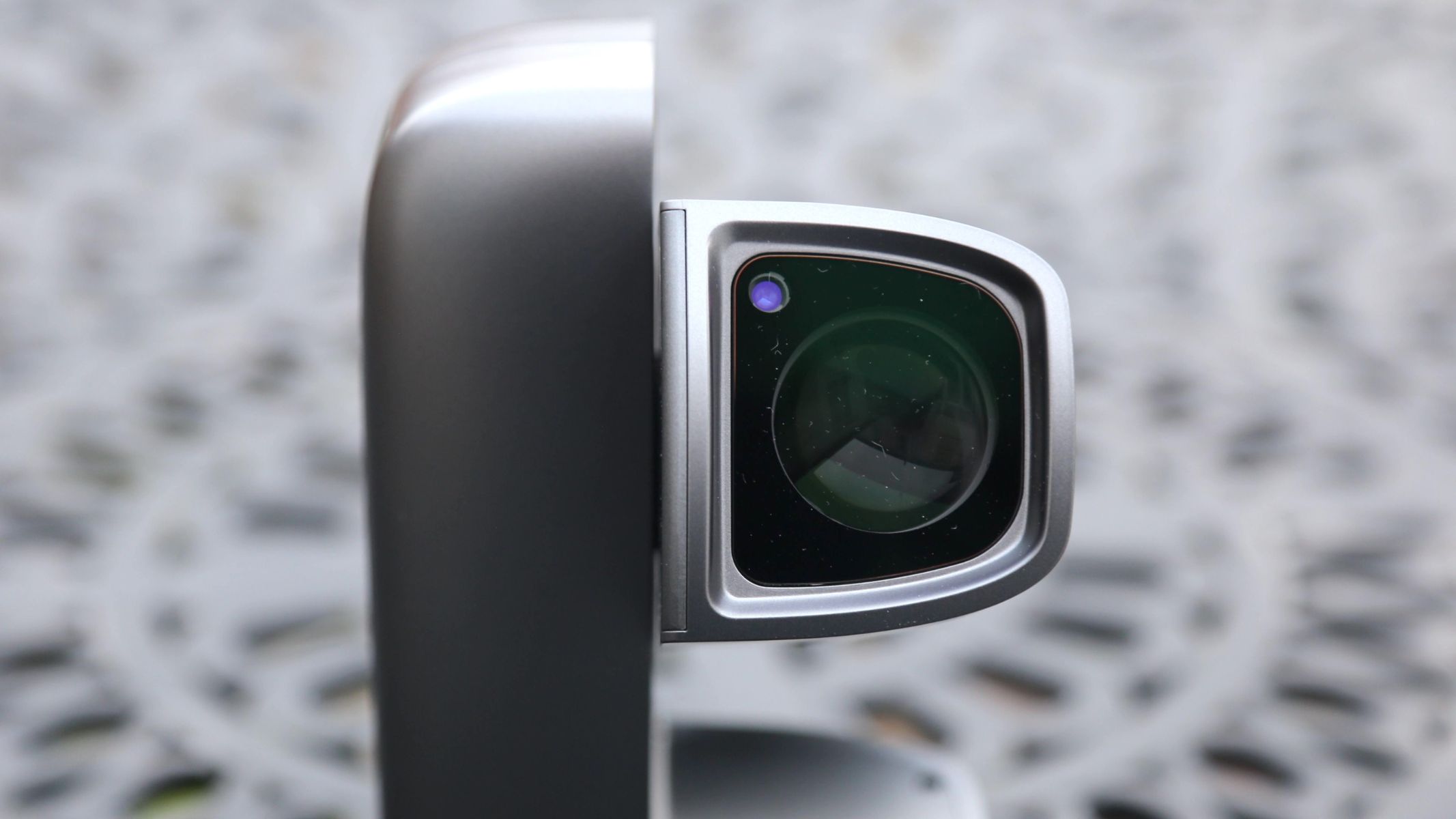
Straight out of the box, the Dwarf Mini surprises with its scale. It's just 8 inches (204 mm) long and weighs a mere 1.8 lbs, (840 g), yet it feels just solid enough when in hand. The lens arm pivots smoothly through 225 degrees, while the base rotates a full 360 degrees, providing flexible sky coverage even when used on a tabletop. This wide range of movement is key to its functionality; the Dwarf Mini has no manual knobs or adjustments. Aiming and tracking are controlled through the DwarfLab app.

The internal optics include a 5.91-inch (150 mm) focal length (f/5 focal ratio) refractor lens and a Sony IMX662 CMOS sensor, the latter known for its strong low-light performance but low resolution. It's also got a motorized filter wheel offering dark-frame, astro (anti-light pollution) and dual-band (nebulae) filters that you can switch between depending on your target.

It’s also got two modes — a wide-angle mode, largely for orienting, and a zoom mode for taking images of deep-sky objects, the sun and the moon. However, the wide-angle imager can also capture constellations, and to some extent, the Milky Way (when it’s in season, which it wasn't during this test) as well as take a basic star trail image.

Sign up for the Live Science daily newsletter now

Get the world’s most fascinating discoveries delivered straight to your inbox.

Image

1

of

2

DWARFLAB Dwarf Mini on a metal garden table
The Dwarf Mini has a wide-angle and a telephoto mode(Image credit: Jamie Carter)

One standout design element for advanced users is the EQ mode. While not physically resembling an equatorial mount, the Dwarf Mini can simulate equatorial tracking once aligned with Polaris, the North Star (in the Northern Hemisphere), using a step-by-step guide in the app. It's a clever solution that makes it technically possible to capture superior images, particularly of faint objects, by enabling long exposures — though for that an equatorial wedge is required (DwarfLab sells its Mini Hydraulic Tripod Head for this purpose, but we didn’t have a chance to review it).

The included solar filter attaches magnetically, covering the lens securely for daytime imaging of sunspots (and the occasional partial or annular solar eclipse). A USB-C charging cable and a basic cleaning cloth are also included — but there is no tripod in the box.

DwarfLab Dwarf Mini: Performance

Image

1

of

2
pleiades star cluster
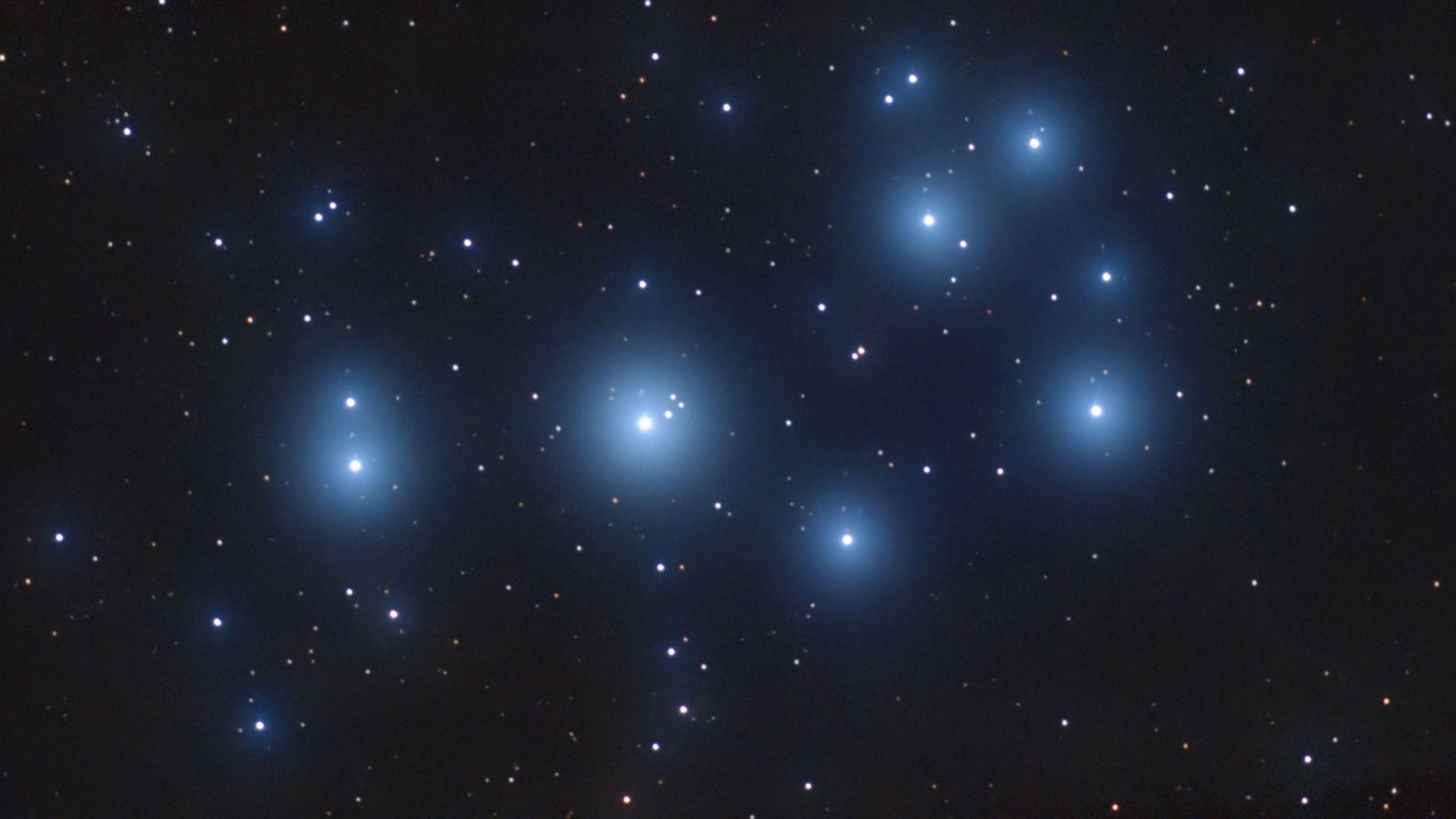
The Pleaides (M45) as seen by Dwarf Mini(Image credit: Jamie Carter)
  • Surprisingly capable deep-sky performance
  • Real-time stacking works well in light-polluted cities
  • Captures sunspots using included solar filter

The Dwarf Mini is ridiculously easy to use. Power on the scope, launch the app, connect your smartphone to its Wi-Fi and select a target from its built-in sky atlas. It then plate-solves the sky to align with the stars, self-correcting itself as it goes.

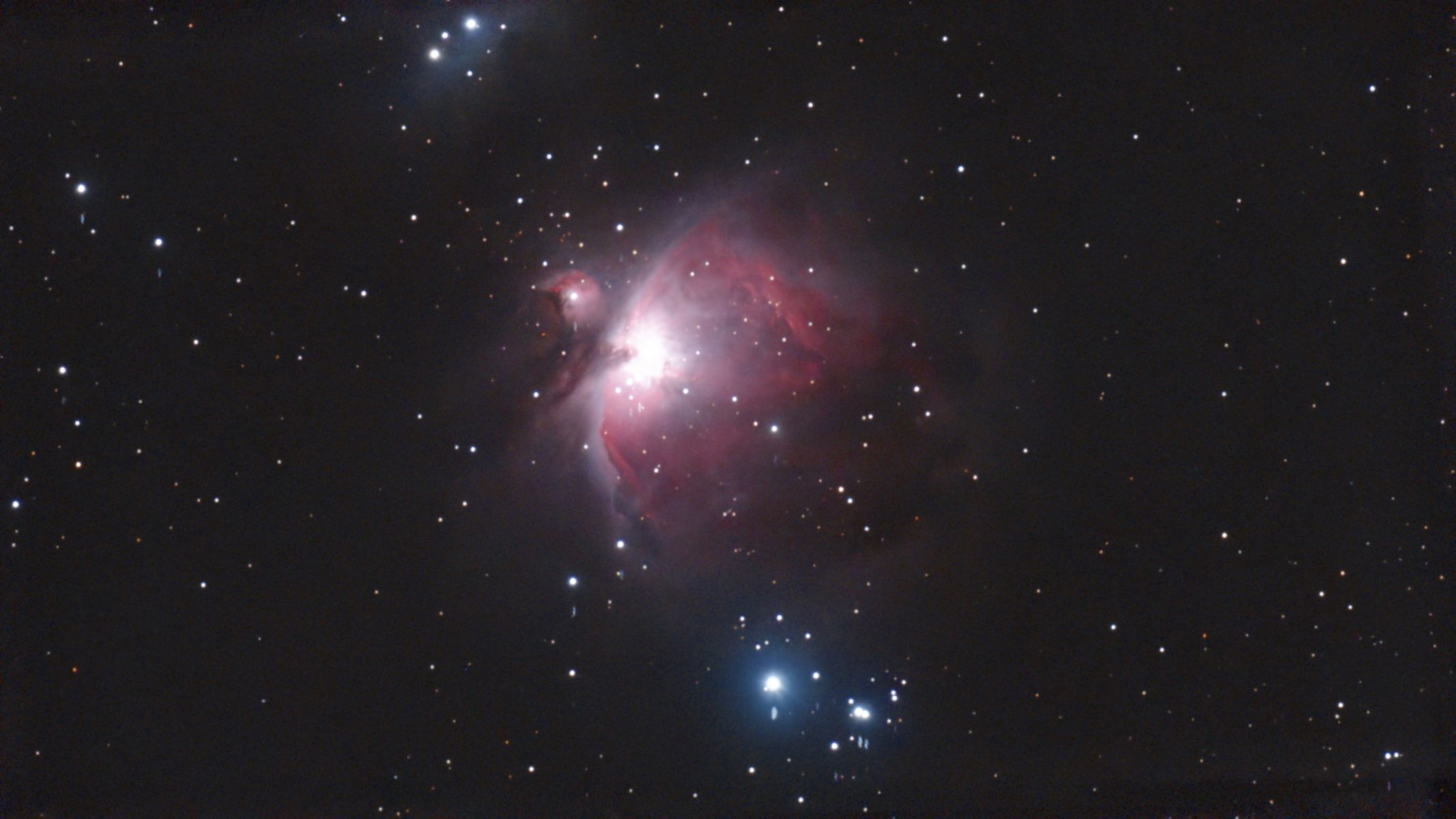
Used in standard alt-az mode, the Dwarf Mini performs well. When slewed to a faint deep-sky object — a galaxy, a nebula or a cluster of stars — it captures and stacks short exposures (typically 10-15 seconds) to gradually build up an image. If it’s bright, like the Orion Nebula (M42), you can get a decent image in a few minutes. However, the longer you wait, the better the image will be. With a fainter nebula, it’s necessary to wait a long time — an hour or so — before you get anything impressive. Usually, patience is rewarded (the exception being the sun and moon, which can be found and imaged in seconds).

Image

1

of

2
orion nebula
The Orion Nebula (M42) looks colorful via Dwarf Mini.(Image credit: Jamie Carter)

That a device this small can capture the light from a faint nebula in light-polluted urban skies is highly impressive. Stacked images are saved in JPG, TIFF or FITS formats and look great on a phone screen. You can export the files for post-processing in tools like PixInsight or Photoshop, but the built-in Stellar Studio app will be good enough for most users. Its Star Correction tool, in particular, is highly effective, restacking the individual images to align perfectly to create a significantly sharper image.

The moon can be imaged easily, either by selecting it in the app or by using an onscreen virtual joystick. Ditto the sun, which requires the magnetic solar filter to be attached. Once pointing at the sun, the Dawf Mini takes 20 short exposures and stacks them into an image that shows sunspots on the solar surface. The Dwarf Mini also captures 1080p video and time-lapse footage, offering extra value for wildlife and landscape photographers.

DwarfLab Dwarf Mini: Functionality

Image

1

of

2
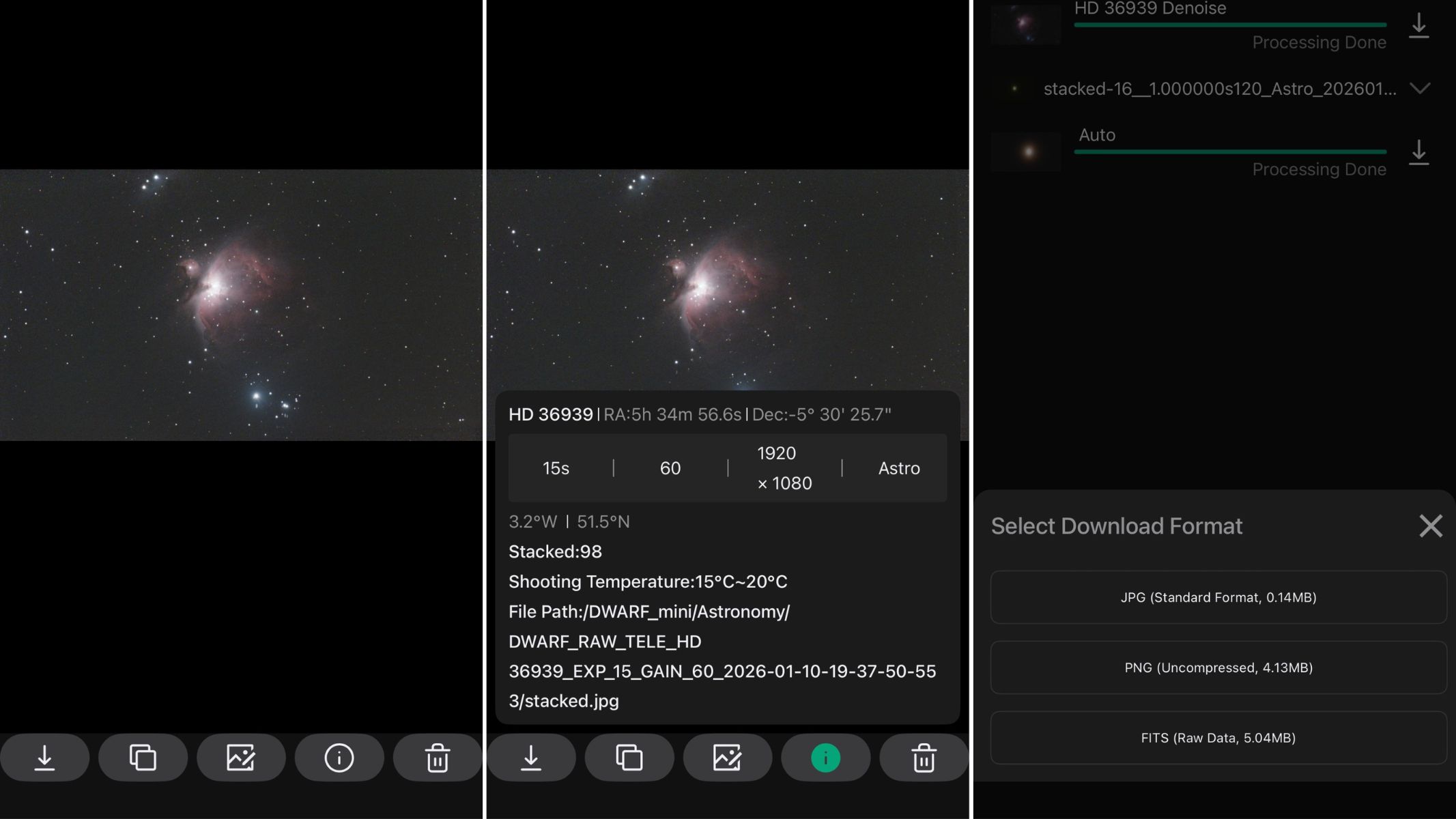
screenshot from the DWARFLAB Dwarf Mini app
Dwarf Mini stacked 15-second exposures of M42 to create 1920x1080 images.(Image credit: Jamie Carter)
  • Fast and intuitive app-based control
  • Real-time stacking with live preview
  • Star Correction tool sharpens images

The DwarfLab app controls everything: target selection, exposure settings, alignment, stacking, file saving and more. Just tap your target and the scope centers, tracks and begins imaging.

The star atlas is a wonderful addition, but it does require a little foresight. It’s not uncommon for it to need a significant data download, so it’s recommended to check the app before attaching to the Dwarf Mini — and certainly before leaving for a remote dark area with no mobile data signal — to make sure it’s up to date.

Image

1

of

2
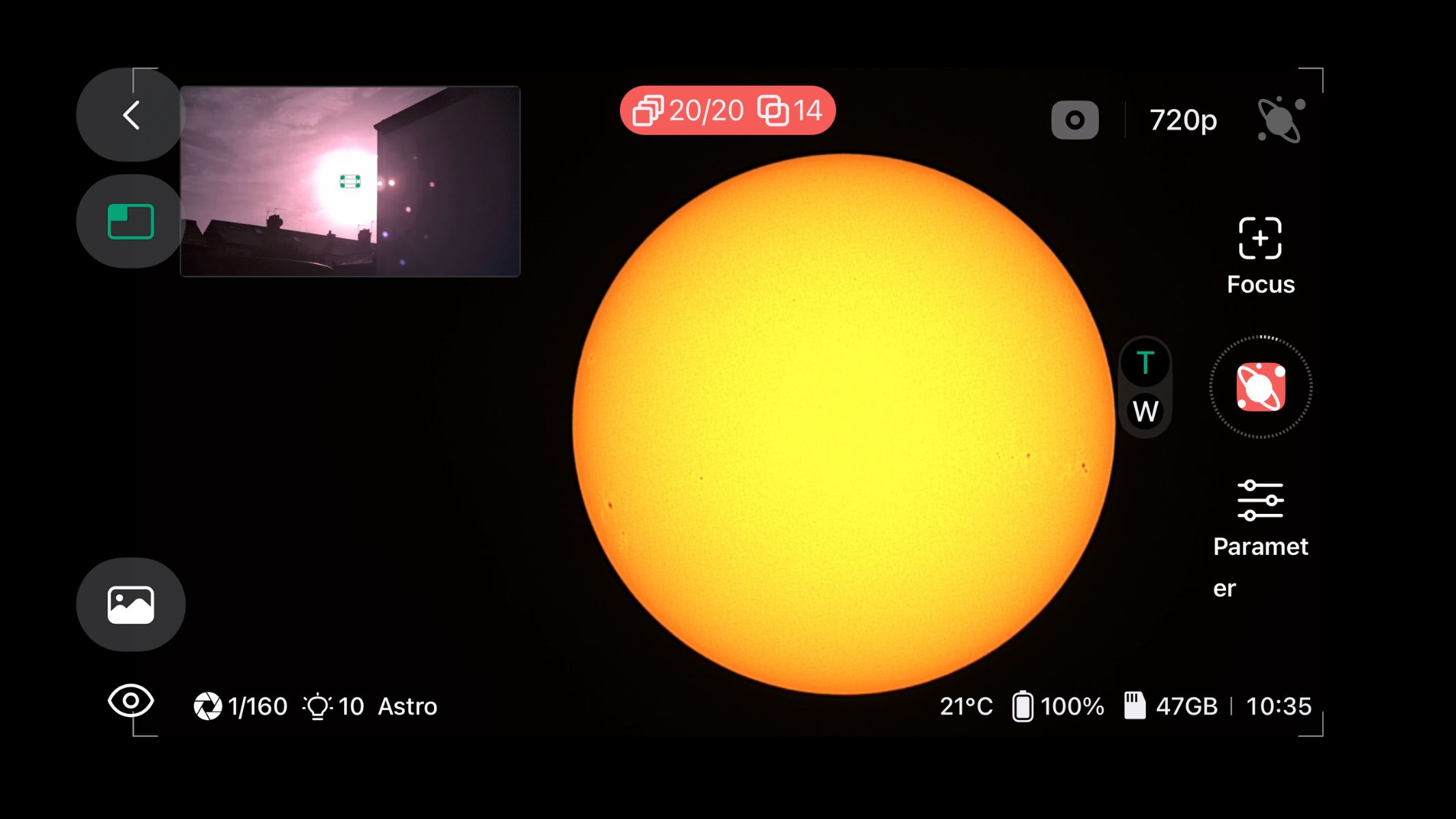
screenshot from the DWARFLAB Dwarf Mini app
The Dwarf Mini comes with a solar filter and finds the sun easily.(Image credit: Jamie Carter)

Stellar Studio, while impressive and definitely worth getting to know well, is rather fiddly. You need to be connected to the Dwarf Mini — and to create an account — to use this simple image processing software, and tweaking images can take some time. It also involves a workflow that’s a little repetitive and attention-hungry. However it works well, with Star Correction mode in particular worth using.

Related articles

Mega Stack is another useful option to have in the app. It allows the bundling of frames from multiple sessions to create an ever-evolving image. For example, you could shoot a faint nebula from your light-polluted backyard over several nights or short sessions, and combine the new and old frames at any time. For some really faint objects, you could arguably have the Dwarf Mini observe for hundreds of hours over a long period of time, or take it to a Dark Sky park to get the best data.

If that sounds tedious, note that the app comes with a scheduler, so you can pre-program what you want it to observe and, in theory, go to bed. However, note that its four-hour battery life means you should consider attaching it to a portable battery if you have grand ambitions during long, clear nights.

Should you buy the DwarfLab Dwarf Mini?
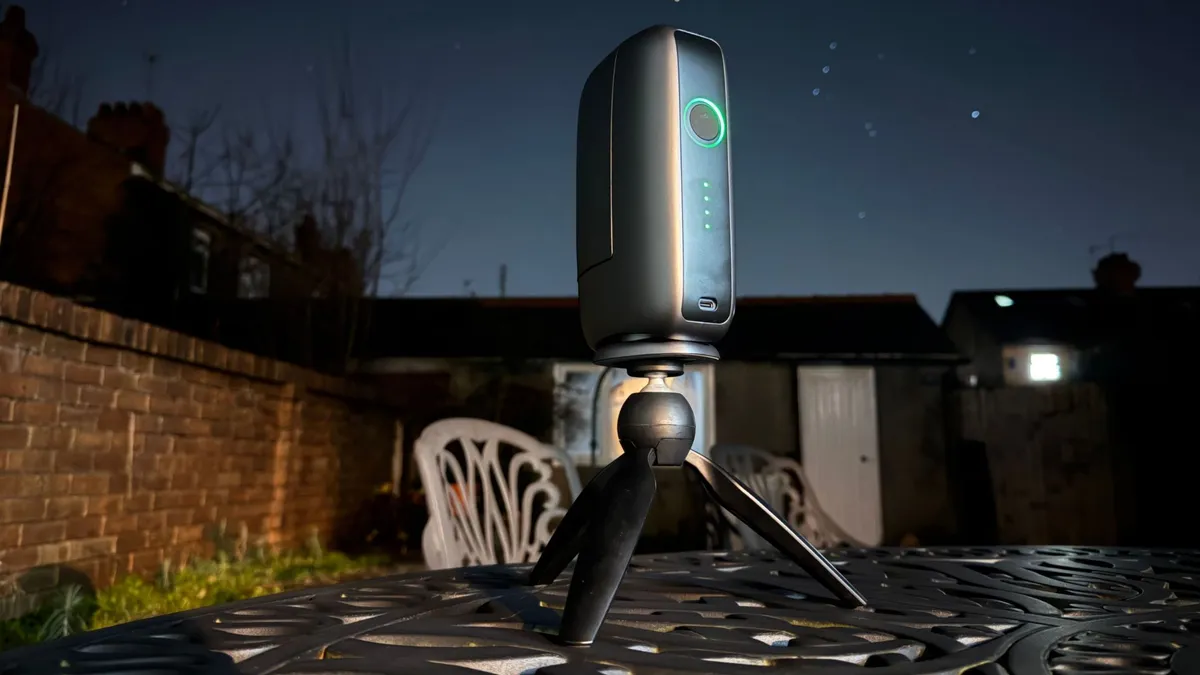
DWARFLAB Dwarf Mini on a metal garden table at night

The Dwarf Mini’s green LEDS can be deactiviated. (Image credit: Jamie Carter)

Buy it if:

✅ You want to tackle deep-sky astronomy and astrophotography from a light-polluted city.

✅ You travel to dark-sky destinations but don’t want to carry bulky or expensive gear.

Don't buy it if:

❌ You want high-resolution images for large-format printing

❌ You prefer to see the universe with your own eyes, not through images.

If you're looking for a compact scope that gets around the problem of light pollution and you want to try casual deep-sky astrophotography, the Dwarf Mini is a standout choice. Despite the small sensor size (2 MP), images appear sharp and vibrant on mobile devices.

Serious astrophotographers may hit the ceiling of what this tiny scope can deliver in terms of resolution and dynamic range, but that’s not the audience the Dwarf Mini primarily serves. Although it’s an ideal secondary imaging rig for those who want a compact, travel-friendly package for dark-sky locations, it’s primarily for anyone who wants consistent, enjoyable imaging from anywhere — including light-polluted backyards.

Whether you're an urban astronomer, an educator or simply someone looking for a convenient way to see and share the wonders of the night sky, the DwarfLab Dwarf Mini is a compelling choice — and a valuable addition to any astrophotography setup.

If this product isn't for you
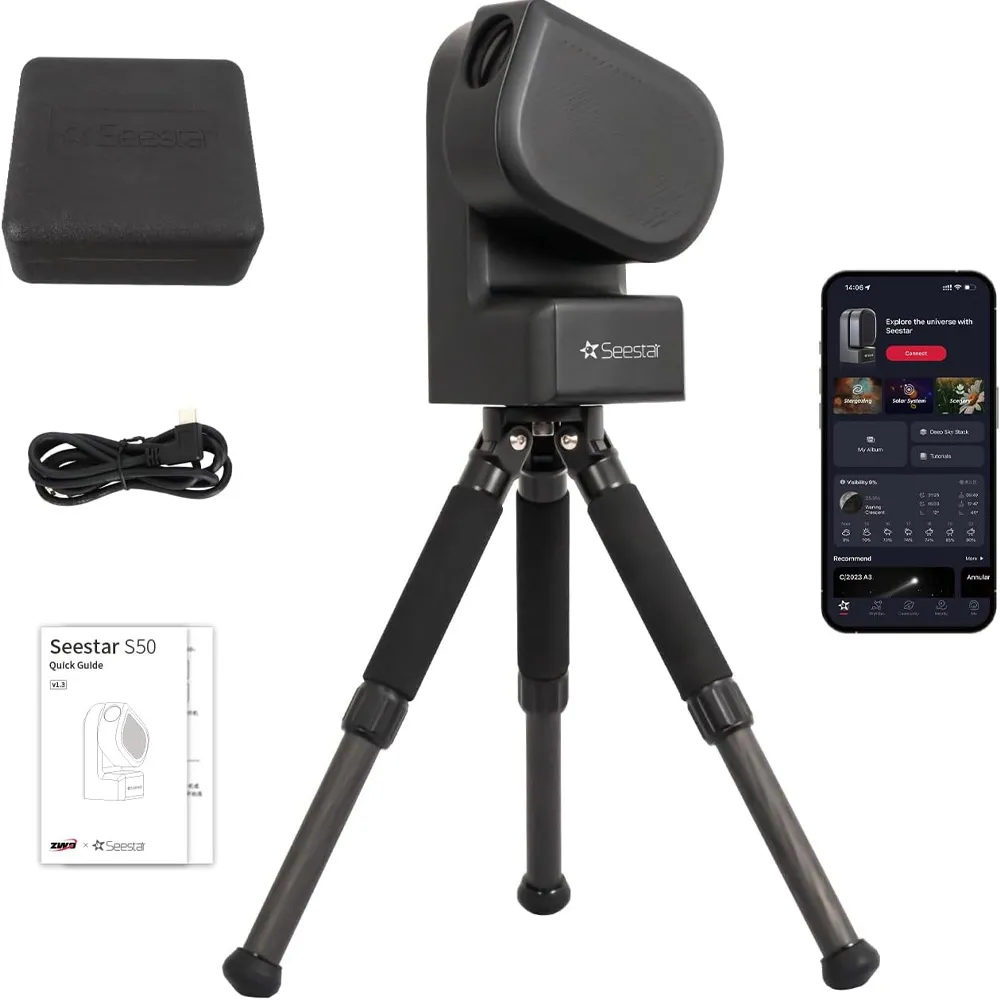
ZWO Seestar S50 on a white background If you want higher resolution

ZWO Seestar S50

If you want higher resolution images, the portable ZWO Seestar S50 has a 50 mm aperture and more onboard memory, though at a higher price.
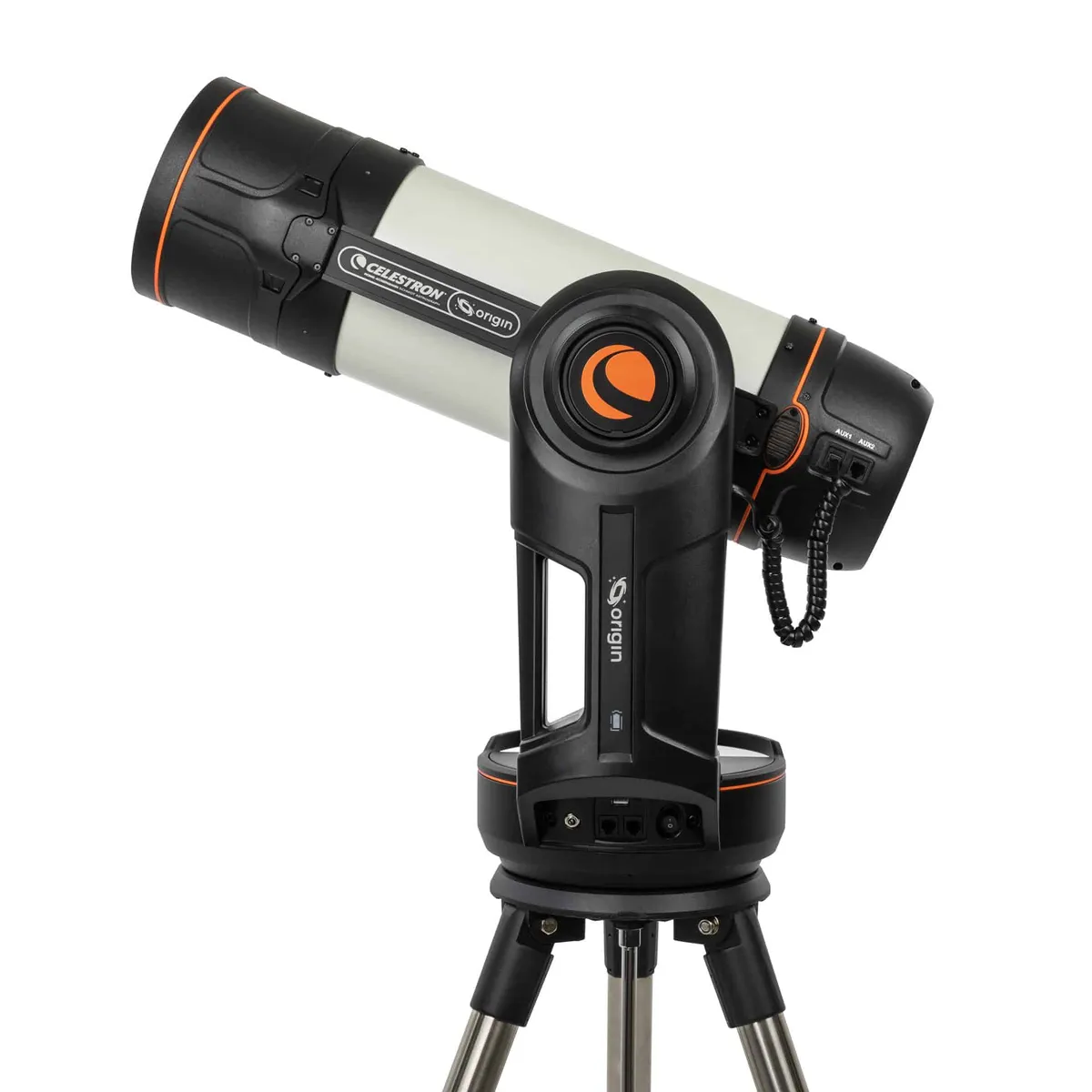
Celestron Origin product image on a white background. A premium option

Celestron Origin Intelligent Home Observatory
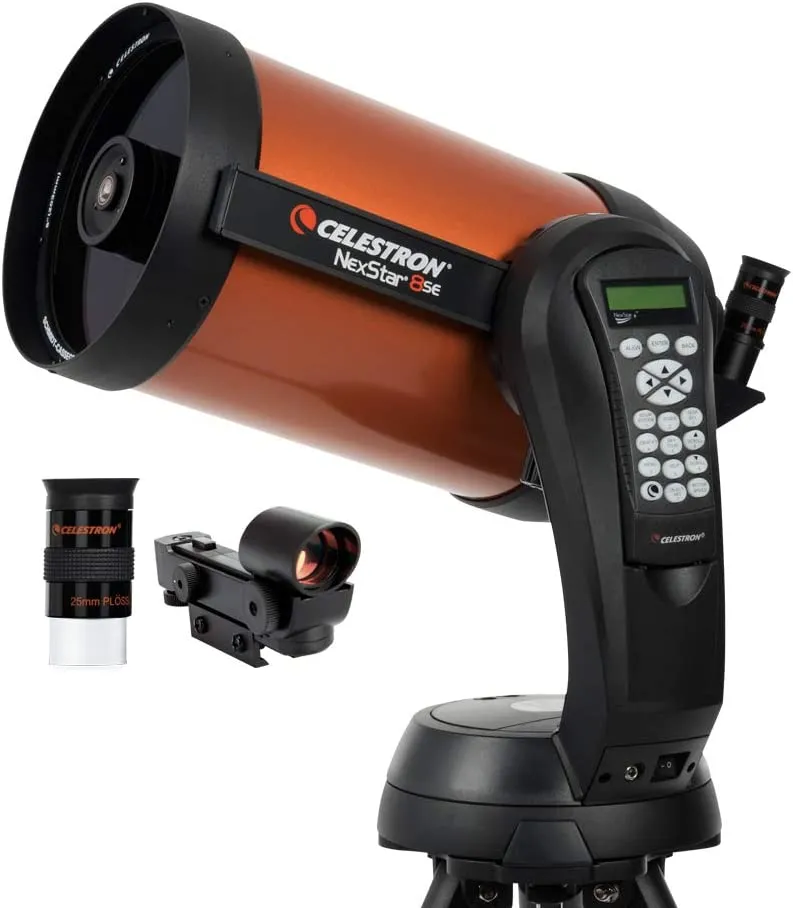
Celestron NexStar 8SE telescope A more traditional telescope

Celestron NexStar 8SE

Those after a more traditional experience should consider the Celestron NexStar 8SE, an affordable optical telescope with a traditional eyepiece, but useful computerized and motorized capabilities.

Jamie Carter

Live Science contributor

Jamie Carter is a Cardiff, U.K.-based freelance science journalist and a regular contributor to Live Science. He is the author of A Stargazing Program For Beginners and co-author of The Eclipse Effect, and leads international stargazing and eclipse-chasing tours. His work appears regularly in Space.com, Forbes, New Scientist, BBC Sky at Night, Sky & Telescope, and other major science and astronomy publications. He is also the editor of WhenIsTheNextEclipse.com.

You must confirm your public display name before commenting

Please logout and then login again, you will then be prompted to enter your display name.