





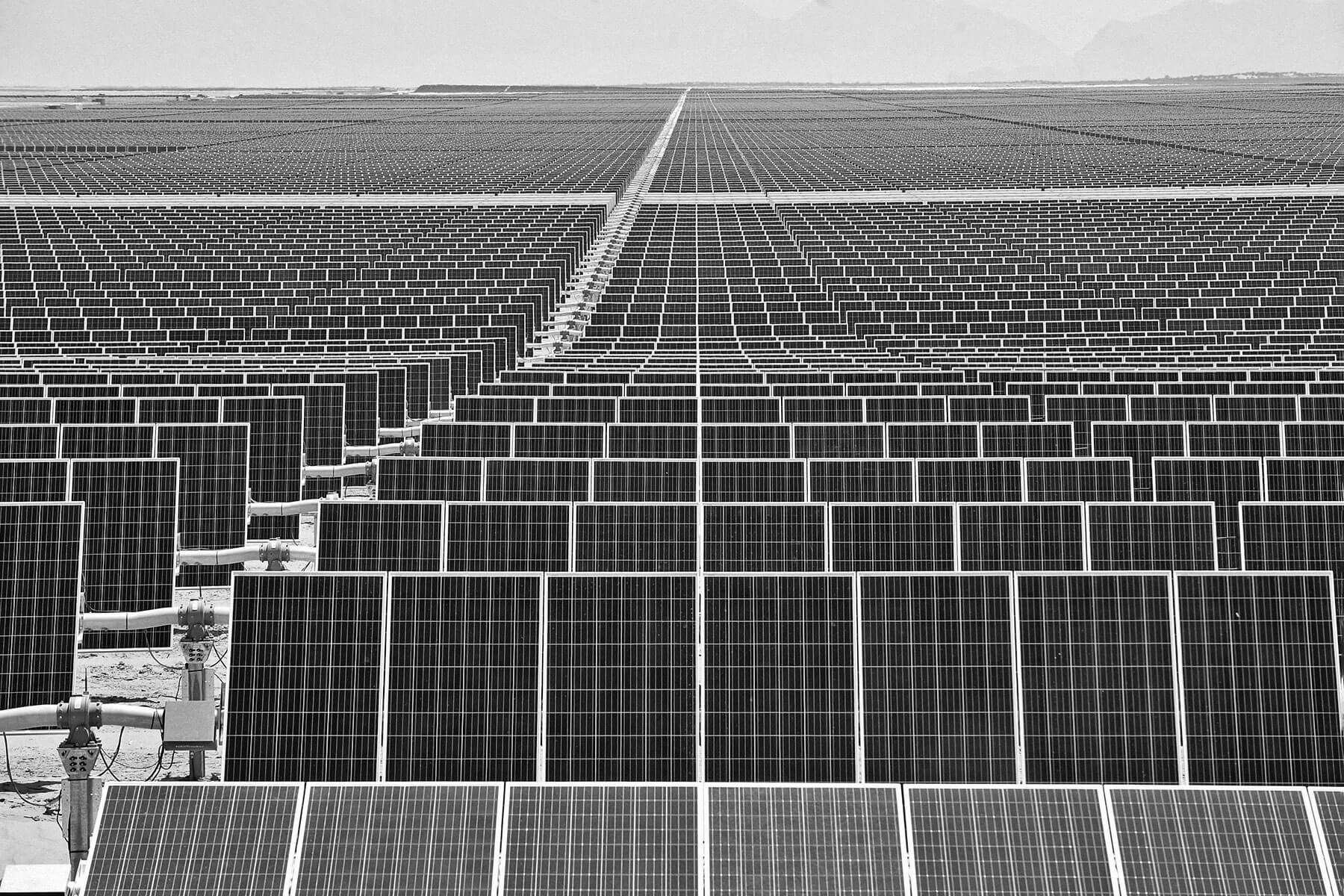
It probably comes as no surprise that Einstein won the Nobel Prize for physics in 1921, but what many people don’t realize is that the award wasn’t honoring the wunderkind’s groundbreaking general theory of relativity, but rather his revolutionary yet often overlooked explanation of the photoelectric effect. The initial discovery of the photoelectric effect came in 1887 from German physicist Heinrich Rudolf Hertz (yes, that Hertz), who noticed that when ultraviolet light hit a metal plate, it created sparks. What was puzzling was that different metals required different frequencies to produce the same effect. Then, in 1905, 26-year-old Einstein solved this conundrum by introducing a new conception of light, which he published in his first paper submitted to Annalen der Physik. He argued that light wasn’t just a wave, as some scientists suggested, but also a stream of particles, later known to science as “photons.” Einstein posited that these photons contained a fixed amount of energy depending on their frequency, and his theory — though derided for years — successfully explained the photoelectric phenomenon. Though solar cells predated Einstein’s discovery by dozens of years, it wasn’t until Einstein’s theory that scientists understood why they worked, which helped make solar panels even more efficient.
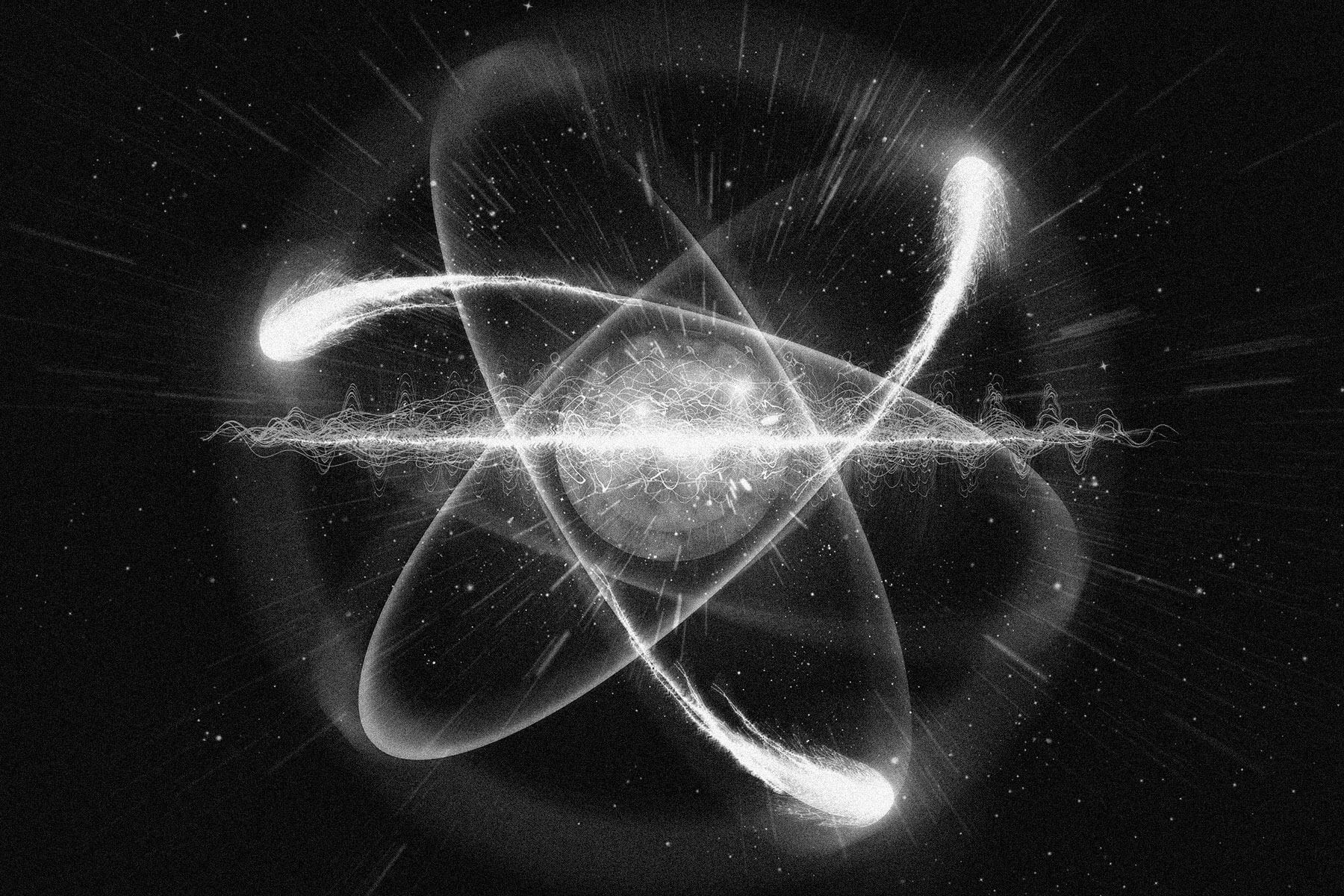
Lasers (an acronym for “Light Amplification by Stimulated Emission of Radiation”) scan your groceries at the supermarket, make self-driving cars possible, and form the backbone of optical communication. And yes, we can thank Einstein for this one, too. In 1917, Einstein published a paper detailing his quantum theory of radiation. The theory basically states that atoms can be stimulated to change energy levels when hit with a specific frequency. If that excited atom is hit with another photon of the same frequency, it’ll produce two coherent photons (traveling in the same direction) while the atom’s electron returns to its ground state. This means you can artificially create a sudden burst of coherent light as atoms discharge in a chain reaction, otherwise known as “stimulated emission of radiation” (the “ser” in “laser”). It wasn’t until after World War II that scientists found a use for Einstein’s discovery; the laser was developed by using mirrors to create light amplification.
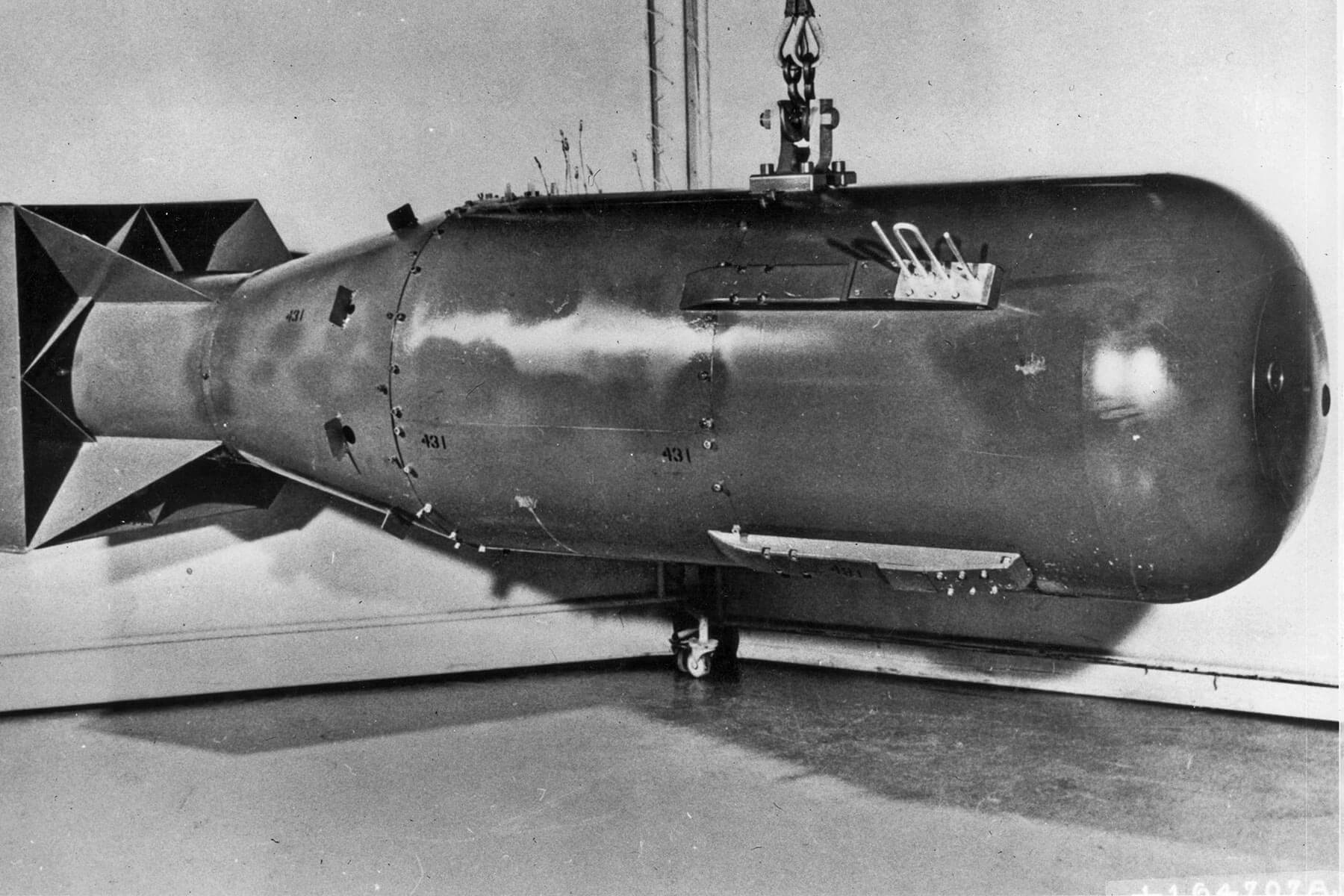
The final discovery of Einstein’s “miracle year” was the concept that light and energy are equivalent, and that their relationship can be explained with the elegantly simple equation E=MC2, meaning energy equals mass times the speed of light squared. Describing mass as essentially super-dense energy, Einstein’s equation shows how even small amounts of mass at atomic levels can produce a tremendous amount of energy when multiplied by the speed of light squared — and you probably see where this is going.
This process explains how a neutron fired from a uranium atom splits it into smaller atoms while releasing a tremendous amount of energy. It’s known as nuclear fission, and when the process is controlled, it provides low-emission nuclear energy. When released in an uncontrolled state, it can be used to produce an atomic bomb. Einstein himself never worked on the Manhattan Project, the secret government program to make the first nuclear bomb, but he rubber-stamped the idea in a 1939 letter to Franklin D. Roosevelt that argued for the U.S. to make the bomb before Nazi Germany. Einstein later regarded that letter as the “one great mistake in my life.”
As previously described, nuclear fission works by breaking apart an element such as a heavy uranium-235 atom into two smaller atoms (krypton and barium). However, something interesting also occurs: If two light nuclei (i.e., hydrogen) can overcome electrostatic repulsion, they fuse together to form a heavy helium-4 atom — sort of like fission but in reverse. Similarly, following the E=MC2 equation, this process produces a tremendous amount of energy and heat. This is known as nuclear fusion, and it’s the atomic science that is the energy-producing engine of stars.
On paper, nuclear fusion could provide the answer to humanity’s expanding energy needs. There’s no enriched material involved; nuclear proliferation with fusion reactors isn’t a worry; a meltdown is scientifically impossible; there’s no radioactive material produced as a byproduct; it’s completely carbon-free; and fusing atoms together releases 4 million times more energy than the chemical process of burning coal. There’s just one catch: Building a fusion reactor is immensely complicated. That’s never stopped people before, though. An international coalition of scientists and agencies is hard at work creating the International Thermonuclear Experimental Reactor, or ITER, which is set to go online in 2025.
此内容由惯性聚合(RSS阅读器)自动聚合整理,仅供阅读参考。 原文来自 — 版权归原作者所有。