
惯性聚合 高效追踪和阅读你感兴趣的博客、新闻、科技资讯
阅读原文 在惯性聚合中打开

推荐订阅源

TaoSecurity Blog
TaoSecurity Blog
OSCHINA 社区最新新闻
OSCHINA 社区最新新闻
F
Fortinet All Blogs
Cisco Talos Blog
Cisco Talos Blog
D
Darknet – Hacking Tools, Hacker News & Cyber Security
S
Secure Thoughts
美团技术团队
雷峰网
雷峰网
Hugging Face - Blog
Hugging Face - Blog
博客园_首页
C
CXSECURITY Database RSS Feed - CXSecurity.com
Engineering at Meta
Engineering at Meta
人人都是产品经理
人人都是产品经理
月光博客
月光博客
T
Tor Project blog
P
Privacy & Cybersecurity Law Blog
Recorded Future
Recorded Future
I
Intezer
博客园 - 【当耐特】
钛媒体:引领未来商业与生活新知
钛媒体:引领未来商业与生活新知
GbyAI
GbyAI
罗磊的独立博客
V
V2EX
Google DeepMind News
D
DataBreaches.Net
Last Week in AI
Last Week in AI
T
Tailwind CSS Blog
www.infosecurity-magazine.com
A
About on SuperTechFans
Scott Helme
Scott Helme
Vercel News
Vercel News
Spread Privacy
Spread Privacy
T
Threat Research - Cisco Blogs
Recent Announcements
Hacker News: Ask HN
Hacker News: Ask HN
C
CERT Recently Published Vulnerability Notes
G
Google Developers Blog
B
Blog
博客园 - 叶小钗
WordPress大学
WordPress大学
博客园 - 聂微东
Threat Intelligence Blog | Flashpoint
Jina AI
Jina AI
IT之家
IT之家
C
Cybersecurity and Infrastructure Security Agency CISA
P
Palo Alto Networks Blog
小众软件
小众软件
博客园 - Franky
Microsoft Azure Blog
AWS News Blog
AWS News Blog

Hackread – Cybersecurity News, Data Breaches, AI and More

Operation Endgame Disrupts StealC, Amadey and SocGholish Malware Networks New GhostShell Hacking Group Targets Ukraine’s Drone Defense Sector Fake npm Packages Impersonate PostCSS Tool to Steal Chrome Passwords Best Crypto Payment Solutions for E-Commerce Businesses Internet Society Foundation Opens Global Call for Common Good Cyber Fund to Strengthen Cybersecurity LastPass Confirms Customer Data Breach After Klue OAuth Token Theft ‘Cordyceps’ CI/CD Flaw Exposes Microsoft, Google, Apache Repos to Pipeline Hijacking The Rise of AI-Powered Academic Fraud: Beyond Traditional Plagiarism New CryptoBandits Malware Uses USB Drives and Tor to Steal Crypto The Evolution of iGaming Fraud: What Security Teams Should Expect in 2027 2 Scattered Spider-Linked Hackers Plead Guilty Over £39M TfL Cyberattack Beats Studio Buds Flaw Could Let Nearby Attackers Eavesdrop on Users Texas Parks and Wildlife Data Breach Affects Over 3M License Customers Threat Hunting Beyond Alerts: Finding the Activity Detection Misses Scammers Use Fake GitHub Stars, VirusTotal Reviews to Spread Crypto Clipper Salesforce Disables Klue Integration After OAuth Token Theft Hits Customer Data MDR Provider Comparison: Time to Discover and Respond to Threats Meteor 3.0 Migration Helped Rocket.Chat Move Off End-of-Life Node.js Runtime Gcore Helps Ucom Safeguard Public Live Broadcast Infrastructure During Armenia’s Parliamentary Elections Nintendo America Employee Data Exposed After Shadowbyt3$ Targets TinyPulse eFAQ Publishes Investigation Into Alleged Scam Activity and Coordinated Reputation Attacks FIFA World Cup 2026: Hackers Target Football Fans With Fake Tickets Sites MacBook Neo vs Windows Laptops for Cybersecurity Tasks Operation Endgame Disrupts SocGholish Malware Infrastructure What Businesses Should Know Before Migrating Their CMS DragonForce Ransomware Abused Microsoft Teams to Hide Malware Activity Agentjacking: Researchers Show How One Fake Bug Report Can Hijack AI Coding Agents FortiBleed Attack Exposes Fortinet Firewall Credentials in 194 Countries SpyCloud Report Finds Phishing Attacks Surge as Employee Data Is Exposed at 86% of Fortune 100 Companies 152 Chrome Live Wallpaper Extensions Hid Ad Tracking and Fake Search Clicks Heimdal Survey: Executives Four Times More Confident About AI Risk Than the Teams Managing It ESET MDR vs Sophos MDR: Compared Time to discover and respond to a threat 15 Malicious JetBrains Plugins Caught Stealing DeepSeek, OpenAI API Keys Amos Stealer Targets macOS Keychain Files and Browser Passwords Aembit Extends IAM for Agentic AI to Microsoft Copilot Studio AppViewX Launches Agent Identity Security to Govern Agents for the AI and Quantum Era New Rokarolla Android Trojan Found Targeting 217 Crypto and Banking Apps Developer laptops are the credential store attackers are picking through in 2026, GitGuardian announces Endpoint Protection Best of Android Fax Apps: Top 5 Secure Picks for 2026 Feds Seize CFAKE and SOCFAKE Over Explicit Deepfakes of Famous Women Handala Hacking Group Claims Breach of California Water Service Over 50 Android Apps Found Spreading MagicAd Trojan via Official Stores Hackers Hide New Argamal Malware Inside Working Hentai Games Extradited Ukrainian Man Admits Role in Conti Ransomware Attacks Atomic Arch Campaign Hijacks 20+ Linux AUR Packages to Deliver Malware ShinyHunters Target Universities in Oracle PeopleSoft Zero-Day Attack The SpaceX Pre-IPO Market: How Crypto Rails Are Opening Synthetic Access Feds Seize AudiA6 and Dark2Web in $389M Crypto Laundering Case ShinyHunters Leak 40GB of University of Nottingham Student Data Authorities Dismantle Decade-Old SniperDZ Phishing Network Criminal IP at Infosecurity Europe 2026: Introducing AITEM, the Next Chapter of Attack Surface Management Hackers Use Fake Claude Code Guide and AI PDFs to Spread AsyncRAT Malware The Hidden Security Risks of Poor Software Testing FBI Seizes China-Linked Fake Consulting Sites Targeting US Clearance Holders How to Turn Images into Animated Videos with AI: A Wondershare Filmora Guide Scammers Use TikTok and Instagram Reels to Spread Vidar Infostealer ServiceNow Discloses Security Incident Exposing Customer Data Cloud Security Report Finds Fragmented Tools Widening the Cloud Complexity Gap Microsoft June 2026 Patch Tuesday Fixes 206 Flaws and 3 Zero-Days Network Log Analysis: Why Collecting Logs is Not Enough E-Signature Security Checklist Before Selecting an E-Signature Tool Maine Govt Portal Lists 10M Discord Data Breach Notice, But Filing Shows Red Flags Handala Claims Israeli Radar Hack, But Evidence Shows Phone Admin Panel WhatsApp Says It Blocked Pegasus Spyware Campaign Linked to NSO Operation FlutterBridge Uses Fake Google Ads to Spread macOS Backdoor Hackers Clone Ghidra, dnSpy and Other Tool Sites to Spread Malware Silent Ransom Group Uses Fast Flux Botnet to Hide Law Firm Leak Sites New Pink Extortion Group Targets Microsoft 365 Cloud Data Via Vishing Scams Miasma Malware Hits 32 Red Hat Packages via Compromised GitHub Account Atlas Menu Data Breach Exposes 64,000 GTA V and CS2 Cheat Service Users Reaper macOS Infostealer Abuses Script Editor to Steal Crypto and Passwords iFood Confirms Data Breach Affecting 1.2 Million Users in Brazil Why eSIMs Are Replacing Traditional SIM Cards Lazarus Group Uses npm Brandjacking Campaign to Target Developers Five Eyes Warns Chinese Spies Are Using Fake Job Ads to Target Military Staff How to Recover Data from iCloud Backup Without Resetting Your iPhone China-Linked TA4922 Hackers Target UK, Europe With New SilentRunLoader Malware Alcasec, "Robin Hood of Spanish Hackers," Jailed for 31 Months Over Data Theft Fake ChatGPT Desktop App Ads Used to Push Password-Stealing Malware Hackers Abused Meta’s AI Support Bot to Hijack Major Instagram Accounts New WordPress Malware Uses Steam Profile Comments to Hide C2 Instructions Halo Security Honored with 2026 MSP Today Product of the Year Award Why Encrypted File Sharing Is Essential for Modern Businesses What One Predator Case Can Reveal About an Online Platform’s Safety Gaps RaccoonLine Publishes 2026 dVPN Buyer’s Guide for Privacy-Focused Users How to Get a Reddit API Key in 2026: Step-by-Step Guide Zero-Click pretalx XSS Flaw Lets Hackers Hijack Conference Organizer Accounts How to Get the Most From Your Explainer Video Production Services Fake Purchase Order Emails Spread Fileless PureLogs Malware via RAR Archives 27,000-Download Codex UI Tool Secretly Stole OpenAI Refresh Tokens Fake Anthropic Sites Deliver Fileless Infostealer to Claude Code Users The Deliverability Problem: How New Platforms Are Solving Inbox Placement The CISO Whisperer's Watch List For The Gartner Security & Risk Management Summit 2026 Can Big Data Predict Market Movements Accurately? Iran’s Nimbus Manticore Used Trojanized Zoom Installers Against US Firms Link11 is fully committed to Europe and is opening a Customer Excellence Hub in Lisbon Trojanized Gemini and Claude Installers Target Developers Via SEO Poisoning Claude Mythos AI Identified 10,000+ Software Vulnerabilities in One Month FBI Chief Kash Patel’s Clothing Store Hacked in ClickFix Infostealer Attack Netherlands Busts Bulletproof Hosting Network Linked to Disinfo and Cybercrime
How Can MSSPs Scale Threat Detection Without Burning Out Their Analysts?
Owais Sultan · 2026-05-27 · via Hackread – Cybersecurity News, Data Breaches, AI and More

See how MSSPs scale threat detection with AI driven intelligence, automated enrichment, and faster triage without overloading security analysts

At the core of MSSP growth lies a paradox: human talent is your most valuable asset, but also your most limited resource. Hiring more analysts isn’t always possible. The global cybersecurity talent shortage makes it difficult. And even if talent were available, inflating staff costs could undermine the business model. Yet overloading existing teams creates its own risks: burnout, alert fatigue, and costly mistakes.

Threat analysts are the backbone of MSSPs. But their daily work is often filled with repetitive tasks, cognitive overload, and stress from high expectations. Without the right support, even the most capable teams risk crumbling under pressure. What MSSPs need is a force-multiplying intelligence layer that amplifies the judgment and throughput of analysts already on the team.

How To Scale Threat Detection in an MSSP Environment

  • Integrate continuously updated threat intelligence into SIEM and detection platforms.
  • Automate IOC enrichment and alert prioritization workflows.
  • Standardize investigation, reporting, and escalation criteria across all tiers.
  • Reduce tool fragmentation by connecting investigation and intelligence workflows.
  • Use AI-assisted summaries to accelerate triage and escalation.
  • Continuously refresh detection logic with adversary-derived, empirical threat data.
  • Focus analyst time on high-confidence threats instead of manual research.

This is how ANY.RUN’s complementary threat intelligence solutions address operational pressure and structural inefficiency that tend to poison MSSP growth.

1. Reduce Analyst Overload by Automating Threat Enrichment and Prioritization 

Alert volume growth consistently outpaces the capacity of manually-driven triage workflows. Analysts expend significant time on indicator validation, cross-referencing disparate intelligence sources, and adjudicating false positives that should never have reached a human queue. Over time, this pattern produces alert fatigue, degraded triage accuracy, and systematic threat coverage gaps. 

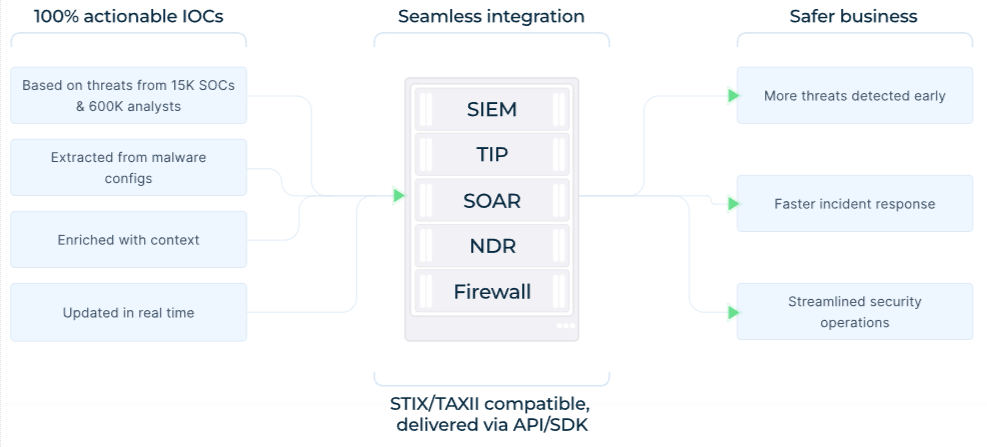
Threat Intelligence Feeds deliver a continuous stream of confirmed malicious IPs, domains, and URLs enriched with behavioral indicators extracted directly from live malware executions occurring around the clock across ANY.RUN’s analysis infrastructure. 

This intelligence can be integrated directly into SIEMs, SOARs, XDRs, TIPs, and detection pipelines using standard formats such as STIX, TAXII, and MISP. 

For MSSPs, the operational advantage is not only stronger detection coverage. It is the reduction of repetitive manual work. This dramatically improves triage speed and lowers the cognitive load on SOC teams.
How Can MSSPs Scale Threat Detection Without Burning Out Their Analysts?
TI Feeds: features and benefits

ANY.RUN’s feeds are designed to fit naturally into existing workflows instead of forcing analysts to learn entirely new processes. Security teams can automate ingestion into their current infrastructure while maintaining familiar workflows and dashboards.

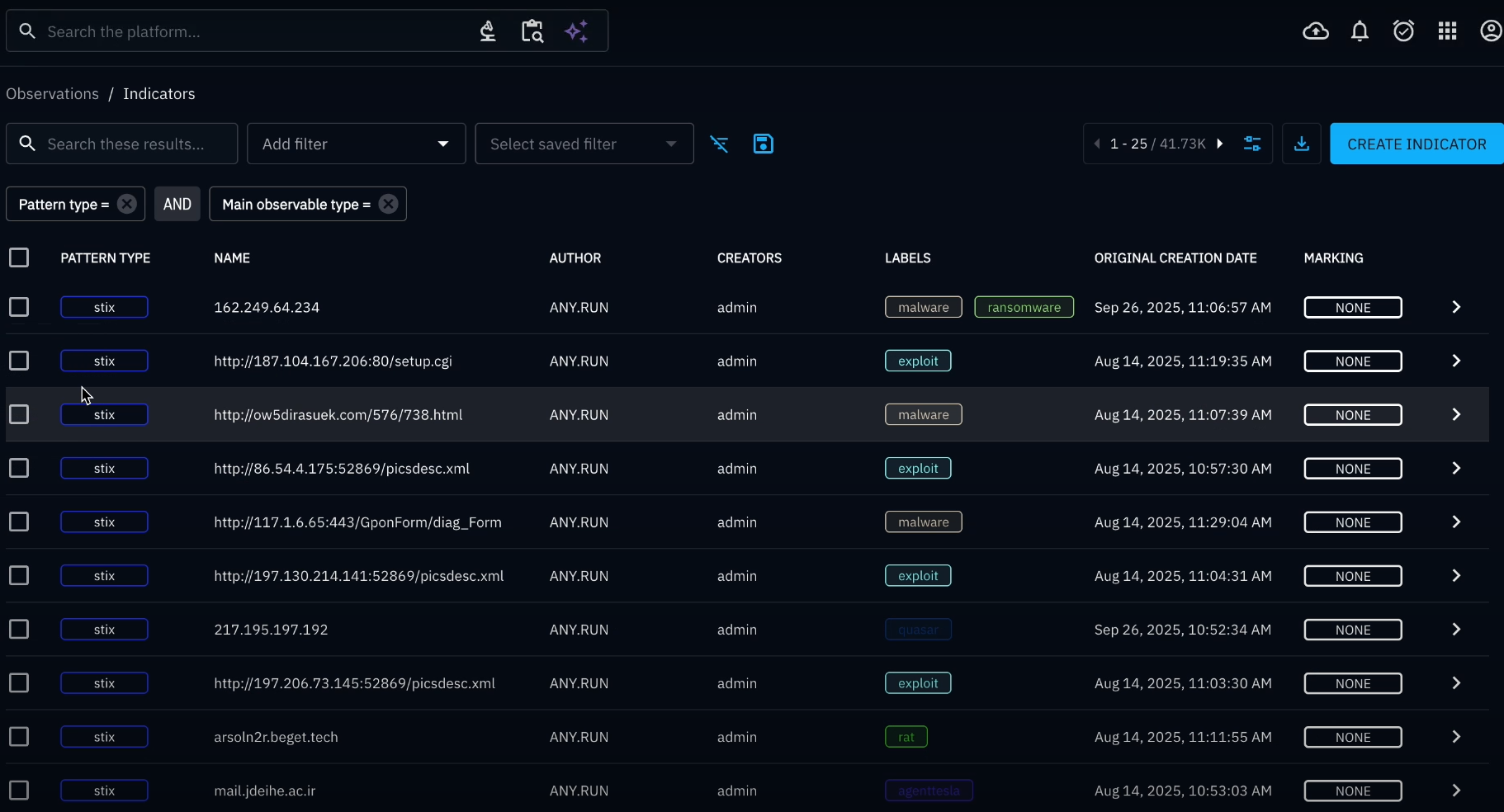
Even less experienced analysts can work confidently because the feeds provide contextualized intelligence instead of raw data streams. Rather than receiving isolated indicators with no explanation, analysts can immediately understand why an IOC matters and how it relates to real attacks.
How Can MSSPs Scale Threat Detection Without Burning Out Their Analysts?
TI Feeds analyst interface

For growing MSSPs, this means:

  • Faster alert enrichment and prioritization;
  • Lower false positive rates;
  • Better analyst productivity;
  • Easier onboarding for junior team members;
  • Stronger proactive detection across multiple client environments.

ANY.RUN’s Threat Intelligence Lookup acts as a threat investigation environment where analysts can instantly search and correlate indicators, files, domains, URLs, IPs, hashes, and behavioral artifacts.

Instead of manually collecting fragments of information, teams immediately access:
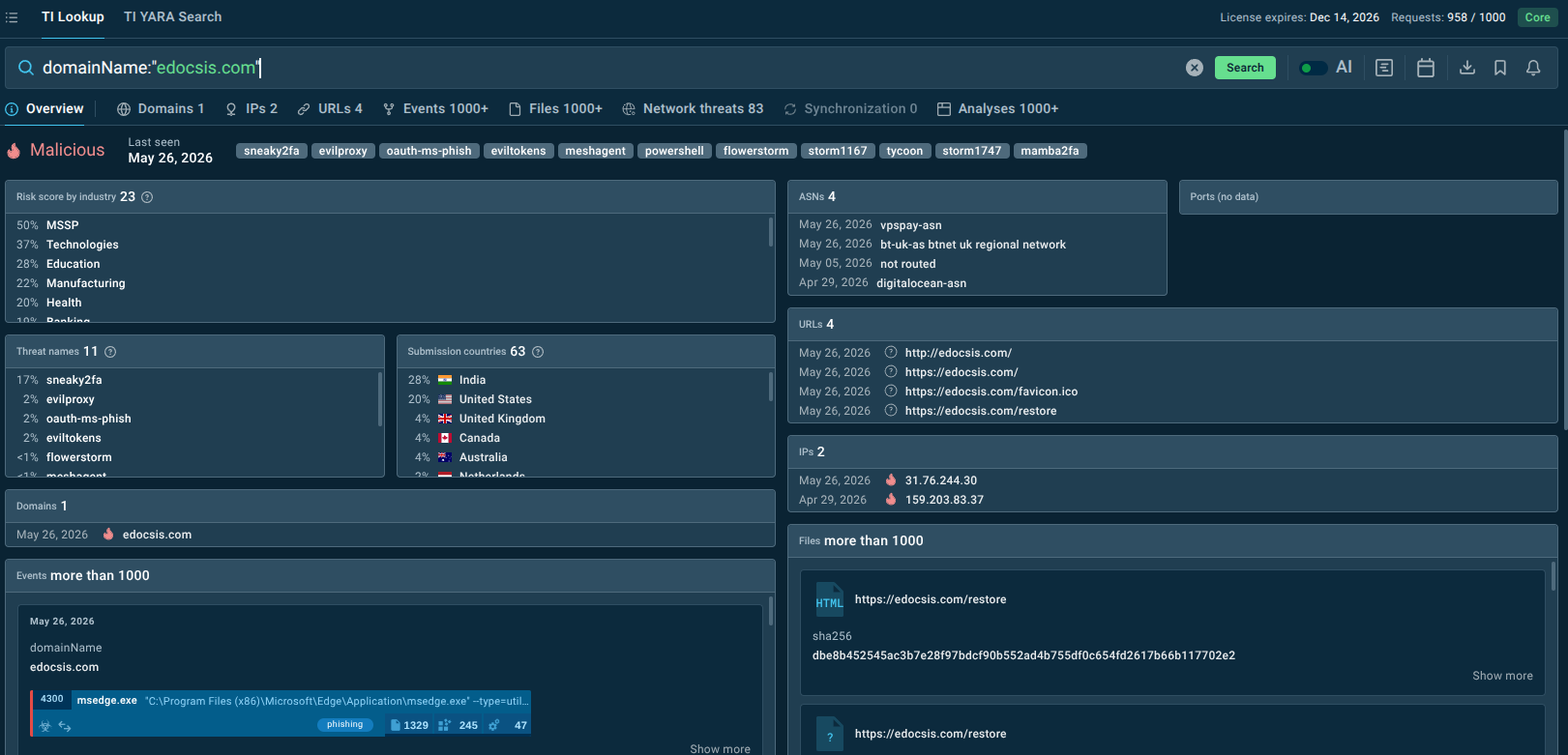
  • Related IOCs and infrastructure;
  • Malware associations;
  • Behavioral patterns;
  • Sandbox analysis references;
  • Threat actor connections;
  • Campaign-related activity.

domainName:”edocsis.com

How Can MSSPs Scale Threat Detection Without Burning Out Their Analysts?
The results of a domain name check in TI Lookup

This makes investigations dramatically faster, but convenience is just as important as speed. The interface is intuitive, AI-assisted, and designed around real investigation workflows rather than abstract intelligence databases.

Built-in query examples and public searches help analysts understand how to structure requests and explore investigations performed by other security professionals. This removes a large portion of the intimidation that often comes with advanced threat hunting platforms.

Instead of learning complex syntax from scratch, analysts can begin working productively almost immediately.

For MSSPs managing high alert volumes, this usability advantage matters enormously. Junior analysts can validate suspicious indicators faster and escalate with more confidence. Senior analysts spend less time answering repetitive questions and more time focusing on high-value investigations.

The result is a more scalable SOC operation where expertise becomes easier to distribute across the team.

As MSSPs grow, having strong detection logic that travels across clients becomes a competitive differentiator. Generic, off-the-shelf rules will only get you so far. MSSPs that can build, test, and operationalize custom detection logic at scale are positioned to deliver measurably better outcomes.

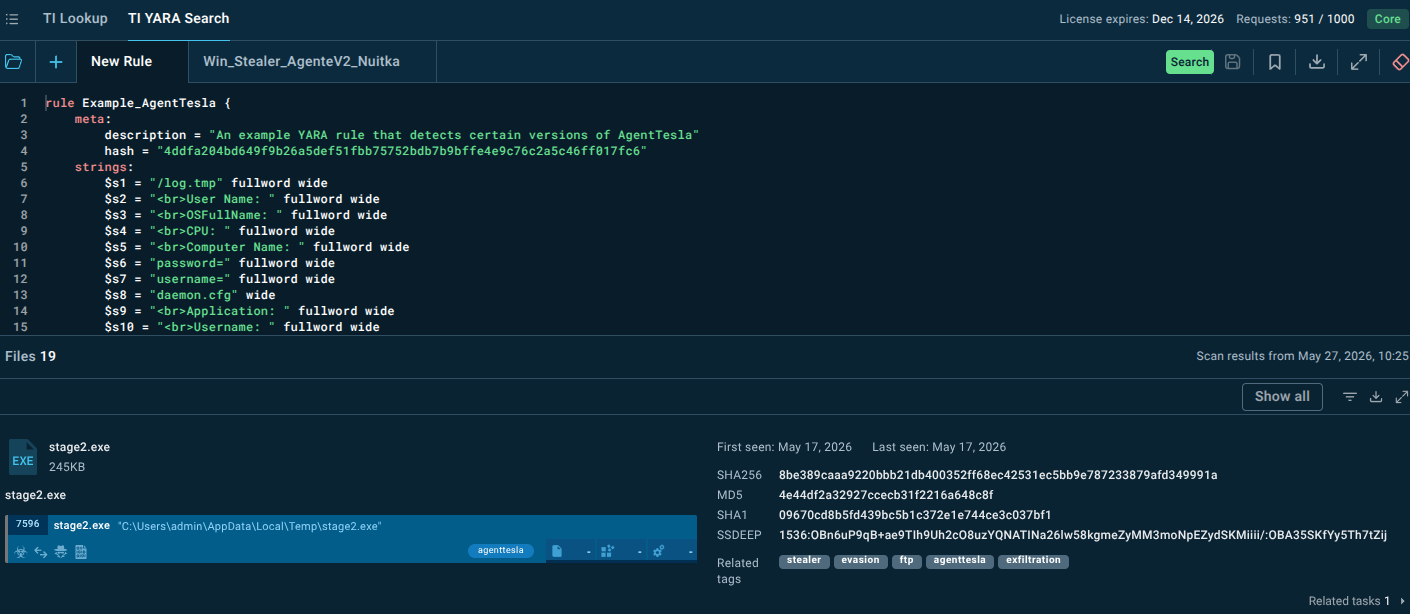
ANY.RUN’s TI YARA Search module enables analysts to write YARA rules and run them against ANY.RUN’s extensive database of malware samples and analysis results instantly identifies which known threats match a given behavioral or structural pattern.
How Can MSSPs Scale Threat Detection Without Burning Out Their Analysts?
YARA rule that detects Agent Tesla

The visual feedback loop writes a rule, sees what it matches, inspects malware samples, improves the rule, removing much of the traditional friction involved in detection engineering. Experienced analysts move faster; junior analysts build confidence and learn by doing.

YARA Search helps MSSPs to:

  • Develop and validate custom detection rules grounded in real malware behavior.
  • Hunt for previously undetected threats across historical analysis data.
  • Share and standardize detection logic across analyst teams.
  • Identify rule gaps before attackers exploit them.
  • Scale detection engineering without requiring specialist expertise at every tier.

3. Deliver Strategic Client Intelligence with Threat Intelligence Reports

Beyond reactive triage and alert enrichment, MSSPs increasingly need to deliver strategic value to clients, not just “we blocked this threat” but “here’s what’s targeting your industry, how it operates, and what to watch for.”

ANY.RUN’s Threat Intelligence Reports support this by providing structured, analyst-ready intelligence on active malware families, campaigns, and threat actor behaviors. These are research-depth reports that give MSSPs the narrative layer to contextualize individual alerts within the broader threat landscape, useful for client briefings, QBRs, and proactive advisory conversations. The reports inform strategy, support client communication, and elevate the perceived value of MSSP services beyond the purely operational.

Scale Multi-Client Operations Without Linear Headcount Growth

The core MSSP scaling challenge is simple: revenue can grow exponentially, but analyst capacity usually cannot. Without workflow optimization, every new client increases operational pressure almost proportionally.

ANY.RUN helps break this pattern by creating a shared intelligence layer across detection, investigation, and reporting workflows. TI Feeds, TI Lookup, YARA Search, and TI Reports work together to:

  • Reduce manual enrichment;
  • Minimize context switching between platforms;
  • Standardize investigations across analyst tiers;
  • Accelerate analyst onboarding;
  • Lower escalation rates;
  • Improve consistency across client environments;
  • Increase investigation throughput per analyst.

This allows MSSPs to scale operations more sustainably while maintaining detection quality and analyst well-being.

ANY.RUN’s Complete Plan: Enterprise-Grade TI Access in One Package

For MSSPs that want to equip their teams with the full intelligence stack, ANY.RUN offers a Complete plan designed for enterprise-grade TI access across the entire threat lifecycle from early detection and triage through response and proactive hunting.

The Complete plan brings together:

  • TI Lookup — instant, deep contextual investigation across indicators
  • YARA Search — custom detection rule development and validation against real malware data
  • TI Reports — structured intelligence on active threats and campaigns
  • TI Feeds — continuously updated IOC streams for automated enrichment and detection

Rather than purchasing modules individually and managing separate integrations, MSSPs on the Complete plan get a unified intelligence environment that covers every stage of analyst work: from a junior analyst triaging their first suspicious IP to a senior threat hunter building custom detections across a client portfolio.

Get Special ANY.RUN Offers Before May 31

To share the joy of its 10th anniversary, ANY.RUN offers special pricing for SOCs, MSSPs, and enterprise security teams that want to strengthen phishing analysis, threat intelligence, and response readiness.

Trusted by security teams worldwide, including 74 Fortune 100 companies, ANY.RUN helps organizations bring earlier threat visibility into the workflows where response decisions happen.
How Can MSSPs Scale Threat Detection Without Burning Out Their Analysts?
ANY.RUN’s birthday special plans

Until May 31, teams can access anniversary offers across key ANY.RUN solutions, including:

  • Interactive Sandbox Enterprise – Suite to safely analyze suspicious links, files, emails, and phishing pages with behavior-based visibility, with bonus seats and exclusive pricing available for teams.
  • Threat Intelligence Solutions – Complete Plan with extra months to help teams connect single cases to related infrastructure, IOCs, campaigns, and broader threat activity.

This is a great opportunity to close social engineering blind spots, reduce gray-zone investigations, and give teams clearer evidence before trusted workflows turn into exposure.