





惯性聚合 高效追踪和阅读你感兴趣的博客、新闻、科技资讯
阅读原文 在惯性聚合中打开

推荐订阅源

P
Palo Alto Networks Blog
大猫的无限游戏
大猫的无限游戏
Martin Fowler
Martin Fowler
GbyAI
GbyAI
CTFtime.org: upcoming CTF events
量子位
T
The Blog of Author Tim Ferriss
Y
Y Combinator Blog
Microsoft Azure Blog
C
CERT Recently Published Vulnerability Notes
Recent Announcements
A
About on SuperTechFans
aimingoo的专栏
aimingoo的专栏
P
Privacy International News Feed
cs.CL updates on arXiv.org
博客园 - 叶小钗
L
Lohrmann on Cybersecurity
G
GRAHAM CLULEY
T
The Exploit Database - CXSecurity.com
Hugging Face - Blog
Hugging Face - Blog
P
Proofpoint News Feed
NISL@THU
NISL@THU
博客园 - Franky
C
Cybersecurity and Infrastructure Security Agency CISA
The Register - Security
M
MIT News - Artificial intelligence
Know Your Adversary
Know Your Adversary
A
Arctic Wolf
F
Full Disclosure
T
Threat Research - Cisco Blogs
P
Privacy & Cybersecurity Law Blog
The Hacker News
The Hacker News
博客园 - 【当耐特】
D
Docker
T
Tailwind CSS Blog
S
SegmentFault 最新的问题
Cyber Security Advisories - MS-ISAC
Jina AI
Jina AI
Help Net Security
Help Net Security
V
Visual Studio Blog
小众软件
小众软件
B
Blog
Vercel News
Vercel News
云风的 BLOG
云风的 BLOG
N
News and Events Feed by Topic
Forbes - Security
Forbes - Security
N
Netflix TechBlog - Medium
让小产品的独立变现更简单 - ezindie.com
C
Cisco Blogs
Security Archives - TechRepublic

KrASIA

GoodMe takes ready-to-drink beverages beyond its own stores Mi Liangchuan’s exit deepens pressure on Xpeng’s robotics push Surging users, widening losses, and leased compute: Behind SiliconFlow’s IPO filing BYD spots North America foothold amid US-Canada tariff discord Momenta makes public debut in Hong Kong, puts physical AI in spotlight IPO aspirant SAIC Mobility grows orders, but platforms capture much of the upside Chinese automakers overtake Japanese rivals in Europe despite EV tariffs Li Auto cuts out middle layer in latest R&D restructuring Growatt’s energy storage shift drives third bid for Hong Kong IPO Deals in brief: Vynn Capital to finance Etaily’s expansion, CATL backs CarbonScape as partner, 17 China investments, and more UBTech’s UWorld U1 tests demand for humanoid robots at home 31-year-old founder steers Direct Drive Tech toward Hong Kong IPO Asia's AI rally winners face a rising leverage problem Can a smart ring make health monitoring part of daily life? Chinese-owned Lotus bets on hybrid SUV for US turnaround Chinese door-to-door logistics networks grow in US to counter trade war Hong Kong's hub ambitions are not a zero-sum game Volcano Engine bets better models, not lower prices, will decide the MaaS race Singapore moves ahead with autonomous taxis as trials expand Hong Kong courts GBA-ASEAN connector role as trade and investment ties grow Deals in brief: Airwallex raises Series H funding, Igloo acquires Eazy Digital, nine China investments, and more CaoCao Mobility’s RoboX plan targets autonomous driving’s next phase Chinese appliance brands gain ground in Southeast Asia Robotics will not get its “GPT moment” by following LLMs, Agibot chief scientist says Flanked by DJI and Insta360, this company has grown 50% a year for five straight years Hong Kong pushes Beijing's bay area dream as it advances first five-year plan Asian streaming services go big on microdramas and AI content RayNeo extends AR glasses lead as smart eyewear demand shifts Huawei lays out six priorities for AI-era mobile networks Seer Robotics rides 24-hour market swing in Hong Kong debut HJ Science stumbles in Hong Kong debut after gray market surge China’s game makers split as giants chase prestige and others target profit Why world models alone will not solve robotics’ deployment problem Geely seeks to double Zeekr sales abroad, eyeing Malaysia output 12306 moves beyond tickets as OTA traffic comes under pressure China’s Aima bets on Black Wing to broaden the appeal of electric two-wheelers 5 things to know about Seer Robotics ahead of its Hong Kong IPO China expo draws Nvidia, Apple, Micron as Beijing guards AI supply chain Deals in brief: Singapore-based ChemT, Synvo, and H3 Zoom raise funding; 100x100 launches climate fund; seven China investments; and more Chinese electronics maker Longcheer bets on US growth Hotpot chain Banu posts stronger profit growth in updated IPO prospectus Wenge AI gears up for Hong Kong IPO at valuation above HKD 10.5 billion HIMA brings in secondary battery suppliers, with Gotion set to power Aito car models China's hydrogen push outstrips Japan's in new fuel race Tata-Chery collaboration highlights Indian EV makers' China reliance What BYD’s Rayong factory reveals about the limits of China’s overseas playbook How AI is changing stock trades for retail investors Plaud reaches USD 100 million ARR in two years as AI hardware gains traction Tsing Micro nears becoming China’s first listed reconfigurable chip company Baidu’s Apollo Go expands Europe plans with Swiss permit Could replacement technology become longevity medicine’s next frontier? Middle East weekly: Invest Qatar and QNB host dialogue, Keeta launches UAE restaurant SME program, China becomes Saudi’s top vehicle supplier, and more World Cup tests Lenovo's ambitions to challenge AI champions Deals in brief: Tin Men Capital backs Pints AI, Malaysia’s GreatAsic raises funding, latest China investments, and more Can a bedside lamp track sleep? A Xiaomi veteran thinks so BYD brand ambassador Wang Leehom uses fee to buy shares Seres-backed AIVA debuts, with first car model set for unveiling this year Xiaomi’s Luo Fuli says Claude Fable 5 is an interim step in AI’s evolution What naphtha shortage? China extends petrochemicals lead amid US-Iran conflict Chinese entrepreneur's e-truck startup Windrose faces unpaid wage claims How China's Anta joined Nike and Adidas on the world sportswear podium ByteDance spins out drug discovery unit to test AI4S commercialization TSMC "not afraid of competition" as CEO wishes Elon Musk good luck on chips Huawei Cloud shifts the AI cloud fight beyond token prices Middle East weekly: Dubai plans smart medical visa, Saudi fund expands overseas project support, Qatar updates business activity classifications, and more Will Li-Ning’s Stephen Curry deal cut both ways? China's BYD, SAIC Motor eye EVs with all-solid-state batteries in 2027 Deals in brief: Handshake Finance, Clear Robotics raise funding; VoidZero joins Cloudflare; GIC invests in Supabase and Ramp; and more Xpeng loses product lead before Iron robot enters critical phase WeChat opens the door to phone-based AI agents, on its own terms Longsys targets edge AI storage in Hong Kong dual listing push Why Curry Brand chose Li-Ning over Anta ByteDance sets four AI priorities for 2026 AI demand strains supplies of lasers, fiber, and other optical tech ByteDance raises Volcano Engine’s MaaS revenue target on Seedance 2.0 growth Kuaishou’s Kling AI seeks fresh funding ahead of planned 2027 IPO CRP advances Hong Kong IPO plan as it expands in industrial robotics Middle East weekly: Invest Qatar concludes China roadshow, Core42 secures HSBC financing, Salwa REIT Fund launches, and more Keenon Robotics prioritizes function over form in its robot lineup Thailand's Line Man pushes beyond food delivery, eyes 2027 IPO Doubao prepares paid subscriptions as ByteDance seeks AI returns Autolink makes its Hong Kong IPO case with smart vehicle architecture Chinese dessert soups are getting a modern makeover, and Mak Kee wants to lead it China's Chery to debut EV minicar in Japan, following BYD's lead MiniMax explores Star Market listing after Hong Kong debut Deals in brief: SG Enviro completes Series A round, Return Helper raises USD 4 million, 14 new China investments, and more Huawei says new Kirin chip for phones overcomes US clampdown China drops hammer on cross-border stock trading: 5 things to know Chinese rivals push GoPro from pioneer to takeover target Chinese EV makers awaken Western rivals' zombie production lines EufyMake: Inside Anker’s push to turn UV printing into a consumer product Pony.ai raises 2026 robotaxi targets as revenue growth accelerates Middle East weekly: Jetour opens UAE service center, Dubai launches second stimulus package, Aramco deploys Saudi Arabia’s first quantum computer, and more AISpeech targets Star Market IPO as demand for conversational AI grows Geespace’s next test is building a business case for satellite infrastructure Why world models must do more than simulate: Pony.ai CTO Index providers reshape Asian financial markets with exacting standards Why AI shopping can finally move from recommendations to checkout Lenovo’s “AI factory” approach starts to show results Huawei proposes “Tau scaling law” to extend chip advances beyond Moore’s law
China’s electric SUV makers chase high-end buyers
Cheng Zi · 2026-06-11 · via KrASIA

Three new flagship SUVs launched in less than two weeks, intensifying competition in China’s high-end new energy vehicle (NEV) market.

On May 15, Li Auto released the new-generation Li L9. Its Livis version comes with an 8,000-volt active suspension, brake-by-wire, steer-by-wire, and a full drive-by-wire chassis, with prices starting at RMB 509,800 (USD 75,133). On May 27, Nio launched the ES9 on the same day that Aito introduced the latest M9. Nio’s ES9 starts at RMB 498,000, (USD 73,394) while the new Aito M9 starts at RMB 499,800 (USD 73,659.2).
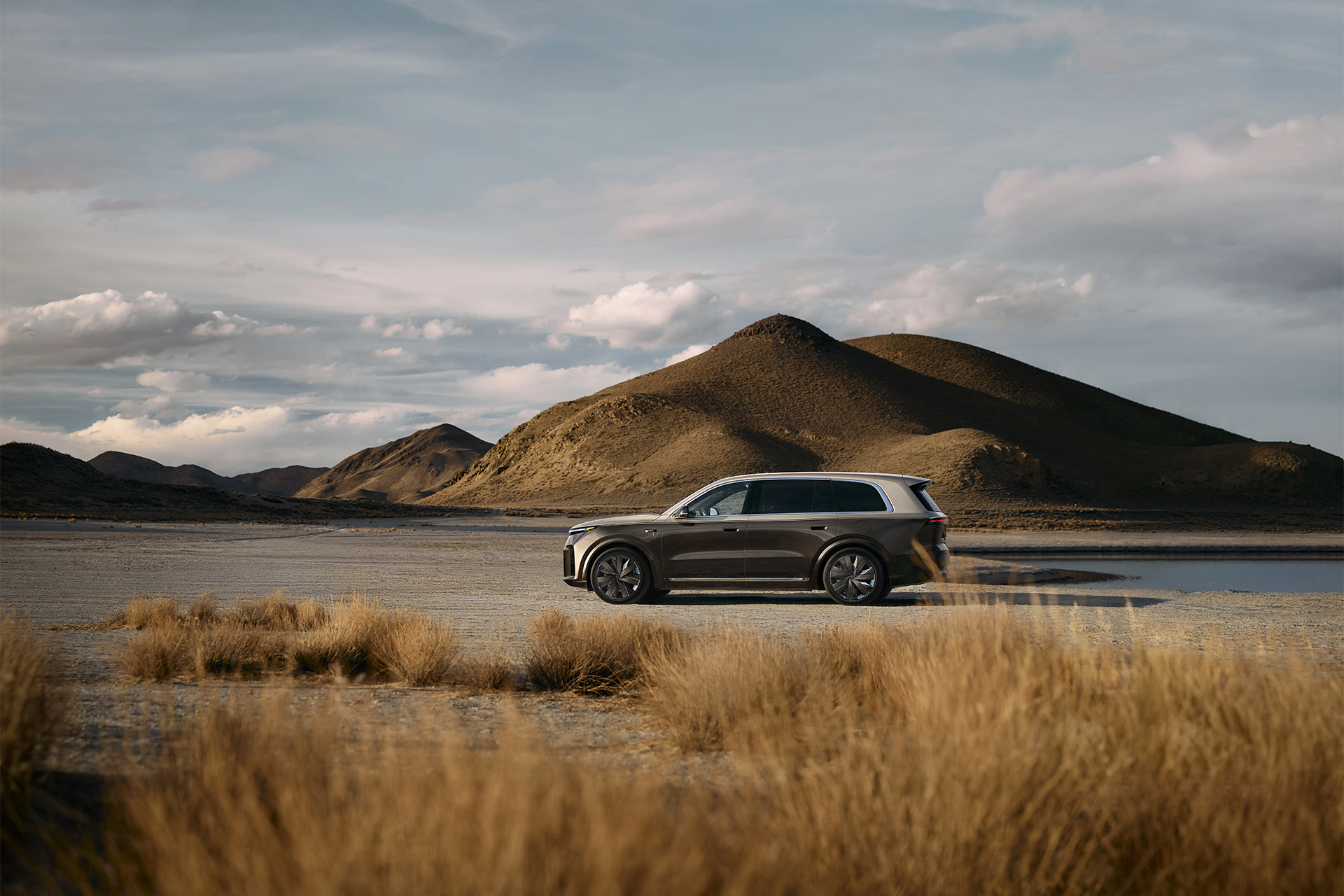
Photo shows the new Li L9, launched by Chinese automaker Li Auto on May 15, 2026.
The new Li L9, launched by Li Auto on May 15. Photo source: Li Auto.

Major NEV brands are converging on the RMB 500,000 (USD 73,688.7)-and-above segment for strategic and financial reasons. In the first quarter of 2026, Li Auto’s sales rose year-on-year, but entry-level models such as the Li L6 and i6 accounted for 70% of orders, weighing on its sales mix and pushing the once-profitable automaker back into a quarterly loss. Nio, by contrast, lifted its core sales range to around RMB 400,000 (USD 58,951) with the ES8, while narrower first-quarter losses reflected both higher pricing and stronger scale effects.

After years of configuration and price competition, profit margins for affordable entry-level models have thinned. Moving toward the RMB 500,000 segment is not only a shift in brand positioning, but also a push for more sustainable profitability.

The challenge is that the market is shrinking. Data from the China Passenger Car Association shows that the market for vehicles priced above RMB 400,000 has contracted for several consecutive quarters. NEV penetration continues to rise, but gasoline-powered luxury vehicles still dominate sales.

36Kr visited 13 stores in Beijing, Guangzhou, Shenzhen, and other cities to understand how the competition is unfolding.

Li Auto salespeople told 36Kr that customers have been surprised by the improved driving feel of the new Li L9. Some users ordered the Livis version immediately after test drives.

The new Li L9 also uses Li Auto’s self-developed M100 chip, but its two configurations currently offer the same functions. Chassis performance has become the more substantive selling point.

Since its 2022 launch, the Li L9 has been positioned as a six-seat family SUV. Its first generation was sometimes criticized for driving like a boat, but it still sold more than 110,000 units in 2023, making it one of China’s faster-growing premium NEVs. Family buyers tend to value space and comfort more than sharp chassis performance. At the RMB 500,000 level, however, users expect a more comprehensive experience. Li Auto’s restrained design may therefore make the new Li L9 slower to gain traction in the premium market.

Nio’s ES9 also emphasizes chassis performance. It uses the SkyRide system, which includes active suspension and steer-by-wire. 36Kr learned that within 72 hours of launch, nearly 80% of ES9 orders were for the executive signature version equipped with the system. Nio salespeople said some ES8 demand also rose after the ES9 launch, as potential buyers were drawn to SkyRide but found the ES9 too expensive.

For ES9 buyers, design and luxury perception appear more important than absolute driving feel. Several users who ordered the ES9 told 36Kr that its driving quality was not outstanding among its peers, but said this was not decisive. One repeat Nio owner said Nio is the only domestic brand at the RMB 500,000 level with an original and attractive luxury interior.
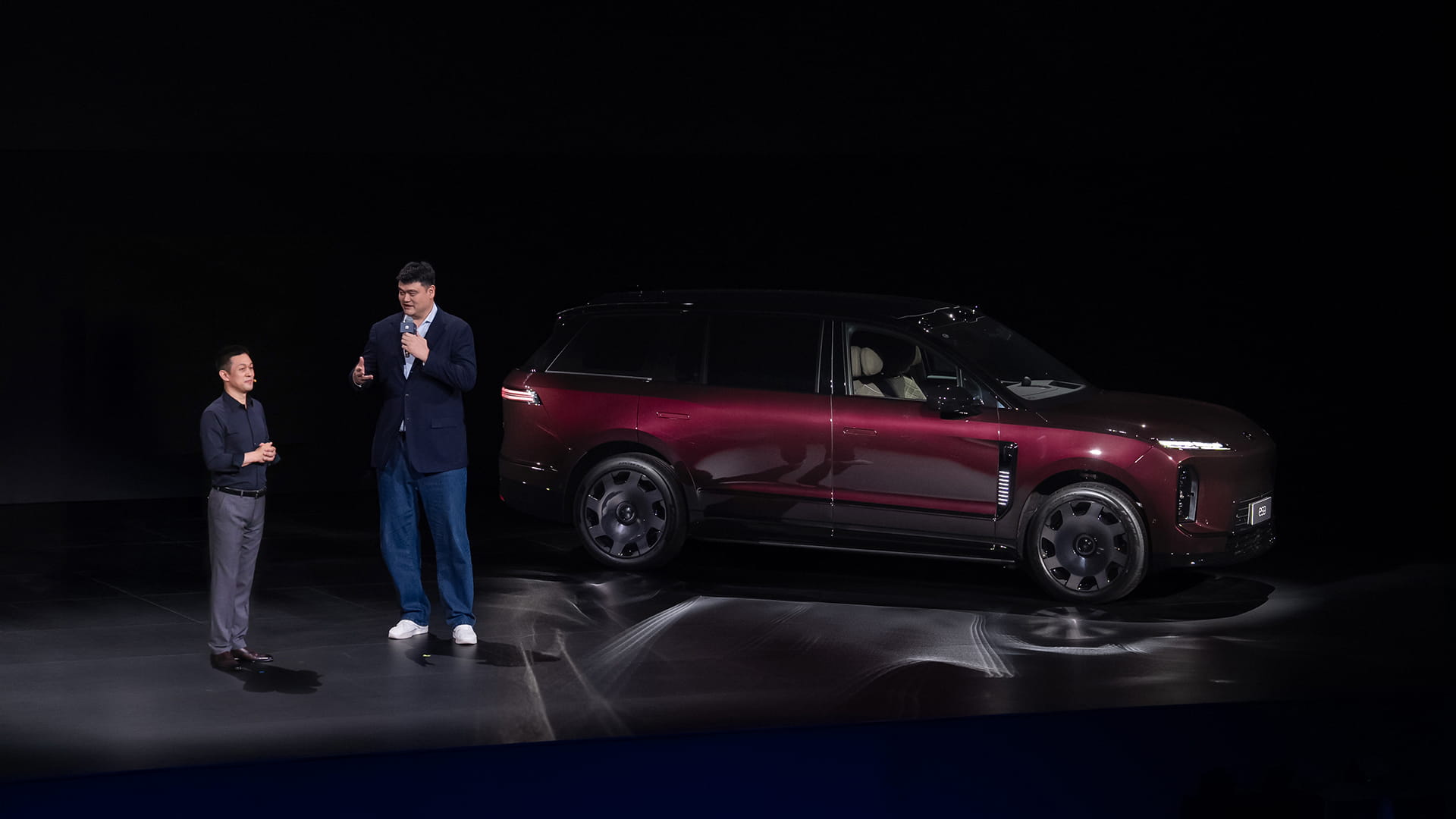
Photo shows former NBA player Yao Ming (right), speaking at the launch of Nio’s latest ES9 alongside co-founder and CEO William Li.
Former NBA player Yao Ming (right), speaking at the launch of Nio’s latest ES9 alongside co-founder and CEO William Li. Yao serves as the automaker’s chief experience officer. Photo courtesy of the company.

Aito’s new M9 presents a third competitive pattern. Like the new Li L9, it received internal upgrades without major exterior changes, but Aito users appear more accepting of this approach. Several salespeople said customers care less about individual specifications and more about the M9’s reputation as a smart vehicle backed by Huawei.

Li Auto anchors itself in family scenarios and comfort. Nio focuses on design and luxury perception. Aito reinforces trust through technology. The NEV wave has shifted high-end SUV competition from the RMB 600,000–800,000 (USD 88,426.5–117,901.9) range of the era led by BMW, Mercedes-Benz, and Audi closer to the RMB 500,000 mark. Under tighter cost constraints, it is difficult to excel in every dimension. The latest SUVs look similar in price and configuration, but each pushes one part of the experience toward the upper end.

Li Auto’s new Li L9 collected 10,000 locked orders within two weeks of launch, while the new Aito M9 passed 20,000 locked orders within 24 hours. Nio’s ES9 currently shows a delivery wait of 16–18 weeks.

Early order numbers matter, but user structure and brand trajectory matter more. 36Kr previously reported that returning owners accounted for 70% of Li L9 Livis orders in the first 72 hours. Nio salespeople said the ES9’s repeat purchase rate is also high, with nearly half of orders coming from existing owners.

The two brands’ existing customer bases differ. Li Auto’s users prioritize comfort but are also conscious of value for money. Some salespeople said not all existing owners can afford RMB 500,000 models, and many are waiting for cheaper Li L7 and L8 Livis versions. Nio’s customer base is more premium. The ES8, priced above RMB 500,000, exceeded 10,000 annual sales in 2018, two years before Li Auto launched its first model in the RMB 300,000–350,000 (USD 44,213.2–51,582.1) range.

Store visits showed that 20–30% of new ES9 orders were corporate purchases. Even with zero down payment and five-year installment plans with two years interest-free, full-payment purchases remain common. Li Auto, by contrast, has more installment buyers.

Aito resembles Nio, but its premium recognition appears broader. Its influence reaches beyond first- and second-tier cities into lower-tier markets. One Aito salesperson said county-level business owners may prefer Aito because, in business settings, people recognize it in a way they do not recognize Li Auto or Nio.

Nio’s sales are closely linked to its battery swap network, giving it a high-end user profile but also a concentrated market distribution in first- and second-tier cities. Traditional flagship SUVs such as the BMW X5 have broader and more stable influence, covering more than 100 cities even as monthly sales fluctuate.

To take root in the high-end market, Chinese NEV brands need symbols that extend beyond core users and early adopters. For Li Auto, that symbol remains family comfort. For Nio, it is design, service, and owner identity. And for Aito, it is Huawei-backed intelligence and trust.

KrASIA features translated and adapted content that was originally published by 36Kr. This article was written by Xu Caiyu for 36Kr.

Note: RMB figures are converted to USD at rates of RMB 6.79 = USD 1 based on estimates as of June 10, 2026, unless otherwise stated. USD conversions are presented for ease of reference and may not fully match prevailing exchange rates.