



惯性聚合 高效追踪和阅读你感兴趣的博客、新闻、科技资讯
阅读原文 在惯性聚合中打开

推荐订阅源

aimingoo的专栏
aimingoo的专栏
S
Securelist
博客园 - Franky
Cyber Security Advisories - MS-ISAC
IT之家
IT之家
GbyAI
GbyAI
Microsoft Azure Blog
The Cloudflare Blog
云风的 BLOG
云风的 BLOG
N
News and Events Feed by Topic
AI
AI
cs.AI updates on arXiv.org
Schneier on Security
Attack and Defense Labs
Vercel News
Vercel News
腾讯CDC
Google DeepMind News
K
KPMG report finds enterprise disconnect between AI and its ROI | CIO
M
MIT News - Artificial intelligence
WordPress大学
WordPress大学
freeCodeCamp Programming Tutorials: Python, JavaScript, Git & More
N
Netflix TechBlog - Medium
量子位
S
Schneier on Security
Hacker News: Ask HN
Hacker News: Ask HN
Cyberwarzone
Cyberwarzone
S
Security Affairs
钛媒体:引领未来商业与生活新知
钛媒体:引领未来商业与生活新知
N
News and Events Feed by Topic
T
Tenable Blog
PCI Perspectives
PCI Perspectives
MyScale Blog
MyScale Blog
L
Lohrmann on Cybersecurity
cs.CL updates on arXiv.org
C
Cyber Attacks, Cyber Crime and Cyber Security
W
WeLiveSecurity
N
News | PayPal Newsroom
P
Proofpoint News Feed
O
OpenAI News
C
CERT Recently Published Vulnerability Notes
B
Blog
Cisco Talos Blog
Cisco Talos Blog
Microsoft Security Blog
V
Visual Studio Blog
MongoDB | Blog
MongoDB | Blog
大猫的无限游戏
大猫的无限游戏
A
Arctic Wolf
Y
Y Combinator Blog
OSCHINA 社区最新新闻
OSCHINA 社区最新新闻
Spread Privacy
Spread Privacy

NVIDIA Blog

GeForce NOW Turns Up the Heat With New GeForce RTX 5080-Powered Toronto Server NVIDIA Nemotron Achieves Benchmark-Leading Performance With LangChain Deep Agents Harness AI Innovators Adopt NVIDIA Vera — Why Max Single-Threaded CPU at Scale Matters NVIDIA and Hugging Face Bring New Models and Frameworks to LeRobot for the Open Robotics Community How Open Models Are Driving AI Research How Nations Are Deploying AI for Strategic Priorities Joyride Through July With 12 Games Coming to GeForce NOW NVIDIA Unlocks AI Compute at Scale, Inviting Partners to Power the AI Infrastructure Buildout NVIDIA and Partners Build in America, for America NVIDIA BioNeMo Agent Toolkit Brings Accelerated AI to Life Sciences Researchers in Claude Science How NVIDIA’s Inference Software Stack Powers the Lowest Token Cost Into the Omniverse: Three Workflows for Improving Vision AI Agent Accuracy With Synthetic Data and Fine-Tuning Claude Meets Blackwell Ultra: Anthropic’s Models Now Run on NVIDIA GB300 in Azure Firefly Aerospace Operates NVIDIA Jetson in Lunar Orbit for the First Time Open Models, Closed Environments: Palantir Brings Secure AI to US Agencies With NVIDIA Nemotron The Ultimate Summer Sale Pairing: Steam Sale Meets GeForce NOW Discounts NVIDIA and AWS Collaborate to Bring AI to Production at Scale How Businesses Are Building Specialized AI They Can Trust NVIDIA Powers Over 400 of the World’s 500 Fastest Supercomputers NVIDIA Brings Trusted, 24/7 AI Agents to Telecom Operations At ISC, JUPITER Shows What Exascale Science Looks Like NAIRR Science Program Reshapes Scientific Research, Powered by NVIDIA AI Infrastructure From Materials Simulation to Experimental Astronomy, New NVIDIA AI Software Unlocks Scientific Discoveries NVIDIA Vera CPU Opens the Way for Agentic Scientific AI at Los Alamos National Laboratory Eco Wave Power Turns Waves Into Watts With NVIDIA AI Infrastructure and Digital Twins Hotter Than a Hot Tub: The 45°C Breakthrough to Cool AI’s Biggest Machines How FERC’s Large-Load Interconnection Actions Help Address Grid Stress, Improve Affordability At Cannes Lions, NVIDIA Partners Reshape Advertising and Marketing With AI Sync and Stream: GeForce NOW Connects to Members’ Game Libraries Across Devices France Advances Europe’s AI Future With NVIDIA Technologies Hands Free, AIs Forward: NVIDIA XR AI Brings Agents to AR Glasses Coherent Breaks Ground on Expanded Texas Facility, Scaling AI’s Optical Backbone HPE AI Factory With NVIDIA Expands for the Era of Agents Fastest, Largest, Strongest: NVIDIA Blackwell Sweeps MLPerf Training 6.0 NVIDIA Blackwell Leads on First Agentic AI Infrastructure Benchmark Save Big and Play Bigger: GeForce NOW Summer Sale Brings Major Membership Savings For Robotaxis, Safety Must Be Built In, Not Bolted On NVIDIA Accelerates Google DeepMind’s DiffusionGemma for Local AI NVIDIA Confidential Computing to Help Expand Apple’s Private Cloud Compute How the UK Is Turning Sovereign AI Ambition Into Action With NVIDIA Technologies NVIDIA and LG Group Build an AI Factory to Advance Physical AI, Mobility and AI Infrastructure NVIDIA and Doosan Group Collaborate to Advance Physical AI and AI Factory Infrastructure NVIDIA, KRAFTON, NC and Reigning ‘League of Legends’ Champions T1 Celebrate RTX Spark at Korea’s PC Bangs Seoul Purpose: How NVIDIA and South Korea Are Building the Future of AI Forecast: Fun Ahead — 18 Games Join in June to Stream on GeForce NOW NVIDIA Research Unlocks Advanced Grasping, Smarter Autonomous Driving and Agent Training at Scale NVIDIA Enables the Next Era Of Physical AI Research With Agent Skills For Autonomous Vehicles, Robotics And Vision AI Industrial Software Leaders Build Secure, Autonomous AI Engineers With NVIDIA NemoClaw NVIDIA Partners With Microsoft on Unified Stack for Agentic AI Deployment, From Windows Devices to Cloud to Local Why Financial Institutions Are Converging on Transaction Foundation Models to Build Their Own Intelligence NVIDIA Jetson Brings Agentic AI to the Physical World NVIDIA AI Cloud Ecosystem Expands Worldwide to Meet Global AI Compute Demand NVIDIA Factory Operations Blueprint Gives Factories a New AI Brain Taiwan’s Industry Titans Turbocharge World’s AI Infrastructure Buildout With NVIDIA How Cosmos 3 Helps Physical AI Think Before It Acts NVIDIA Levels Up Local AI Agents Across RTX PCs and DGX Spark NVIDIA Research Advances Robotics From Simulation to the Real World The Name’s Gaming … Cloud Gaming: ‘007 First Light’ Launches on GeForce NOW AI Factories: The New Infrastructure of Intelligence NVIDIA Vera CPU Is ‘Packing a Heavy-Hitting Punch’ Against Competition NVIDIA GTC Taipei at COMPUTEX: Live Updates on What’s Next in AI License to Stream: ‘007 First Light’ Coming to GeForce NOW With an Ultimate Bundle NVIDIA and Google Cloud Empower the Next Wave of AI Builders NVIDIA CEO Jensen Huang at Dell Technologies World: ‘Demand Is Going Parabolic, Utterly Parabolic’ Vera Arrives: NVIDIA’s First CPU Built for Agents Lands at Top AI Labs Sea You in the Cloud: ‘Subnautica 2’ Early Access Dives Onto GeForce NOW NVIDIA, Ineffable Intelligence Team Up to Build the Future of Reinforcement Learning Infrastructure Hermes Unlocks Self-Improving AI Agents, Powered by NVIDIA RTX PCs and DGX Spark NVIDIA and SAP Bring Trust to Specialized Agents Linked and Loaded: Gaijin Single Sign-On Now Available on GeForce NOW NVIDIA and ServiceNow Partner on New Autonomous AI Agents for Enterprises It’s Gonna Be May: 16 Games Hit the Cloud This Month, With More NVIDIA GeForce RTX 5080 Power NVIDIA Launches Nemotron 3 Nano Omni Model, Unifying Vision, Audio and Language for up to 9x More Efficient AI Agents Into the Omniverse: Manufacturing’s Simulation-First Era Has Arrived Tag, You’re It: GeForce NOW Levels Up Game Discovery With Xbox Game Pass and Ubisoft+ Labels Making Sense of the Early Universe From Rainforests to Recycling Plants: 5 Ways NVIDIA AI Is Protecting the Planet NVIDIA and Google Cloud Collaborate to Advance Agentic and Physical AI Autonomous AI at Scale: Adobe Agents Unlock Breakthrough Creative Intelligence With NVIDIA and WPP No Need for Space Gear — Capcom’s ‘PRAGMATA’ Joins GeForce NOW on Launch Day Rethinking AI TCO: Why Cost per Token Is the Only Metric That Matters New Adobe Premiere Color Grading Mode Accelerated on NVIDIA GPUs Strength and Destiny Collide: ‘Samson: A Tyndalston Story’ Arrives in the Cloud National Robotics Week — Latest Physical AI Research, Breakthroughs and Resources From RTX to Spark: NVIDIA Accelerates Gemma 4 for Local Agentic AI Press Start on April: GeForce NOW Brings 10 Games to the Cloud Efficiency at Scale: NVIDIA, Energy Leaders Accelerating Power‑Flexible AI Factories to Fortify the Grid Into the Omniverse: NVIDIA GTC Showcases Virtual Worlds Powering the Physical AI Era Game On: Five New Titles Now Streaming on GeForce NOW The Future of AI Is Open and Proprietary Blowing Off Steam: How Power-Flexible AI Factories Can Stabilize the Global Energy Grid Advancing Open Source AI, NVIDIA Donates Dynamic Resource Allocation Driver for GPUs to Kubernetes Community How Autonomous AI Agents Become Secure by Design With NVIDIA OpenShell NVIDIA GTC 2026: Live Updates on What’s Next in AI Smooth Moves: 90 Frames-Per-Second Virtual Reality Arrives on GeForce NOW From Simulation to Production: How to Build Robots With AI More Than Meets the Eye: NVIDIA RTX-Accelerated Computers Now Connect Directly to Apple Vision Pro NVIDIA, Telecom Leaders Build AI Grids to Optimize Inference on Distributed Networks GTC Spotlights NVIDIA RTX PCs and DGX Sparks Running Latest Open Models and AI Agents Locally Snap Decisions: How Open Libraries for Accelerated Data Processing Boost A/B Testing for Snapchat
How Jaiveer Singh Is Helping Robots — and Developers — Move Faster
NVIDIA Writers · 2026-06-30 · via NVIDIA Blog

When Jaiveer Singh talks about robots, he doesn’t begin with spectacle. He begins with infrastructure: the boards inside machines, the software that lets developers see through a robot’s cameras and the engineering required before a robot can leave a demo floor to do something useful.

As a robotics software engineer who leads the team behind NVIDIA Isaac ROS (Robot Operating System), Singh works on the connective tissue of the physical AI era. Built on the open source ROS 2 framework, Isaac ROS brings CUDA-accelerated libraries and AI models to developers building autonomous mobile robots, manipulation systems and humanoids. 

“My goal is to make sure everyone feels like they are a part of the robotics future,” Singh said.

For Singh, that future began in middle school, building with LEGO Mindstorms, a popular line of programmable robotics kits. After excelling in robotics competitions throughout high school, he studied electrical engineering, computer science and business at the University of California, Berkeley, before joining NVIDIA full time after an internship with the robotics team.

In a satisfying turn, the work he now leads began as his intern project.

“We wanted to see what would happen if we just released some software as open source that uses the NVIDIA Jetson platform and NVIDIA CUDA libraries for robotics. Would there be any value there?” Singh recalled. “And the answer was, of course, yes, because developers always want to be able to unlock the full power of their GPUs.”

The result was Isaac ROS.

The Building Blocks of a Robotics Revolution

Physical AI has long been a field of extraordinary imagination and stubborn, physics-bound realities. A clip of a robot dancing or executing complex balletics can travel the internet in hours. Building a system that works repeatedly, across sensors, platforms, factories and labs, is slower business. 

For Singh and the Isaac ROS team, the next era of robotics relies on a full stack: simulation, training, accelerated computing, AI models, middleware and edge deployment.

Isaac ROS supports manipulation, mobility and humanoids. It gives developers packages for perception, object detection, mapping, collision detection and motion planning, and it can run on workstations, NVIDIA DGX Spark personal AI supercomputers as well as NVIDIA Jetson edge systems. 

“Compared with the original Isaac SDK, Isaac ROS is completely modular,” Singh said. “We ship the software like a bunch of LEGO bricks — you get to assemble them however you want, and you can easily combine our packages with existing ROS code written by you or others in the global robotics community.”

NVIDIA is making it easier for many robot builders to move faster, Singh said, and to do so on a foundation they can inspect, adapt and trust.

“The main reason open source is valuable is because it gives people confidence that they can build upon this stack at this very initial stage,” Singh said. “Because the entire landscape can shift so rapidly, developers need the confidence that this platform is still going to be there to modify and improve two or three years into the future.”

That confidence matters because robotics is changing quickly. Humanoid robots, in particular, have moved from science fiction to an active engineering frontier.
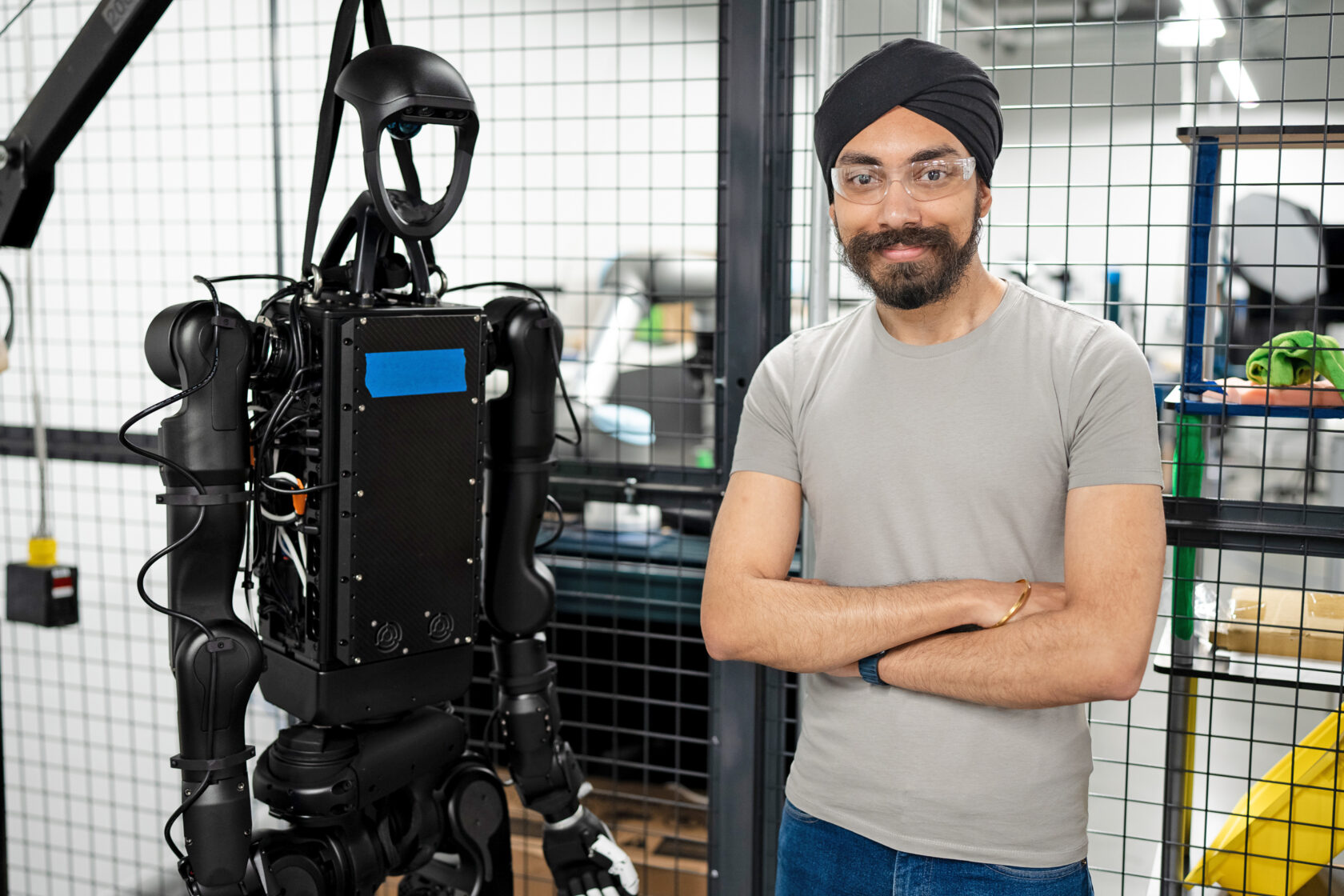
Singh’s team has been making Isaac ROS better suited to this moment, including for developers using AI agents and for humanoid systems that need an end-to-end software stack.

NVIDIA’s long history of work in robotics and farsighted vision for the field is what initially attracted Singh to the company — and made him all the more confident in his work upon joining.

“NVIDIA was here and working on this problem before anybody else thought it was important,” he said. “We already had a stake in the ground.”

Open source, in Singh’s view, is a way of sharing both confidence and responsibility. If a robotics startup builds on a closed system, it must trust that the system will still match its needs years later. With open software, developers can inspect the code, change it, contribute fixes and carry it forward. One company’s bug fix becomes another company’s acceleration.

“When more people can build robots,” Singh said, “the future gets here faster.”
Follow @nvidialife on Instagram and learn more about NVIDIA life, culture and careers