








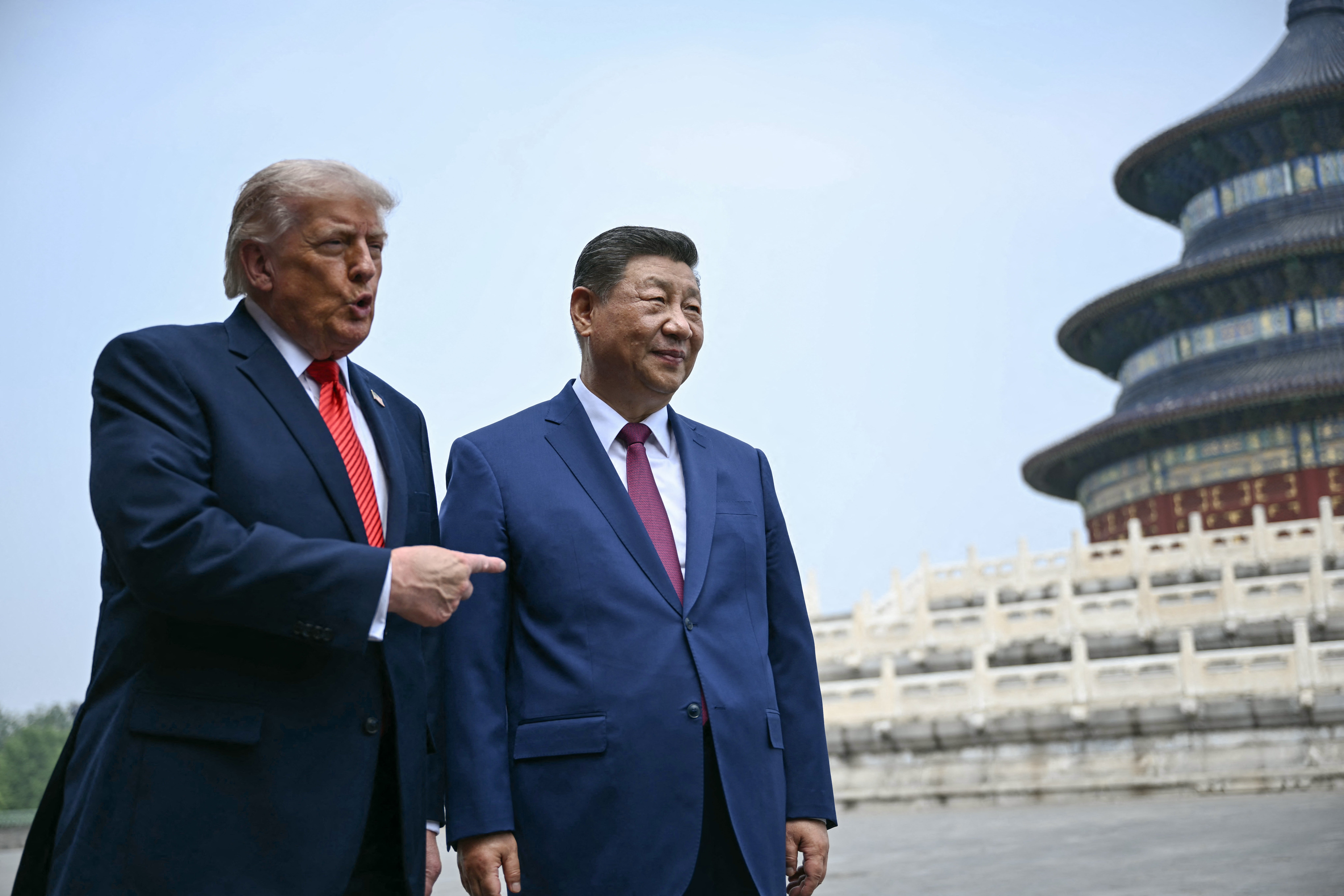
Chinese leader Xi Jinping told President Donald Trump on Thursday that disagreement over Taiwan could send relations down a dangerous path.
He stated that "Taiwan independence" and cross-Taiwan Strait peace are as "irreconcilable as fire and water", underscoring Beijing's stance.
Below are some questions and answers about what is meant by the term "Taiwan independence" and the positions of the Chinese, US and Taiwanese governments.
What is Taiwan’s history and formal name today?
The contentious issue of Taiwan's status, often called "Taiwan independence", is rooted in complex history.
Known as Formosa, the island was home to indigenous people for millennia, with brief Dutch and Spanish rule in the 1600s.
The Qing dynasty incorporated Taiwan in 1684, making it a separate Chinese province in 1885.
After defeat by Japan, it became a Japanese colony in 1895, then handed to the Republic of China (ROC) government in 1945 post-World War Two.
In 1949, the ROC government fled to Taiwan, establishing its capital after being defeated by Mao Zedong's Communist forces.
The Republic of China remains the island's formal name. Mao then founded the People's Republic of China, asserting it as the sole legitimate Chinese government for all China, including Taiwan, as the ROC's successor.
What is Taiwan’s international status and China’s position?
For decades, the Republic of China in Taipei also claimed to be the legitimate Chinese government, but in 1971 Beijing took over the China seat at the United Nations from Taipei.
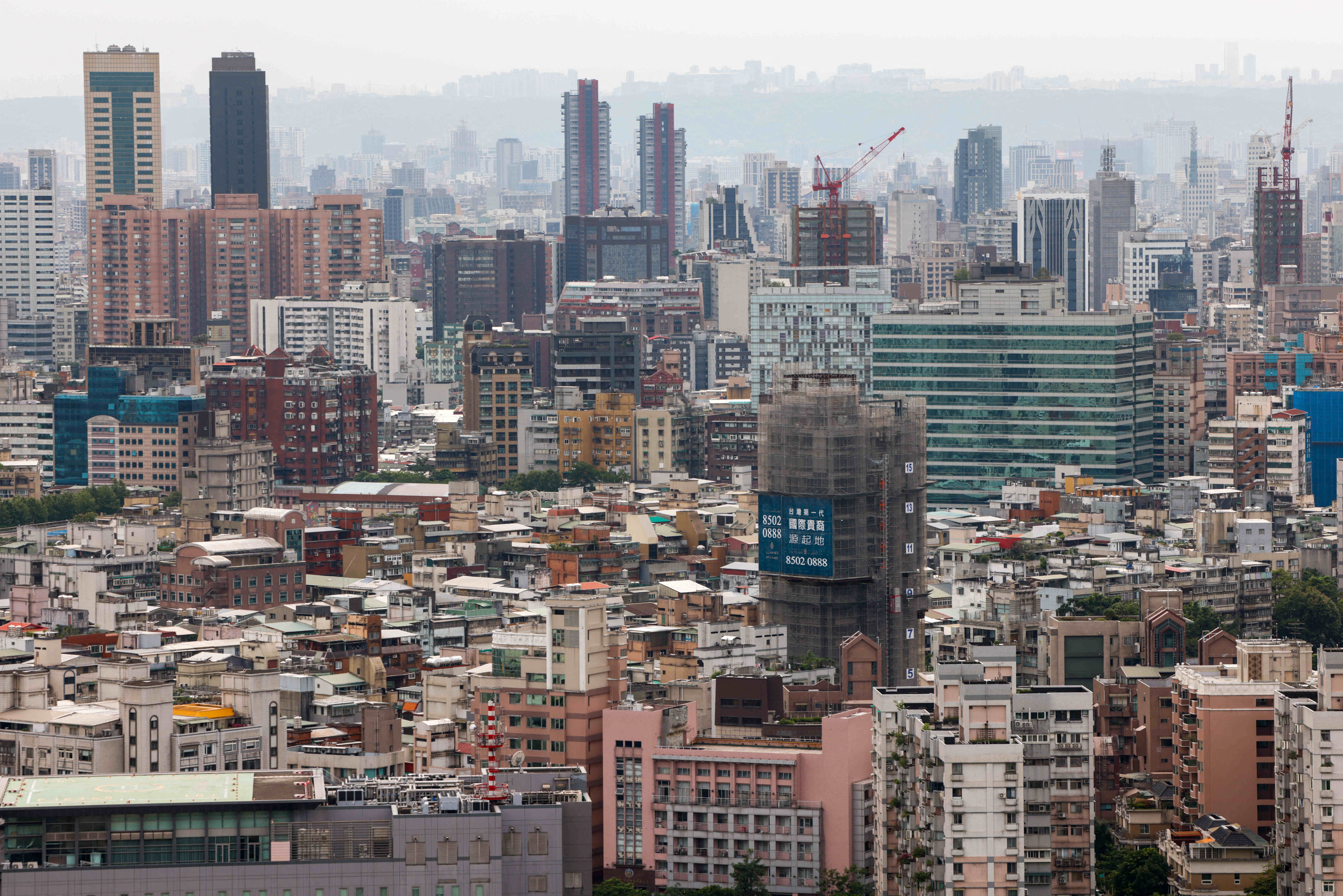
Currently only 12 countries maintain formal ties with Taipei, mostly small developing nations such as Belize and Tuvalu.
Most major Western countries and US allies maintain close unofficial ties with Taiwan by recognising the Republic of China passport and having de facto embassies in each other's capitals. Taiwanese citizens can freely travel to most countries using their Taiwanese passports.
China says it will not renounce the use of force to bring Taiwan under its control. Beijing has offered Taiwan a "one country, two systems" model similar to Hong Kong, which promised the city a high degree of autonomy, although no major political party in Taiwan supports that.
Opinion polls in Taiwan have repeatedly shown most Taiwanese wish to maintain the current status quo in relations with China.
China also says that United Nations Resolution 2758, passed in 1971, means the world legally recognises Taiwan belongs to China. The resolution states that the People's Republic of China is the only legitimate government of China.
The government in Taipei says that is nonsense given the resolution made no mention of Taiwan or its status. Last year, the US State Department said China was intentionally mis-characterising the resolution as part of broader "coercive attempts to isolate Taiwan from the international community".
What is the United States’ position?
The US severed official ties with Taipei in favour of Beijing in 1979 but is bound by the Taiwan Relations Act to provide the island with the means to defend itself.
The US officially takes no position on Taiwan's sovereignty under Washington's "One China" policy.
In 2022, the State Department also added wording on the Six Assurances, referring to six Reagan-era security assurances given to Taiwan, which the United States declassified in 2020.
Among the assurances made in 1982, but never previously formally made public, are statements that the US has not set a date for ending arms sales to Taiwan, nor agreed to prior consultation with Beijing on such sales, or to revise the Taiwan Relations Act that underpins US policy towards the island.
China has repeatedly demanded that the US end arms sales to Taiwan.
Is Taiwan already an independent country?
Taiwan, whose people elect their own leaders and whose government controls a defined area of territory with its own military, passport and currency, enjoys de facto independence even if that is not formally recognised by most countries.
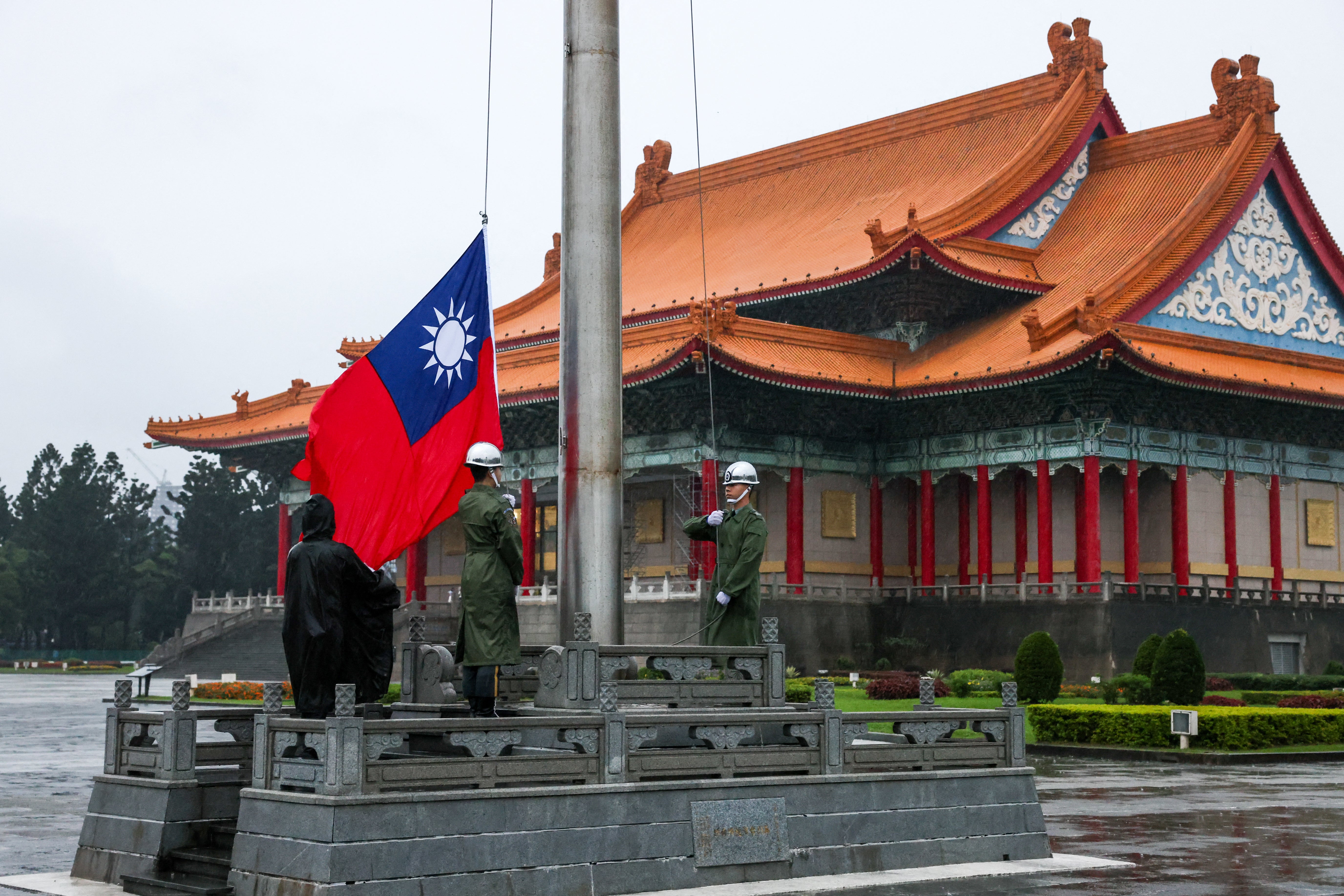
Taiwan's government says the Republic of China is a sovereign state and that Beijing has no right to speak for or represent it given the People's Republic of China has no say in how it chooses its leaders and has never ruled Taiwan.
Could Taipei declare a ‘Republic of Taiwan’?
It would be very difficult and require parliamentary approval of a constitutional amendment and then a referendum, rather than a simple declaration by President Lai Ching-te.
At least 75 per cent of lawmakers would need to pass that amendment, and the ruling Democratic Progressive Party and main opposition party the Kuomintang (KMT) currently have an equal number of seats.
The DPP, which has been in power since 2016, has not made an attempt to change the constitution. The KMT strongly opposes any attempts to change the name of Republic of China.
What does Taiwan’s president say about independence?
China detests Lai and calls him a "separatist". Before Lai was elected president he made comments about being a "practical worker for Taiwan independence". Lai maintains he simply meant Taiwan is already an independent country.
Since taking office in 2024, Lai has said on several occasions that the Republic of China and People's Republic of China are "not subordinate to each other", which Beijing says means he believes the two are separate countries and so he is therefore pushing an independence narrative.
Does China have a legal framework to prevent formal independence?
In 2005, China's largely rubber-stamp parliament passed the Anti-Secession Law that gives the country the legal basis for military action against Taiwan if it secedes or if the "possibilities for a peaceful reunification should be completely exhausted", but the law is vague and does not give details.