



A Russian cargo ship that sank after a series of explosions 17 months ago was likely headed to North Korea carrying nuclear submarine reactors, according to a report.
The Ursa Major sank in the Mediterranean Sea off the coast of Spain on 23 December 2024, shortly before midnight. The explosions and sinking of the vessel sparked concerns and curiosity due to its long voyage and Russia taking over operations as soon as another warship arrived.
The 142-metre-long vessel, also known as Sparta 3 and owned by the Russian state-linked Oboronlogistics, departed from St Petersburg and was bound for Vladivostok in Russia’s Far East, carrying two large manhole covers, 129 empty shipping containers, and two large Liebherr cranes.
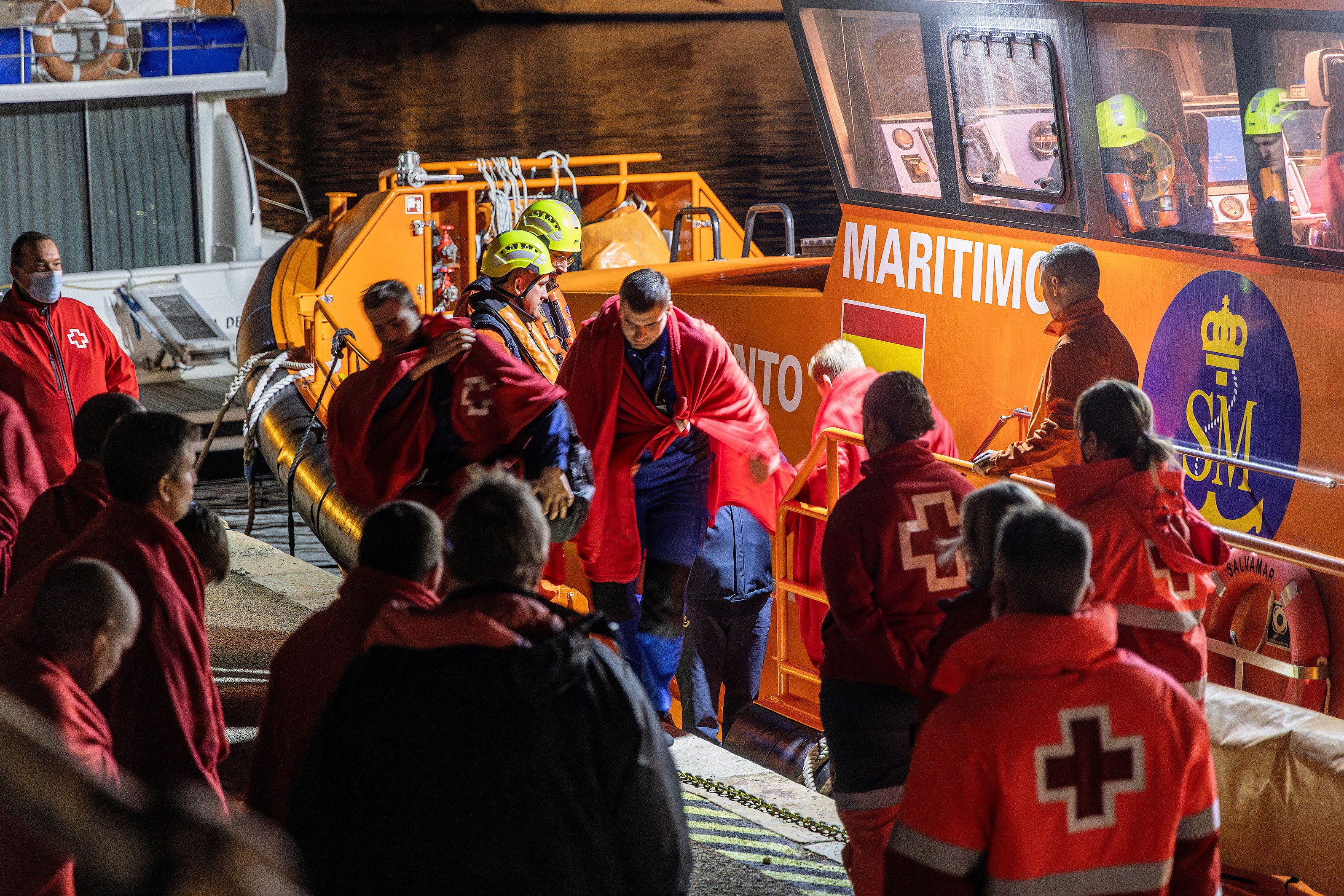
Two crew members were killed, and 14 were evacuated on a lifeboat. They later said that three explosions had occurred near the ship’s engine room.
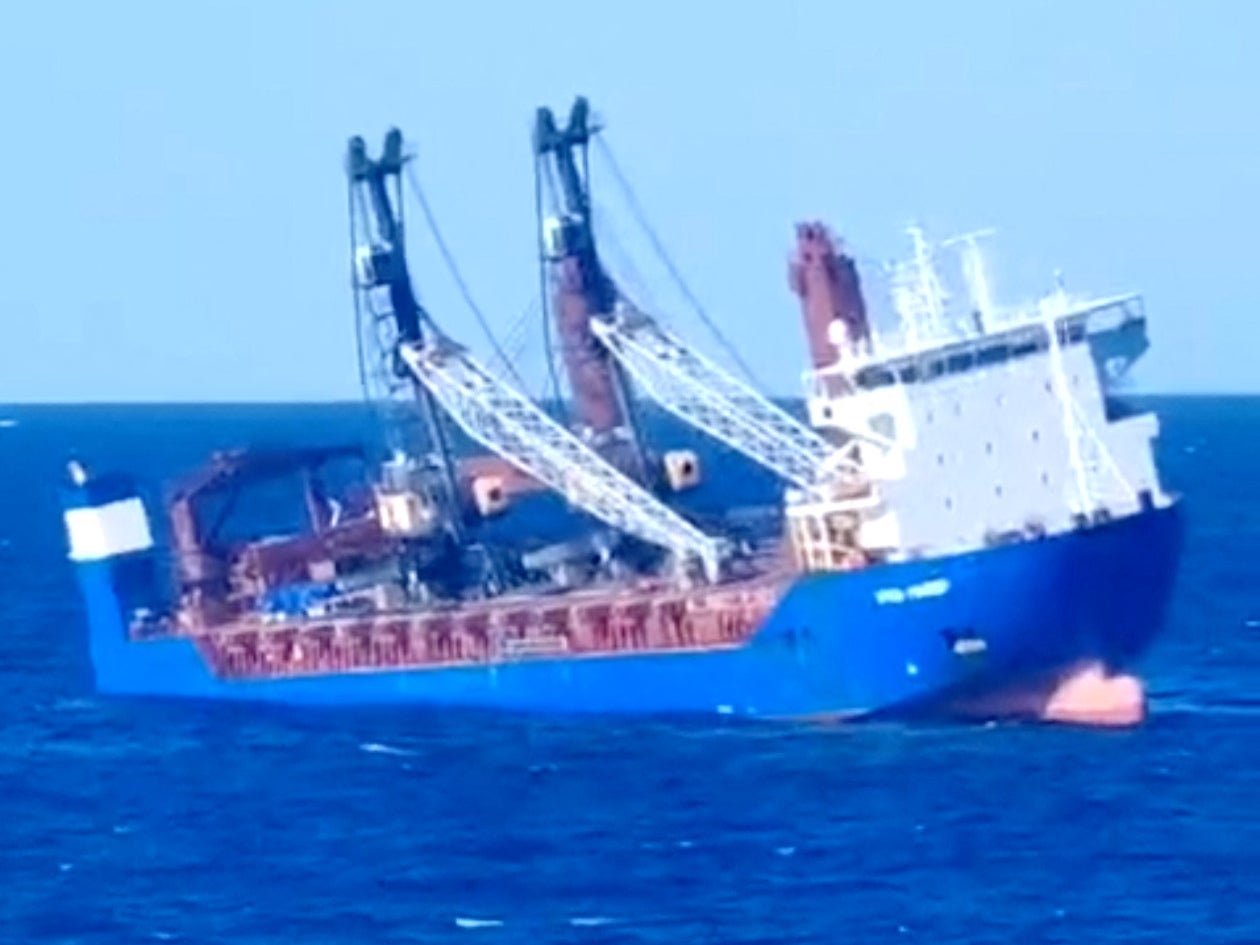
Spanish authorities immediately launched an operation to assist the vessel after it sent a distress call at 12.53pm, dispatching a helicopter, a fast rescue boat, and a tugboat.
But efforts by Spain’s maritime rescue and security service, Sasemar, were curtailed at 8pm that evening when a Russian ship arrived and ordered nearby vessels to keep a distance of two nautical miles, and later asking them to return the crew members immediately.
A CNN investigation into the mysterious sinking of the vessel has now found that four seismic signatures were registered at the same time as four further explosions occurred on the vessel, the Spanish National Seismic Network told the news network.
It said the pattern of the seismic signatures was similar to mines or overground quarry blasts.
Following the three explosions near the engine room that killed two people, four explosions happened after the Russian vessel arrived on the scene, and the Ursa Major sank to the seabed at a depth of 2,500m, the report said, citing Spanish investigators.
According to a Spanish government document released three months ago in response to parliamentary questions over the incident, the Russian warship that had come to assist the Ursa Major had launched flares. A report in the newspaper La Verdad said the flares could have been launched to blind the infrared channels of intelligence satellites monitoring the incident before the explosions occurred.
Its suggested that the sinking of the Russian vessel “may mark a rare and high-stakes intervention by a western military to prevent Russia from sending an upgrade in nuclear technology to a key ally, North Korea”.
The captain of the Ursa Major, who was initially reluctant to reveal information due to fears for his safety, told Spanish investigators that the so-called manhole covers on board the ship “were the components of two nuclear reactors similar to those used by submarines”, but that they did not contain nuclear fuel.
The Russian captain, named Igor Anisimov, told investigators that he believed he would be diverted to the North Korean port of Rason to deliver the two reactors, CNN reported.
The vessel had embarked on the journey just two months after North Korean leader, Kim Jong Un, sent his troops to assist with Vladimir Putin’s invasion of Ukraine.
Investigators said they saw two huge blue containers, each estimated to weigh about 65 tonnes, on the stern of the ship in satellite images.
The long route taken by the vessel between two Russian ports, covering 15,000km by sea despite the extensive rail network spanning the country, raised further suspicion.
“These would therefore be two loads almost impossible to transport along the winding roads of Russia, Kazakhstan, Uzbekistan, and Afghanistan between the two cities served by the Ursa Major,” the report in La Verdad said.
It added that the mysterious undeclared cargo certainly justified the long voyage taken between St Petersburg and Vladivostok.
Four days after the sinking, the ship’s owner, Oboronlogistics, claimed the vessel had been deliberately targeted in what it called a “terrorist attack”, saying three explosions had ripped through the ship. Oboronlogistics is a company that is part of the Russian defence ministry's military construction operations.
The Russian foreign ministry's crisis centre said at that time in a statement that 14 of the ship's 16 crew members had been rescued and brought to Spain, but that two were still missing. It did not say what had caused the engine room explosion. Russia's embassy in Spain was cited by the state RIA news agency as saying it was looking into the circumstances of the sinking and was in touch with the authorities in Spain.
Investigators later found a 50cm by 50cm (20in by 20in) breach in the hull, with the metal twisted inward, while shrapnel was scattered across the deck, according to the company’s statement, as reported by CNN and La Verdad.
The 50cm hole in the hull was likely caused by a Barracuda supercavitating torpedo – a high-speed underwater weapon. These high-speed torpedoes, which fire air ahead of the weapon to reduce water drag, are believed to be possessed only by the US, a few Nato allies, Russia, and Iran.
The Russian military returned to the scene a week later and the Russian research ship Yantar remained around the wreckage for five days before four more explosions were detected, sources familiar with the investigation said, suspecting the explosions were aimed at destroying remains on the seabed.
CNN reported a “flurry of recent military activity” around the wreck of the Ursa Major, including two overflights by US nuclear “sniffer” aircraft in the past year.
The vessel, built in 2009, had been placed under sanction by the United States for its ties to Russia’s military after the invasion of Ukraine.