





Formula One fan Carmen Pacios flew all the way from Spain to Shanghai to watch the 2026 Chinese Grand Prix in earlier March.
Apart from the racing at the Shanghai International Circuit, she and her family toured the city’s downtown area. At an Adidas store, she immediately spotted the Chinese-style red jackets she wanted.
“There’s so much cool Chinese stuff,” Pacios said. “I think they only sell them in China and I really wanted to get one.”
The popular series was launched by the German sportswear company in 2022 exclusively for the Chinese market. With distinctive knot buttons and an upright collar, it went viral online, worn by influencers and celebrities including F1 driver Mercedes’ George Russell.
Guo Aijie, a senior sales manager at the Adidas brand centre on Shanghai’s East Nanjing Road, said the jacket is popular with consumers of all ages, backgrounds and nationalities.
On 1 January, several hundred people lined up for the latest version before the store opened at 10am. “I was shocked by the number of people, most of them foreigners, waiting outside,” said Guo.
“About 1,000 units were sold that day, setting a single-day sales record for the special series at the store.”
The product represents a shift from “Made in China” to “Made for China”. Multinational companies have been rolling out designs tailored specifically for the Chinese market to secure success in China and global growth.
The Adidas Creation Centre Shanghai is responsible for more than 60 per cent of the company’s products in the Chinese market. Adidas said the centre’s focus is on Chinese culture and the rise of guochao or China-chic trends.
The company said younger consumers seek brands that reflect their cultural identity.
“Products designed by the centre allow global consumers to appreciate the charm of Chinese culture,” Adidas stated.
Lan Tian, a senior analyst at Euromonitor International, a London-based market research company, said customised products are an inevitable choice as the market matures. Growth now depends on segmented customer groups and shifts in lifestyle.
“China’s advantages in retail infrastructure, digital capabilities, and supply chains’ quick response capabilities have made it both feasible and cost-controllable for multinational companies to conduct highly localised operations,” Lan said.
Canadian coffee chain Tim Hortons is another success story. “Bagels are one of our signature products,” said Lu Yongchen, CEO of Tims China. “The ones sold in China are adapted to meet local preference for a softer texture.” .
Since 2022, bagel sales have snowballed to exceed 80 million units. The company has localised its products with flavours such as scallion.
Since opening its first store in Shanghai in February 2019, Tims China has pursued rapid expansion and went public on the Nasdaq in September 2022.
“As of 30 September 2025, we operate 1,030 stores across 91 cities in China,” Lu said. About 90 per cent of its products are tailored for local consumers.
Pontus Erntell, CEO, president and chief sustainability officer of Ikea China, said the company has followed the evolving needs of Chinese consumers since it entered the market in 1998. The Swedish retailer offers home solutions tailored to diverse lifestyles.
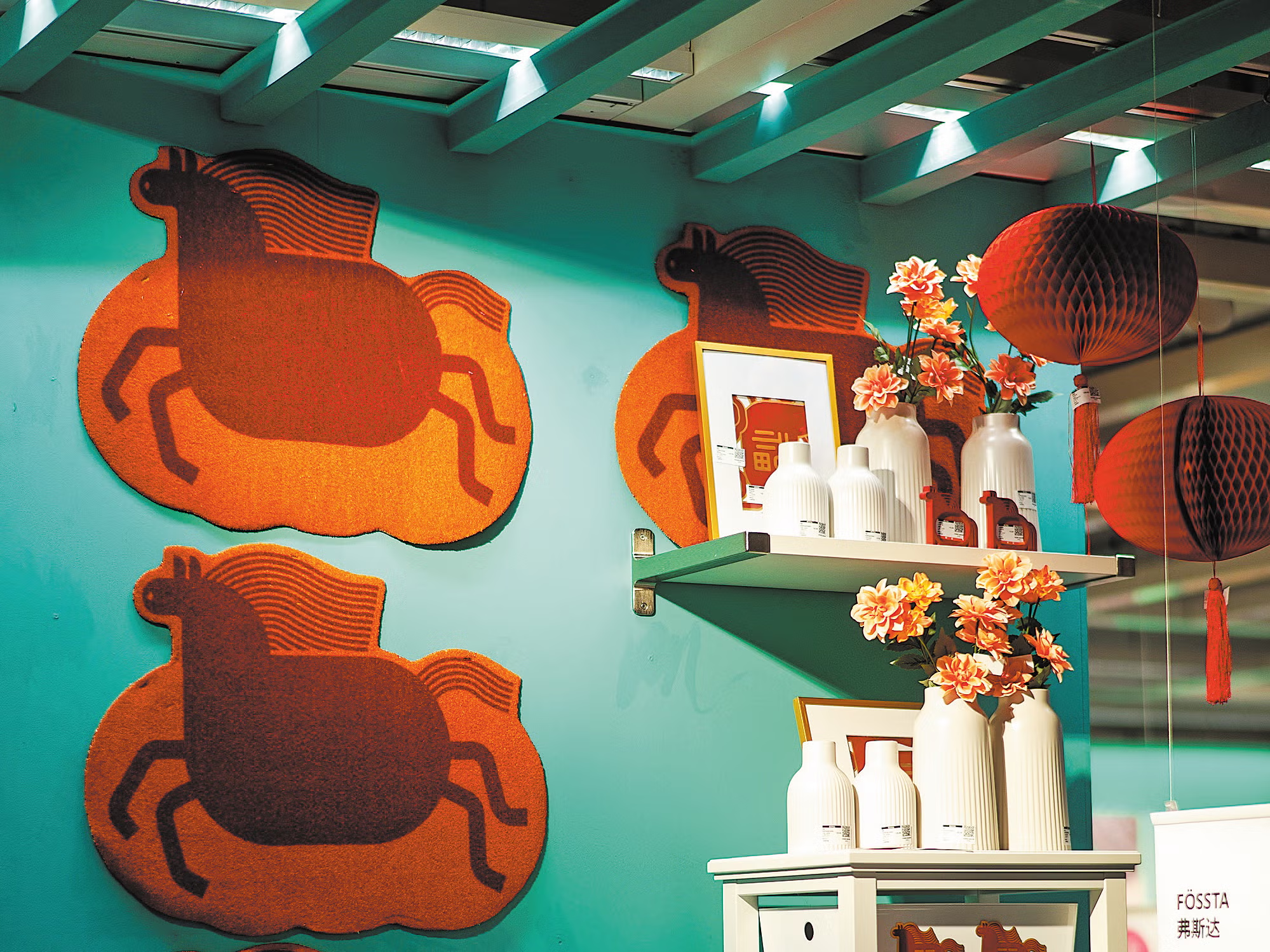
A Chinese New Year collection was launched globally by Ikea, reflecting confidence in China, for China, and in co-creating with China, he said. The Year of the Snake collection recorded sales of over 400,000 units from its debut at the China International Import Expo in November through the post-Spring Festival period, and was subsequently launched in overseas markets.
Spanish fashion giant Inditex, owner of Zara, is exporting initiatives first introduced in China.
Eugenio Bregolat, president of Inditex China, noted collaborations with local designers and artists.
In April 2025, a collection co-branded with artist Lin Fanglu debuted in China and was released in international markets, including Spain, the United Kingdom, Italy, Japan and South Korea.
Inspired by China’s livestreaming boom, Zara introduced “show style” livestreaming in November 2023. The brand later promoted the concept in the UK and the United States.
Lan of Euromonitor said: “China has accumulated a wealth of repeatable practices in product iteration, channel coordination, community-based operations, and building high-quality, cost-effective models. When these experiences are applied to other emerging or even mature markets,they are effectively reshaping multinational companies’ global operations.”