





South Korea recorded nearly £28m in spending by foreigners attending concerts by K-pop group BTS, who recently returned to the stage after four years.
Figures released by the credit card company Hana Card showed that some 30,000 overseas visitors spent about 55.5bn won on airfare, accommodation, food, and retail during the three days that BTS performed at Goyang Stadium earlier this month, according to The Korea Times.
The band composed of RM, Jin, Suga, J-Hope, Jimin, V, and Jung Kook had been on a hiatus since 2022 while the members completed their country’s compulsory military service. The members pursued solo projects during that time but returned as a group last month with their new album Arirang.
The comeback was marked by a free concert at the historic Gwanghwamun Square in central Seoul on 21 March. They launched the accompanying Arirang World Tour on 9 April in Goyang, just outside the capital, kicking off a global run of shows across Asia, Europe, and the Americas.
All three shows at the 41,000-seat Goyang Stadium sold out during presales, according to local media reports.
Foreign card transactions in the area rose 807 per cent from 6 to 12 April compared with the previous week, while overall spending increased by 231 per cent. Spending at convenience stores rose by 1,069 per cent and at cafes by 1,109 per cent, while restaurant spending increased by 600 per cent and retail purchases by 629 per cent, Hana Card said.
The total number of cards used rose by 1,252 per cent, the company added.
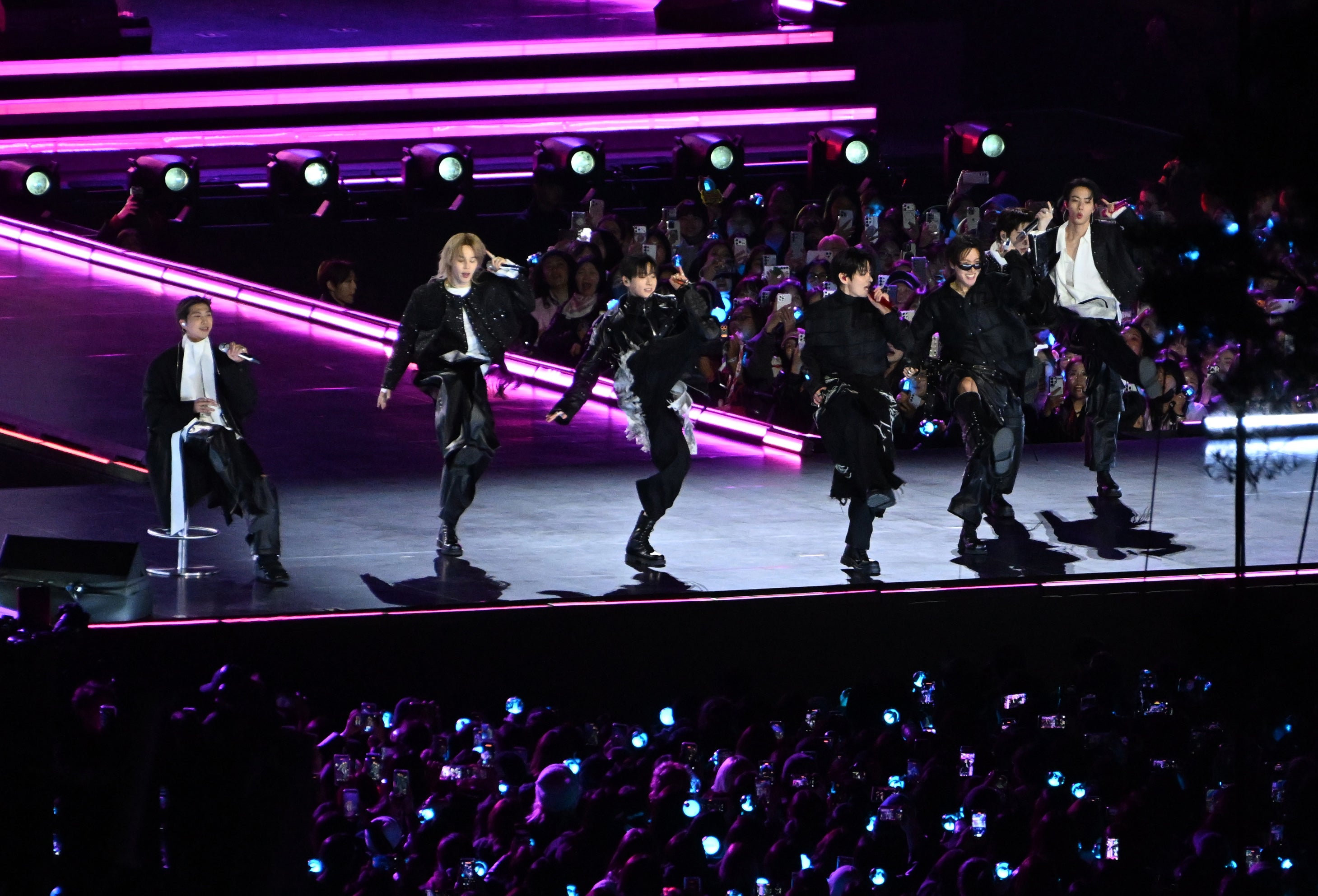
Visitors attending the concerts spent an average of 616,000 won (£307) on airfare and 480,000 won (£240) on accommodation while shopping averaged at 314,000 won (£157). They also spent more at convenience stores and cafes than general tourists, suggesting consumption was concentrated around the venue.
The Goyang concerts mark the first shows in the K-pop group’s 82-date Arirang World Tour, which will span 34 cities and is scheduled to run through March 2027.
A Billboard analysis from January estimated the tour to generate nearly £740m in revenue, but recent projections put the figure significantly higher. According to NH Investment & Securities, the tour could make as much as £4bn.
“Performances by artists with a global fandom like BTS do not end with ticket sales but drive tourism consumption throughout the entire city” Lee Hwa Jeong, a researcher at NH Investment & Securities, told Reuters, adding that the estimate included direct revenue and secondary consumer spending.
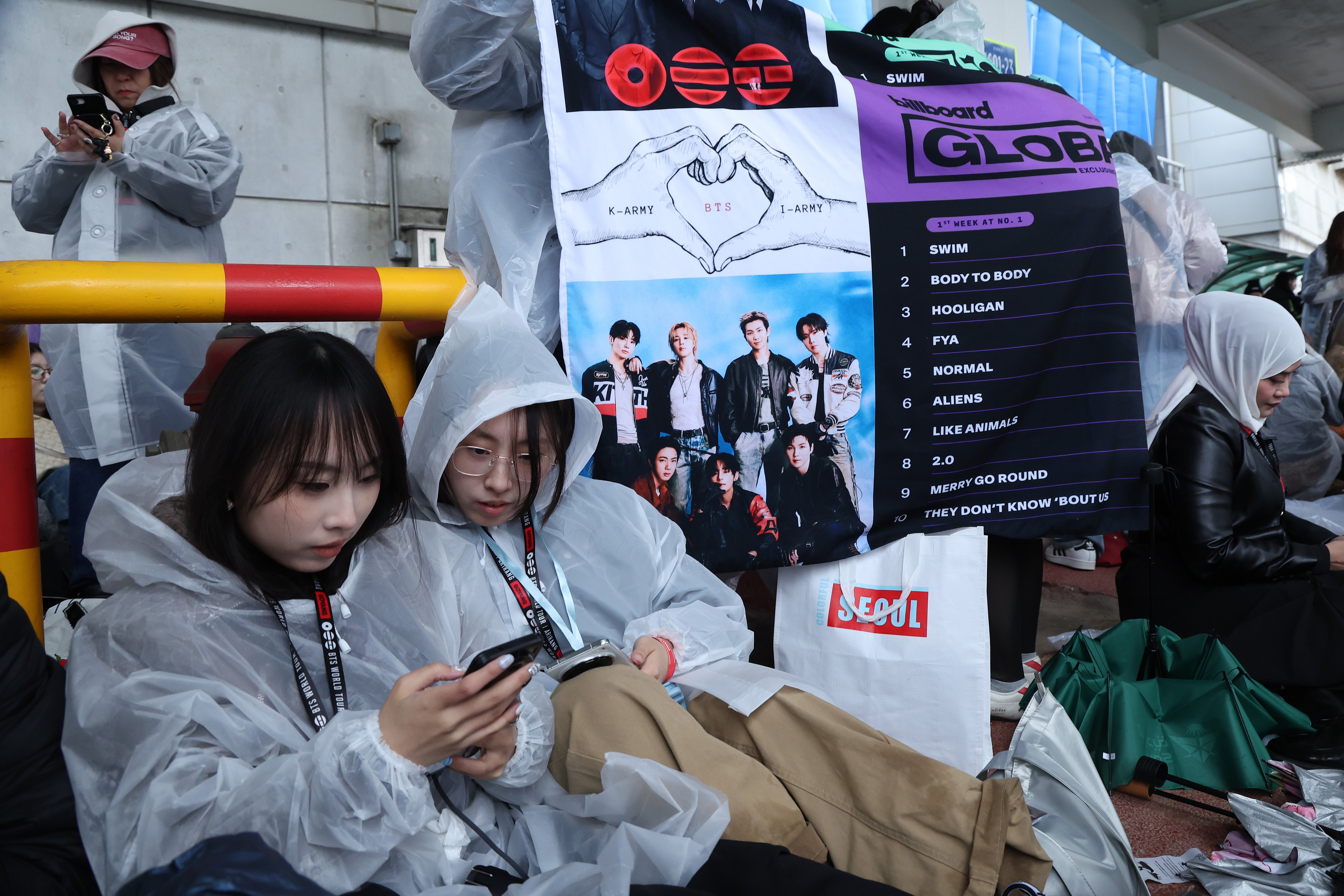
For many fans, the trip to Seoul extended beyond the concerts. Maria Herrera, a 58-year-old utility worker from Vancouver, Canada, told Reuters that she spent around £2,700 on the week-long trip despite not having secured tickets for the BTS shows.
“For myself Botox, facials, Potenza and all that stuff,” she said, adding that “we do our hair care here, like we do haircuts, we do our colour and all that.”
In the lead-up to the BTS comeback, fans began visiting sites linked to their early career, including the former headquarters of their label, BigHit Music, and Hakdong Park in Gangnam, where the members spent time as trainees. Commercial tours emerged to cater to this demand, offering guided itineraries for visitors through places the group frequented, including training-era hangouts and filming locations.
Signs of what analysts described as “BTSnomics” were apparent before the concerts even began. The Korea Economic Daily found that searches for travel to Seoul rose by 155 per cent within 48 hours of the tour announcement in January. Interest in the port city Busan, where the group were slated for a pair of stops in June, rose by 2,375 per cent, according to the Hotels.com.
Domestic searches for travel to Seoul and Busan increased by 190 per cent and 3,855 per cent, respectively.
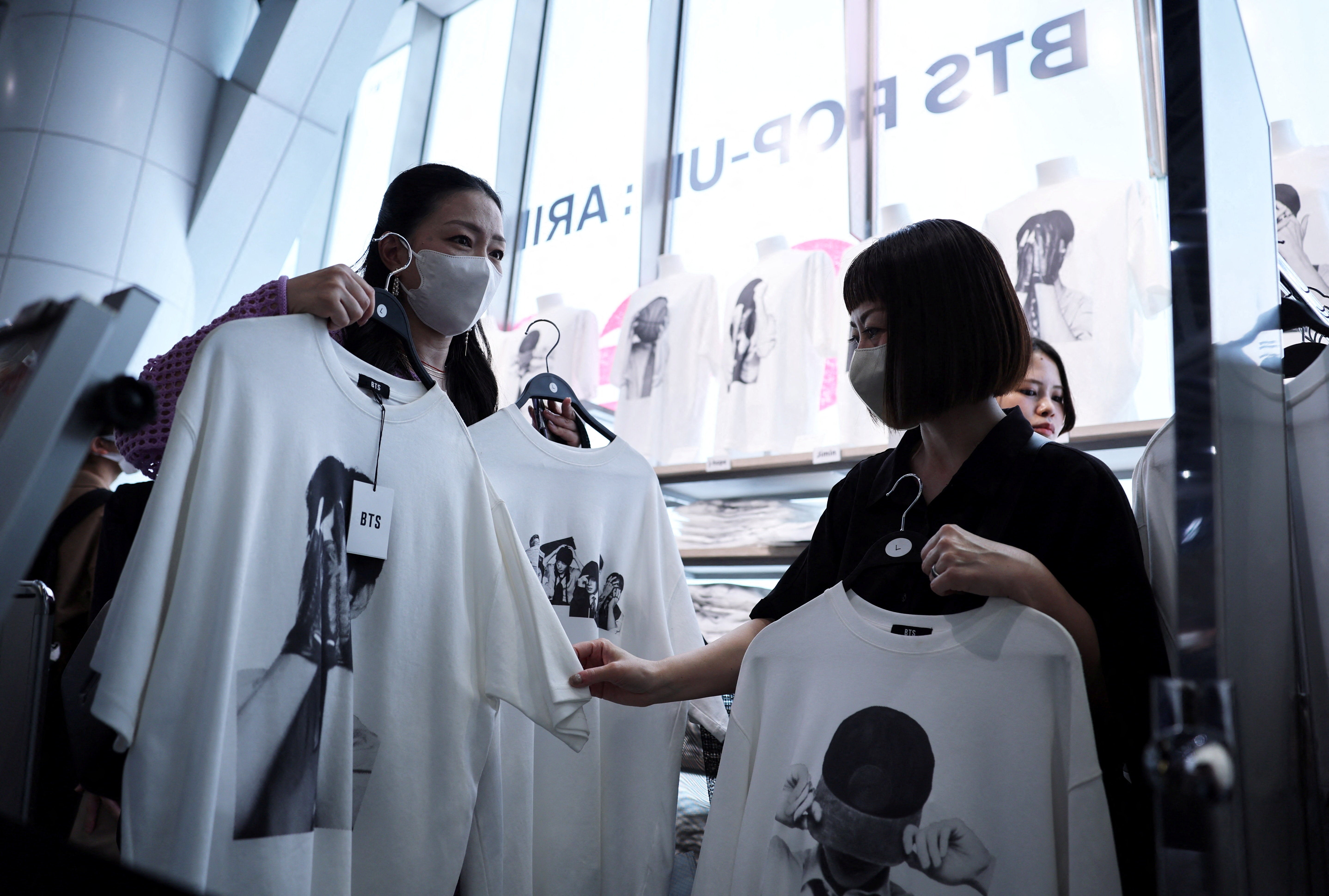
Shortly before the Gwanghwamun concert, sales of BTS merchandise at the Shinsegae Duty Free went up by 430 per cent, according to Reuters. Revenue at the Lotte Department Store in Myeongdong, one of Seoul’s main shopping districts and a major draw for tourists, grew by 30 per cent compared to a year earlier, while Shinsegae’s revenue increased by 48 per cent.
BTS’s comeback has coincided with a broader rise in tourism to South Korea. The country received a record 4.76 million foreign visitors in the first quarter of 2026, according to data from the Ministry of Culture, Sports and Tourism.
As many as 2.06 million visitors arrived in March alone, the highest monthly figure on record.