








After weeks of relentless spring rain, French-German artist Alexandre Dupeyron finally navigated the decaying corridors and broken staircases of an abandoned coal mining area in Ningxiang, Hunan province. His footsteps stirred the dust that had settled over scattered debris.
Dupeyron picked up a small fragment of coal from the floor. Remnants of the conveyor that once carried coal through the facilities, stretched like a skeletal staircase against the sky. This humble lump of coal, glittering faintly in the sunlight, became the raw material for his artwork.
“I’ve been working with crushed coal here, blending drawing and photography,” said Dupeyron, 43, who arrived at the former Wumuchong coal mine area in early March for a one-month artist’s residency.
In his temporary studio, Dupeyron ground coal and brick fragments gathered from the area into fine powder, filtering it multiple times. With his own recipe, he planned to use the powder to create pigments — for drawings, photographs and artworks born from the substance of the mine area.
One of the recurring themes in his artwork is the relationship between people and nature, Dupeyron said.
The Wumuchong coal mine was once a key energy production base in Hunan. At its peak, the mining area employed 2,000 miners, with dormitories, bathhouses, sorting conveyors, and ventilation shafts spread across the area. For decades, the coal extracted and processed in Wumuchong powered industries and heated homes across the region.
In 2014, the local government decided to shut down the mining operation to phase out outdated production methods and address environmental concerns.
After the mine officially ceased production in 2016, many industrial facilities and buildings were preserved. Nine main buildings, three mine shafts, miles of railway tracks, and the skeletal frame of the sorting conveyor sat silently in the nearly 25-acre area.
The project to build an international art zone in the former mining area began in 2020, said Liu Ke, a professor at the Guangzhou Academy of Fine Arts and one of the project’s initiators.
The heart of the complex, once completed, will be a museum built on-site to preserve and display the main industrial heritage of the old mine, surrounded by artist studios and living areas, galleries and exhibition halls, and a public ecological art park.
International artist residencies are one of the Wumuchong art zone’s primary focuses, Liu said. “We encourage visiting artists to stay longer, typically for one or two months,” Liu said. “This extended immersion allows them to develop a closer bond with China, gain a better understanding of the local culture, and form collaborative relationships with local artists.”
Since 2020, approximately 300 international artists have completed short-term residencies in the area, while seven artists are in long-term residence, Liu said.
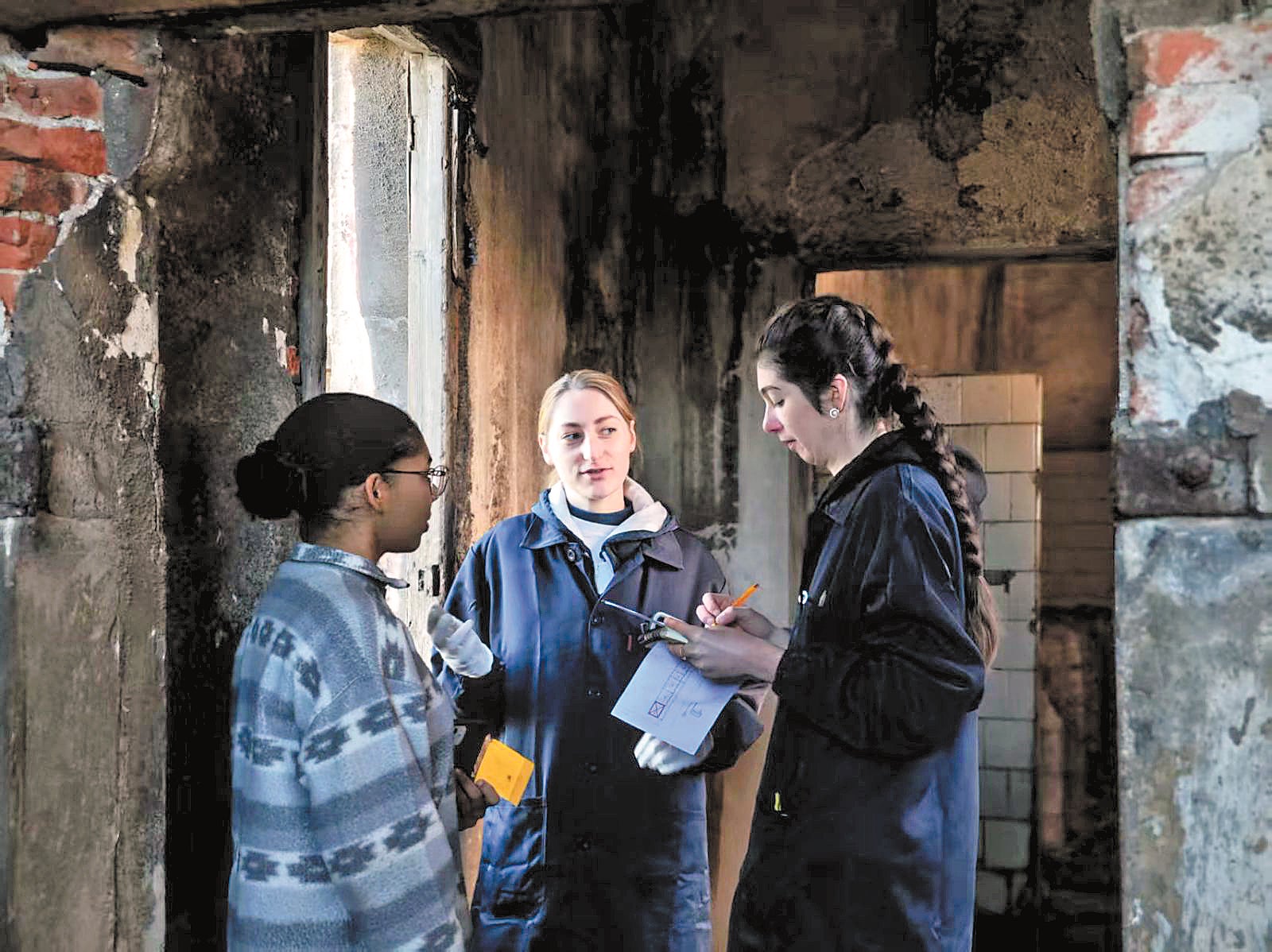
In 2024 the Guangzhou Academy of Fine Arts and the Avignon Higher School of Art in France jointly launched the Wumuchong Coal Mining Area Cultural Preservation and Ecological Restoration Project.
“The restoration of the buildings aims to preserve their authentic materials,” said Herve Giocanti, a professor of conservation and restoration of cultural heritage at the Avignon Higher School of Art. “First, we need to understand the history of this mine and its people.”
Ecological considerations also play a vital role in the project. The French team introduced biochar technology, which treats abandoned materials through anaerobic combustion, reducing pollution while producing outputs useful in both agriculture and art.
The transformation underway in Wumuchong is part of a larger phenomenon seen across China. In nearly every Chinese city, the physical remnants of industrialisation — shuttered factories, abandoned mines and disused rail yards — stand as quiet witnesses to the rapid industrial upgrading and urban development, awaiting their next chapter.
Worldwide, the recognition of industrial heritage developed progressively throughout the past century. In the mid-20th century, the foundation for “industrial archaeology” as a research approach was established in the United Kingdom, significantly accelerating the recognition of the historical significance of industrial remains.
“The term ‘industrial heritage’ helps us understand the significance of these sites through the lens of historical timelines,” said Qiu Jun, a senior architect at the China Architecture Design and Research Group. “Just like cultural relics or geological remains, industrial heritages are also carriers of the memory of human beings at a particular historical moment,” Qiu said.
He Chun and Yang Xiaonan contributed to this story.