





The afternoon sun slants through the tinted glass walls of a livestreaming base in Chengmai county, Hainan province, casting a golden light on the busy venue.
At 2 pm, the place comes alive. Behind one soundproof door, a young woman from Morocco adjusts a ring light; behind another, a Ghanaian man flashes a wide smile at his camera. In less than a minute, they will begin speaking to thousands of shoppers thousands of miles away — in places like New York, Casablanca, Lagos and Jakarta.
This is not a scene from well-known Chinese e-commerce cities such as Shenzhen, Guangdong province, or Hangzhou, Zhejiang province. This is Hainan, the southern island province known for coconut trees, beach resorts and rocket launches.
But after the island-wide special customs operations came into effect in December at Hainan Free Trade Port, a different kind of tide is rolling in — not of tourists, but of foreign faces speaking into phones, selling “Made in China” to the world.
“What makes me come to Hainan? It’s growing. It’s a good opportunity. I feel like I’m going to grow together with this island,” said Imane, a 25-year-old from Morocco, taking a quick break from her setup.
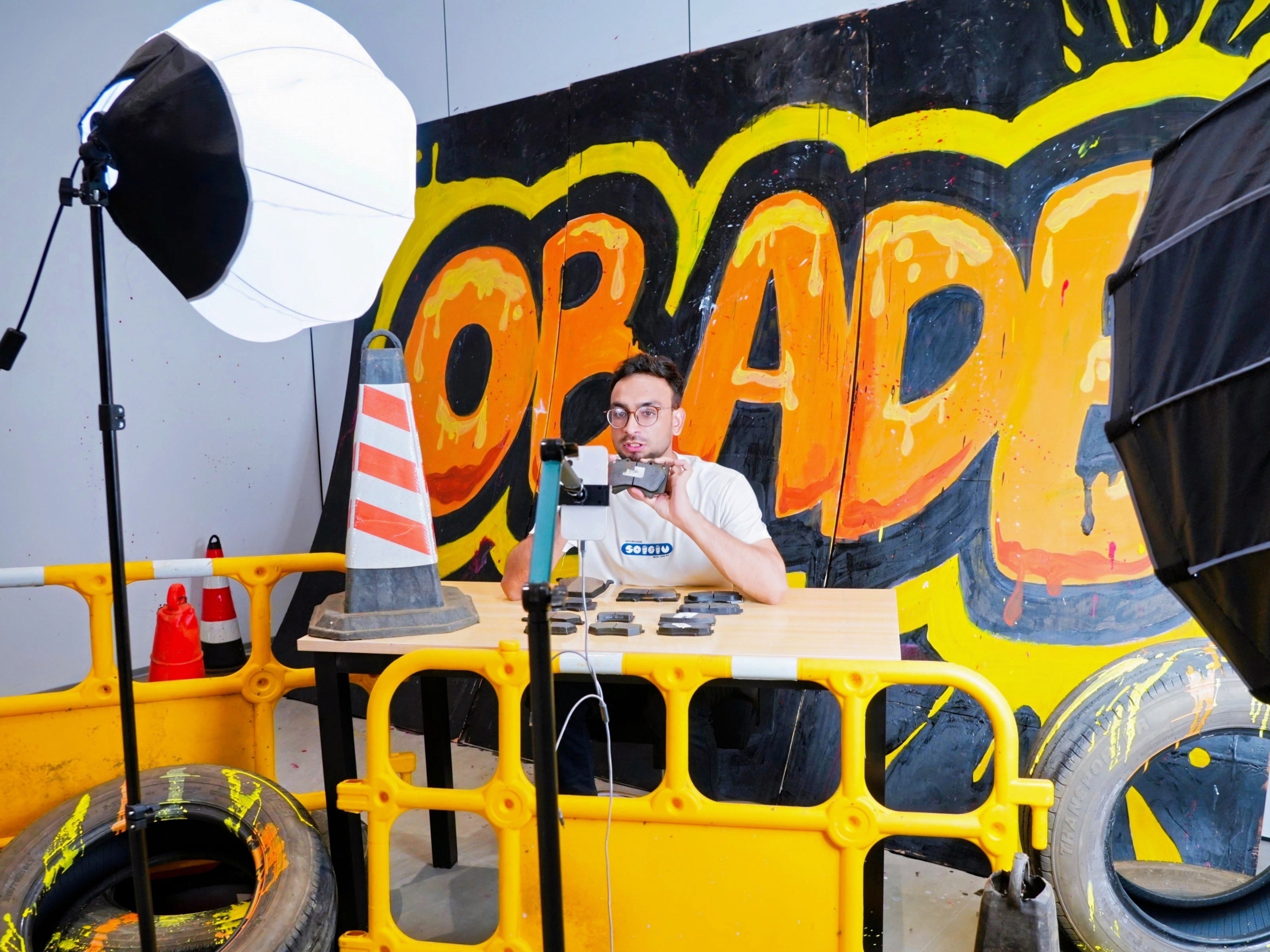
Imane is one of a growing number of foreign livestreamers who have made Hainan their home base. Since arriving in October, she has gone from a newcomer to a seasoned host. Now she speaks not just as a seller, but as a cultural bridge.
She held up a box of coconut tea, a Hainan specialty. “I drink Chinese tea every day — green tea, very refreshing. But when I moved to Hainan, I really like this: coconut tea. In Morocco, we also have tea, it’s famous. So I tell my audience: ‘This is like your tea, but with a tropical touch’. The biggest challenge is not the language,” she reflected, “It’s the trust.”
The trust-building is exactly why Hainan’s cross-border e-commerce players are doubling down on foreign hosts. Xu Jie, co-founder of Hainan Chuangchen Overseas Enterprise Services, runs a livestreaming base in Chengmai that now employs hosts from nine countries — Pakistan, Egypt, Morocco, Ghana, Congo and beyond.
Behind the smiling faces on camera is a carefully engineered policy environment. Xu said: “Without Hainan’s special policies, we couldn’t have built this international team.”
Hainan Free Trade Port has rolled out a suite of measures that directly benefit cross-border e-commerce. For foreign talent, the process has been streamlined. Hainan now offers a joint work permit and residence permit application that takes just three working days — a reduction of more than 70 per cent compared to traditional procedures. Work permits, once issued for three or six months, are now routinely valid for a year.
Why has Chengmai become the epicentre of this activity? The county, located in northwestern Hainan, sits inside the half-hour economic circle of the provincial capital Haikou. It is close enough to benefit from Haikou’s infrastructure, but affordable enough to host large-scale operations.
Huang Wanshu, deputy director of the Bureau of Commerce in Chengmai, said the strategy comes with right timing, right location and right people.
The location includes Macun Port — a national first-class open port connecting to Southeast Asia and the countries and regions involved in the Belt and Road Initiative. As for people, Chengmai has adopted a “talent first” philosophy, streamlining bureaucratic hurdles and providing value-added services.
Across Hainan, a bigger picture is emerging. In Haikou’s industrial parks, livestreaming rooms facing Southeast Asia are running at full capacity. In Sanya, cross-border e-commerce charter flights are also busy travelling around the world.
Hainan, once a tropical vacation getaway, is now a frontier of a different kind — an island where a young woman from Casablanca and a young man from Accra are helping the world see a new China, one livestreaming session at a time.