



惯性聚合 高效追踪和阅读你感兴趣的博客、新闻、科技资讯
阅读原文 在惯性聚合中打开

推荐订阅源

Forbes - Security
Forbes - Security
A
Arctic Wolf
M
MIT News - Artificial intelligence
T
Threat Research - Cisco Blogs
T
The Exploit Database - CXSecurity.com
C
CERT Recently Published Vulnerability Notes
NISL@THU
NISL@THU
L
Lohrmann on Cybersecurity
Martin Fowler
Martin Fowler
A
About on SuperTechFans
P
Palo Alto Networks Blog
Project Zero
Project Zero
The GitHub Blog
The GitHub Blog
WordPress大学
WordPress大学
Blog — PlanetScale
Blog — PlanetScale
博客园_首页
大猫的无限游戏
大猫的无限游戏
Cisco Talos Blog
Cisco Talos Blog
P
Proofpoint News Feed
D
DataBreaches.Net
Cyberwarzone
Cyberwarzone
T
Tor Project blog
IT之家
IT之家
P
Proofpoint News Feed
Help Net Security
Help Net Security
S
Securelist
Threat Intelligence Blog | Flashpoint
C
CXSECURITY Database RSS Feed - CXSecurity.com
Microsoft Azure Blog
V2EX - 技术
V2EX - 技术
K
Kaspersky official blog
Hugging Face - Blog
Hugging Face - Blog
MongoDB | Blog
MongoDB | Blog
B
Blog
N
News and Events Feed by Topic
The Cloudflare Blog
S
Schneier on Security
P
Privacy & Cybersecurity Law Blog
T
The Blog of Author Tim Ferriss
Recorded Future
Recorded Future
Last Week in AI
Last Week in AI
The Last Watchdog
The Last Watchdog
Hacker News - Newest:
Hacker News - Newest: "LLM"
L
LangChain Blog
I
InfoQ
F
Full Disclosure
The Register - Security
阮一峰的网络日志
阮一峰的网络日志
H
Hacker News: Front Page
V
V2EX

Check Point Blog

AI Appreciation Day: Let's Be Honest About What We're Appreciating - Check Point Blog AI Security Is Never Finished: Building the Continuous Red Teaming Loop  - Check Point Blog AI Agents are Only As Effective as Their Harness - Check Point Blog Email Agent Hijacking: The Hidden Threat That Breaks Post-Delivery Security - Check Point Blog How Check Point Email Security Stopped a Student Job Scam Before It Reached the Inbox - Check Point Blog Redefining the CISO Contract: From Securing the Business to Securely Doing Business - Check Point Blog A New Ransomware Leader Emerges as June 2026 Attack Volumes Climb Worldwide How Unified Policies Close Security Gaps - Check Point Blog Under Pressure: Insights from the 2026 Exposure Gap Report - Check Point Blog When AI Invents the Attack: Browser-Native Ransomware - Check Point Blog Check Point and the AWS European Sovereign Cloud: Securing Europe’s Digital Future - Check Point Blog Shadow AI Is Not a Tool Problem. It's a Timing Problem. - Check Point Blog AI Is Changing Cyber Careers. NICE 2026 Showed What Students Need Next - Check Point Blog 90% of the World's Businesses are SMEs and MSMEs and AI Is Reshaping Both Their Future and Their Risk - Check Point Blog Prevention Before the Inbox: Reading the Microsoft Defender Benchmark Report in Context - Check Point Blog ClickFix: The Attack That Turns Users Into Their Own Attackers - Check Point Blog From Prompt Testing to AI Red Teaming at Enterprise Scale - Check Point Blog AI Has Moved From Assistance to Action. Is Your Security Model Ready? AI Security Governance: How to Secure AI Agents, Copilots, and Autonomous AI in 2026 - Check Point Blog OpenAI Frontier AI Models Powering Check Point's Leading Cyber Security Solutions The Operational Reality of Zero Trust- And How You Can Change It - Check Point Blog Amazon Prime Day 2026: Bargains Begin June 23 — and So Do the Scams - Check Point Blog Securing AI Agent Behavior with Amazon Bedrock AgentCore and CheckPoint AI Security - Check Point Blog What Successful Exposure Management Deployments Had in Common in 2026 - Check Point Blog From Stars to Upvotes: The Fake Reputation Economy Behind a Crypto Clipboard Hijackers - Check Point Blog AI Red Teaming Makes the Unknowns Known - Check Point Blog Check Point and Illumio Expand Partnership to Secure Hybrid Environments - Check Point Blog The NCSC Patch Wave Is Coming. Do You Know Where Your Risk Lives? - Check Point Blog NCSC Warns of AI-Driven Patch Wave: Is Your Attack Surface Ready? Energy, Healthcare, and Finance: Why Midwest Industries Are Facing Surging Cyber Attacks - Check Point Blog Midwest Cyber Attacks Surge in 2026: Energy, Healthcare, and Finance Under Growing Threat Travel Phishing and Cyber Attacks are Surging in 2026, Growing 122% over the last 3 years. Here's What Cyber Criminals Are Actually Doing - Check Point Blog Travel Phishing Scams Surge 122%: How Cybercriminals Are Targeting Travelers in 2026 The AI Your Security Team Can’t See Is the One You Should Worry About Check Point Engage Public Sector 2026: AI Is the New Battlefield Check Point Joins OpenAI’s Trusted Access for Cyber Program and Daybreak Initiative When Your AI Agent’s Memory Becomes a Security Liability AI Agents Are Becoming Enterprise Workers. Who Secures Them? Global Cyber Attacks Ease in May 2026, But Ransomware Surges 48% As Threats Reorganize Security Advisory – Action Required – Active Exploitation of Check Point VPN Authentication Bypass (CVE-2026-50751) Fraud, Ransomware, and Fake Apps Are Already Targeting FIFA 2026 The AI Defense Plane: Securing the New Enterprise Execution Layer The Meta AI Account Recovery Incident Wasn’t Just a Chatbot Problem Check Point Lays the Groundwork for the Future of AI Factory Security with NVIDIA - Check Point Blog Check ... The 2026 U.S. Midterms Have a Cyber Problem, But it’s Not at the Ballot Box The Server Seizure That Affects Also Iran’s Cyber Operations The Autonomous Security Platform Built for Attacker Speed Check Point Frontier AI Models Readiness Program – Security Update 2026 Cloud Security Report: Why Traditional Network, Cloud, and Security Architecture Are Lagging Behind t ... AI Attacks Are No Longer Experimental: Key Findings from the March-April 2026 AI Threat Landscape - Check ... Protect GenAI Chatbots with Check Point WAF The Network Security Problem No One Could Solve – Until Now. Hacktivists, Ransomware, and a 124% Surge Across DACH The Case for a Vulnerability Operations Center Before the First Whistle: How Cyber Criminals Are Targeting World Cup 2026 - Check Point Blog World Cup 20 ... When the Ransomware Gang Gets Hacked: What the Gentlemen Leak Reveals About Modern Ransomware Risk - Check ... Cyber Threats Spike in April 2026 as Ransomware Expands and Attack Volumes Climb After Short-Lived Moderation Q1 2026 Ransomware Report: Fewer Groups, Higher Impact - Check Point Blog World Password Day 2026: Why "Strong Passwords" Can’t Save You from AI, Infostealers, and the Telegram Underground - Check Point Blog Resilient by Design: When the Network Itself Becomes the Target AI Threat Readiness: Defending Against Attacks Powered by Frontier AI Models Check Point Cyber Security Now Available Across All Levels of U.S. Government - Check Point Blog Check Poi ... VECT Ransomware: Why Paying Won’t Get Your Files Back Check Point WAF Leads Application Security-Validated by Frost & Sullivan Check Point WAF Leads Application ... From Access Control to Outcome Control: Securing AI Agents with Check Point and Google Cloud Experience AI-Powered Check Point Firewall at Google Cloud Next AI Finds Every Gap: How Many Can Your Network Survive? The Gentlemen RaaS Is Surging in 2026 The Phishing Paradox: The World’s Most Trusted Brands Are Cyber Criminals’ Entry Point of Choice World Quantum Day 2026: The Harvest Has Already Begun, Are You Prepared? Why Manufacturing Cyber Security is Becoming More Complex as Cyber Attacks Accelerate March 2026 Cyber Threat Report: Ransomware & GenAI Risk PS Private Training: Turning Cyber Complexity into Operational Control Tax Season 2026: How Cyber Criminals Are Preparing Their Attacks Months in Advance Claude Mythos Wake-Up Call: What AI Vulnerability Discovery Means for Cyber Defense Iran-nexus Password Spray Campaign Targeting Cloud Environments, with a Focus on the Middle East ROI of Hybrid Mesh Network Security (IDC Study 2026) Operation TrueChaos: TrueConf Zero‑Day Supply‑Chain Attack ChatGPT Data Leak (Fixed Feb 2026): Key Takeaways Spring Cleaning Has Arrived: Meet the New Check Point Portal Experience North America’s Cyber Security Threat Reality in 2026
AI Security Threats in 2026: Annual Insights from Check Point Research - Check Point Blog
lizwu@checkpoint.com · 2026-07-14 · via Check Point Blog
Key Takeaways
  • Vulnerability response times have collapsed from days to hours. AI can reason about code well enough to generate working exploits at scale, so defenders now face patch windows of 12 to 72 hours instead of the traditional timeframe
  • Your exposed AI infrastructure is being actively probed right now. Model servers, inference endpoints, and agent control panels are facing the internet, and most security teams don’t know they’re there
  • Data leakage through approved AI use doubled in one year. Employees sharing context with generative AI to get useful answers are exposing credentials and source code in ordinary workflows, no attack required
  • In a single operation earlier this year, one attacker ran Claude Code and GPT-4.1 in parallel to breach nine Mexican government agencies and extract 400 million records. The AI ran the operation with minimal human direction between steps
  • Speed, visibility, and governance have to move together. The defense has to operate at machine speed, find what it cannot see, and control how employees use AI every day

For years, the cyber security industry tracked AI as a force multiplier: something that made existing attack techniques faster, cheaper, and more accessible. That framing was accurate. But the annual AI Security Report 2026 from Check Point Research documents a transition that goes further. AI has crossed from assistant to operator. Where it once helped attackers prepare, it now runs the operation. What follows is a structured review of the report’s key findings, grounded in original incidents and case studies from the past twelve months.

How is AI being used to power attacks

AI now participates directly at every stage of the attack chain, from writing malware to executing commands inside live networks with minimal human direction between steps. The clearest example from the past year was the breach of nine Mexican government agencies [1] between late 2025 and early 2026. A single operator ran Claude Code and GPT-4.1 in parallel, one handling live exploitation across 34 sessions, the other analyzing stolen data and automatically tasking follow-on activity. The human set the architecture in motion. The AI ran the operation, producing more than 5,000 executed commands and exposing roughly 400 million records.

AI has also industrialized the criminal tooling market. Phishing-as-a-service platforms [2] now embed language models directly into the attack workflow, automatically scanning stolen accounts, mimicking the victim’s writing style, and generating convincing follow-on scam emails. Voice fraud platforms [3] run fully automated AI agents that walk targets through scripted account-recovery calls to steal one-time passcodes, with no human caller involved. The jailbreak is built into the product, so a buyer needs no AI skill at all to run a sophisticated, multi-step attack.

What has AI done to the vulnerability window

AI is now capable enough at reasoning about code that it speeds up both sides of the race simultaneously. Google’s Threat Intelligence Group reported the first AI-assisted zero-day built for mass exploitation, while other research showed frontier models producing working zero-day exploits at scale. The practical effect is compression: a vulnerability disclosure that once gave defenders days to respond now gives them hours. US Government CISA responded by requiring agencies to remediate the highest-risk vulnerabilities within three days. India’s CERT-In went further, advising organizations to patch critical systems within 12 hours.

How has AI itself become an attack surface

As organizations embedded AI into email, documents, code, and core business workflows, the AI stack became a target in its own right. Indirect prompt injection where malicious instructions are hidden inside content an AI reads as part of its normal work, has moved from proof-of-concept to operational threat. Check Point AI Security recorded a roughly fivefold increase in detections of large malicious prompt-injection payloads between March and May 2026, consistent with indirect injection becoming a routine attack path rather than a theoretical one.
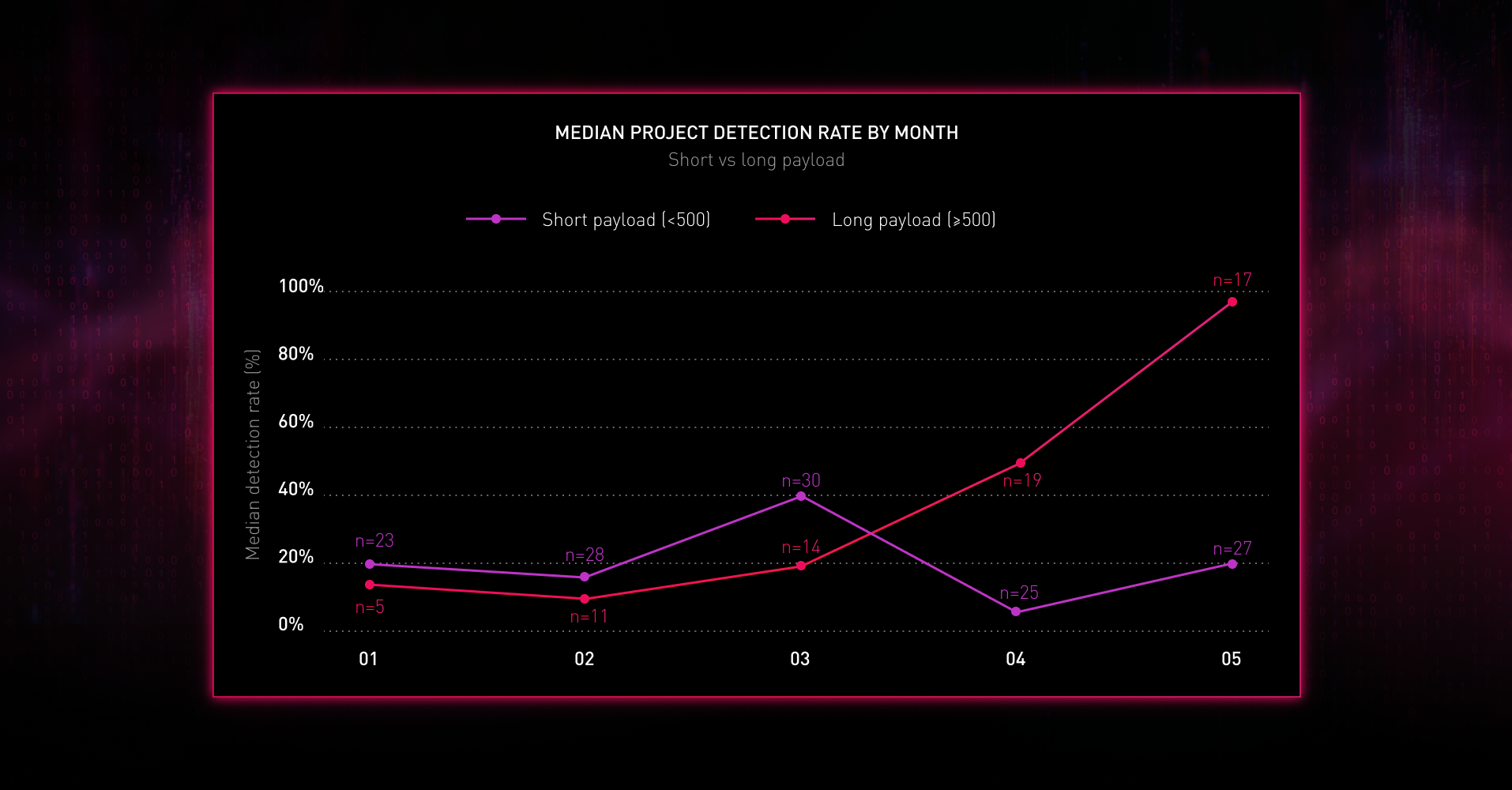
Figure 1: Malicious prompt detection rate by payload size

AI infrastructure has also become a target through conventional means. A critical flaw in Ollama [4] left roughly 300,000 internet-facing model servers leaking prompts, keys, and environment variables. GreyNoise [5] recorded around 91,000 attack sessions probing LLM deployments in a single quarter. The AI software supply chain has proven equally exposed: the Shai-Hulud worm in November 2025 compromised hundreds of widely used code packages and tens of thousands of repositories, stealing developer credentials as it spread automatically through build pipelines.

What has AI done to digital identity

Voice, face, documents, and real-time video can all now be convincingly synthesized, meaning none of them can stand alone as proof of identity. Over the past year [6], real-time face-swap moved from nation-state operations into industrialized fraud. Document forgery commoditized to the point where one service sold more than 10,000 AI-generated fake IDs capable of passing bank KYC checks across 56 countries. A North Korean-linked group took this furthest, using AI-fabricated personas to get operatives hired inside Western companies as legitimate remote employees, generating close to 800 million dollars for the regime’s weapons programs.
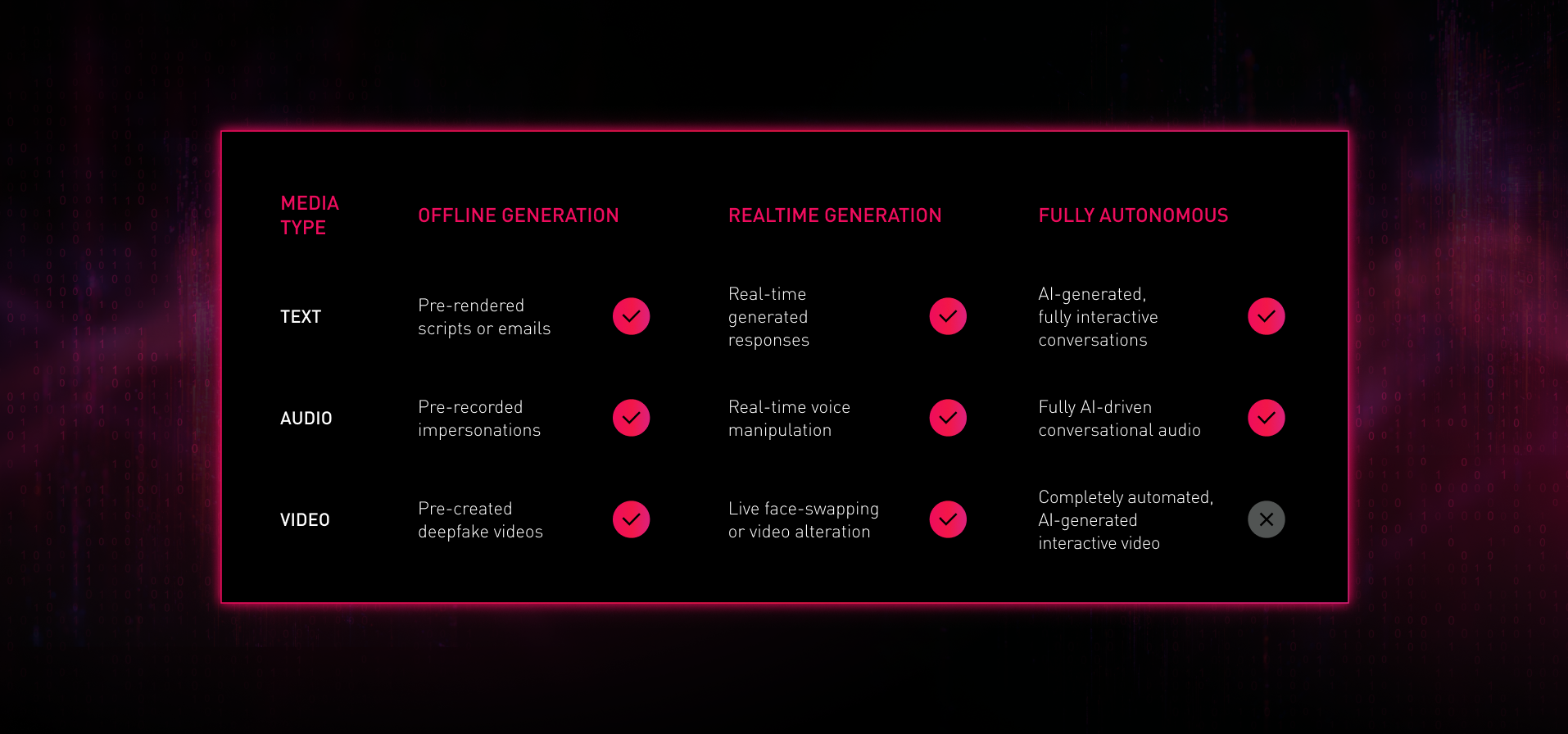
Figure 2: Generative identity threats by media type and maturity (Check Point Research, 2025)

How much sensitive data is leaking through enterprise AI tools

High-risk GenAI prompts doubled from 2 percent to 4 percent over the past year. The average organization runs 10 AI applications per month, many without formal approval. Business Services had the highest rate of any industry, nearly one in every 17 AI interactions carried a real risk of sensitive data exposure, by May 2026, this climbed to 1 in 14 AI interactions. Most of this exposure comes not from attacks but from ordinary approved use, where employees share more context than they realize to get a useful answer.
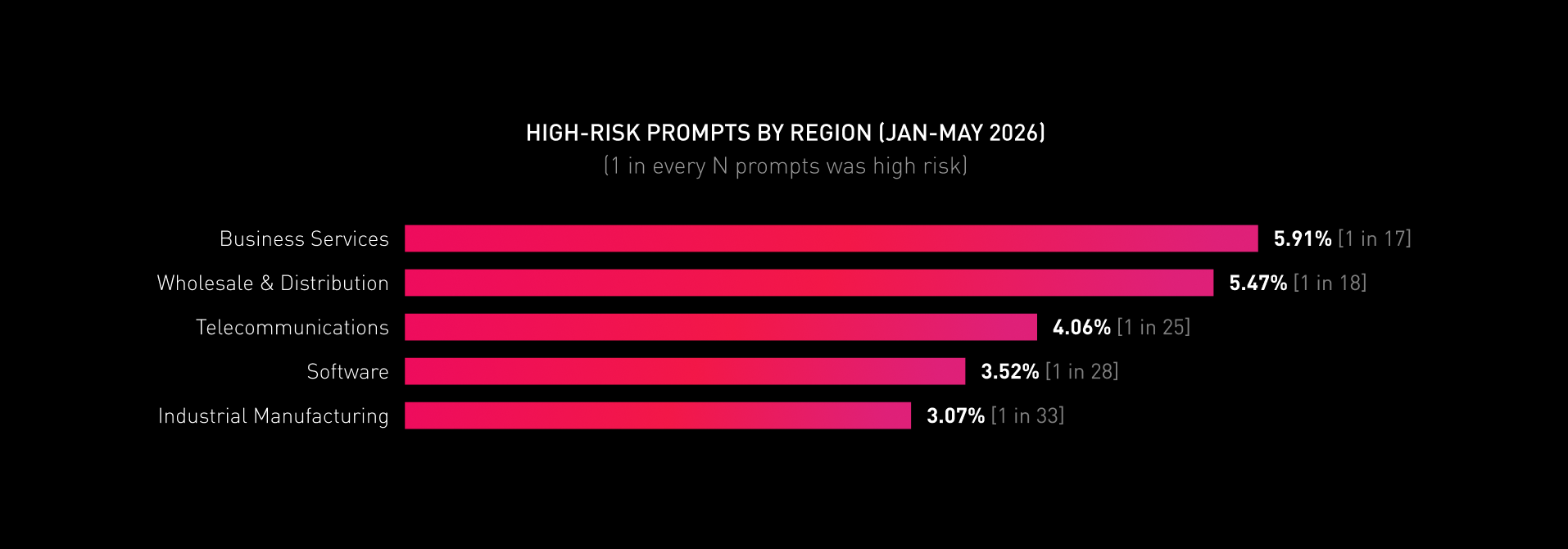
Figure 3: High-risk prompts by region

How does Check Point address these threats

The risks in this report fall into three categories, and each one calls for a different kind of defense: protecting AI itself, matching the speed of AI powered attacks, and governing how AI actually gets used across the workforce.

Protecting AI systems

Most security teams cannot see the riskiest part of their own AI attack surface, so protection starts with visibility and extends into how agents behave once they are live.

  • AI Agent Security governs how agents interact with prompts, tools, data, and actions in real time, preventing manipulation through prompt injection, poisoned configurations, and unsafe tool use
  • AI Red Teaming tests whether AI applications can be tricked into exposing sensitive data or bypassing policies, before attackers get the chance, and validates security again after every meaningful change to models, prompts, or permissions
  • WAF, powered by a dual layer ML engine, blocks prompt injections and unsafe content at the perimeter without needing signatures or causing downtime
  • AI Factory Security delivers a layered defense across hardware, workloads, containers, inference APIs, and endpoints for organizations building their own AI infrastructure
  • Exposure Management discovers every internet facing AI asset, including exposed model servers and agent control panels, and flags newly exposed infrastructure the moment it appears
Matching the pace of AI powered attacks

Intrusions now span dozens of targets at once, with AI handling the operational work between check ins. Security teams working at human speed simply cannot keep that pace, which is why the defense has to run on AI too.

  • ThreatCloud AI runs at two speeds simultaneously, generating continuous background intelligence while answering real time queries from Check Point sensors around the world, connected across networks, email, endpoints, mobile, and cloud
  • The Frontier AI Models Readiness Program, including Check Point’s internal, model agnostic BLAST technology, proactively uncovers and resolves vulnerabilities in the frontier models that power Check Point’s own defenses, closing the gap before it can be weaponized elsewhere
Governing AI use from the inside

Much of the exposure in this report never came from an attack at all. It came from ordinary, approved use, where employees shared more than they realized just to get a useful answer.

  • Workforce AI Security discovers both sanctioned and unsanctioned AI applications across the organization and applies real time data loss prevention to GenAI prompts, so credentials, source code, and customer data stop leaving through everyday AI use
  • Exposure Management extends that same visibility to the external surface, ranking exposures by what is genuinely exploitable rather than by scanner volume, and through its Brand Protection and Threat Intelligence layers, it also catches phishing pages, cloned sites, and stolen credentials, including AI service logins, already circulating on the deep and dark web

To read the full findings, access the AI Security Report 2026 from Check Point Research here

Further Reading and Sources

[1] Gambit Security, “A Single Operator, Two AI Platforms, Nine Government Agencies: The Full Technical Report” https://gambit.security/blog-posts/a-single-operator-two-ai-platforms-nine-government-agencies-the-full-technical-report

[2] Sekoia, “New Widespread EvilTokens Kit: Device Code Phishing-as-a-Service” https://blog.sekoia.io/new-widespread-eviltokens-kit-device-code-phishing-as-a-service-part-1

[3] Abnormal Security, “ATHR: AI Voice Phishing and TOAD Attacks” https://abnormal.ai/blog/athr-ai-voice-phishing-toad-attack

[4] Cyera, “Bleeding Llama: Critical Unauthenticated Memory Leak in Ollama” https://www.cyera.com/research/bleeding-llama-critical-unauthenticated-memory-leak-in-ollama

[5] GreyNoise, “Threat Actors Actively Targeting LLMs” https://www.greynoise.io/blog/threat-actors-actively-targeting-llms

[6] Malwarebytes, “Scam Compounds Hiring AI Models to Seal Deal in Deepfake Video Calls” https://www.malwarebytes.com/blog/news/2026/03/scam-compounds-hiring-ai-models-to-seal-deal-in-deepfake-video-calls