惯性聚合 高效追踪和阅读你感兴趣的博客、新闻、科技资讯
阅读原文 在惯性聚合中打开

推荐订阅源

GbyAI
GbyAI
N
News and Events Feed by Topic
D
DataBreaches.Net
MongoDB | Blog
MongoDB | Blog
CTFtime.org: upcoming CTF events
freeCodeCamp Programming Tutorials: Python, JavaScript, Git & More
Engineering at Meta
Engineering at Meta
T
Tailwind CSS Blog
博客园_首页
Microsoft Azure Blog
Y
Y Combinator Blog
博客园 - Franky
Hugging Face - Blog
Hugging Face - Blog
月光博客
月光博客
A
About on SuperTechFans
I
InfoQ
S
Securelist
Last Week in AI
Last Week in AI
S
Schneier on Security
C
CXSECURITY Database RSS Feed - CXSecurity.com
Hacker News: Ask HN
Hacker News: Ask HN
Schneier on Security
Know Your Adversary
Know Your Adversary
腾讯CDC
大猫的无限游戏
大猫的无限游戏
S
Security @ Cisco Blogs
博客园 - 三生石上(FineUI控件)
Simon Willison's Weblog
D
Darknet – Hacking Tools, Hacker News & Cyber Security
T
Tor Project blog
美团技术团队
aimingoo的专栏
aimingoo的专栏
G
Google Developers Blog
罗磊的独立博客
Vercel News
Vercel News
Cyber Security Advisories - MS-ISAC
Threat Intelligence Blog | Flashpoint
The Cloudflare Blog
S
Secure Thoughts
www.infosecurity-magazine.com
Latest news
Latest news
Recent Announcements
Exploit-DB.com RSS Feed
cs.CV updates on arXiv.org
奇客Solidot–传递最新科技情报
奇客Solidot–传递最新科技情报
L
LINUX DO - 热门话题
Security Latest
Security Latest
TaoSecurity Blog
TaoSecurity Blog
Cyberwarzone
Cyberwarzone
有赞技术团队
有赞技术团队

Check Point Blog

AI Security Is Never Finished: Building the Continuous Red Teaming Loop  - Check Point Blog AI Security Threats in 2026: Annual Insights from Check Point Research - Check Point Blog AI Agents are Only As Effective as Their Harness - Check Point Blog Email Agent Hijacking: The Hidden Threat That Breaks Post-Delivery Security - Check Point Blog How Check Point Email Security Stopped a Student Job Scam Before It Reached the Inbox - Check Point Blog Redefining the CISO Contract: From Securing the Business to Securely Doing Business - Check Point Blog A New Ransomware Leader Emerges as June 2026 Attack Volumes Climb Worldwide How Unified Policies Close Security Gaps - Check Point Blog Under Pressure: Insights from the 2026 Exposure Gap Report - Check Point Blog When AI Invents the Attack: Browser-Native Ransomware - Check Point Blog Check Point and the AWS European Sovereign Cloud: Securing Europe’s Digital Future - Check Point Blog Shadow AI Is Not a Tool Problem. It's a Timing Problem. - Check Point Blog AI Is Changing Cyber Careers. NICE 2026 Showed What Students Need Next - Check Point Blog 90% of the World's Businesses are SMEs and MSMEs and AI Is Reshaping Both Their Future and Their Risk - Check Point Blog Prevention Before the Inbox: Reading the Microsoft Defender Benchmark Report in Context - Check Point Blog ClickFix: The Attack That Turns Users Into Their Own Attackers - Check Point Blog From Prompt Testing to AI Red Teaming at Enterprise Scale - Check Point Blog AI Has Moved From Assistance to Action. Is Your Security Model Ready? AI Security Governance: How to Secure AI Agents, Copilots, and Autonomous AI in 2026 - Check Point Blog OpenAI Frontier AI Models Powering Check Point's Leading Cyber Security Solutions The Operational Reality of Zero Trust- And How You Can Change It - Check Point Blog Amazon Prime Day 2026: Bargains Begin June 23 — and So Do the Scams - Check Point Blog Securing AI Agent Behavior with Amazon Bedrock AgentCore and CheckPoint AI Security - Check Point Blog What Successful Exposure Management Deployments Had in Common in 2026 - Check Point Blog From Stars to Upvotes: The Fake Reputation Economy Behind a Crypto Clipboard Hijackers - Check Point Blog AI Red Teaming Makes the Unknowns Known - Check Point Blog Check Point and Illumio Expand Partnership to Secure Hybrid Environments - Check Point Blog The NCSC Patch Wave Is Coming. Do You Know Where Your Risk Lives? - Check Point Blog NCSC Warns of AI-Driven Patch Wave: Is Your Attack Surface Ready? Energy, Healthcare, and Finance: Why Midwest Industries Are Facing Surging Cyber Attacks - Check Point Blog Midwest Cyber Attacks Surge in 2026: Energy, Healthcare, and Finance Under Growing Threat The AI Your Security Team Can’t See Is the One You Should Worry About Check Point Engage Public Sector 2026: AI Is the New Battlefield Check Point Joins OpenAI’s Trusted Access for Cyber Program and Daybreak Initiative When Your AI Agent’s Memory Becomes a Security Liability AI Agents Are Becoming Enterprise Workers. Who Secures Them? Global Cyber Attacks Ease in May 2026, But Ransomware Surges 48% As Threats Reorganize Security Advisory – Action Required – Active Exploitation of Check Point VPN Authentication Bypass (CVE-2026-50751) Fraud, Ransomware, and Fake Apps Are Already Targeting FIFA 2026 The AI Defense Plane: Securing the New Enterprise Execution Layer The Meta AI Account Recovery Incident Wasn’t Just a Chatbot Problem Check Point Lays the Groundwork for the Future of AI Factory Security with NVIDIA - Check Point Blog Check ... The 2026 U.S. Midterms Have a Cyber Problem, But it’s Not at the Ballot Box The Server Seizure That Affects Also Iran’s Cyber Operations The Autonomous Security Platform Built for Attacker Speed Check Point Frontier AI Models Readiness Program – Security Update 2026 Cloud Security Report: Why Traditional Network, Cloud, and Security Architecture Are Lagging Behind t ... AI Attacks Are No Longer Experimental: Key Findings from the March-April 2026 AI Threat Landscape - Check ... Protect GenAI Chatbots with Check Point WAF The Network Security Problem No One Could Solve – Until Now. Hacktivists, Ransomware, and a 124% Surge Across DACH The Case for a Vulnerability Operations Center Before the First Whistle: How Cyber Criminals Are Targeting World Cup 2026 - Check Point Blog World Cup 20 ... When the Ransomware Gang Gets Hacked: What the Gentlemen Leak Reveals About Modern Ransomware Risk - Check ... Cyber Threats Spike in April 2026 as Ransomware Expands and Attack Volumes Climb After Short-Lived Moderation Q1 2026 Ransomware Report: Fewer Groups, Higher Impact - Check Point Blog World Password Day 2026: Why "Strong Passwords" Can’t Save You from AI, Infostealers, and the Telegram Underground - Check Point Blog Resilient by Design: When the Network Itself Becomes the Target AI Threat Readiness: Defending Against Attacks Powered by Frontier AI Models Check Point Cyber Security Now Available Across All Levels of U.S. Government - Check Point Blog Check Poi ... VECT Ransomware: Why Paying Won’t Get Your Files Back Check Point WAF Leads Application Security-Validated by Frost & Sullivan Check Point WAF Leads Application ... From Access Control to Outcome Control: Securing AI Agents with Check Point and Google Cloud Experience AI-Powered Check Point Firewall at Google Cloud Next AI Finds Every Gap: How Many Can Your Network Survive? The Gentlemen RaaS Is Surging in 2026 The Phishing Paradox: The World’s Most Trusted Brands Are Cyber Criminals’ Entry Point of Choice World Quantum Day 2026: The Harvest Has Already Begun, Are You Prepared? Why Manufacturing Cyber Security is Becoming More Complex as Cyber Attacks Accelerate March 2026 Cyber Threat Report: Ransomware & GenAI Risk PS Private Training: Turning Cyber Complexity into Operational Control Tax Season 2026: How Cyber Criminals Are Preparing Their Attacks Months in Advance Claude Mythos Wake-Up Call: What AI Vulnerability Discovery Means for Cyber Defense Iran-nexus Password Spray Campaign Targeting Cloud Environments, with a Focus on the Middle East ROI of Hybrid Mesh Network Security (IDC Study 2026) Operation TrueChaos: TrueConf Zero‑Day Supply‑Chain Attack ChatGPT Data Leak (Fixed Feb 2026): Key Takeaways Spring Cleaning Has Arrived: Meet the New Check Point Portal Experience North America’s Cyber Security Threat Reality in 2026
Travel Phishing and Cyber Attacks are Surging in 2026, Growing 122% over the last 3 years. Here's What Cyber Criminals Are Actually Doing - Check Point Blog Travel Phishing Scams Surge 122%: How Cybercriminals Are Targeting Travelers in 2026
lizwu@checkpoint.com · 2026-06-15 · via Check Point Blog

Every summer, hundreds of millions of people book flights, reserve hotels, and plan vacations online. And every summer, cyber criminals show up to take advantage of exactly that. Check Point Research tracked the threat landscape heading into the 2026 summer travel season, and what they found should give travelers pause before they click “confirm booking.” 

The hospitality sector is under targeted attack 

The hospitality, travel, and recreation sector recorded 2,291 average weekly cyberattacks per organization in May 2026, a 24% increase compared to the same month last year. To put that in context, the global year-over-year rise across all industries was just 2%. The sector has more than doubled its attack volume since May 2023, growing from 1,032 to 2,291 weekly attacks per organization over three years, a cumulative increase of 122% over three years. 

This is not a general uptick in cyber crime that happens to touch travel. It is a deliberate, seasonal intensification targeting an industry that processes enormous volumes of personal and financial data precisely when people are distracted, rushing, and eager to secure a good deal. 

Nearly 50,000 fake travel domains registered in one month 

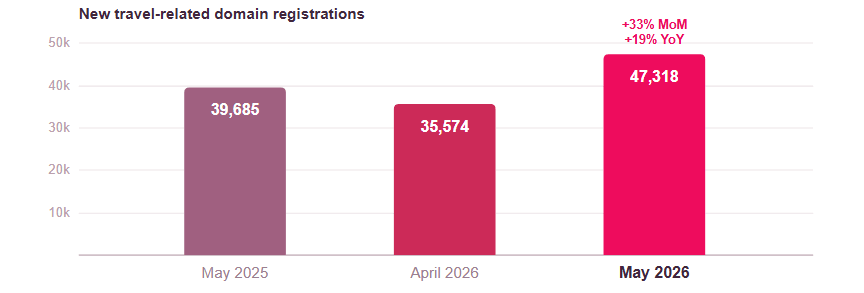
In May 2026 alone, 47,318 new travel-related domains were registered, up 33% from April and 19% higher than May 2025. Among those domains, one in every 112 is already classified as malicious or suspicious. Many others remain dormant for now, waiting to be activated as summer traffic peaks. 

Check Point Research identified three coordinated bulk-registration campaigns within the April and May data. The first revolves around over 210 sequentially numbered hotel-lure domains following templates like hotel-stay[N].com and stay-hotel[N].com, all pointing to a single automated actor building phishing infrastructure at scale. The second impersonates American Express and Lloyds Travel Choice, an affiliation of Lloyds Bank with travel reward lures, combining recognizable financial brand names with keywords like “happytrip” and “travelchoice” on .ink domains, a TLD frequently used for short-lived phishing operations. The third targets the brand “Fora Travel” across 108 distinct TLDs, including .cruises, .miami, and .international, a saturation strategy aimed at flooding multiple web domains with lookalike sites to increase the chances of intercepting travelers, no matter what they type into a browser. 
Fake Booking.com, Airbnb, and Skyscanner sites are already live 

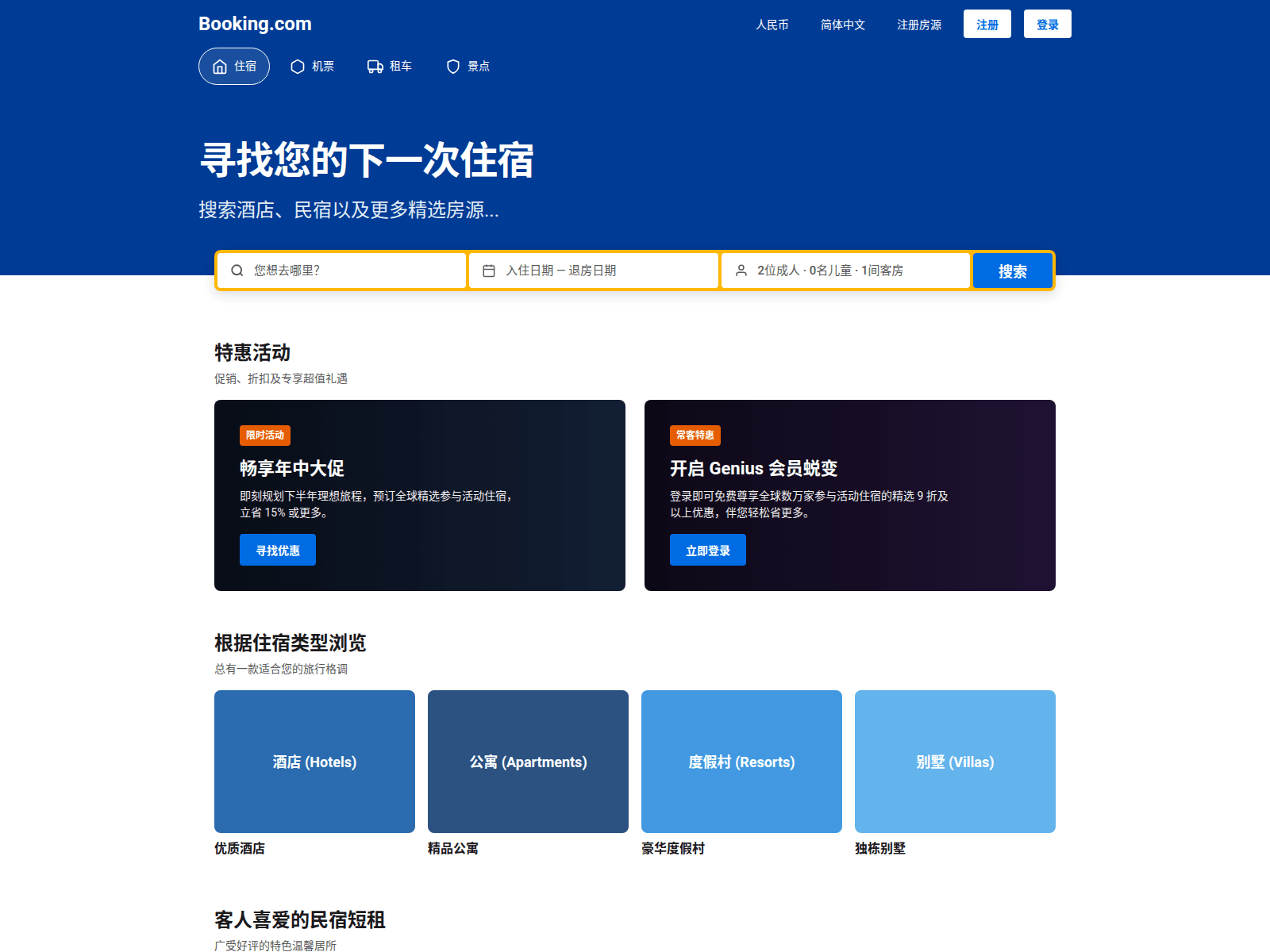
Beyond infrastructure, Check Point’s threat intelligence identified active travel phishing sites impersonating some of the most trusted names in online travel booking. bookingni[.]com reproduces the Booking.com sign-in flow to harvest credentials and payment card details. A coordinated campaign using booking-cn[.]com and booking-hk[.]com targets Chinese-speaking travelers with localized versions of the Booking.com homepage, complete with RMB pricing and a “mid-year summer sale” banner timed to the booking peak. The same actor also operates booking-jp[.]com and booking-zh[.]com. 

airbnb-ca[.]com targets travelers planning a trip to Canada with a geo-specific impersonation site featuring Canadian Rockies photography and property listings for Montreal, Toronto, Vancouver, and Banff.  

And several domains operating under the Skyscanner name, including skyscanners[.]shop and skyscanners[.]life, display real-looking “presale price” hotel deals at Malaysian resorts before collecting deposits that go nowhere near an actual booking. 

How to protect yourself from hospitality & travel phishing scams 

Knowing that fake booking sites exist is useful. Knowing how to spot them is what actually keeps you safe. 

  • Type travel URLs directly into your browser rather than following links from emails or ads
  • Look carefully at the domain before entering any login or payment information, because a single letter of difference is exactly what these campaigns rely on
  • Use a credit card rather than a debit card for online bookings, since credit cards offer stronger fraud protection and easier dispute resolution
  • Enable two-factor authentication on any travel platform account you use regularly
  • If a deal feels unusually urgent or cheap, that pressure is usually engineered

Travel cyber security threats follow a predictable seasonal rhythm. The people behind fake booking sites plan around the summer surge just as carefully as legitimate businesses do, and they are ready well before most travelers start searching.