



惯性聚合 高效追踪和阅读你感兴趣的博客、新闻、科技资讯
阅读原文 在惯性聚合中打开

推荐订阅源

K
Kaspersky official blog
G
Google Developers Blog
Apple Machine Learning Research
V
Visual Studio Blog
WordPress大学
WordPress大学
博客园 - Franky
雷峰网
雷峰网
钛媒体:引领未来商业与生活新知
钛媒体:引领未来商业与生活新知
博客园 - 【当耐特】
人人都是产品经理
人人都是产品经理
月光博客
月光博客
V
V2EX
freeCodeCamp Programming Tutorials: Python, JavaScript, Git & More
IT之家
IT之家
小众软件
小众软件
Cloudbric
Cloudbric
量子位
N
News and Events Feed by Topic
Vercel News
Vercel News
Security Archives - TechRepublic
www.infosecurity-magazine.com
C
Check Point Blog
The Cloudflare Blog
Hugging Face - Blog
Hugging Face - Blog
T
Tenable Blog
S
Secure Thoughts
Know Your Adversary
Know Your Adversary
C
CXSECURITY Database RSS Feed - CXSecurity.com
C
Cyber Attacks, Cyber Crime and Cyber Security
Stack Overflow Blog
Stack Overflow Blog
Help Net Security
Help Net Security
L
LINUX DO - 最新话题
Google DeepMind News
云风的 BLOG
云风的 BLOG
OSCHINA 社区最新新闻
OSCHINA 社区最新新闻
cs.AI updates on arXiv.org
N
News | PayPal Newsroom
PCI Perspectives
PCI Perspectives
T
Troy Hunt's Blog
GbyAI
GbyAI
Attack and Defense Labs
C
Cybersecurity and Infrastructure Security Agency CISA
Y
Y Combinator Blog
美团技术团队
爱范儿
爱范儿
Martin Fowler
Martin Fowler
Last Week in AI
Last Week in AI
P
Privacy International News Feed
T
The Blog of Author Tim Ferriss
F
Full Disclosure

博客园 - 老猴

SharePoint 2010问题集锦 (2011.2) SharePoint 2010问题集锦 (2011.1) Excel REST使用方法 微软企业生产力大学培训课程_8月 招聘:赴微软工作SharePoint技术专家(V-,北京) SharePoint 2010: 如何使用Word Automation Services开发应用 SharePoint 2010: 对于开发人员 SharePoint 2010: 使用SharePoint的Theming引擎 SharePoint 2010: 学习资源 SharePoint 2010: 使用Visio Services展示SCOM数据 SharePoint 2010: 设计BCS工作流 SharePoint 2010: 使用BCS构建解决方案 WSS3.0 Server Admin Template vs Site Admin Template 安装BSM2005时的错误 K2.net工作流引擎在智能设备上的应用 如何使用K2.Net 2003设计流程 K2与SharePoint 2003集成特征 K2.Net 2003中的5种业务规则(Rules) 感受K2.Net 2003工作流解决方案
SharePoint 2010: Claims-based Authentication
老猴 · 2010-06-22 · via 博客园 - 老猴

基于声明的身份授权模型

SharePoint Server 2010引入了一个全新的、强大的,并且非常灵活的授权模型,可以和企业的任何身份体系相集成,包括:AD,基于LDAP的目录服务,特定应用程序的身份体系,以及新的以用户为中心的身份模型,如LiveID。该模型使用基于声明的授权模式和新产品——Geneva。基于声明的授权模型围绕身份理念构建,并且使用WS-Federation, WS-Trust,以及诸如Security Assertion Markup Language (SAML)等协议构建。

身份是用户信息的集合,包括:名称、邮箱地址、部门等等。事实上,Geneva等同于3套相关的技术:Active Directory Federation Services (以前称为Geneva Server),Windows Cardspace™ (以前称为Cardspace Geneva), 以及Windows Identity Foundation (以前称为Geneva Framework)。
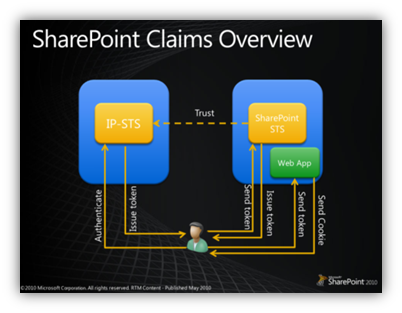
为什么使用这个新的系统?

身份是驱动应用各个关键部分的核心,比如:用户是谁(authentication),用户拥有什么样的权限(authorization),以及应用如何与用户进行交互(personalization)等等。当今所有的应用都有身份体系,但都运行在各自的身份体系下。通常,要集成这些应用非常非常困难。

基于声明的身份授权体系为应用提供了一种从组织内、其他组织以及Internet,获取用户身份信息的常规方法。

身份信息包含在security token内(简单来讲,就是Token)。Token包含一个或者多个用户声明。我们可以把基于声明的授权体系理解为用户元数据,而这些数据贯穿于用户访问Session的整个过程。

基于声明的授权体系为SharePoint 2010提供了无限的可能性。我们可以在一个Web应用中灵活地使用多个用户授权体系,然后根据他们的Token提供的身份信息提供更加个性化的访问体验。