








At Open Whisper Systems, our goal is to make private communication simple. A year ago, we announced a partnership with WhatsApp and committed to integrating the Signal Protocol into their product, moving towards full end-to-end encryption for all of their users by default.
Over the past year, we’ve been progressively rolling out Signal Protocol support for all WhatsApp communication across all WhatsApp clients. This includes chats, group chats, attachments, voice notes, and voice calls across Android, iPhone, Windows Phone, Nokia S40, Nokia S60, Blackberry, and BB10.
As of today, the integration is fully complete. Users running the most recent versions of WhatsApp on any platform now get full end-to-end encryption for every message they send and every WhatsApp call they make when communicating with each other. This includes all the benefits of the Signal Protocol – a modern, open source, forward secure, strong encryption protocol for asynchronous messaging systems, designed to make end-to-end encrypted messaging as seamless as possible.
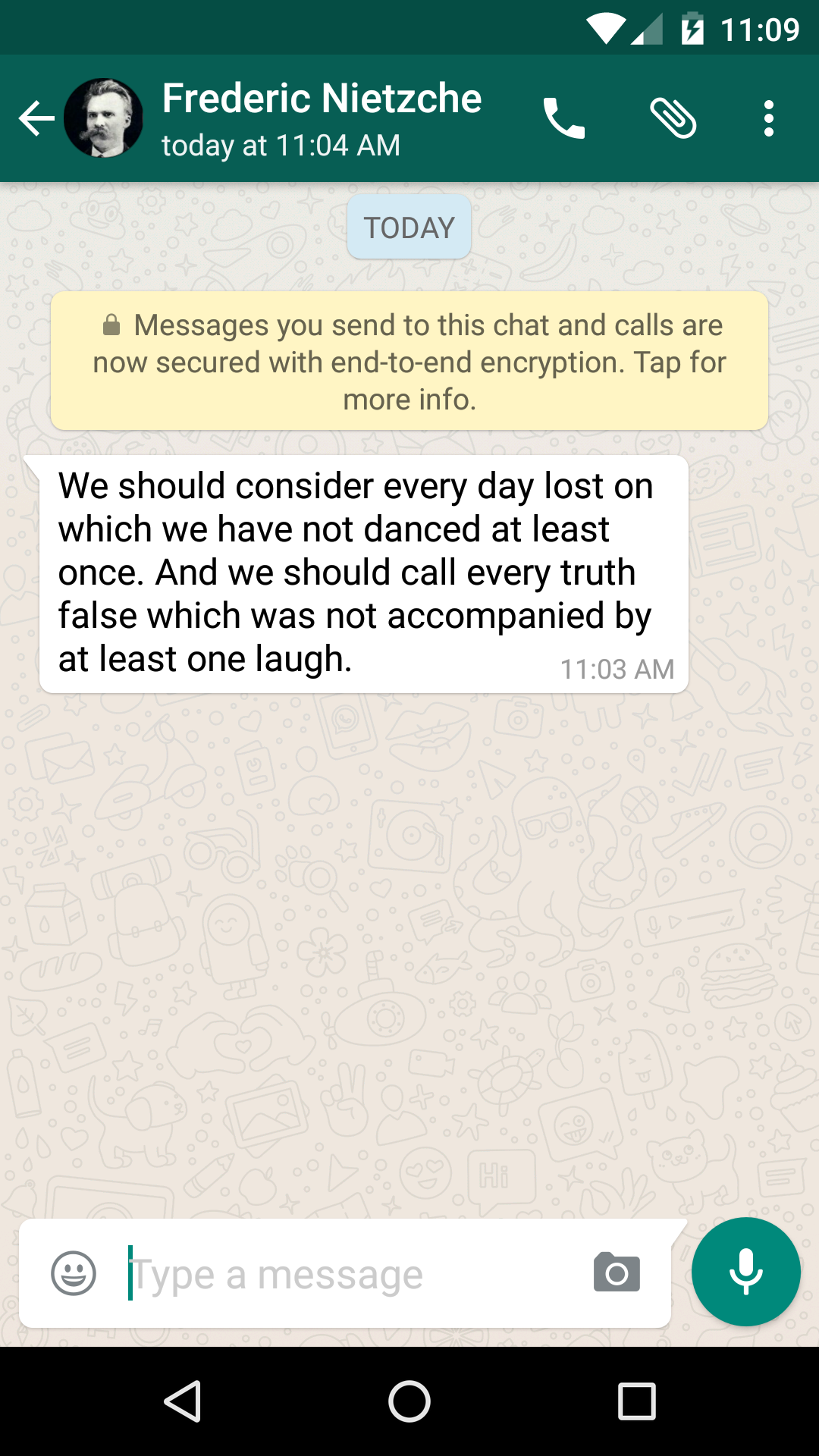
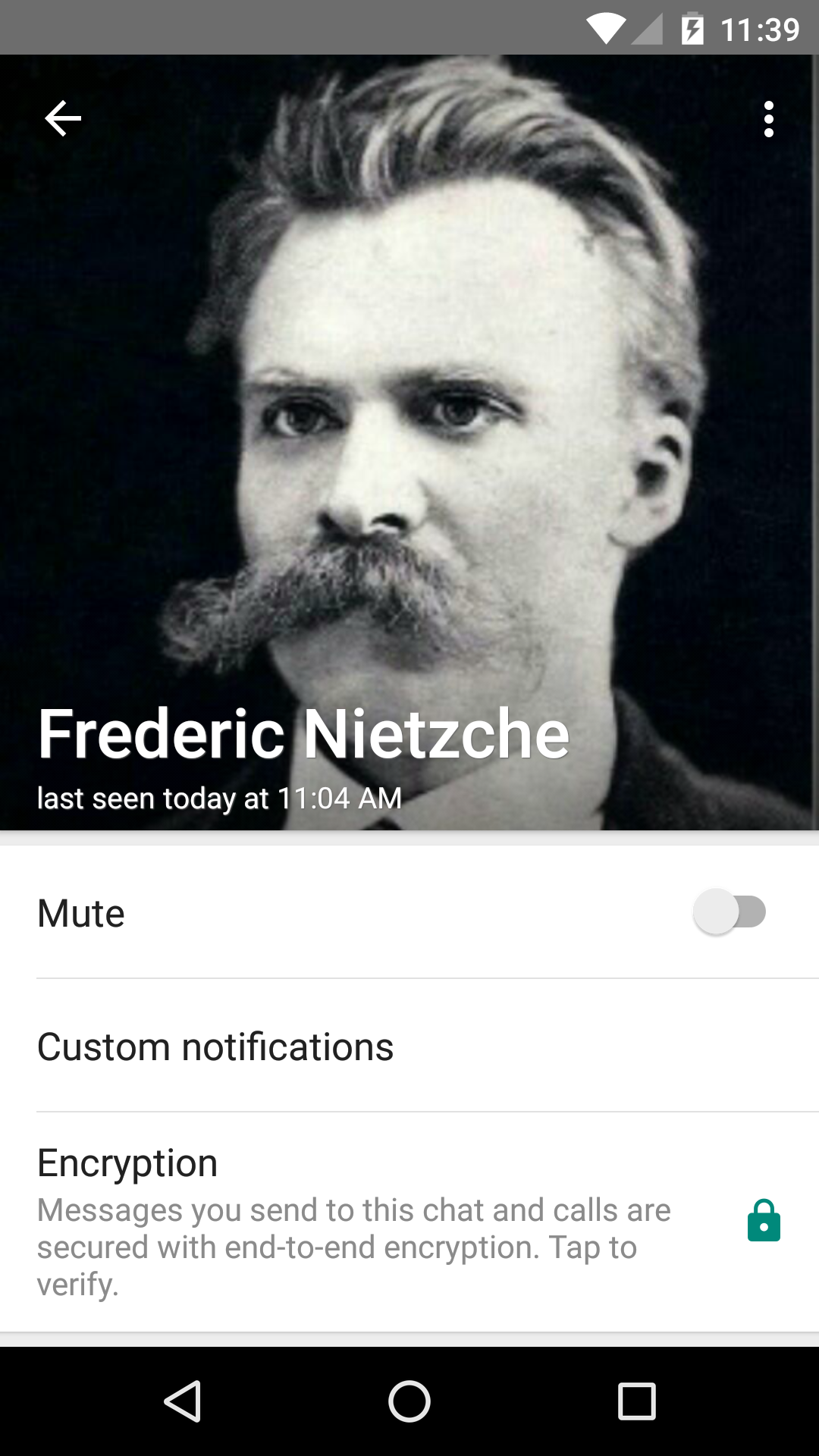
Before all users have updated to the latest version of the software for their platform, there will still be some plaintext on the network. To make this transition as clear as possible, WhatsApp clients notify users when their chats become end-to-end encrypted. Starting today, users will see a notice in their conversation screen as their individual and group chats become end-to-end encrypted. Additionally, the encryption status of any chat is visible under that chat’s preferences screen.
Once a client recognizes a contact as being fully e2e capable, it will not permit transmitting plaintext to that contact, even if that contact were to downgrade to a version of the software that is not fully e2e capable. This prevents the server or a network attacker from being able to perform a downgrade attack.
Eventually all the pre-e2e capable clients will expire, at which point new versions of the software will no longer transmit or accept plaintext messages at all.
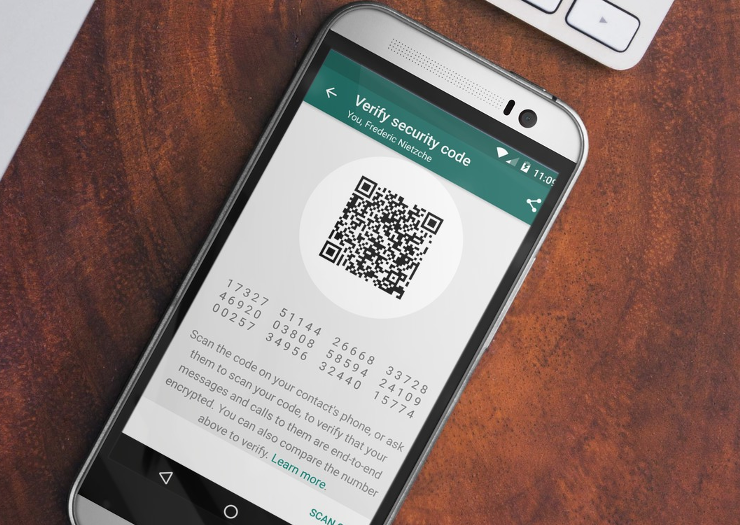
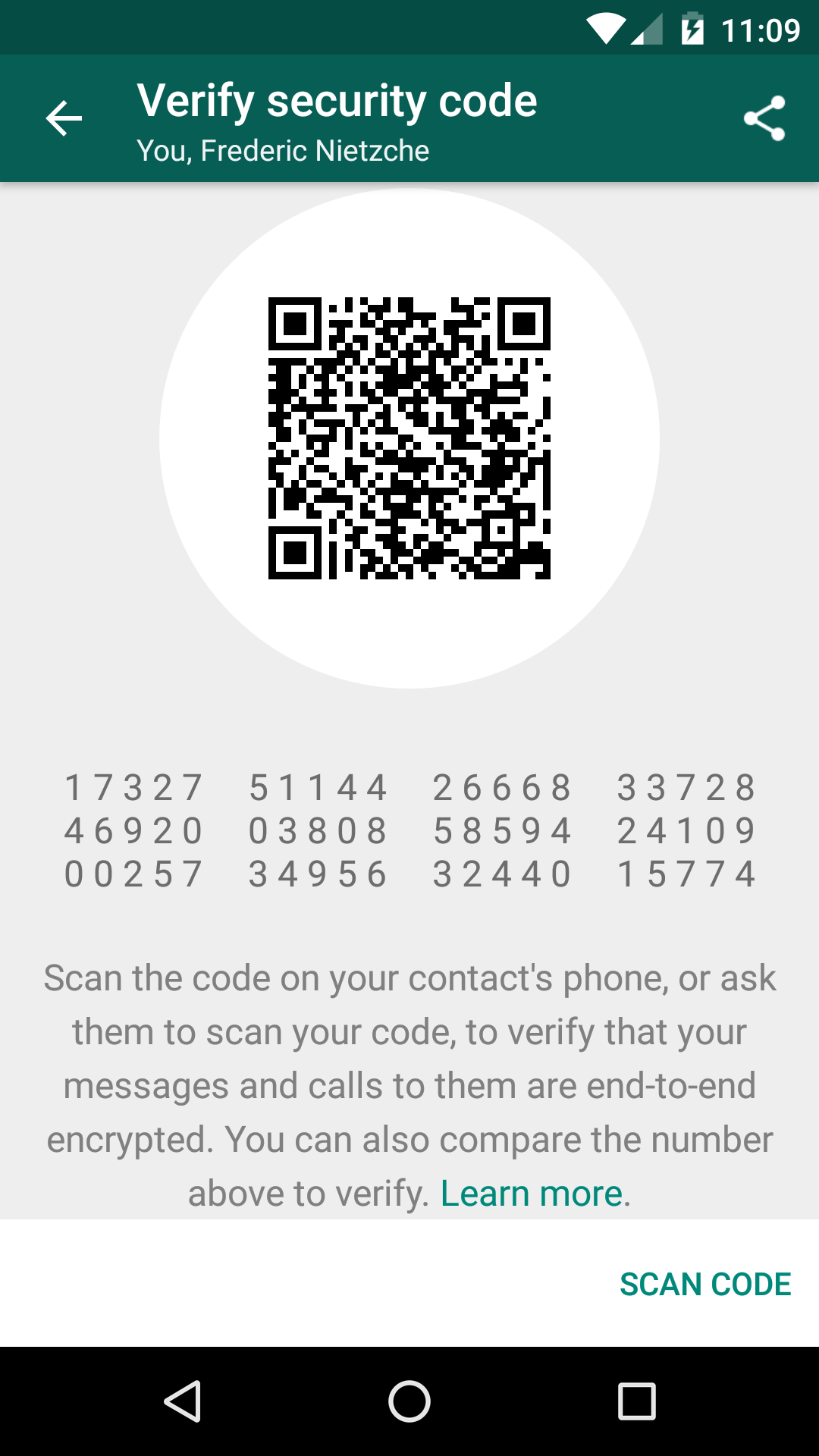
By default, WhatsApp users have the option to verify the authenticity of their encrypted session. Like Signal, this can be done by either scanning a QR code or by reading a string aloud. We’ve updated the Signal Protocol to support a fully numeric fingerprint format, which we call “security codes” in WhatsApp. A fully numeric fingerprint format has a few advantages:
They’re easy to localize. WhatsApp has a billion active users across the globe, so using a wordlist in a single language is not an option, and trying to localize wordlists to make cross-language comparisons possible is very error-prone. Likewise, hexadecimal representations are not compatible with all alphabets. However, all languages WhatsApp supports have a consistent concept of base 10 digits that security codes can be seamlessly localized to.
They’re visually and audibly distinct. Numeric representations in all languages have a lot of evolution behind them which has pushed them towards visual and audible distinguishability.
They’re still relatively compact. Users compare 12 groups of 5 digits with each other.
Additionally, WhatsApp users can opt in to a preference which notifies them every time the security code for a contact changes. For more information, see the technical document WhatsApp has published here.
Over a billion monthly active users across the world are now using the Signal Protocol for end-to-end encryption. Over the next year, we will continue to work with additional messengers to amplify the impact and scope of private communication even further. We’re excited about the future of the Signal Protocol and the places it is going.
此内容由惯性聚合(RSS阅读器)自动聚合整理,仅供阅读参考。 原文来自 — 版权归原作者所有。