


 In a world of elevated geopolitical tensions, sharp risk-on/risk-off swings and rapid automation, global investors are shifting from a “growth story” lens to an “execution story” lens.
Thirty years ago, if you were a bond trader trying to build exposure to India, you weren’t clicking into an electronic order book. You were more likely filling out a deal slip, calling a counterparty, and faxing confirmations; then waiting on back-office reconciliation to catch up. Settlement was slower and more operationally complex, information travelled unevenly, participation was thinner, and institutional risk management was still developing.
But change was around the corner. Liberalisation began to widen India’s economic horizons, and with it came the imperative to modernise the financial system which would fund that growth. What followed over three decades was not just a bigger market, but a more credible one: the steady construction of institutions, rules and market plumbing that make trust scalable. And that’s exactly what global capital increasingly cares about now.
As India seeks deeper, more durable participation from global capital, it’s worth pausing on what made this moment possible: three decades of market-building that catalysed access into reliability.
In a world of elevated geopolitical tensions, sharp risk-on/risk-off swings and rapid automation, global investors are shifting from a “growth story” lens to an “execution story” lens. They are looking closely at whether markets can deliver liquidity depth, efficient settlement, credible risk-transfer tools and high-integrity data, especially under stress.
It is easy to understand market growth through market cap milestones – but, in the case of Indian capital markets, it undersells the change. Much more important has been the institutional build-out behind the scenes: a stronger securities framework with better disclosure, surveillance and investor protection that makes regulation predictable in practice, reduces the risk premium, and supports longer-duration capital.
The move to nationwide electronic exchanges then transformed price discovery and made market quality measurable.
Stronger clearing corporations, risk controls, margining frameworks and default management processes institutionalised risk management. This matters because global hub status is earned in stress scenarios. Continued progress toward shorter settlement cycles in securities also turns operational efficiency into economic advantage by reducing counterparty exposure and freeing up capital. The question isn’t whether markets function in calm conditions; it’s whether they continue to function when volatility spikes and liquidity thins.
Rapid adoption of digital payments reduced friction across the financial system and normalised end-to-end digital workflows. Markets don’t operate in isolation; they thrive on the reliability of the wider financial plumbing.
India’s integration with global capital has been deliberate rather than sudden. Access frameworks have expanded in measured steps, giving market participants time to adapt and regulators room to build safeguards as volumes and complexity grew. That incrementalism has helped widen participation without destabilising the system — an advantage when global capital is wary of policy whiplash.
Together, these reforms moved India from ‘access constraints’ to broader institutional participation, and from ‘episodic liquidity’ to steadily improving depth. India today offers a combination that global allocators value: relative geopolitical stability, a strong demographic dividend, and a regulatory environment that is structured and broadly predictable, at a time when uncertainty is being repriced across markets.
But being counted alongside New York, London or Singapore is not about scale alone. It is about reliability at global standards: ease of entry and exit, low operational friction, efficient hedging, robust settlement certainty, and trusted data. We can’t confuse progress with completion – there is always more to do, but recognition of Indian capital markets is heading in the right direction.
For three decades, Bloomberg has worked with Indian institutions through the shift from liberalisation-era markets to a digitally led, globally connected ecosystem. The progress belongs to Indian market participants, institutions and regulators. We’re pleased to have contributed — supporting transparency, decision-useful information and connectivity that help link Indian markets with global investors.
If the last 30 years were about building the rails, the next decade is about how competitively those rails perform on a global scale. India already has strong liquidity in parts of equities, but the next step in market maturity is broader depth — more consistent liquidity across the government bond curve, a more liquid and accessible corporate bond market, and deeper derivatives markets so risk can be transferred efficiently when conditions are volatile.
That naturally links to hedging: as India’s global investor base widens, the all-in cost and accessibility of hedging in rates and FX become increasingly important to portfolio decisions.
At the same time, as automation and AI spread across trading, surveillance and risk, data integrity shifts from a back-office concern to a core pillar of credibility. Clean identifiers, consistent corporate actions and reliable disclosures are what make transparency scalable.
Underpinning all of this is India’s key advantage – regulatory credibility. Preserving predictable, consultative, technology-aware regulation, while keeping pace with market complexity and cyber risk will be central to sustaining long-term capital without compromising stability.
The next goal now should naturally be reliability at scale; so India becomes a market that global investors can rely on, not just one they want exposure to. That reliability is what separates a large market from a true global financial centre.
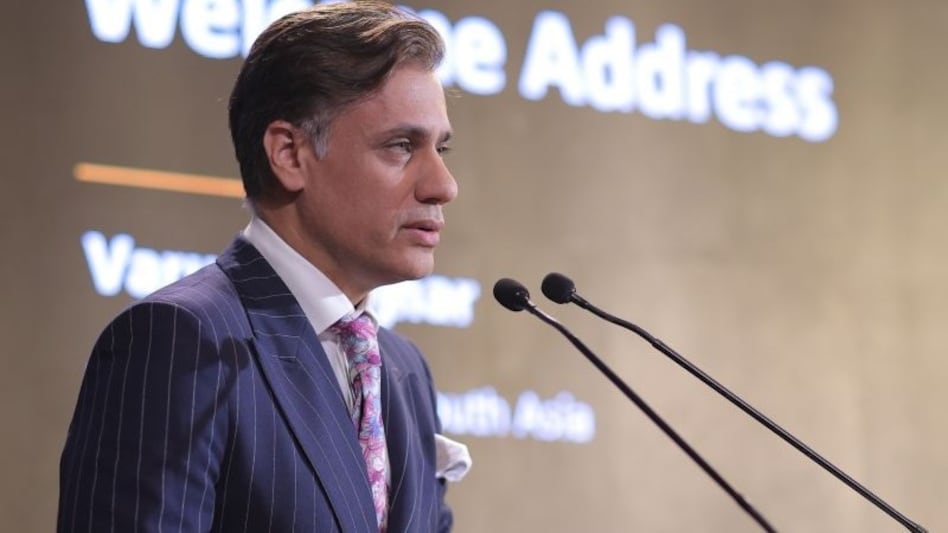
(The author is the Head of Bloomberg, South Asia. Views are personal)
Published on: Jun 19, 2026 8:50 PM IST
此内容由惯性聚合(RSS阅读器)自动聚合整理,仅供阅读参考。 原文来自 — 版权归原作者所有。