


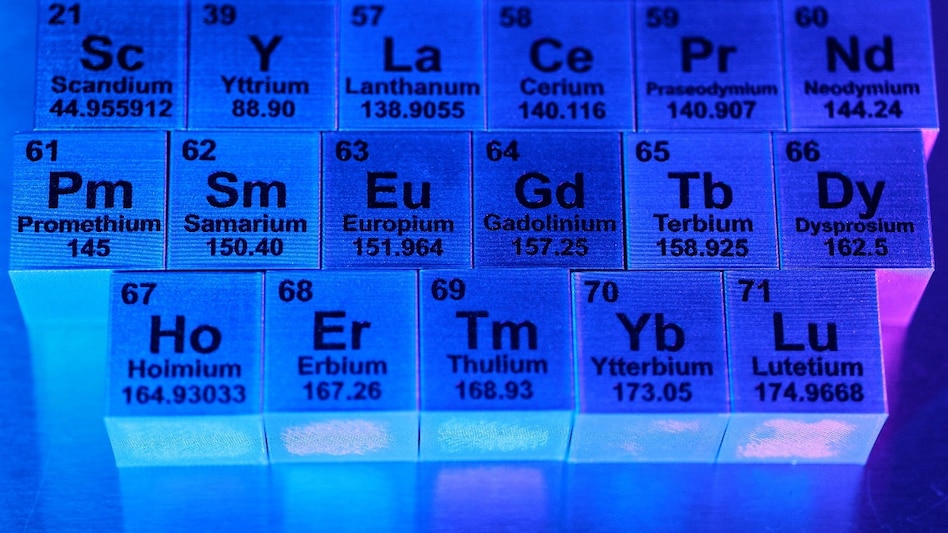
 Rare earth elements are indispensable for manufacturing permanent magnets used in electric vehicle motors, wind turbines and a range of advanced defence systems.
India is stepping up efforts to secure access to critical rare earth minerals as it seeks to strengthen domestic supply chains and reduce its dependence on imports for materials essential to electric vehicles, clean energy technologies and defence applications.
According to a report by news agency Reuters, India is interested in studying the mineral composition of Russia's giant Tomtor deposit before considering any deeper involvement. The source, who requested anonymity because the talks are confidential, said New Delhi wants to better understand the quality and commercial viability of the resources before moving ahead.
State-owned Indian Rare Earths Ltd (IREL) has emerged as a key player in India's international push to secure long-term supplies of rare earth elements amid rising domestic demand. The effort is part of a broader strategy to diversify sourcing and lessen reliance on China, especially as relations between the two Asian neighbours remain strained.
Neither IREL, the Department of Atomic Energy, which oversees the company, nor India's ministries of external affairs and mines responded to requests for comment. Russian oil producer Rosneft also did not immediately comment on the development.
Located in Yakutia in eastern Siberia, the Tomtor project is regarded as one of the world's largest undeveloped rare earth deposits. However, any future cooperation could be complicated by Western sanctions on Russia. The United States has imposed measures targeting Moscow's energy sector, including sanctions affecting Rosneft and Lukoil, as part of efforts to pressure Russia over the war in Ukraine.
Rare earth elements are indispensable for manufacturing permanent magnets used in electric vehicle motors, wind turbines and a range of advanced defence systems. Recognising their strategic importance, New Delhi approved a 73 billion rupee ($770.77 million) incentive programme in November aimed at developing a domestic rare earth magnet industry.
Despite possessing the world's third-largest rare earth reserves, estimated at around 7.23 million metric tonnes, India currently lacks commercial-scale facilities capable of refining and separating the full spectrum of rare earth elements to high-purity levels. The country also does not produce rare earth magnets domestically.
In recent years, India has widened its search for overseas resources. Reuters reported last year that New Delhi had explored rare earth samples from neighbouring Myanmar with the assistance of an influential rebel group. IREL is also engaged in discussions with Japanese and South Korean companies on plans to manufacture rare earth magnets commercially.
MUST READ: New series IIP from June 1 to give better estimates on factory output
The state-run company is additionally evaluating mining opportunities in Argentina, Australia and Malawi, and aims to begin domestic rare earth magnet production between 2029 and 2030, according to the source.
China's export of rare metals
Meanwhile, China continues to dominate the global rare earth industry. Data released by the General Administration of Customs of China showed that the country's exports of rare earth ore, metals and compounds totalled 25,378 tonnes during January-May 2026, up 2.2% from a year earlier. However, export values surged 44.9% to $243.63 million, reflecting stronger prices and robust global demand.
In May alone, China exported 5,490.4 tonnes of rare earth products worth $63.08 million. The figures highlight how shipment volumes have remained relatively stable while values have risen sharply, underscoring the growing importance of rare earths in supply chains linked to electric vehicles, renewable energy, advanced electronics and defence industries.
China remains the world's leading producer and processor of rare earth elements, supplying critical materials that underpin a wide range of high-technology and clean energy sectors. The country's dominance in refining and processing continues to shape global efforts by nations such as India to diversify supply sources and build greater self-reliance in strategically important minerals.
MUST READ: Lohum’s Rs 500-crore rare earth magnet plant gets approval under ECMS scheme
Published on: Jun 16, 2026 6:09 PM IST
此内容由惯性聚合(RSS阅读器)自动聚合整理,仅供阅读参考。 原文来自 — 版权归原作者所有。