







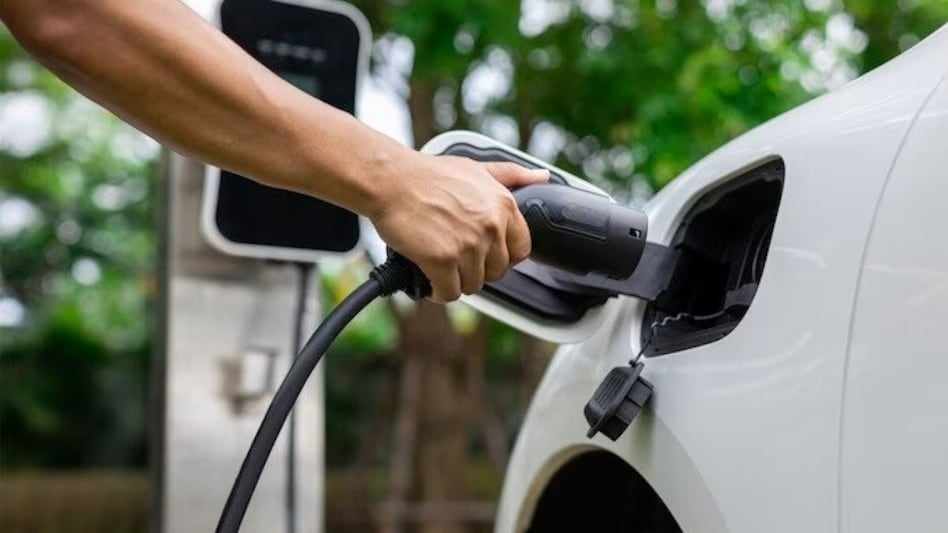
 One of the largest opportunities to accelerate this transition exists within government departments and public sector undertakings (PSUs) that operate extensive vehicle fleets.
India's electric vehicle transition is no longer just a sustainability agenda. It is increasingly becoming part of the country's broader energy security and economic resilience strategy.\
This is why the recent emphasis from Prime Minister Narendra Modi on accelerating EV adoption carries significance beyond environmental goals alone. For a country that imports close to 90% of its crude oil requirements and roughly half of its natural gas demand, fleet electrification is increasingly becoming an energy security imperative as much as a mobility transition. Every kilometre shifted from fossil fuels to electricity contributes towards reducing import dependence, retaining foreign exchange and strengthening long-term economic resilience.
One of the largest opportunities to accelerate this transition exists within government departments and public sector undertakings (PSUs) that operate extensive vehicle fleets. However, despite clear policy intent, procurement systems continue to evaluate EV adoption through frameworks designed for internal combustion engine (ICE) vehicles.
Most government vehicle hiring decisions today rely primarily on direct monthly cost comparisons between ICE vehicles and electric vehicles. An ICE vehicle may typically be hired at approximately ₹45,000-₹50,000 per month, while an electric alternative may cost ₹75,000-₹80,000 depending on utilisation patterns and charging arrangements.
Viewed only through departmental expenditure, EV adoption can appear costlier. Yet that comparison captures only one part of the equation. The procurement norms currently do not mandate lifecycle cost evaluation or energy-security weightage for vehicle procurement, which means individual departments have neither the framework nor the incentive to account for these broader benefits.
Depending on vehicle type and utilisation, a fleet vehicle covering around 2,000 kilometres per month can consume roughly 250 litres of fuel. Over the course of a year, this translates into roughly 3,000 litres of fuel consumption for a single vehicle. When multiplied across large government and PSU fleets, even a gradual transition towards electric mobility can reduce fuel demand at a meaningful scale.
The resulting benefits extend far beyond the transport budget of an individual department. Lower fuel consumption, when viewed at a macroscopic level means lower crude oil imports, reduced foreign exchange outflows, and less exposure to global energy price volatility. In the case of CNG fleets, electrification can also reduce dependence on imported natural gas, which is increasingly becoming another source of external energy vulnerability. Every fossil fuel kilometre replaced by an electric alternative helps convert recurring import expenditure into domestic economic activity while reducing exposure to global energy markets.
The benefit of fleet electrification accrues largely to the nation, while the higher rental cost is borne by an individual department. Procurement officers are understandably tasked with managing departmental budgets, not quantifying national energy security gains. As a result, systems often default to the option that appears cheapest today, even when the alternative may generate greater long-term value for the country.
I believe the challenge is not a lack of political intent or ecosystem readiness. Charging infrastructure, vehicle reliability and domestic manufacturing capability have all improved significantly. The issue is that procurement systems remain optimised for immediate costs rather than long-term strategic outcomes, causing national priorities such as energy security and import substitution to be treated as externalities rather than decision-making criteria.
Government mobility should not be viewed solely as an administrative expense. It can also serve as a strategic instrument that advances India's priorities around energy security, economic resilience and reduced dependence on imported fuels. At its core, fleet electrification is about ensuring that public mobility increasingly runs on domestically generated energy rather than imported fuels.
A more evolved procurement framework for government and PSU fleets could therefore become increasingly important. Instead of relying exclusively on monthly rental comparisons, evaluation systems could incorporate factors such as avoided fuel consumption, lifecycle efficiency, lower import exposure, foreign exchange savings and long-term operating value.
Technology can further improve fleet efficiency through route optimisation, digital scheduling and car-pooling models. Demand-side support mechanisms such as PM e-Drive already provide a foundation; the next lever is on the procurement side.
Importantly, this does not require new subsidies or additional fiscal support. It simply requires procurement frameworks to evolve alongside national priorities and recognise the broader value generated by electrification.
India today has the policy direction, ecosystem capability and industrial momentum to accelerate EV adoption at scale. The next phase of the transition may depend less on new incentives and more on whether institutional systems evolve quickly enough to operationalise that vision.
Ultimately, the gap lies in how value is defined within existing procurement frameworks. While the benefits of fleet electrification accrue at a national level through reduced fuel continue to be shaped by narrow, departmental cost structures. Bridging this gap in evaluation design will be critical to translating India’s EV ambition into system-wide adoption.
(The author is the Managing Director of Refex Industries Ltd, a publicly listed company with businesses spanning electric mobility, renewable energy, environmental services and industrial logistics. Views are personal)
Published on: Jun 19, 2026 1:37 PM IST
此内容由惯性聚合(RSS阅读器)自动聚合整理,仅供阅读参考。 原文来自 — 版权归原作者所有。