








 Iran’s announcement is likely to trigger international debate over maritime jurisdiction and navigational rights under international law.
Iran has formally announced a new regulatory framework for the Strait of Hormuz, one of the world’s most strategically important maritime chokepoints, and introduced a new body called the Persian Gulf Strait Authority (PGSA) to oversee transit management in the region.
The move is significant because nearly a fifth of the world’s oil trade passes through the narrow waterway connecting the Persian Gulf to the Gulf of Oman and the Arabian Sea. Any change in navigation rules or maritime oversight in the strait is closely watched by global energy markets, shipping operators and governments.
What did Iran announce?
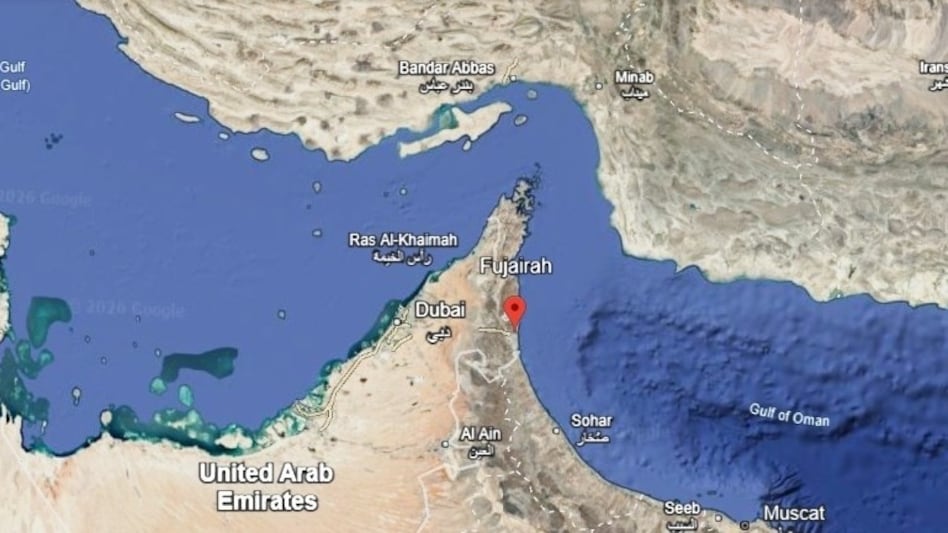
According to statements released by the PGSA, the Islamic Republic has defined a “management supervision area” covering parts of the Strait of Hormuz and surrounding waters.
Iran said the regulated maritime zone stretches from:
The authority also stated that vessels using communication frequencies within this maritime range would require coordination with Persian Gulf waterway management authorities and permits issued by the PGSA.
1/
— PGSA | نهاد مدیریت آبراه خلیج فارس (@PGSA_IRAN) May 20, 2026
جمهورى اسلامى ايران محدودهٔ نظارتى مديریت تنگه هرمز را به این شرح تعيین کرده است: «خط اتصال كوه مبارك درايران وجنوب فجيره درامارات در شرق تنگه تاخط اتصال انتهاى جزيره قشم درايران و ام القيوین امارات درغرب تنگه.» pic.twitter.com/3ELSwYx5Bp
In a statement on X (formally twitter), the authority said frequencies used for passage through the Strait of Hormuz “require coordination with the Persian Gulf Waterway Management and a permit from this entity.”
What is the Persian Gulf Strait Authority?
The Persian Gulf Strait Authority appears to be a newly designated Iranian maritime management body tasked with supervising navigation, communications coordination and transit management in the Strait of Hormuz.
Iran has not yet publicly released a detailed charter explaining the full legal powers, structure or international status of the authority. However, the announcement suggests Tehran is seeking to formalise its oversight role in one of the world’s busiest energy corridors.
The authority’s creation comes amid heightened geopolitical tensions in West Asia and growing concerns over maritime security, tanker movements and military deployments in the Gulf region.
Why is the Strait of Hormuz important?
The Strait of Hormuz is a narrow maritime passage between Iran and Oman that serves as the primary gateway for crude oil and liquefied natural gas exports from major Gulf producers including Saudi Arabia, Iraq, Kuwait, the UAE and Qatar.
At its narrowest point, the strait is only around 33 km wide, making shipping lanes highly sensitive to military or regulatory disruptions.
According to global energy estimates, roughly 20 million barrels of oil pass through the strait daily. Any restrictions, delays or security incidents in the region can sharply impact global oil prices, shipping insurance costs and supply chains.
What are the jurisdiction and legal questions?
Iran’s announcement is likely to trigger international debate over maritime jurisdiction and navigational rights under international law.
Under the United Nations Convention on the Law of the Sea (UNCLOS), straits used for international navigation are generally subject to “transit passage” rights, allowing ships and aircraft to move through without interference, provided they comply with international regulations.
However, Iran has historically maintained that foreign military vessels should seek permission before transiting through its territorial waters in the Strait of Hormuz — a position disputed by several Western countries, including the United States.
The UAE has not publicly commented on Iran’s announcement so far.
Published on: May 21, 2026 7:04 PM IST
此内容由惯性聚合(RSS阅读器)自动聚合整理,仅供阅读参考。 原文来自 — 版权归原作者所有。