


惯性聚合 高效追踪和阅读你感兴趣的博客、新闻、科技资讯
阅读原文 在惯性聚合中打开

推荐订阅源

Martin Fowler
Martin Fowler
D
DataBreaches.Net
F
Fortinet All Blogs
阮一峰的网络日志
阮一峰的网络日志
博客园_首页
Apple Machine Learning Research
H
Help Net Security
M
MIT News - Artificial intelligence
美团技术团队
人人都是产品经理
人人都是产品经理
freeCodeCamp Programming Tutorials: Python, JavaScript, Git & More
Cyber Security Advisories - MS-ISAC
The Cloudflare Blog
有赞技术团队
有赞技术团队
L
LangChain Blog
博客园 - Franky
钛媒体:引领未来商业与生活新知
钛媒体:引领未来商业与生活新知
博客园 - 【当耐特】
S
SegmentFault 最新的问题
V
Visual Studio Blog
Blog — PlanetScale
Blog — PlanetScale
Hugging Face - Blog
Hugging Face - Blog
B
Blog
I
InfoQ

Business News India: Latest Business News Today, Share Market, Economy

'Chase every drop of oil, gas because...': ONGC chief's warning as Hormuz closure continues TCS dividend payment date 2026: What company said for payout in Q4 results Shapoorji Pallonji urges Tata Sons listing; fresh backing emerges within Trusts How BEL became India's most admired defence PSU under Manoj Jain Becquer, the market leader for industrial captive solar hardware, Introduces India’s Most Advanced Solar Panels for Industrial & Residential Applications अक्षय तृतीया पर सोने के अलावा और क्या-क्या खरीद सकते हैं - चेक करें ये 5 बेहतरीन ऑप्शन Axis Mutual Fund के इस नए डिफेंस इंडेक्स फंड का खुला एनएफओ! बढ़ते रक्षा खर्च के बीच निवेश का बड़ा मौका BT EXPLAINER: Planning to buy an EV in Delhi? Bumper savings, tax waivers under new policy explained - BusinessToday Sam Altman shares family photo after Molotov attack, warns against rising AI hostility Gold Rates Today, 10th April 2026: What is the gold rate in your city today? Check the new list here Silver Rates Today 10th April 2026: What is the silver rate in your city today? Check the new list here Too Much Protein? — The Fitness Trend That’s Raising Questions Silver Rates Today 9th April 2026: What is the silver rate in your city today? Check the new list here Gold Rates Today, 9th April 2026: What is the gold rate in your city today? Check the new list here Silver Rates Today 8th April 2026: What is the silver rate in your city today? Check the new list here Gold Rates Today, 8th April 2026: What is the gold rate in your city today? Check the new list here Platinum’s Timeless Luxury: How its weight and durability make it a top choice for luxury lovers Silver Rates Today 7th April 2026: What is the silver rate in your city today? Check the new list here Gold Rates Today, 7th April 2026: What is the gold rate in your city today? Check the new list here Akshaya Tritiya 2026: 19 या 20 अप्रैल इस बार कब से अक्षय तृतीया? जानिए क्या है सोना खरीदने का शुभ मुहूर्त - Akshaya Tritiya 2026 Date time and best time to buy gold - 'Then ​​​​​​​don’t give it at all' : Chef Sanjeev Kapoor refused to accept Padma Shri without his Chef’s uniform, here's why Ghaziabad: LPG supply expands with 5 kg cylinders rollout for workers, low-income homes Q4 results 2026 dates: HDFC Bank, Yes Bank, Wipro, ICICI Bank, others to post earnings next week US Iran peace talks: Negotiations to take place in Islamabad; details on key obstacles, top attendees - BusinessToday Gold, silver rates April 11: Gold near ₹1.52 lakh, silver up as geopolitical tensions keep markets on edge शेयर बाजार की गिरावट पर एक्सपर्ट की राय, जानिए किन सेक्टर्स में है आगे दम Petrol, diesel prices today, April 11: Check prices in Delhi, Mumbai, Kolkata, Chennai, Hyderabad and more - BusinessToday Emotional vibe check before commitment: Why India's Gen Z daters are auditing hearts before swiping right on love? Why Indians buy gold on Akshaya Tritiya: Belief, tradition and investment logic भारत ने कैसे तैयार किया स्ट्रैटेजिक पेट्रोलियम रिजर्व? 1990 के संकट से आज तक, जानिए ऑयल रिजर्व की पूरी टाइमलाइन
Crossing the red line: What crossing 1.5°C means for Indi...
2026-06-01 · via Business News India: Latest Business News Today, Share Market, Economy

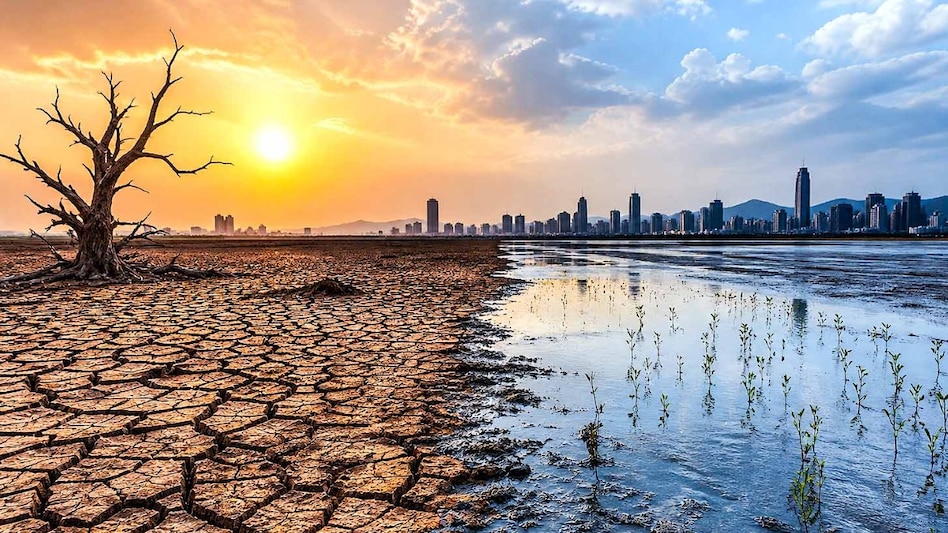
According to the World Resources Institute, at current warming levels of around 1.34°C to 1.41°C, the world is already witnessing more intense heatwaves, floods, droughts, wildfires, and storms.

Crossing the red line: What crossing 1.5°C means for India, the world, and our futureThe figure may sound small. After all, a difference of 1.5°C is barely noticeable on a daily weather forecast.

As India endures another summer marked by punishing heatwaves, soaring temperatures, water shortages, and rising energy demand, a climate benchmark that once seemed distant is now at the center of global concern: 1.5 degrees Celsius of warming above pre-industrial levels. 

The figure may sound small. After all, a difference of 1.5°C is barely noticeable on a daily weather forecast. But when scientists talk about 1.5°C, they are referring to the average temperature of the entire planet — including oceans, polar regions, forests, deserts, and cities — compared with temperatures before large-scale industrialization.

According to the World Resources Institute (WRI), every fraction of a degree matters because even small increases in global average temperature can trigger disproportionately large impacts on ecosystems, economies, and human health. 

Why 1.5°C became the red line 

The 1.5°C target became a cornerstone of the 2015 Paris Agreement. Countries agreed to keep warming "well below" 2°C and pursue efforts to limit it to 1.5°C after scientific evidence showed that the risks rise dramatically beyond that point. Vulnerable nations, especially small island states, argued that even 2°C of warming could threaten their survival through rising sea levels and extreme weather. 

The threshold is not an arbitrary number. It represents the level beyond which climate impacts become significantly harder to manage, adapt to, and reverse. 

Have we already crossed 1.5°C? 

In 2024, global temperatures averaged about 1.55°C above pre-industrial levels, making it the first full year to temporarily exceed the 1.5°C mark. However, the Paris Agreement measures warming over a long-term average rather than a single year. Scientists therefore do not yet consider the target officially breached, though many warn the world may already be entering the period that will eventually push long-term warming beyond 1.5°C. 

What does 1.5°C look like in real life? 

The effects are already visible. 

India's recent summers have offered a glimpse into what a warmer world feels like. Prolonged heatwaves have strained power grids, disrupted outdoor work, reduced agricultural productivity, and increased health risks for millions. Cities such as Delhi and several parts of northern and central India have repeatedly experienced temperatures well above seasonal norms, while rising humidity has made conditions even more dangerous. 

According to the World Resources Institute, at current warming levels of around 1.34°C to 1.41°C, the world is already witnessing more intense heatwaves, floods, droughts, wildfires, and storms. Food and water security are increasingly under pressure, and ecosystems are showing signs of irreversible damage. 

If warming reaches or exceeds 1.5°C, the consequences intensify: 

  • Nearly one billion people could face increased water stress and desertification. 
  • Crop losses and agricultural damage could cost tens of billions of dollars. 
  • About 14% of the world's species could face extinction risks. 
  • Coral reefs could decline by 70% to 90%. 
  • Flood risks would rise for millions more people. 
  • Diseases such as malaria could spread into new regions. 

Why economies should be worried 

Climate change is no longer just an environmental issue; it is increasingly an economic one. 

Extreme heat lowers worker productivity, especially in construction, agriculture, manufacturing, and other outdoor industries. Heat-related illnesses increase healthcare costs and reduce workforce participation. Crop failures can drive up food prices, while floods and storms can destroy infrastructure worth billions. 

For India, where a significant share of the workforce depends on climate-sensitive sectors, the economic risks are particularly acute. Rising temperatures can reduce labor efficiency, increase cooling costs, and put additional stress on water and electricity systems. 

The World Resources Institute notes that the economic losses from climate impacts are accompanied by "loss and damage" that cannot easily be quantified — including the loss of homes, livelihoods, cultural heritage, and even lives. 

Scientists warn that warming around or above 1.5°C increases the risk of major ice-sheet collapse in Greenland and Antarctica, widespread coral reef die-offs, large-scale permafrost thaw, and shifts in critical ecosystems such as the Amazon rainforest. Once these systems cross certain thresholds, reversing the damage could take centuries or even millennia or maybe even not.

Published on: Jun 1, 2026 4:57 PM IST