





Bhupender Yadav has long moved between the worlds of law, politics and policy, first as an advocate and party organisational strategist, and is now India’s Union Minister for Environment, Forest and Climate Change. The Lok Sabha member from Alwar, Rajasthan, has chaired or served on several key Parliamentary Committees, including those examining GST, insolvency, corruption and forest conservation. Author of The Rise of the BJP and Supreme Court on Forest Conservation, Yadav brings to climate policy a lawyer’s precision and a politician’s instinct for balancing ambition with feasibility for India. In this interview at this year’s BT India’s Most Sustainable Companies event, he discusses the renewable-energy push, coal dependence, climate finance, air pollution, and the role of fossil fuels in our energy security. Edited excerpts:
SZ: How can we build a sustainable economy while protecting our environment?
The latest report by the International Renewable Energy Agency states that India has now become the world's second-largest producer of solar energy. We are now producing more than the United States.
It was a coincidence that when I attended the G20 meeting in Cape Town, the UNFCCC (United Nations Framework Convention on Climate Change) presented an assessment of the innovative efforts made by different countries after the Paris Agreement.
Since the Paris Agreement was signed in 2015, the UNFCCC reviewed the ten-year period from 2015 to 2025 and stated that the milestones India has achieved in the field of renewable energy are remarkable and worthy of global recognition.
We have increased our capacity by 53%. We have always maintained that, at present, no country can function without energy, and access to energy is a fundamental right of every citizen.
However, this transition cannot happen overnight. Therefore, when India has represented the interests of the Global South, we have consistently argued that in the case of fossil fuels, there should not be a "phased-out" but rather "phased-down."
Furthermore, our country is steadily moving in that direction through the National Green Hydrogen Mission. We will continue progressing towards clean energy, which is one of the principal foundations of a sustainable economy.
SURABHI: We need to further strengthen our energy security and renewable energy capabilities. What is the government's thinking on this issue? What more can we do?
The government is continuously working in the energy sector. Sustainability means improving all those parameters that enhance the quality of life of our people.
When we conceived the vision of achieving Net Zero by 2070, we ensured that every sector was included—whether it is transportation, urban housing, biodiversity conservation, new forms of energy production, adoption of new technologies, or the systematic development of mitigation and adaptation plans for the country.
All these aspects have been incorporated into our policy framework. If you observe recent developments, the government has introduced new budgetary provisions to promote green growth and innovation, and we are continuously working in that direction.
SZ: In your assessment, when will the pressure of depending on coal reduce significantly?
Tell me, which country in the world is completely independent of such dependence?
We are continuously expanding our capacities. In fact, you should appreciate that India is a nation of 1.4 billion people.
First, one must understand our consumption pattern. Whenever we participate in global discussions, people often tell us that India ranks fourth in pollution. We respond that they should look at per capita consumption.
If you combine the most developed countries, which account for around 17% of the world's population, their consumption patterns are nearly 20 times ours. Our per capita consumption is perhaps even lower than Ethiopia's.
We are improving our lifestyle and standard of living. India's position has been that we want to be part of the solution to global environmental challenges, not part of the problem.
If you examine our efforts at three levels, the first is the Nationally Determined Contributions that India has committed to the world. Whether it is reducing carbon emissions, increasing renewable energy capacity, or expanding green spaces and carbon sinks, we have consistently achieved our targets.
Second, we are strengthening India's capabilities through new start-ups, promoting green growth, establishing carbon credit mechanisms, and developing green credit mechanisms. We continue to make steady progress in all these areas.
Third, we believe that alongside the government's mitigation measures, adaptation practices must also become part of society. We are working on a comprehensive adaptation plan, while also encouraging behavioural change among individuals through programmes such as Mission LiFE. This includes seven areas: saving energy, saving water, saving food, solid waste management, banning single-use plastic, promoting a healthy lifestyle, and various campaigns.
In addition, the government is also working on a National Cooling Action Plan to address the challenges posed by rising temperatures, and a dedicated strategy has already been formulated for this purpose.
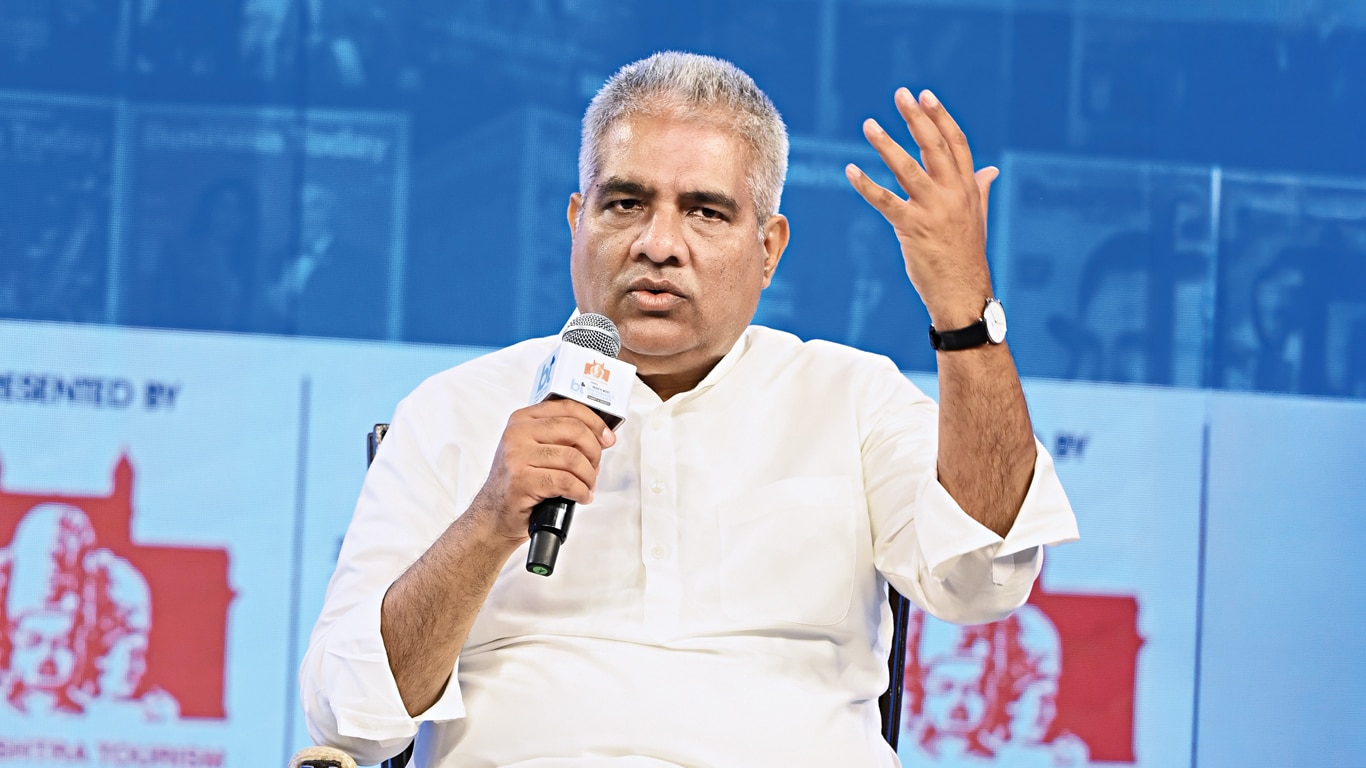
"Our country is steadily moving in the direction of clean energy through the National Green Hydrogen Mission."
-Bhupender Yadav,Union Minister for Environment, Forest and Climate Change
SURABHI: What does the National Cooling Action Plan involve?
Some measures relate to behavioural changes, which would include working hours and working patterns.
Some measures concern capacity building such as increasing cooling capacity and developing industries that can provide cooling solutions.
There is also the need for a joint mechanism, where the central government and the state governments work together on preventive measures.
We are working on all three action plans simultaneously.
SZ: Air pollution is clearly a complicated issue. Should we expect that this problem will ever truly end?
The first area we examined was vehicle pollution. To address this, you would have noticed that we have upgraded fuel categories. In the previous Cabinet meeting itself, the Central Government approved a new incentive scheme worth `10,000 crore for commercial vehicles.
Another aspect is smart traffic management. In Delhi, we have already identified sixty-two locations where traffic congestion is particularly severe. We have instructed authorities to improve these areas before October, because smoother traffic movement will naturally help reduce pollution.
The second major source of pollution is dust. We launched an initiative where we said that while trees should certainly be planted, local grasses and shrubs native to Delhi should also be planted in open spaces.
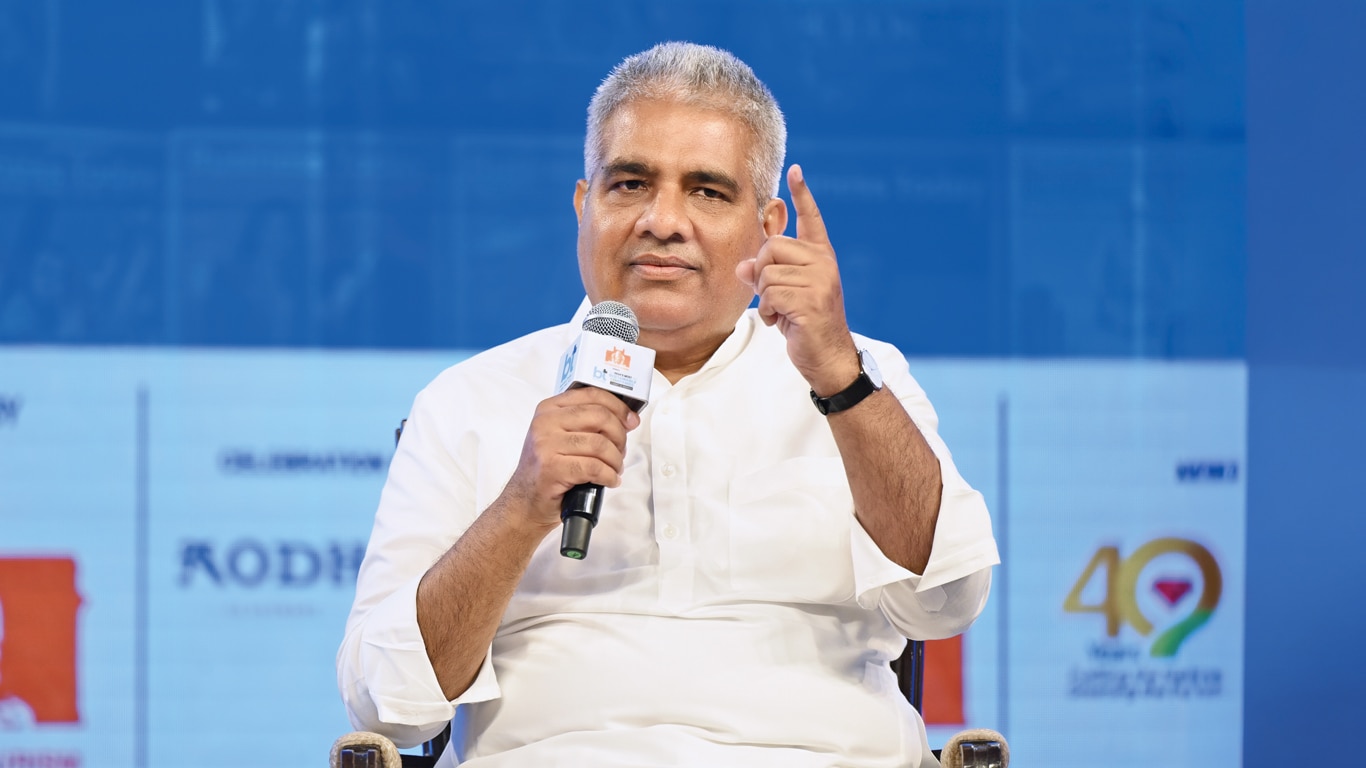
"People often tell us that India ranks fourth in pollution. We respond that they should look at per capita consumption."
-Bhupender Yadav,Union Minister for Environment, Forest and Climate Change
SURABHI: Climate finance is a major topic of discussion. We have seen Green Bonds, and the government is working on a Green Taxonomy. What additional measures can be taken?
India is expanding its own capabilities. Whether we are talking about green sovereign funds, carbon credit schemes, green credit mechanisms, or expanding our capacity in the solar renewable sector, India continues to move forward.
In the renewable energy sector, the International Solar Alliance now has its headquarters in Gurugram.
To address disasters arising from climate change, India established the Coalition for Disaster Resilient Infrastructure, which is another climate action initiative, and its headquarters is also located here.
Similarly, for hard-to-abate industries—those sectors with high carbon emissions such as steel, aluminium, mining and transport—India, together with Sweden, launched the Leadership for Industrial Transition initiative as a climate action programme.
To further expand capacities, India has also participated in the International Biofuel Alliance as part of its climate action initiatives.
There is also the International Big Cat Alliance for biodiversity conservation. Although one of its programmes was postponed due to certain reasons, the objective remains to preserve biodiversity balance.
Therefore, we believe that climate discussions cannot be limited to negotiations alone.
Countries must engage in knowledge sharing, capacity building, innovation and mutual support to implement effective climate action programmes.
SZ: How do you expect corporate India to contribute to sustainable development?
I have one suggestion for everyone. We should dedicate a portion of our profits towards research, innovation, skill development and capacity building. In the future, good technology, strong skills and enhanced capacity will provide the solutions.
@surabhi_prasad @szarabi
此内容由惯性聚合(RSS阅读器)自动聚合整理,仅供阅读参考。 原文来自 — 版权归原作者所有。