

惯性聚合 高效追踪和阅读你感兴趣的博客、新闻、科技资讯
阅读原文 在惯性聚合中打开

推荐订阅源

雷峰网
雷峰网
G
Google Developers Blog
D
Docker
The GitHub Blog
The GitHub Blog
H
Help Net Security
WordPress大学
WordPress大学
博客园_首页
Recent Announcements
P
Proofpoint News Feed
罗磊的独立博客
I
InfoQ
U
Unit 42
Cyber Security Advisories - MS-ISAC
V
Visual Studio Blog
Jina AI
Jina AI
J
Java Code Geeks
博客园 - Franky
freeCodeCamp Programming Tutorials: Python, JavaScript, Git & More
大猫的无限游戏
大猫的无限游戏
小众软件
小众软件
Last Week in AI
Last Week in AI
钛媒体:引领未来商业与生活新知
钛媒体:引领未来商业与生活新知
D
DataBreaches.Net
Google DeepMind News

Business News India: Latest Business News Today, Share Market, Economy

'Chase every drop of oil, gas because...': ONGC chief's warning as Hormuz closure continues TCS dividend payment date 2026: What company said for payout in Q4 results Shapoorji Pallonji urges Tata Sons listing; fresh backing emerges within Trusts How BEL became India's most admired defence PSU under Manoj Jain Becquer, the market leader for industrial captive solar hardware, Introduces India’s Most Advanced Solar Panels for Industrial & Residential Applications अक्षय तृतीया पर सोने के अलावा और क्या-क्या खरीद सकते हैं - चेक करें ये 5 बेहतरीन ऑप्शन Axis Mutual Fund के इस नए डिफेंस इंडेक्स फंड का खुला एनएफओ! बढ़ते रक्षा खर्च के बीच निवेश का बड़ा मौका BT EXPLAINER: Planning to buy an EV in Delhi? Bumper savings, tax waivers under new policy explained - BusinessToday Sam Altman shares family photo after Molotov attack, warns against rising AI hostility Gold Rates Today, 10th April 2026: What is the gold rate in your city today? Check the new list here Silver Rates Today 10th April 2026: What is the silver rate in your city today? Check the new list here Too Much Protein? — The Fitness Trend That’s Raising Questions Silver Rates Today 9th April 2026: What is the silver rate in your city today? Check the new list here Gold Rates Today, 9th April 2026: What is the gold rate in your city today? Check the new list here Silver Rates Today 8th April 2026: What is the silver rate in your city today? Check the new list here Gold Rates Today, 8th April 2026: What is the gold rate in your city today? Check the new list here Platinum’s Timeless Luxury: How its weight and durability make it a top choice for luxury lovers Silver Rates Today 7th April 2026: What is the silver rate in your city today? Check the new list here Gold Rates Today, 7th April 2026: What is the gold rate in your city today? Check the new list here Akshaya Tritiya 2026: 19 या 20 अप्रैल इस बार कब से अक्षय तृतीया? जानिए क्या है सोना खरीदने का शुभ मुहूर्त - Akshaya Tritiya 2026 Date time and best time to buy gold - 'Then ​​​​​​​don’t give it at all' : Chef Sanjeev Kapoor refused to accept Padma Shri without his Chef’s uniform, here's why Ghaziabad: LPG supply expands with 5 kg cylinders rollout for workers, low-income homes Q4 results 2026 dates: HDFC Bank, Yes Bank, Wipro, ICICI Bank, others to post earnings next week US Iran peace talks: Negotiations to take place in Islamabad; details on key obstacles, top attendees - BusinessToday Gold, silver rates April 11: Gold near ₹1.52 lakh, silver up as geopolitical tensions keep markets on edge शेयर बाजार की गिरावट पर एक्सपर्ट की राय, जानिए किन सेक्टर्स में है आगे दम Petrol, diesel prices today, April 11: Check prices in Delhi, Mumbai, Kolkata, Chennai, Hyderabad and more - BusinessToday Emotional vibe check before commitment: Why India's Gen Z daters are auditing hearts before swiping right on love? Why Indians buy gold on Akshaya Tritiya: Belief, tradition and investment logic भारत ने कैसे तैयार किया स्ट्रैटेजिक पेट्रोलियम रिजर्व? 1990 के संकट से आज तक, जानिए ऑयल रिजर्व की पूरी टाइमलाइन
India gets own Disaster Alert Service: How it compares wi...
2026-05-02 · via Business News India: Latest Business News Today, Share Market, Economy

The alerts were part of India’s new Cell Broadcast-based disaster warning network being rolled out by the Department of Telecommunications (DoT) and the National Disaster Management Authority (NDMA). 

India gets own Disaster Alert Service: How it compares with the US, Japan & Europe systemsUnlike countries where alerts may also cover law enforcement or national security issues, India’s current rollout is primarily focused on disaster management and weather-related emergencies.

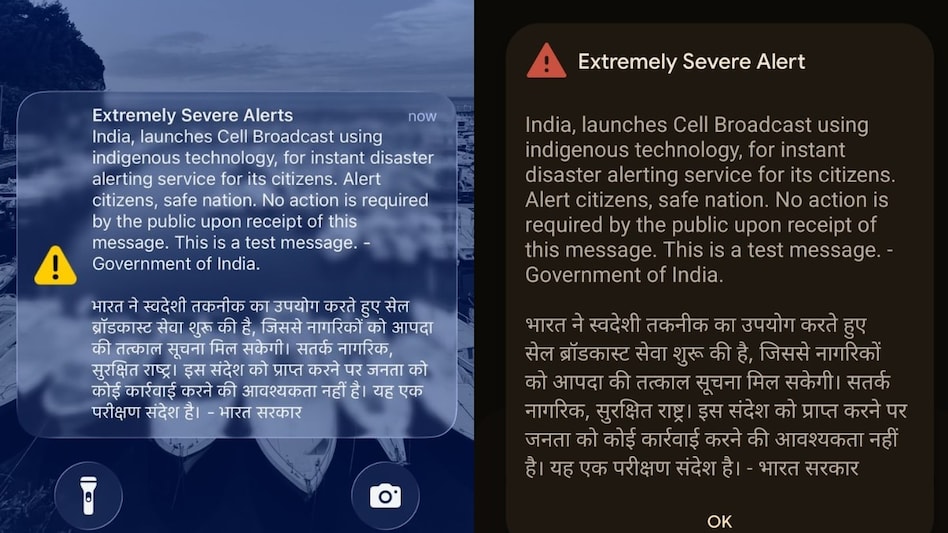
Millions of Indians recently received a loud “Extremely Severe Alert” notification on their mobile phones as the government tested a nationwide emergency warning system. The alerts were part of India’s new Cell Broadcast-based disaster warning network being rolled out by the Department of Telecommunications (DoT) and the National Disaster Management Authority (NDMA). 

The system has sparked curiosity because similar emergency alerts have long been used in countries such as the United States, Japan, South Korea and several European nations to warn citizens about earthquakes, tsunamis, floods, wildfires, missile threats and other emergencies. 

What are Wireless Emergency Alerts? 

Wireless Emergency Alerts (WEA) are government-issued warnings sent directly to mobile phones in a specific geographic area during emergencies. 

Unlike ordinary SMS messages, these alerts use Cell Broadcast technology, which allows authorities to instantly push messages to all compatible phones connected to nearby mobile towers. 

The alerts are designed to: 

  • Override silent mode in many cases 
  • Deliver warnings within seconds 
  • Reach millions simultaneously 
  • Work even during network congestion 
  • Provide location-specific alerts 

These notifications are typically accompanied by loud alarm tones and vibrations so people notice them immediately.

How does the technology work? 

The system works through mobile towers rather than individual phone numbers. 

In a Cell Broadcast system: 

  • Authorities issue an alert 
  • Telecom networks send the message through selected cell towers 
  • Every compatible phone in that area receives the alert instantly 

This differs from SMS, where messages are sent individually and networks can become overloaded during emergencies. 

India’s new system is integrated with the government’s SACHET disaster platform developed by C-DOT. 

Which countries use Wireless Emergency Alerts? 

United States: The US operates one of the world’s best-known systems called Wireless Emergency Alerts (WEA), managed by FEMA and the FCC. Americans receive alerts for: Tornadoes, Flash floods, Wildfires, AMBER child abduction alerts and National emergencies. The US also conducts nationwide emergency alert tests periodically. 

Japan: Japan uses one of the fastest alert systems globally because of its earthquake and tsunami risks. Its J-Alert network can send warnings within seconds of seismic activity. Phones, TV broadcasts, radio systems and public speakers are activated almost simultaneously. 

South Korea: South Korea frequently uses emergency alerts for: Severe weather, Air pollution warnings, Earthquakes and Military emergencies. The system became globally noticed after missile-launch alerts involving North Korea. 

European countries: Many European nations use the EU-Alert framework based on Cell Broadcast technology. Countries including: Netherlands, Germany, Greece, France and Italy have implemented location-based emergency alerts in recent years. 

Canada: Canada’s Alert Ready system broadcasts emergency messages through television, radio and mobile phones. 

Australia & New Zealand: These countries use emergency alert systems mainly for: Bushfires, Cyclones, Floods and Tsunami warnings.   

How is India’s system different from others? 

India’s emergency alert system differs from many international systems in several important ways. 

  1. Indigenous Technology: India says the platform has been developed domestically through C-DOT and integrated with the SACHET disaster platform. Countries like the US and Europe often use commercially developed systems integrated into telecom infrastructure. 
  2. Multilingual Alerts: India’s system is designed to send alerts in multiple Indian languages. Given India’s linguistic diversity, authorities say regional-language support is a key focus. 
  3. Disaster-Focused Rollout: Unlike countries where alerts may also cover law enforcement or national security issues, India’s current rollout is primarily focused on disaster management and weather-related emergencies. 
  4. Combination Of SMS + Cell Broadcast: India is using Cell Broadcast alongside its existing SMS-based SACHET network rather than replacing it entirely. 
  5. Scale Challenge: India’s telecom ecosystem is among the world’s largest, with hundreds of millions of users across urban and rural regions. Ensuring compatibility across older phones, multiple telecom operators and diverse languages is a far bigger logistical challenge than in many smaller countries.

Published on: May 2, 2026 4:27 PM IST