





India exports smartphones to America, writes software for the world and generates one-fifth of global data. Yet, the chips powering its devices, the Graphics Processing Units (GPUs) training its AI models and much of the software running its enterprises are controlled by foreign companies.
From hardware to software, much of India’s technology stack is built on technologies developed elsewhere. This despite a population of over 1.4 billion—the largest in the world—and a deep pool of world-class talent.
Experts warn that India’s reliance on foreign technologies mirrors a modern form of “colonialism” where unseen chains of dependency continue to tighten.
The Battle of Ownership
India has created a $300-billion IT industry by exporting software to the world and is rapidly scaling electronics manufacturing. Over 99% of all mobile phones sold in India are now assembled domestically. Yet, beneath this success lies a striking dependence.
As per government data, India is now the world’s second-largest mobile phone manufacturer, producing over 330 million handsets annually across more than 300 manufacturing facilities. Exports have grown even faster, surging 127-fold from `1,500 crore in FY15 to `2 lakh crore in FY25. Apple alone exported devices worth a record `1.1 lakh crore from India in 2024, marking a 42% year-on-year increase.
However, critical layers of the ICT ecosystem, right from semiconductors and electronic components to cloud infrastructure, enterprise software, and advanced computing remain largely imported or controlled by global technology giants.
Yes, in an interconnected world, global trade is built on interdependence. But disruptions of recent years—from the pandemic and supply-chain shocks to geopolitical tensions, the most recent being the war between the US and Iran, and export controls—have exposed the risks of excessive dependence and reignited the push for greater self-reliance.
This raises a fundamental question: Why are we so dependent on imports despite scale, talent pool, and technological ambitions?
“Until a decade ago, globalisation was the dominant narrative. But Covid-19, geopolitical tensions, supply-chain disruptions, and strategic realignments have exposed the risks of excessive dependence. The world is less globalised today than it was in 2015, making resilience and technological sovereignty far more important than they once seemed,” Srikanth Velamakanni, Group Chief Executive, Fractal, and Chaiperson, Nasscom, tells BT.
Gauging Capability
India today generates nearly 20% of the world’s data, yet stores only about 3% of it domestically, a stark reminder of the gap between digital consumption and technological self-reliance.
The contrast is equally visible in electronics manufacturing. The country has emerged as the world’s second-largest smartphone manufacturer and, in 2025, overtook China to become the largest exporter of smartphones to the United States. But how much of the underlying technology is made in India?
From display panels and sensors to semiconductors and advanced electronic components, a significant portion of the supply chain continues to depend on imports, primarily from China and Taiwan. While assembly operations have scaled rapidly, domestic value addition remains limited in several critical segments.
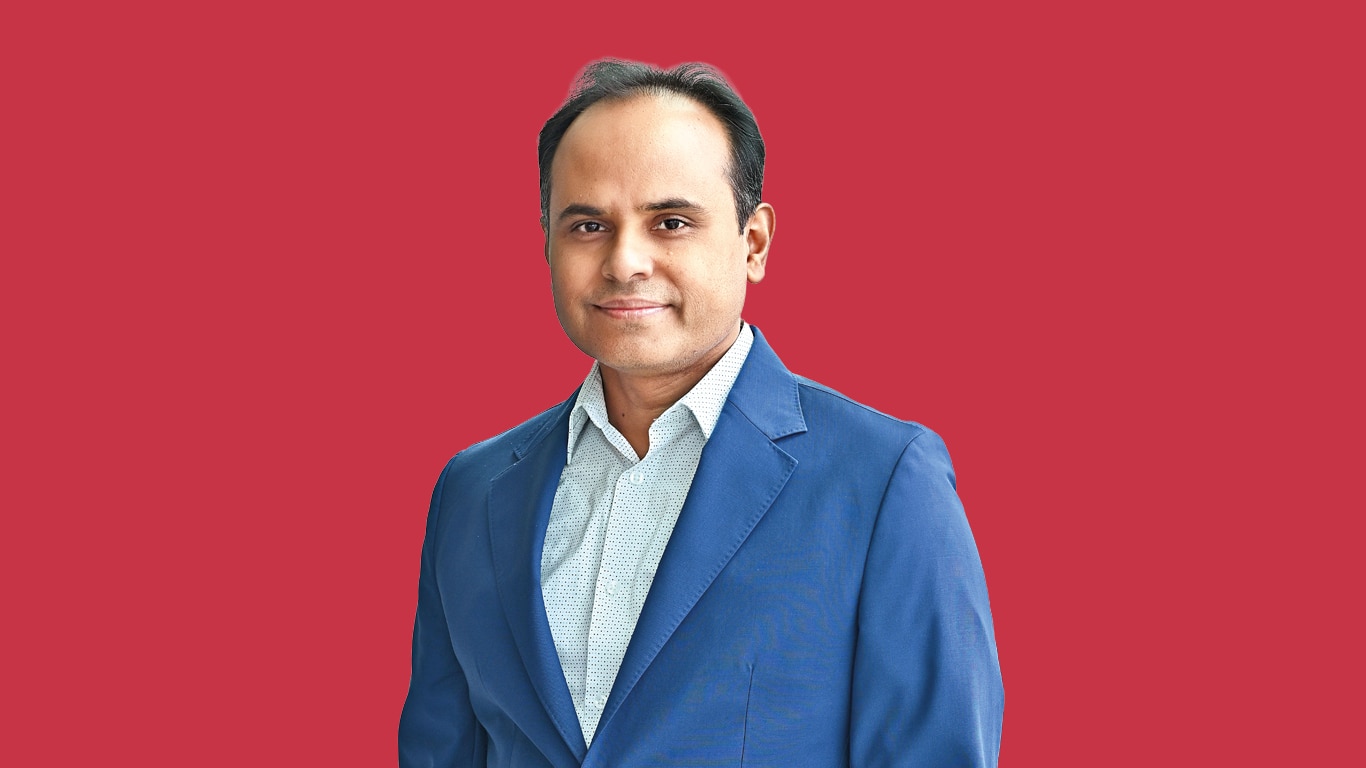
With a more mature VC and PE ecosystem, a growing pool of risk-taking entrepreneurs, India is better positioned to build globally competitive tech products and intellectual property.
-Srikanth Velamakanni,Group Chief Executive, Fractal, and Chaiperson, Nasscom
Pankaj Mohindroo, Chairman of the India Cellular & Electronics Association, says semiconductors remain India’s biggest vulnerability. “Wherever the CPU is being imported, that has to be changed quickly. That alone can ensure 15-20% value addition. Beyond the most advanced semiconductor nodes, India will have to develop capabilities across the entire electronics value chain,” he says.
India’s vast talent pool and engineering capabilities have helped it establish a strong position in software and digital services. However, dependence rises sharply lower down the technology stack.
Ken Research says India relies on overseas vendors —mostly from the US—for about 65% enterprise software requirements and nearly 80% cybersecurity solutions. Dependence is higher in hardware and electronics, with imports accounting for an estimated 70-80% of electronic components and devices such as laptops, while semiconductors remain around 90-95% import-dependent, as per Niti Aayog.
To bridge these gaps, the government did roll out production-linked incentive (PLI) schemes for electronics manufacturing and component production, alongside the $10-billion Semicon India programme, launched in 2022. Despite the policy push and growing investments, the journey towards a self-sustaining electronics ecosystem remains a work in progress. There are hurdles of high capital costs, infrastructure gaps, talent shortages, technology dependence, and supply chain constraints.
The AI Era
The advent of AI has amplified these vulnerabilities. Velamakanni argues that as a capital-scarce, labour-rich country, India naturally gravitated towards services. However, with a more mature venture capital and private equity ecosystem, a growing pool of risk-taking entrepreneurs, and falling costs of product development, it is better positioned to build globally competitive technology products and intellectual property (IP).
India is also rapidly expanding its data centre infrastructure. Investments are accelerating. Google is reportedly planning a $15-billion investment to develop a one-gigawatt AI-focused data centre campus in Visakhapatnam, Andhra Pradesh. More recently, Reliance Industries and Meta have agreed to collaborate on building an AI data centre.
Tech Sovereignty
India remains almost entirely dependent on NVIDIA GPUs for advanced AI computing, though consultants note that this is not unique to India but a reality across the world. According to Peeyush Vaish, Partner and TMT Industry Leader at Deloitte India, no country today possesses complete control over the entire technology value chain.
For India, semiconductors remain a strategic priority. “As and when you get into more automation, the demand for semiconductors in India will significantly go up over the next five years. It will probably go up by 10x or even 20x,” says Vaish.
Yet, building semiconductor capability alone may not be sufficient. Experts argue that India must also become deeply embedded in global manufacturing networks if it hopes to move up the technology value chain.
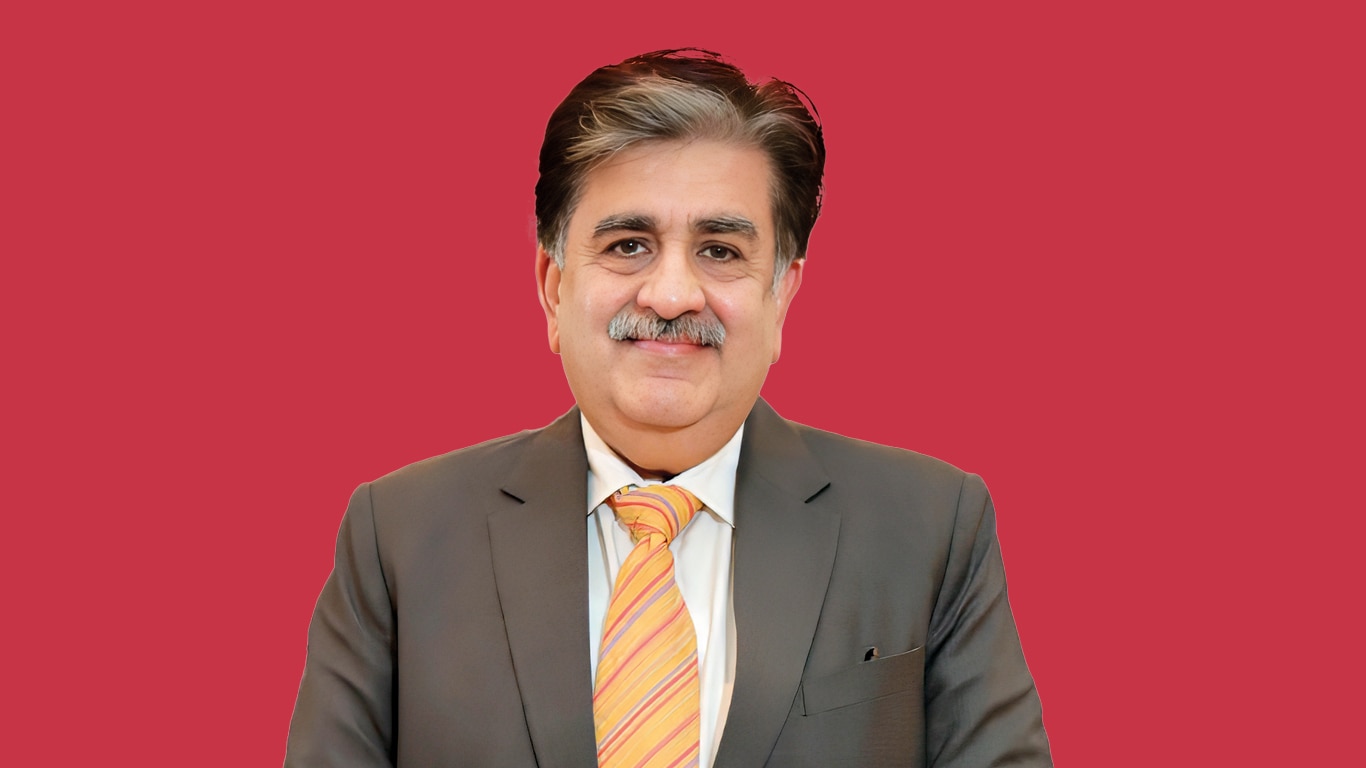
Beyond the most advanced semiconductor nodes such as 5 nanometre and 3 nanometre, India will have to develop capabilities across the entire value chain.
-Pankaj Mohindroo,Chairman of the India Cellular & Electronics Association
Mohindroo points to another structural challenge—India’s limited integration into global value chains (GVCs). “One big structural defect India has is that GVCs don’t have major participation in India, barring Apple,” he says.
Beyond manufacturing and supply chains lies a broader debate around what technological sovereignty should mean in the AI era. For Velamakanni, the ultimate test of tech sovereignty is control.
While experts differ on how much self-reliance is realistically achievable, they agree that technological sovereignty is not about eliminating every dependency. Rather, it is about ensuring that critical technologies, infrastructure and supply chains do not become strategic vulnerabilities.
India’s challenge is no longer proving that it can assemble the world’s devices or provide software talent to global companies. It is ensuring that the critical technologies underpinning the digital economy cannot be switched off by someone else.
@PalakAgarwal64
此内容由惯性聚合(RSS阅读器)自动聚合整理,仅供阅读参考。 原文来自 — 版权归原作者所有。