







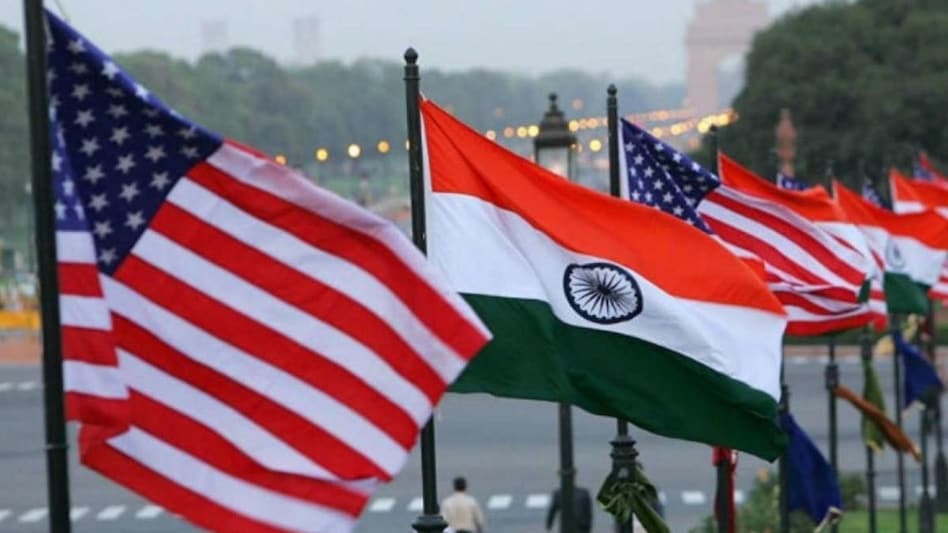
 US targets India: 12.5% tariff proposed over forced-labor import concerns
The United States is preparing to slap sweeping new tariffs of up to 12.5% on 60 economies, accusing major trading partners of failing to block the import of goods made with forced labour.
In a sweeping Section 301 determination announced Tuesday, the Office of the U.S. Trade Representative (USTR) declared that global inaction on forced labour unfairly penalises American workers and distorts international commerce.
Calling the disparity "unacceptable," Ambassador Jamieson Greer proposed a tiered penalty system to force compliance. Under the proposed responsive action, nations lacking forced-labour import bans face a 12.5% blanket duty on their products. Countries with partial restrictions or reciprocal trade commitments will face a slightly lower 10% levy, though the USTR is proposing a specialised quota mechanism to ease the tariff burden on certain textile and apparel imports.
ALSO READ: US proposes new tariffs on trading partners; India, China to be tariffed 12.5%: Report
The USTR will hold public hearings on the proposed tariffs in July, with requests to testify due by June 22.
The report concludes that failing to ban forced-labour imports hurts U.S. interests and global standards because it:
Distorts the Market
Permits firms that use forced labour to produce goods at lower costs, artificially distorting market conditions.
Undercuts Ethical Companies
Undermines the profitability of businesses that refuse to use forced labour in their supply chains.
Enables Circumvention
Contributes to the circumvention of existing forced labour import prohibitions (like those currently enforced by the U.S.).
Stalls Universal Goals:
Directly undermines the global aim of eliminating forced labour.
Burden on U.S. Commerce
The USTR stated that the inaction of these 60 economies subjects American workers and producers to unfair competition. U.S. producers are forced to compete against artificially cheap goods both domestically and in export markets, which displaces goods produced without forced labour.
Proposed Tariffs and Responsive Actions.
To address these findings, the USTR is proposing a tiered tariff approach against the targeted economies:
10% Additional Duty: Proposed for economies that have a partial regime in place to prevent forced labour imports, or those that have committed to imposing and enforcing a prohibition through an Agreement on Reciprocal Trade.
12.5% Additional Duty: Proposed for all other economies that entirely lack forced labour import prohibitions.
Textile Mechanism The USTR has also proposed a specialised mechanism for certain volumes of apparel and textile goods to mitigate supply chain shock.
Next Steps and Public Comment
The USTR is opening up the proposed actions to public feedback:
India is explicitly targeted in the report and stands to be significantly impacted by the proposed actions
Here are the specific details regarding India from the USTR findings and the immediate diplomatic fallout:
The 12.5% Tariff Target
India is identified as one of the 54 economies (out of the 60 investigated) that the USTR claims entirely fail to impose and enforce a prohibition on the importation of goods produced with forced labour.
Because India does not have an existing ban, a partial framework, or a reciprocal trade commitment in place, it falls into the strictest penalty tier. The USTR is proposing a 12.5% additional duty on Indian imports, rather than the 10% duty proposed for countries with partial measures.
The Textile Mechanism
The USTR report outlines a separate, volume-based mechanism for textiles and apparel that would allow a specified quota of these goods from selected economies to enter the U.S. at a lower tariff rate. Given that textiles are one of India's largest export sectors to the U.S., the negotiation of these specific volume allowances will be highly consequential for Indian manufacturers.
Immediate Diplomatic Friction
The timing of this USTR release directly intersects with ongoing bilateral negotiations.
The report was published just as senior U.S. and Indian trade officials, including the U.S. delegation led by Chief Negotiator Brendan Lynch, are in New Delhi for a three-day round of talks aimed at advancing a broader U.S.-India trade deal. The Indian government is actively urging the U.S. to resolve these forced-labour and overcapacity concerns within the framework of these ongoing trade negotiations, warning against the implementation of unilateral Section 301 tariffs.
Written comments are due by July 6, 2026.
USTR will hold hearings about the proposed actions in these investigations on July 7, 2026.
Published on: Jun 3, 2026 10:56 AM IST
此内容由惯性聚合(RSS阅读器)自动聚合整理,仅供阅读参考。 原文来自 — 版权归原作者所有。