

惯性聚合 高效追踪和阅读你感兴趣的博客、新闻、科技资讯
阅读原文 在惯性聚合中打开

推荐订阅源

S
Schneier on Security
cs.AI updates on arXiv.org
T
Threat Research - Cisco Blogs
C
Cyber Attacks, Cyber Crime and Cyber Security
C
CXSECURITY Database RSS Feed - CXSecurity.com
A
Arctic Wolf
Security Latest
Security Latest
Simon Willison's Weblog
I
Intezer
cs.CV updates on arXiv.org
T
Troy Hunt's Blog
Latest news
Latest news
Help Net Security
Help Net Security
S
Security Affairs
Webroot Blog
Webroot Blog
The Hacker News
The Hacker News
AI
AI
cs.CL updates on arXiv.org
T
Tor Project blog
Forbes - Security
Forbes - Security
Google DeepMind News
AWS News Blog
AWS News Blog
Attack and Defense Labs
P
Proofpoint News Feed
www.infosecurity-magazine.com
H
Help Net Security
L
Lohrmann on Cybersecurity
S
SegmentFault 最新的问题
Google Online Security Blog
MongoDB | Blog
MongoDB | Blog
Cyberwarzone
Cyberwarzone
The Last Watchdog
The Last Watchdog
S
Securelist
N
News and Events Feed by Topic
S
Secure Thoughts
F
Fortinet All Blogs
博客园_首页
C
Cybersecurity and Infrastructure Security Agency CISA
量子位
M
MIT News - Artificial intelligence
F
Full Disclosure
T
The Blog of Author Tim Ferriss
T
Tailwind CSS Blog
Recent Commits to openclaw:main
Microsoft Security Blog
I
InfoQ
P
Privacy International News Feed
L
LangChain Blog
Know Your Adversary
Know Your Adversary
C
CERT Recently Published Vulnerability Notes

Latest news

Why I'm recommending last year's phones over 2026 models - with one exception This powerful Gemini setting made my AI results way more personal and accurate After testing this HP laptop, I get why its 'boring' design is adored by business users The best TV antenna of 2026: Expert tested Your old iPad or Android tablet can be your new smart home panel - here's how Apple's original AirTag still tracks effectively, and you can get a 4-pack for its best price ever How to qualify for Apple's education discount - and get a $499 MacBook Neo for school T-Mobile will give you a Samsung Galaxy Watch 8 for free - how to get yours Prolonged AI use can be hazardous to your health and work: 4 ways to stay safe Verizon will give you a free iPad or Apple Watch with your next iPhone - how the deal works The best laptops of 2026: Expert tested and reviewed I hid 4 Bluetooth trackers (including AirTags) to test their reliability - here's how Android rivals compared I stopped using my iPhone's hotspot after testing this 5G router - and that won't change The best Kindles in 2026: Expert recommended Does Best Buy price match? Everything to know about matching prices online and in-store The best WordPress hosting services of 2026: Expert tested and reviewed The best Apple Watch of 2026: Expert tested and reviewed The best TV screen cleaners of 2026: Expert recommended The best 50-inch TVs of 2026: Expert tested I traded my Sonos Era 300 for Denon's new home speaker - and see no reason to go back AI-powered website builders have come a long way - here's your best option in 2026 Amazon just slashed $250 off the Google Pixel 10 - and a Prime subscription isn't required I found the apps slowing down my PC - how to kill the biggest memory hogs These companies are actually upskilling their workers for AI - here's how they do it Verizon will give you Meta Ray-Bans for free with this Fios Internet deal - how to get yours I tried the new Gemini app for Mac - it has one major advantage over the web version How Google's updated AI Mode will ease your tab clutter when you search Why this MagSafe battery pack is our readers' favorite model right now - especially at its price T-Mobile will give you a Google Pixel 10a for free - plus an extra gift OpenAI's Codex Desktop can run your computer now - and has its own browser Want to build a startup that gets acquired? This founder shares 5 proven tips Google to pay $135M settlement to Android phone users - how to claim your share if you qualify Want to stand out on LinkedIn? Try this career strategist's top 3 tips for strengthening your profile I've used Dell's new XPS 16 for a week, and it's the Windows laptop to beat in 2026 You can get 50% off YouTube Premium for 1 year right now - but the deal ends soon Tidal vs. Qobuz: I tried both hi-res streaming services, and they couldn't be more different This stroller turns into a carry on-suitcase, and I recommend it for traveling parents The best small business VoIP providers of 2026: Expert tested and reviewed Protect your devices with our pick for the best antivirus software, now over 60% off MacBook Neo vs. Surface: Why spiraling RAM prices are bruising Microsoft's PC business but not Apple's I tried Google's new desktop app for Windows, and I'll never search the old way again Microsoft's Windows 11 laptop deal for students comes with a $500 bonus - what's included You can buy an LG B5 OLED for $1,500 off at Best Buy - and it comes with a free 4K TV Why Zorin OS 18.1 is simply the best Linux distro - for anyone Why Netgear just got the first FCC router ban exemption in the US Microsoft's latest Windows update now confirms if your PC is Secure Boot-protected - how it works Can this $70 Linux app make up for the lack of Photoshop? I tried it to find out 'Like handing out the blueprint to a bank vault': Why AI led one company to abandon open source iPhone charging slowly? 6 quick fixes to try before blaming your battery Roku TV vs. Fire Stick: Why I'm looking beyond streaming resolution when comparing the two AI is getting better at your job, but you have time to adjust, according to MIT The best internal communication tools of 2026: Expert tested and reviewed Half of all US employees use AI at work now - and waste almost 8 hours a week doing it The latest Google Home update brings Gemini fixes that I'm actually excited to try again I've been subscribed to a data removal service a month now - what I wish I knew sooner You can use Linux 7.0 on these 7 distros today - here's what to expect How I share audio from my Android phone to multiple earbuds (and why it's a big deal) Why the Apple Watch's 20-minute calibration test is worth your time - especially if you're data curious Meta is selling refurbished Ray-Bans for as low as $197 right now - but they're going fast Setting a MagSafe charger on my nightstand was the iPhone upgrade I didn't know I needed I swapped my Sony WH-1000XM6 for lower-end JBL headphones, and they still sounded great I tested ChatGPT Plus vs. Gemini Pro to see which is better - and if it's worth switching I used the 'Plus Five' rule to fix my iPhone's slow wireless charging - here's how it works The new rules for AI-assisted code in the Linux kernel: What every dev needs to know 'Job seekers have to be detectives': 3 signs that listing is a scam How the latest Netrunner distro delivers a Linux productivity powerhouse This Linux distro offers an easy DNS switcher - but there's more to it that I like I tested Artix Linux: An enjoyable systemd-free distro for experienced users (and ChromeOS speeds) I spent two years testing wind power at home - here's why solar is still my preferred source I camera-tested the Samsung Galaxy S26 Ultra with Oppo and Xiaomi - this model won it for me How I boosted my portable solar panels' power by up to 30% - 11 expert-approved tips I see why Ubuntu 26.04 is more than just a performance bump for thrill-seeking gamers France is ditching Windows for digital sovereignty - and its new Linux stack is taking shape KDE Linux is the purest form of Plasma I've used in months - but there's a catch LG C6 vs. LG C5: Why the 2025 model is still the smarter OLED TV model buy for me How I disabled 'fast startup' on my Windows 11 laptop to stop overnight battery drain 30 years later, I returned to Enlightenment Linux to test the Elive beta - and it's much better Here's my favorite email trick for cleaning up inbox clutter - automatically The $30 Google TV stick may be the budget Chromecast successor we've been waiting for The best AR and MR glasses in 2026: Expert tested and reviewed This handy electric screwdriver is now 50% off - here's where to snag the deal This Ryobi yard essentials bundle packs a free power tool - how to get yours After trying these boomless headphones in the office, I'm feeling hopeful for the future of work tech I used this EcoFlow battery to run my 3,000-sq-ft home in a blackout - here's how it kept my AC on Microsoft's Windows Insider Program is no longer a confusing mess Forget Shokz: I tried the Suunto Spark earbuds for a month, and they've sold me on air conduction iOS 26.4 brings essential upgrades to your iPhone - including a vital security fix YouTube Premium is getting a price increase in June - but you can save $32 with one change Your router may be vulnerable to Russian hackers, FBI warns: 5 steps to take now I walked 3,000 steps with my Apple Watch, Google Pixel, and Oura Ring - this tracker was most accurate I stopped guessing which AA batteries are dead - this charging station keeps them in check for me My favorite Android Auto find is these hidden shortcuts that are highly customizable AirDrop is coming to older Samsung phones - is yours supported? How to get it early I'm no longer using Google Photos as just a cloud storage - 5 tools that elevate the app The best data removal services of 2026: Expert tested and reviewed The best Samsung TVs of 2026: Expert tested and reviewed The best mobile scanning apps of 2026: Expert tested and reviewed The best HP laptops of 2026: Expert tested and reviewed After using Lenovo's new Yoga laptop, I'm wondering if Windows makers are running out of ideas Samsung S95H vs. Samsung S95F: I compared the OLED TVs and wasn't prepared for the upset
Samsung watches can predict if you're about to faint - but there are big caveats
Elyse Betters Picaro · 2026-05-09 · via Latest news
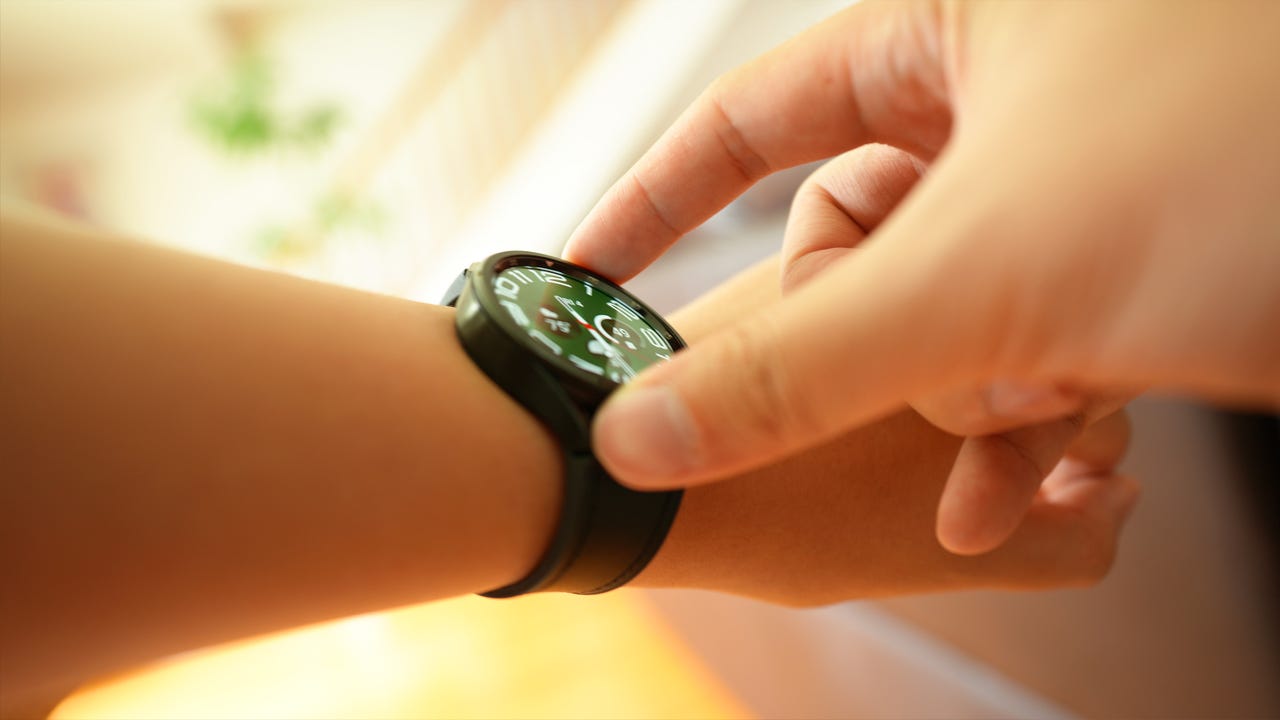
Person turning the bezel of the Samsung Galaxy Watch 6 Classic
June Wan/ZDNET

Follow ZDNET: Add us as a preferred source on Google.


ZDNET's key takeaways

  • Samsung's Galaxy Watch may predict fainting episodes.
  • False alarms and missed warnings remain concerns.
  • More real-world testing is still needed.

Samsung wants you to know its smartwatch can do more than count your steps, track your sleep, and guilt you for not moving enough. The company has announced its Galaxy Watch may be able to predict a fainting episode or blackout before it happens.

Samsung revealed this week that a joint clinical study with Chung-Ang University Gwangmyeong Hospital in Korea validated the Galaxy Watch 6's ability to predict vasovagal syncope, or VVS. The study used the device's photoplethysmography, or PPG, sensor to analyze heart rate variability data, then applied an AI algorithm to predict VVS during head-up tilt testing.

Also: You can still get a free Samsung Galaxy Watch 8 deal at T-Mobile

Samsung called the research the "world's first study" to demonstrate the potential for a commercial smartwatch to provide early prediction of syncope. The findings were published in European Heart Journal - Digital Health.

Why early warnings matter

Vasovagal syncope is one of the most common types of fainting, with "up to 40% of people" experiencing it in their lifetime, according to Junhwan Cho, a professor in the department of cardiology at Chung-Ang University Gwangmyeong Hospital.

It happens when heart rate and blood pressure abruptly drop, often because of stress, dehydration, standing too long, or another trigger. The fainting itself is not life-threatening, but the resulting fall can lead to a concussion, fracture, or other injury.

Also: Google Pixel vs. Samsung Galaxy: There's a clear winner

"The injuries from sudden falls can be very real," Dr. Sam Setareh, director of cardiology and cardiovascular performance at Beverly Hills Cardiovascular and Longevity Institute told ZDNET. "Even a few minutes of warning could be meaningful: sit or lie down, hydrate, perform counterpressure maneuvers, or call for help. That could reduce falls, fractures, concussions, and other secondary injuries."

This is where Samsung is positioning the Galaxy Watch and an early warning system as potentially making a difference.

The study and the results

According to Samsung, the joint research team, led by Cho, evaluated 132 patients with suspected VVS symptoms during induced fainting tests. Using heart rate variability data from Samsung's watch, the AI model predicted fainting episodes up to five minutes before they happened with 84.6% accuracy. Samsung also said the model reached 90% sensitivity and 64% specificity.

Also: I use this 30-second routine to fix sluggish Samsung smartwatches

Sensitivity refers to how often the system correctly catches true fainting events, while specificity is how often it correctly avoids false alarms. Looking at the numbers, there could still be a significant number of alerts generated when a person is not about to faint.

False positives

Dr. Brett A. Sealove, chair of cardiology at Hackensack Meridian Jersey Shore University Medical Center and vice chair of cardiology at Hackensack Meridian School of Medicine, said the 64% specificity is one of the study's biggest limitations.

"In a controlled tilt-table lab, that may be acceptable," he said, but in the real world, where millions of watch users are moving through daily life, "that false-positive rate could generate an enormous volume of unnecessary alerts."

Setareh also cautioned that the study was done in a controlled tilt-table lab, with researchers observing patients in a setting designed to provoke symptoms, not in a broad real-world consumer setting with users going about normal life. Everyday factors such as "motion artifact, hydration status, posture, medications, sleep, alcohol, anxiety, and other variables" can affect signals, he said.

He added: "Too many false positives can create anxiety, alarm fatigue, and unnecessary medical evaluations."

Also: Samsung's Galaxy Watch 8 got me off my couch and running again

Sealove noted the study population was also highly specific. Every participant was undergoing a "deliberately provocative laboratory procedure designed to induce syncope (or the blackout event)," he said. The participants also had suspected neurally mediated syncope, which means the findings do not show how the algorithm would perform in someone without that history.

"The study tells us nothing about how this algorithm would perform in someone who has never had a tilt-table test, who has no documented history of vasovagal syncope, or who is simply going about their daily life," Sealove said.

False reassurance

False reassurance is another risk, warned Dr. Rab Nawaz Khan, a board-certified neurologist at MyMigraineTeam, a San Francisco-based health startup. "If a watch does not warn someone, that does not mean they are safe," he said. "People with fainting linked to chest pain, palpitations, seizure-like activity, neurologic symptoms, injury, or exertion still need medical evaluation."

Also: Best Android smartwatches of 2026

In other words, someone should not assume everything is fine, or shrug off recurrent fainting, just because their watch did not buzz.

"A normal smartwatch reading should not make someone ignore recurrent syncope, chest pain, palpitations, exertional symptoms, or neurologic symptoms," Dr. Setareh agreed.

Not a replacement for medical evaluation

For now, the most realistic role for this kind of smartwatch feature appears to be as an extra warning layer for people already known to have recurrent vasovagal syncope. In that scenario, a few minutes of warning could be enough time for someone to sit down, lie down, call for help, or move away from stairs, traffic, or another unsafe place.

But it needs to be accurate enough to help without creating panic, a false sense of safety, or causing people to ignore alerts. It should also work alongside medical care, not instead of it. The important part of the study, according to Setareh, is not that Samsung's watch diagnosed fainting like a doctor would. It's that it may be picking up a physiological pattern before an event.

Also: I tracked 3,000 steps on my Apple Watch, Google Pixel, and Oura Ring

"Consumer smartwatches are absolutely becoming legitimate preventive health tools, but they are not yet replacements for medical evaluation," he said. "Their best role is as an early-warning and risk-awareness layer."

Khan shared a similar sentiment. "My view is that consumer smartwatches are becoming legitimate health-support tools, but they are not diagnostic replacements for clinicians," he said.

Sealove said the Samsung study is still notable because it used a commercial smartwatch rather than a medical-grade device, going as far as to call it a "meaningful milestone." Nevertheless, he warned that while wearables are useful for collecting physiological data, most are not ready to diagnose conditions or suggest treatment.

More studies needed

Sealove reiterated that Samsung's study does not yet validate the Galaxy Watch as a preventive tool for the general population.

Predicting a fainting episode during a controlled tilt-table test is one thing. Predicting one while someone is cooking breakfast, standing on a crowded platform, walking outdoors in the heat, or getting up during the night is a much harder challenge.

Both Setareh and Khan also suggested that the next step is real-world validation.

New studies should answer practical questions: Does the feature work when people are walking, overheated and sweating, not sleeping well, drinking alcohol, taking prescriptions, or wearing the watch loosely? Does it perform equally well across ages, skin tones, and health ailments? And do alerts actually prevent injuries, or do they create noise? Only more data can provide answers.

"Larger, multicenter studies across different populations, devices, skin tones, activity levels, and spontaneous fainting episodes" are needed, Setareh said. "We also need to know whether alerts actually reduce injuries."

"If validated in larger real-world studies," Khan said, "this type of technology could become a useful preventive tool for people with recurrent vasovagal syncope."

Coming soon? Not so fast

Samsung didn't report how it plans to use the results of this study. It only said the study demonstrates the "potential for early fainting detection" using the Galaxy Watch and that it paves the way for real-time warning systems. 

Currently, there is no timeline for rolling out a fainting detection feature to the broader public.