




惯性聚合 高效追踪和阅读你感兴趣的博客、新闻、科技资讯
阅读原文 在惯性聚合中打开

推荐订阅源

S
SegmentFault 最新的问题
Jina AI
Jina AI
罗磊的独立博客
V
Visual Studio Blog
freeCodeCamp Programming Tutorials: Python, JavaScript, Git & More
J
Java Code Geeks
U
Unit 42
Microsoft Azure Blog
B
Blog RSS Feed
爱范儿
爱范儿
酷 壳 – CoolShell
酷 壳 – CoolShell
Last Week in AI
Last Week in AI
T
The Blog of Author Tim Ferriss
腾讯CDC
Hugging Face - Blog
Hugging Face - Blog
T
Tailwind CSS Blog
让小产品的独立变现更简单 - ezindie.com
I
InfoQ
月光博客
月光博客
博客园_首页
Vercel News
Vercel News
P
Proofpoint News Feed
GbyAI
GbyAI
Y
Y Combinator Blog

Frank Landymore Archives - Futurism

Elon Musk Absolutely Obsessed With Tweets From Random Guy In India Who Constantly Glazes Him, Analysis Shows Meta Employee Attacks Zuckerberg for Collecting Every Employee Keystroke Someone Asked Physicists What They Really Believe About the Universe and… Yikes Elon Musk Flees OpenAI Trial as Tide Turns Against Him Waymo Admits Its Robotaxis Have a Small Issue With Driving Into Floodwaters New Wikipedia Clone Made Entirely of AI Hallucinations Mark Zuckerberg Is Realizing That When You Treat Your Workers Like Human Garbage, They Might Not Like You Anymore MAGA in Shambles as Trump’s “Made in America” Phone Crumbles Into Dust Researchers Put Google Gemini in Charge of an Entire Coffee Shop, and It’s Inexorably Driving It Out of Business Husband Alarmed as Wife Starts Whispering Quietly to Her Computer Google Alarmed by Formidable AI-Powered Zero-Day Cyberattack Researchers Alarmed by AI That Can Self-Replicate Into Another Machine Man Who Invented Roomba Moves Into Household Demon Market Government Releases UFO Files Containing Photos of “Anomalies” During Apollo 12 and 17 Man Wearing Smart Glasses Secretly Records Woman, Demands Money to Delete Video From His Socials A Major Paper Claiming AI Is Good for Students Just Got Retracted, Which Is Very Bad News for Advocates of AI in the Classroom Cybertruck Recalled to Keep Its Wheels From Flying Off While Driving NASA Rover Gets Arm Stuck Inside Mars Rock, Struggles to Break Free Thermoses Linked to Permanent Vision Loss Hacker Takes Over Robot Lawnmower, Runs Over Innocent Man NASA Says Strange Red Dots in Sky Are an Unknown Class of Object That Looks Like a Huge Evil Eye The CDC Fired All Its Cruise Ship Inspectors Before the Hantavirus Outbreak CEOs Say AI Gives Them Only Two Options, and Both Are Bad News for Employees Sure, Elon Musk Did Roleplay As His Toddler Son on a Secret Burner Account, But He Probably Isn’t Pretending to Be His Mom The Situation With Richard Dawkins’ AI Girlfriend Just Got Way Weirder SpaceX Bombarded With Lawsuits to Accusing Starship of Damaging Homes Sam Altman Frets That Frontier AI Models Are Acting Strange, Asking for Favors Earth Screams in Agony as Microplastics Found to Increase Global Warming Apple Is Blocking Vibe Coding Apps From the App Store, Infuriating Developers Approaching Half of New Podcasts Appear to Be AI Slop
Out-of-Control Icebergs Are Wreaking Havoc on the Oceans
Frank Landymore · 2026-06-20 · via Frank Landymore Archives - Futurism

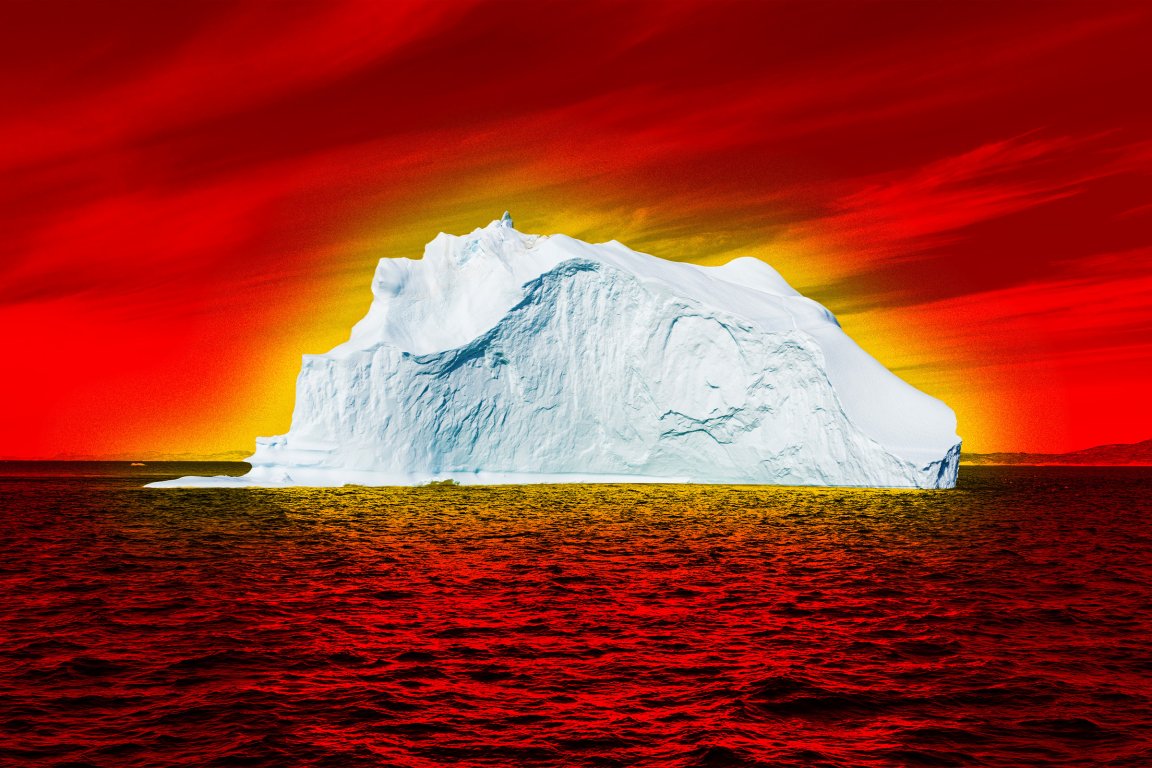
A colorful stylized photo illustration featuring an isolated iceberg.

Illustration by Tag Hartman-Simkins / Futurism. Source: Shutterstock

Sign up to see the future, today

Can’t-miss innovations from the bleeding edge of science and tech

One consequence of climate change you probably haven’t considered? Iceberg traffic.

In a new study published in the journal Nature, researchers from the Technical University of Denmark found that Greenland’s melting glaciers are unleashing a swarm of icebergs into the wider ocean, gumming up shipping routes and unexpectedly transforming marine ecosystems.

“We know from measurements and satellite observations that the large glaciers in Northeast Greenland have lost stability over recent decades,” study coauthor Shfaqat Abbas Khan, a professor at DTU Space, said in a statement about the work. “The new study shows that the consequences do not stop at rising sea levels, but directly affect deep-sea ecosystems far from the glaciers.” 

To document the iceberg swarm, the researchers combined four decades of shipboard records with satellite data, sea-ice models, and seabed studies centered on the Fram Strait, a sea passage between Greenland and Svalbard that’s the main gateway between the Arctic and the rest of the world’s oceans.

What they found was something unfolding at a decidedly un-glacial pace: since 2000, the number of icebergs being released from the strait has quadrupled.

The mechanism behind this is twofold: melting glaciers in Northeast Greenland are destabilizing and “calving,” or releasing ice, while sea ice — the ice that forms on the surface of the water — has simultaneously melted, clearing the path for the newly-calved icebergs to throng into the ocean.

Anyone who’s seen “Titanic” will know that having more icebergs around is dangerous for sea vessels. But they’re having an impact on marine life, too. That’s because they contain loads of sediments inside; when the icebergs melt far afield from their homes, they dump rocks onto the formerly pristine seafloor.

Underwater images taken at around 8,000 feet below the surface showed that the “dropstones” are spawning tiny ecosystems — as if all that iceberg traffic were commuters fleeing to a new bedroom town.

“Where previously there were only isolated stones of various sizes, we are now finding much larger accumulations, frequently in small groups. And with each new stone, a permanent settlement is created on the seabed,” coauthor Kirstin Meyer-Kaiser at the Woods Hole Oceanographic Institution said in a statement about the work

“Sponges, anemones, and other animals that favour hard substrates can settle there,” she added. “As a result, biodiversity in the deep sea is increasing.”

The work reminds us that land processes can be deeply linked with deep sea ecosystems, and how fear reaching — and unexpected — the impact of rising global temperatures can be.

“The Arctic is responding faster to global warming than most other places on Earth,” Khan said in the statement. “Therefore, it is crucial to understand the interaction between ice sheets, the ocean, and ecosystems. This knowledge is necessary if we are to predict and manage the consequences of future climate change.”

More on climate change: Scientists Horrified as Huge Heatwave Hits Antarctica