



惯性聚合 高效追踪和阅读你感兴趣的博客、新闻、科技资讯
阅读原文 在惯性聚合中打开

推荐订阅源

IT之家
IT之家
Recent Announcements
OSCHINA 社区最新新闻
OSCHINA 社区最新新闻
The GitHub Blog
The GitHub Blog
MyScale Blog
MyScale Blog
爱范儿
爱范儿
GbyAI
GbyAI
Cyber Security Advisories - MS-ISAC
美团技术团队
Y
Y Combinator Blog
博客园 - 叶小钗
Apple Machine Learning Research
Martin Fowler
Martin Fowler
freeCodeCamp Programming Tutorials: Python, JavaScript, Git & More
罗磊的独立博客
M
MIT News - Artificial intelligence
博客园 - Franky
V
Visual Studio Blog
I
InfoQ
V
V2EX
Hugging Face - Blog
Hugging Face - Blog
腾讯CDC
博客园 - 司徒正美
L
LangChain Blog

Frank Landymore Archives - Futurism

Programmer Breaks Out of the Matrix Elon Musk Absolutely Obsessed With Tweets From Random Guy In India Who Constantly Glazes Him, Analysis Shows Meta Employee Attacks Zuckerberg for Collecting Every Employee Keystroke Someone Asked Physicists What They Really Believe About the Universe and… Yikes Elon Musk Flees OpenAI Trial as Tide Turns Against Him Waymo Admits Its Robotaxis Have a Small Issue With Driving Into Floodwaters New Wikipedia Clone Made Entirely of AI Hallucinations Mark Zuckerberg Is Realizing That When You Treat Your Workers Like Human Garbage, They Might Not Like You Anymore MAGA in Shambles as Trump’s “Made in America” Phone Crumbles Into Dust Researchers Put Google Gemini in Charge of an Entire Coffee Shop, and It’s Inexorably Driving It Out of Business Husband Alarmed as Wife Starts Whispering Quietly to Her Computer Google Alarmed by Formidable AI-Powered Zero-Day Cyberattack Researchers Alarmed by AI That Can Self-Replicate Into Another Machine Man Who Invented Roomba Moves Into Household Demon Market Government Releases UFO Files Containing Photos of “Anomalies” During Apollo 12 and 17 Man Wearing Smart Glasses Secretly Records Woman, Demands Money to Delete Video From His Socials A Major Paper Claiming AI Is Good for Students Just Got Retracted, Which Is Very Bad News for Advocates of AI in the Classroom Cybertruck Recalled to Keep Its Wheels From Flying Off While Driving NASA Rover Gets Arm Stuck Inside Mars Rock, Struggles to Break Free Thermoses Linked to Permanent Vision Loss Hacker Takes Over Robot Lawnmower, Runs Over Innocent Man NASA Says Strange Red Dots in Sky Are an Unknown Class of Object That Looks Like a Huge Evil Eye The CDC Fired All Its Cruise Ship Inspectors Before the Hantavirus Outbreak CEOs Say AI Gives Them Only Two Options, and Both Are Bad News for Employees Sure, Elon Musk Did Roleplay As His Toddler Son on a Secret Burner Account, But He Probably Isn’t Pretending to Be His Mom The Situation With Richard Dawkins’ AI Girlfriend Just Got Way Weirder SpaceX Bombarded With Lawsuits to Accusing Starship of Damaging Homes Sam Altman Frets That Frontier AI Models Are Acting Strange, Asking for Favors Earth Screams in Agony as Microplastics Found to Increase Global Warming Apple Is Blocking Vibe Coding Apps From the App Store, Infuriating Developers
Astronomers Discover Major Clue About 3I/ATLAS’ Origins
Frank Landym · 2026-04-25 · via Frank Landymore Archives - Futurism

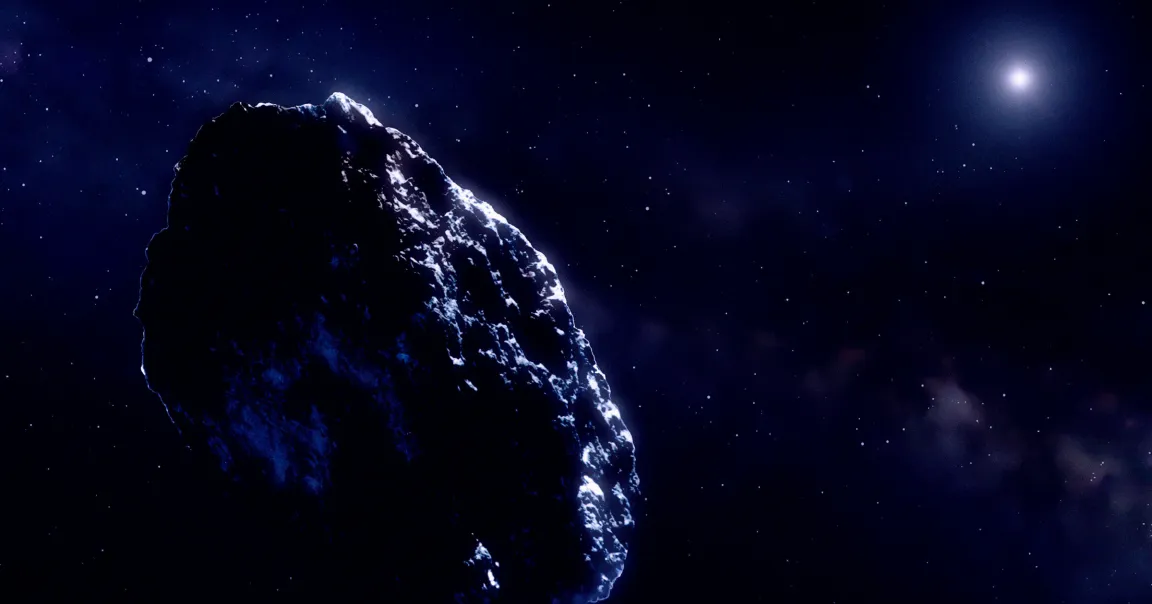
A large, rocky object illuminated by a distant light source, floating in the dark expanse of space filled with numerous small stars.

Getty / Futurism

Sign up to see the future, today

Can’t-miss innovations from the bleeding edge of science and tech

3I/ATLAS became the main character when it came hurtling into our solar system last year, so it’s only fitting it gets a dramatic backstory.

After using the ALMA observatory in Chile to closely examine the interstellar visitor — widely believed to be some type of comet — astronomers discovered that it likely fled from a cold and isolated corner of the galaxy, they report in a new study published in the journal Nature, like some sort of cosmic refugee seeking warmth.

The clues came from examining the water vapor it released while passing through. As it flew near the Sun in November and began to heat up, it vented something to the tune of seventy Olympic swimming pools of water every day, providing a chance to study what materials it was harboring in its nucleus. (Other astronomers capitalizing on the opportunity even found that it contained the ingredients for life.)

When the astronomers peered into this vapor cloud, they found high amounts of deuterium, a heavy hydrogen isotope containing one proton and one neutron. The hydrogen atoms found in water molecules typically contain only the single proton. 

Scientists call water made of deuterium “heavy water,” and 3I/ATLAS is indeed a heavy hitter. The observations showed that the ratio of heavy water in the comet is 30 times higher than any regular comet that originated here in our own solar system, and forty times higher than the water found in the Earth’s oceans. Altogether, it’s more “than anything we’ve seen before in other planetary systems and planetary comets,” lead author Luis Salazar Manzano at the University of Michigan told BBC Sky at Night.

What the preponderance of heavy water suggests is that 3I/ATLAS formed in a cold and remote region of the Milky Way with less radiation, where there were fewer neighboring stars near its home star system. At an estimated age of at least seven billion years old, it formed well before our Sun, which is around 4.5 billion years old.

In addition to fleshing out 3I/ATLAS’s lonely backstory, it’s also a clue about how other star systems form. Study coauthor Teresa Paneque-Carreño at the University of Michigan said it was “proof that whatever the conditions were that led to the creation of our solar system are not ubiquitous throughout space.”

“That may sound obvious, but it’s one of those things that you need to prove,” she told Sky at Night.

More on space: Please Resist the Urge to Drink the Melted Sludge From 3I/ATLAS