



惯性聚合 高效追踪和阅读你感兴趣的博客、新闻、科技资讯
阅读原文 在惯性聚合中打开

推荐订阅源

U
Unit 42
罗磊的独立博客
博客园 - 聂微东
T
The Blog of Author Tim Ferriss
博客园 - 司徒正美
Stack Overflow Blog
Stack Overflow Blog
F
Fortinet All Blogs
A
About on SuperTechFans
腾讯CDC
Apple Machine Learning Research
B
Blog RSS Feed
IT之家
IT之家
V
Visual Studio Blog
freeCodeCamp Programming Tutorials: Python, JavaScript, Git & More
宝玉的分享
宝玉的分享
C
Check Point Blog
Cyber Security Advisories - MS-ISAC
Vercel News
Vercel News
爱范儿
爱范儿
Microsoft Security Blog
月光博客
月光博客
T
Tailwind CSS Blog
The Cloudflare Blog
Hugging Face - Blog
Hugging Face - Blog

Joe Wilkins Archives - Futurism

Billionaire Declares That “Tax the Rich” Is Hate Speech That Offends Him Horribly FBI Director Kash Patel Says AI Has Stopped Numerous Violent Attacks Against America. We’d Love to See a Single Whiff of Evidence Video Shows Amazon Drone Dropping Package Into Pond Ordinary People Fear AI, While the Tech Leaders Working to Create a Permanent Underclass Say They’re Extremely Psyched About It Busy Roadways Clogged as Waymo Becomes Stumped by Small Puddle Passengers Groan as Robot Passenger Causes Hour-Long Delay at Oakland Airport Zuckerberg Trying to Simulate Human Biology at the Cellular Level Startup Says It’s Invented a Beanie That Reads Your Mind Man Says His Waymo Ditched Him at the Airport Before He Could Get His Luggage Out of the Trunk, Refused to Return Frontier AI Models Giving Specific, Actionable Instructions to Perpetrate Bioterror Attack The “Pentastack” of Illegal Drugs That Looksmaxxers Like Clavicular Are Taking to Enjoy a Night Out Sounds Like a One-Way Trip to the Hospital Chinese Court Rules That a Worker Cannot Be Replaced by AI There’s Something Bizarre About the Offices of AI Startups Trump’s US Forest Service Spraying Deadly Toxins on America’s Woodlands Wild Video Shows Ukrainian Troops Evacuate Babushka With a Military Robot AV Companies Might be in Trouble Now As Cops Start Ticketing Driverless Cars Elon Musk Just Got Badly Humiliated in Court If You Bet on Polymarket, This New Study May Cause You Physical Pain Mark Zuckerberg Just Got Shot Down by China, Again Startup Says It Can Read Your Brain Signals Using a Pair of Headphones AI Spy Cameras Suddenly Blanketing America Man Trapped in Dystopian Nightmare Thanks to AI Surveillance Cameras Flagging His Every Move Police Are Using AI Camera Networks to Stalk Women Woman Convicted for Attacking Police With Swarm of Furious Bees A Tiny Town Is Building So Many Data Centers That There’ll Be Almost Nothing Else Left The War in Iran Is Causing China to Sell So Many Solar Panels That Your Jaw Will Drop Waymo Has a Bike Lane Problem Ransomware Negotiator Pleads Guilty to Deploying Ransomware Himself America Trembles as Transportation Secretary Announces Plans for Air Traffic Controllers to Lean on AI Tools Experts Warn of AI Swarms Hijacking Democracy With Fake Citizens
Study Finds AI Use Eats Away at Users’ Confidence in Thei...
Joe Wilkins · 2026-04-19 · via Joe Wilkins Archives - Futurism

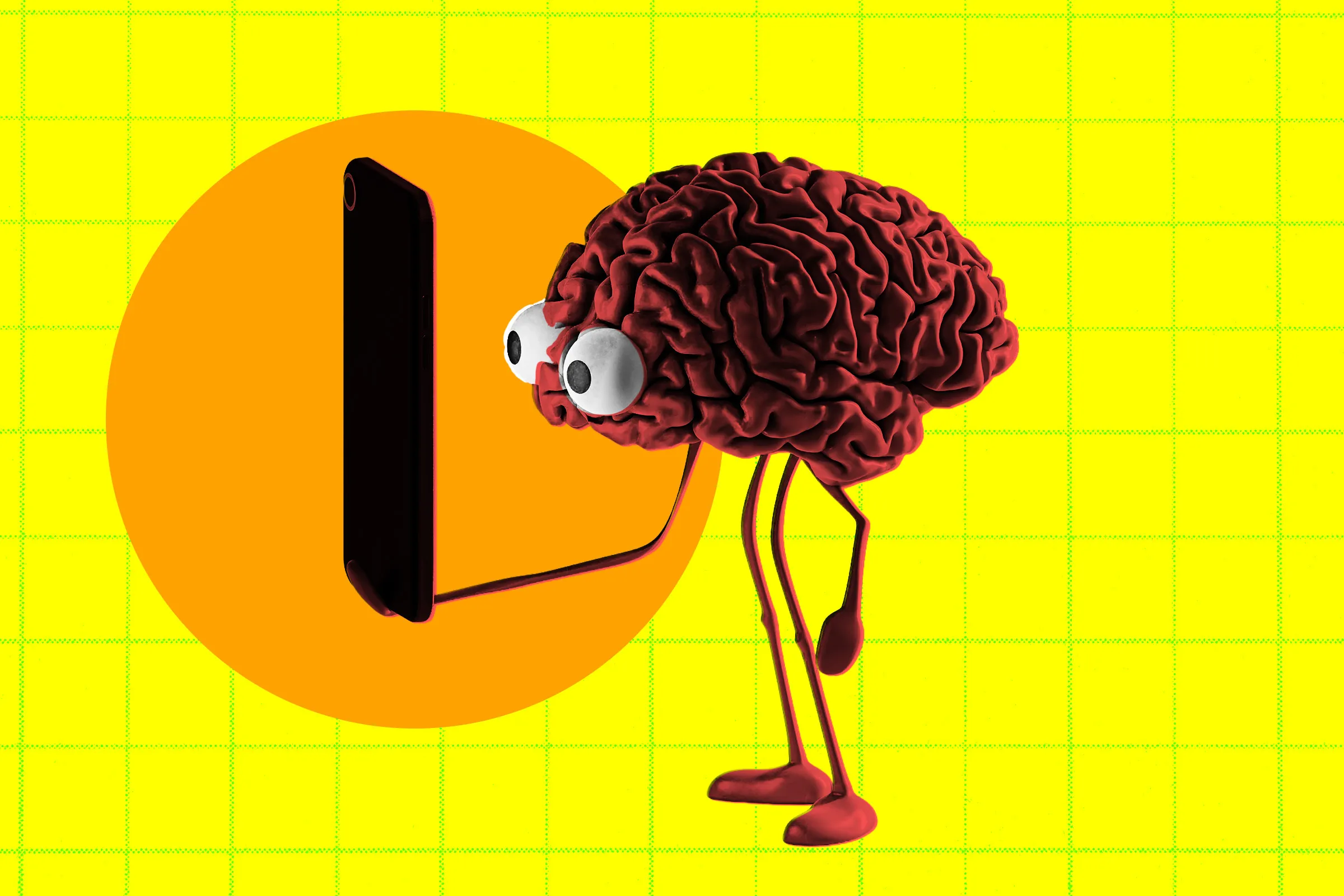
A cartoonish red brain with large, googly eyes and thin, stick-like arms and legs is looking at a smartphone held up in front of it. The background is bright yellow with a grid pattern and an orange circle behind the phone.

Illustration by Tag Hartman-Simkins / Futurism. Source: Getty Images

Sign up to see the future, today

Can’t-miss innovations from the bleeding edge of science and tech

Researchers are growing increasingly suspicious that outsourcing intellectual tasks to AI is causing a range of cognitive deficits. A new study adds a wrinkle worth paying attention to: that use of the bots can eat away at users’ faith in their own abilities, resulting in lower confidence in their own independent reasoning.

The new peer-reviewed study, published in the journal Technology, Mind and Behavior and flagged by TIME, found that those who showed a heavy reliance on AI were more likely to admit chatbots were “thinking” for them — and seem to show decreased confidence in their own ideas.

By the same token, participants who took control over their AI’s output by editing, questioning, or scrapping it showed a greater confidence and sense of ownership over the final output, even though the tools used were the same.

As the study’s author Sarah Baldeo — a PhD candidate in AI and neuroscience at Middlesex University — told TIME, the ultimate cognitive effects “depends on your interaction style.”

“When we look at brain activity contingent on how people choose to use the tool, we can see increases or decreases,” Baldeo said. “It really doesn’t have to do with the tool itself.”

That finding lines up with the “boiling frog study” we covered earlier this week. That yet-to-be-peer-reviewed paper, by researchers at MIT and Carnegie Mellon, claimed to have found the first causal evidence that AI can rapidly degrade users’ intellectual abilities, particularly when we use the tech for “reasoning-intensive” work.

During that study, participants in the experimental group were given AI access to complete a series of equations. The researchers then pulled the plug in the middle of their work, forcing them to continue without it. Those who had been abandoned by their AI chatbots saw rapid declines in reasoning ability, as well as a swift drop in willingness to follow-through and complete the math tasks.

Both studies converge on the same core mechanism: how you use AI is an important factor in determining whether it harms your cognitive ability. Basically, they argue that offloading all of your work to the machine degrades your capacity for independent reasoning, while using AI as a supplement may help to preserve it.

Whether you’re measuring confidence or raw reasoning, both pieces of research seem to pose an important question: are you using AI to help you think, or is AI doing the thinking for you?

More on AI: College Students Losing Ability to Participate in Class Discussions Due to Offloading Their Thinking to AI