
惯性聚合 高效追踪和阅读你感兴趣的博客、新闻、科技资讯
阅读原文 在惯性聚合中打开

推荐订阅源

G
Google Developers Blog
有赞技术团队
有赞技术团队
WordPress大学
WordPress大学
博客园 - 司徒正美
D
Docker
B
Blog
V
Visual Studio Blog
Blog — PlanetScale
Blog — PlanetScale
U
Unit 42
S
SegmentFault 最新的问题
小众软件
小众软件
J
Java Code Geeks
美团技术团队
腾讯CDC
MyScale Blog
MyScale Blog
爱范儿
爱范儿
H
Help Net Security
宝玉的分享
宝玉的分享
Microsoft Azure Blog
A
About on SuperTechFans
Google DeepMind News
钛媒体:引领未来商业与生活新知
钛媒体:引领未来商业与生活新知
博客园 - 三生石上(FineUI控件)
博客园 - 【当耐特】

Victor Tangermann Archives - Futurism

Grimly Cyberpunk Video Shows Ukrainian Soldiers Leaning Out of Propeller Plane to Obliterate Drones With Rifles AI Slop YouTube Channel Glitches Out in a Way So Bizarre That It’s Vaguely Disturbing Double Murder Suspect Asked ChatGPT How to Hide Body in Dumpster The White House Suddenly Seems Pretty Terrified of Anthropic Democrat and Republican Voters United on Key Issue: Hatred of Data Centers NASA’s Moon Landing Schedule Slipping Horrendously Under Trump NASA Fires Up Futuristic Plasma Thruster Designed to Take Us to Mars Toilet Maker Spikes in Value as It Flushes Money Into AI New England Journal of Medicine Retracts Paper Because Photo of Patient’s Insides Was Garbled by AI Eric Trump’s Crypto Company Is Falling Into Total Disaster Gen Z Is Turning Against AI in an Incredible Way If OpenAI Loses This Trial, It Could Effectively Be Eliminated in Its Current Form D4vd Bought Chainsaws and Body Bag on Amazon After Murder, Prosecutors Say, in the Most Grisly Case of Internet Brain Rot We’ve Ever Heard There’s a Hidden Shortcut to Mars, Scientific Paper Finds Reddit Intentionally Breaks Its Mobile Website, Demanding Users Download Its App Instead Uninstalls of ChatGPT Are Spiking at the Worst Time Imaginable for OpenAI Another Military UFO Guy Just Died Sam Altman Caught in What May Be His Most Spectacular Lie Yet Scientists Scan Gigantic Structure Hiding Behind Our Galaxy If You Thought Mark Zuckerberg Was a Pathetic Little Worm Before, Wait Until You Hear About His Latest Move OpenAI in Shambles as IPO Looms Scientists Experimenting With Quantum Effect That Some Fear Could Cause Chain Reaction That Ends Entire Universe Weird Things Happen When You Give AI Agents Money and Let Them Spend It Bitcoin Developers Are Debating a Move That Could Send Crypto Markets Into a Tailspin Video Shows NASA Astronaut Struggling to Walk After Journey Around the Moon Sam Altman Issues Grim Apology Top Medical Journal Publishes Searing Article Warning Against Medical AI New Browser Plugin Adds Typos to Your AI-Generated Emails to Make Them Look Real New AI-Powered Robot Can Destroy Human Champions at Ping Pong Devious New AI Tool “Clones” Software So That the Original Creator Doesn’t Hold a Copyright Over the New Version
We’re In Utter Disbelief About the Photos the Moon Astron...
2026-04-07 · via Victor Tangermann Archives - Futurism

Here are some of the most spectacular snapshots NASA recently received from the crew of its Artemis 2 mission.

NASA

Sign up to see the future, today

Can’t-miss innovations from the bleeding edge of science and tech

On Monday, the four crew members of NASA’s Artemis 2 mission made history, officially breaking the record for the farthest any human has ever traveled from Earth, at an astonishing 252,752 miles from home.

At the time, the crew’s capsule was swinging around the Moon before starting its multi-day return journey, offering the astronauts some truly astonishing views. The team spent many hours using both professional-grade photography equipment — as well as their iPhones — to capture the exceedingly rare moment, from a dazzling “Earthset” to a total solar eclipse that lasted nearly an entire hour.

The team was extensively coached on how to take these pictures and what to look out for as they gazed at the rugged surface of the Moon through Orion’s windows. It was a highly organized “seven-hour lunar observation period,” as NASA notes, with the crew dividing into pairs. Two crew members observed for 55 to 85 minutes at a time, “while the other pair exercises or works on other tasks.”

Here are some of the most spectacular snapshots NASA recently received from the historic flyby.

Earthset

One particularly impressive image shows the Earth, half plunged into nighttime, peeking out from behind the cratered lunar surface. It’s essentially the equivalent of a sunset as seen from Earth, except that it’s the entire Earth setting below the horizon of the Moon, hence NASA’s use of the word “Earthset.”
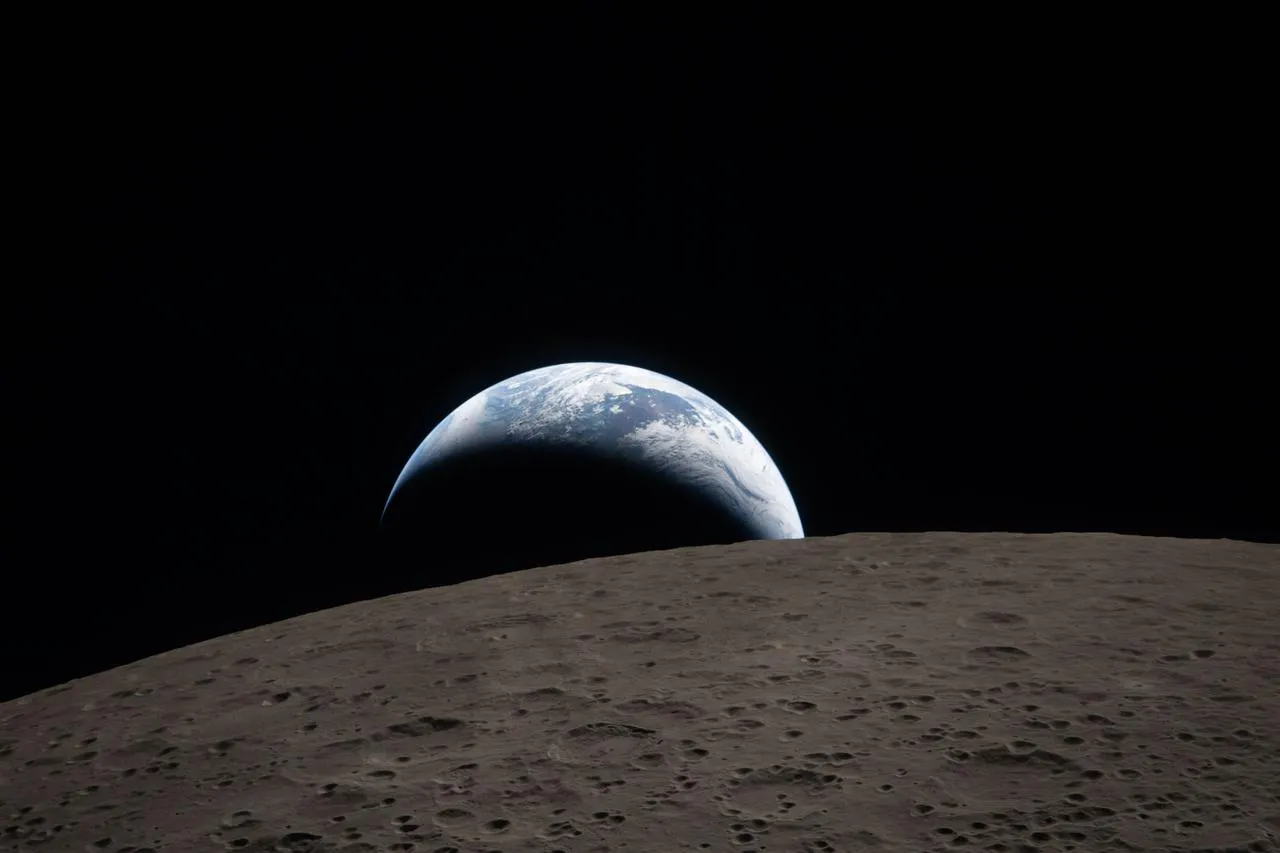
Earthset captured through the Orion spacecraft window at 6:41 p.m. EDT, April 6, 2026, during the Artemis II crew’s flyby of the Moon.

Total Solar Eclipse

Another photo captures the total solar eclipse the crew was beholden to for a stunning 54 minutes as the Moon fully eclipsed the Sun from their perspective. The image shows the Sun’s corona in the form of a “halo around the dark lunar disk,” as NASA explains.
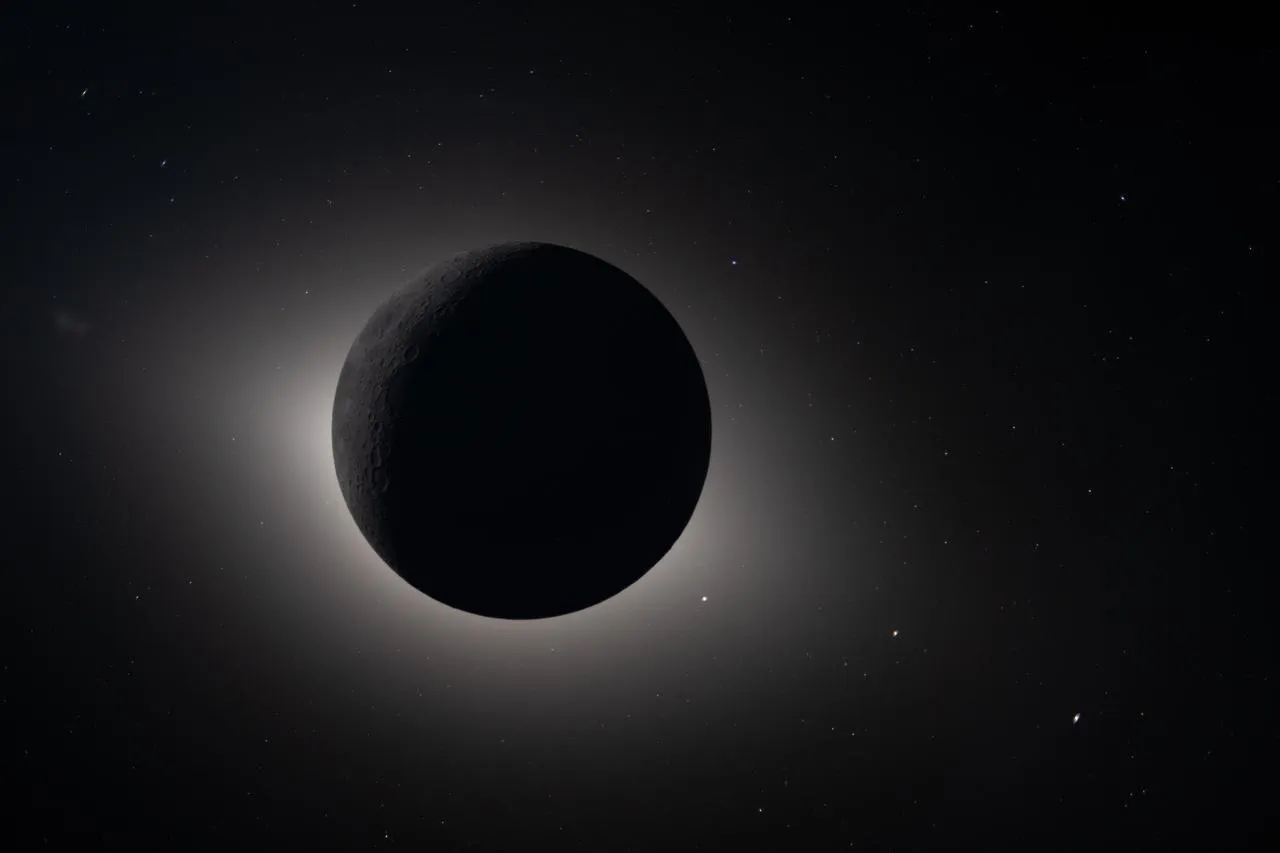
The total solar eclipse the crew of NASA's Artemis 2 mission was beholden to for a stunning 54 minutes as the Moon fully eclipsed the Sun from their perspective.

Eclipse Selfie

The prolonged eclipse forced the crew to don eclipse glasses, much like the ones we wear during the (much shorter) total solar eclipses on Earth, as seen in an iPhone 17 Pro selfie seemingly taken by NASA astronaut and mission commander Reid Wiseman.
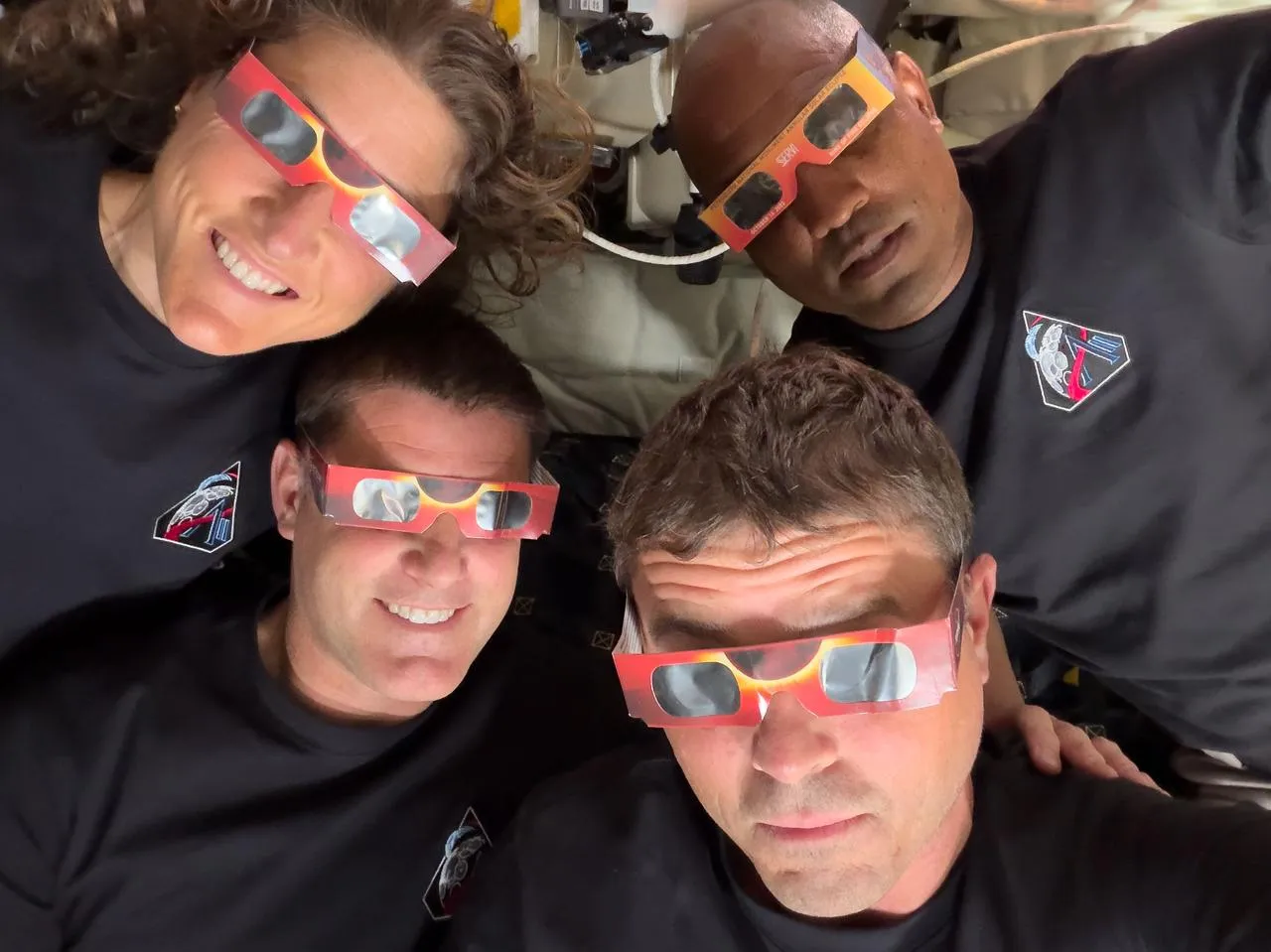
The prolonged eclipse forced the crew to don eclipse glasses, much like the ones we wear during total solar eclipses on Earth, as seen in an iPhone 17 Pro selfie.

South Pole

The crew were also treated to an extremely close view of the eastern edge of the Moon’s South Pole-Aitken basin, a region of particular interest as NASA is eyeing it as a place to land during its first crewed mission to the lunar surface. The Aitken basin is the largest impact crater on the far side of the Moon, measuring around 1,600 miles in diameter.
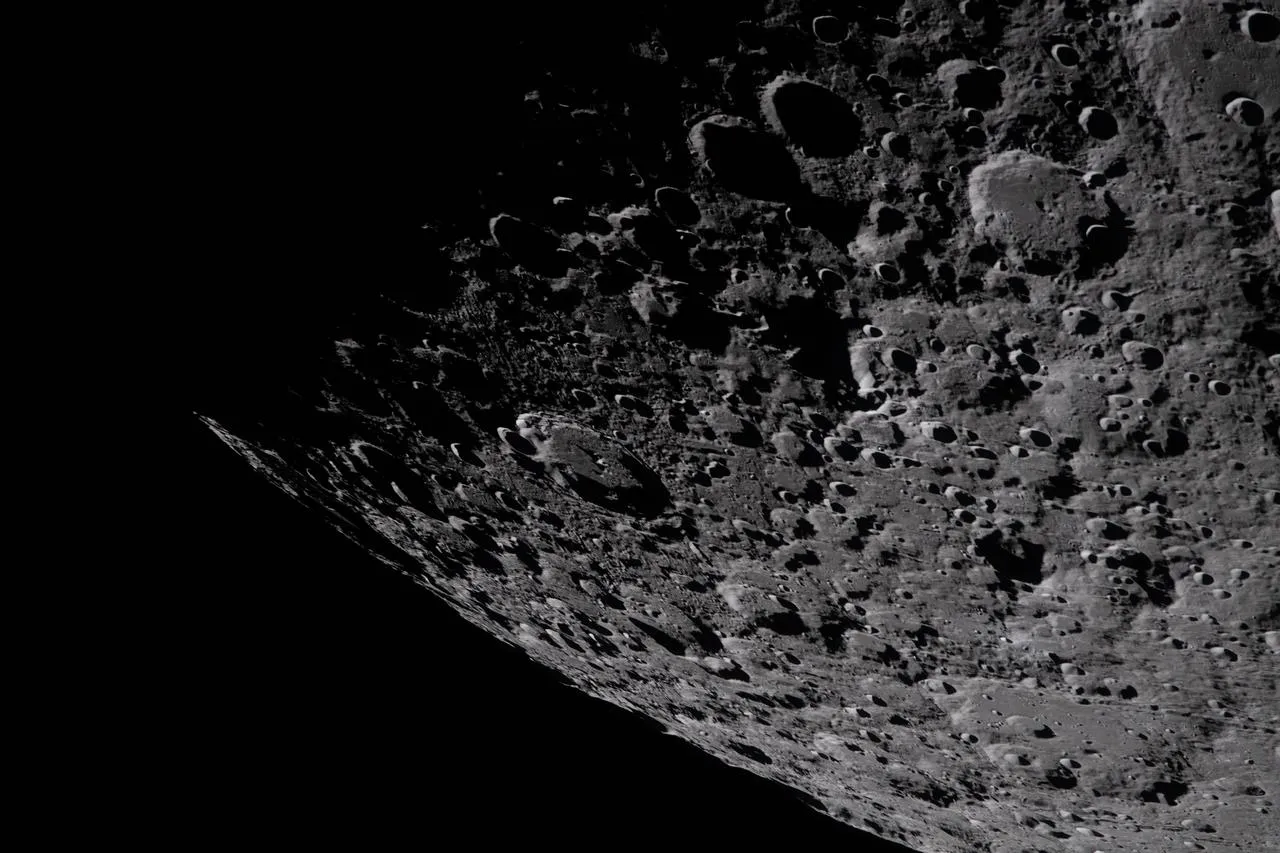
An extremely close view of the Moon's south pole, a region of particular interest as NASA is eyeing it as a place to land during its first crewed mission to the lunar surface.

Orientale Basin

The crew also got a perfect look at the Orientale Basin, a “black patch of ancient lava in the center that punched through the Moon’s crust in an eruption billions of years ago,” per NASA. It measures roughly 600 miles across and lies in the transition between the Moon’s far and near sides.
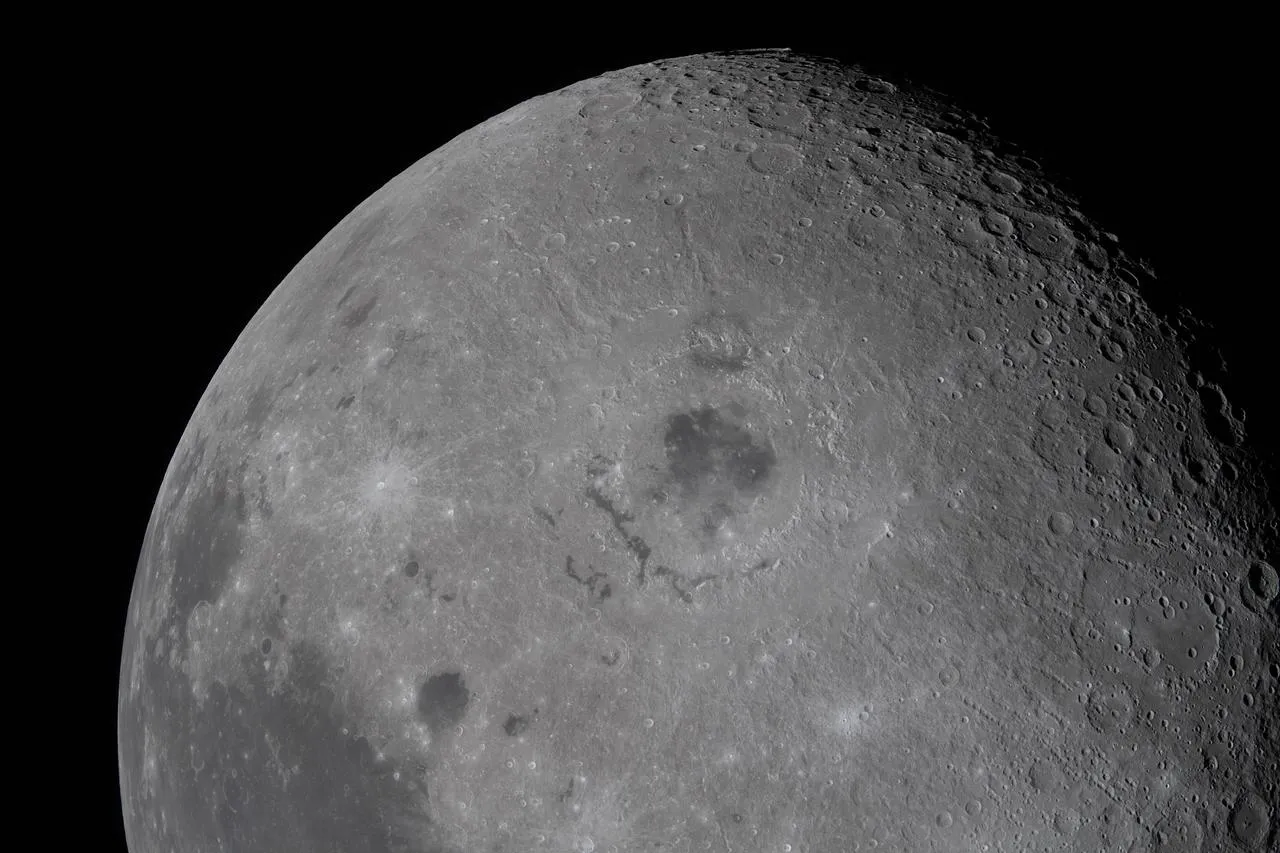
The crew got a perfect look at the Orientale basin, a "black patch of ancient lava in the center that punched through the Moon’s crust in an eruption billions of years ago," per NASA.

Earthrise

At 7:22 pm Eastern time, the crew saw the Earth emerging once more from behind the Moon, an otherworldly “Earthrise” that few will ever get to experience in their lifetimes.
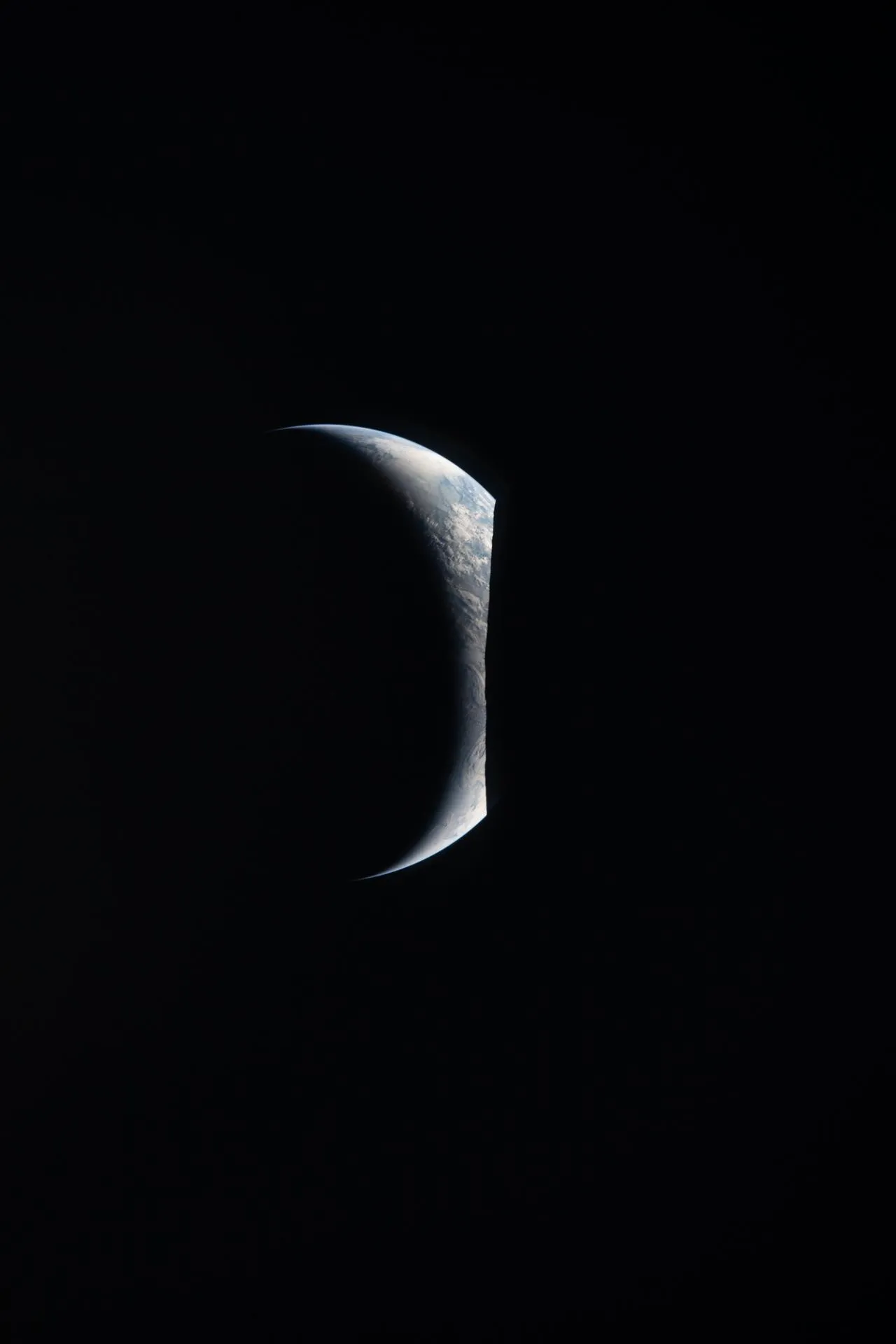
At 7:22 pm Eastern time, the crew saw the Earth emanating once more from behind the lunar surface, an otherworldly "Earthrise" that few will ever get to experience in their lifetimes.

Total Eclipse Redux

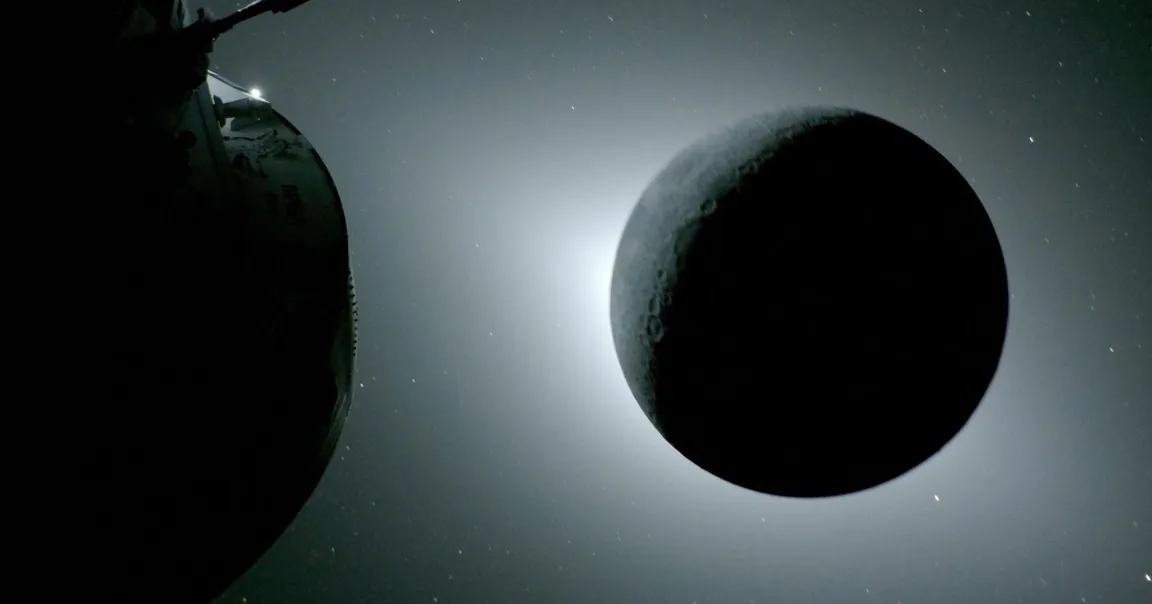
The Orion capsule’s exterior camera, which is attached to the spacecraft’s solar array wings, snapped an equally impressive shot of the total solar eclipse, as seen in this eerie photo.

“The bright spot visible just below the Moon’s bottom right edge is Saturn,” NASA notes.
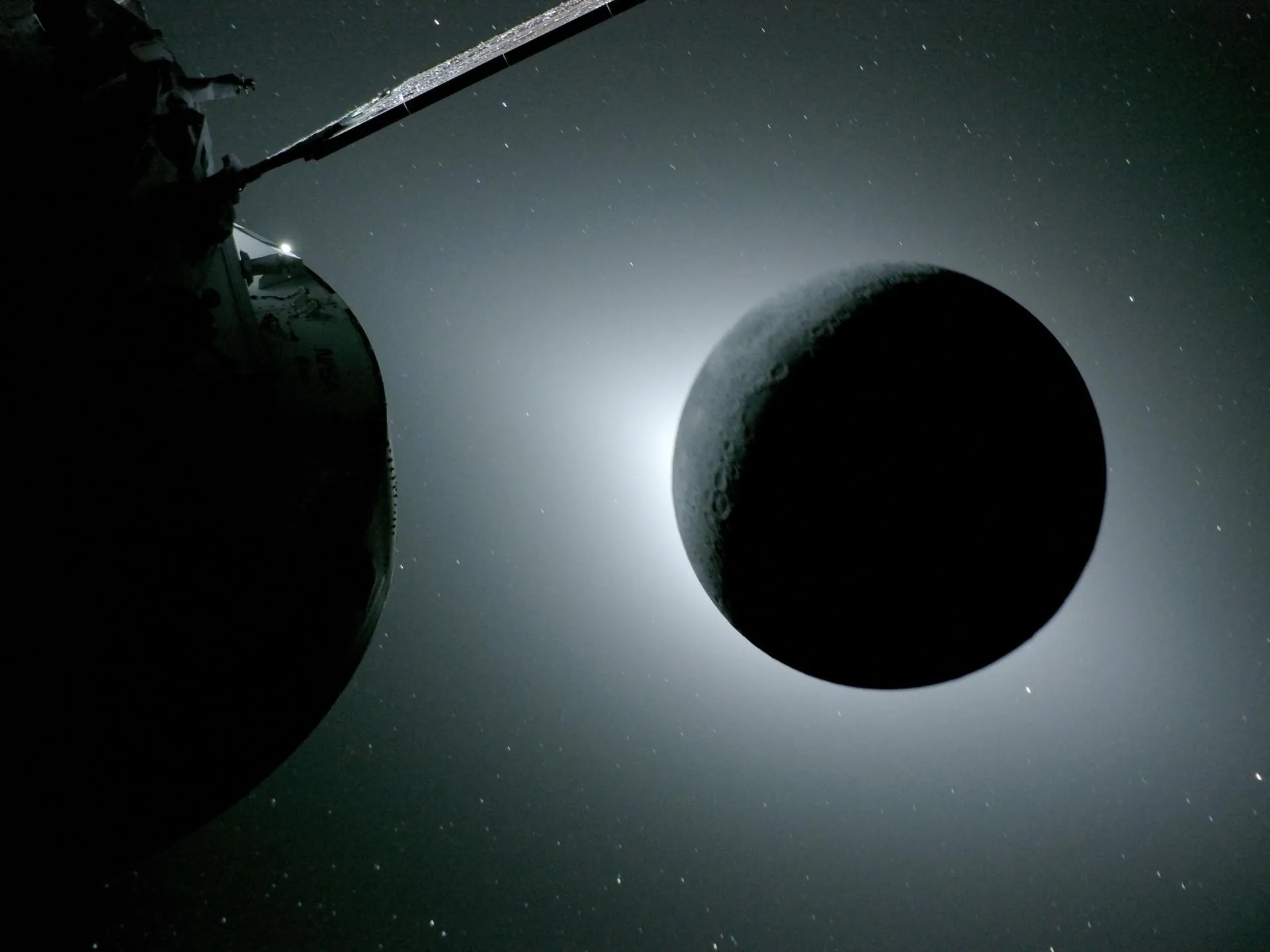
The Orion capsule's exterior camera, which is attached to the spacecraft's solar array wings, snapped an equally impressive shot of the total solar eclipse, as seen in this eerie photo.

Return Journey

The team is expected to reenter the Earth’s atmosphere on Friday evening, a harrowing maneuver that will involve it crashing into our planet’s protective layer at a speed of 25,000 mph, while Orion’s heat shield reaches temperatures over 3,000 degrees Fahrenheit.

If all goes well, the crew will splash down in the Pacific Ocean, concluding one of the best and rarest photo opp journeys in human history.

More on the mission: The Moon Astronauts Just Broke the Record for the Farthest Any Human Has Ever Traveled From Earth