
惯性聚合 高效追踪和阅读你感兴趣的博客、新闻、科技资讯
阅读原文 在惯性聚合中打开

推荐订阅源

Apple Machine Learning Research
爱范儿
爱范儿
博客园_首页
博客园 - 【当耐特】
V
Visual Studio Blog
博客园 - 叶小钗
月光博客
月光博客
美团技术团队
J
Java Code Geeks
小众软件
小众软件
Y
Y Combinator Blog
博客园 - Franky
Martin Fowler
Martin Fowler
博客园 - 聂微东
Microsoft Azure Blog
IT之家
IT之家
MyScale Blog
MyScale Blog
人人都是产品经理
人人都是产品经理
Microsoft Security Blog
OSCHINA 社区最新新闻
OSCHINA 社区最新新闻
阮一峰的网络日志
阮一峰的网络日志
酷 壳 – CoolShell
酷 壳 – CoolShell
钛媒体:引领未来商业与生活新知
钛媒体:引领未来商业与生活新知
云风的 BLOG
云风的 BLOG

Futurism

China Deploys Rare Type of Space Junk That Pollutes Orbit for Hundreds of Years Researchers Alarmed as GPS Readings Suddenly Veer Off by 33 Feet, Enough to Crash Self-Driving Cars Scientists Baffled by Bizarre "Anomaly" Deep Beneath the Surface of Mars NASA's Powerful New Space Telescope, Just Cleared for Launch, Was Developed by an Intelligence Agency to "Spy on America's Adversaries" NASA Set Up a Major Test of Its New Strategy Under Trump by Hiring a Startup to Launch a Daring Mission to Rescue a Dying Space Telescope in Orbit. The Unfortunate Result Will Have Long-Ranging Repercussions. Scientists Warn That New Satellites Could Cause Eye Damage for People on the Ground Scientist Reveals Plan to Save Earth From Destruction by the Sun NASA Rescue Mission Spirals Into Crisis Incredible Video Shows Chinese Rocket Get Hit by Lightning Mid-Launch SpaceX Plunges to All-Time Low After Competitor Makes Major Leap China Is Catching Up With SpaceX Fast, Landing First Reusable Rocket Booster on Offshore Platform Scientists Test New Spacecraft Thruster That Uses No Fuel, Just Earth's Magnetic Field, in Orbit Experts Say Mysterious Metallic Orbs Appear to Have Fallen From the Sky Anybody Who Thinks Orbital Data Centers are a Good Idea Is Suffering from AI Psychosis, Experts Argue NASA Prepping to Launch Extremely Risky Rescue Mission Boeing's Starliner Is Such a Disaster That We Don't Even Have Words NASA Has a Major Problem Threatening Its Entire Moon Plans NASA Rover Finds "Complex Organic Matter" on Mars SpaceX Launches Secretive New Spacecraft Shaped Like Flying Saucer Saturn's Icy Moon Is the Perfect Place to Settle, NASA Scientist Argues Scientists Building World's Most Powerful Radio Telescope Deep in the Nevada Desert NASA Loads Moon Rocket onto Giant Trump-Branded Train NASA’s Next Moon Mission Is a Rube Goldberg Machine of Corporate Failure Points Scientists Release Results After Scanning 3I/ATLAS for Alien Signals NASA’s James Webb Discovers That 3I/ATLAS Let One Rip as It Passed Through Solar System Scientists Find Chunk of Lost Planet in Desert ISS Astronauts Ordered to Enter Evacuation Mode Paper Claims the “Asteroid” Japan’s Probe Is Approaching Is Actually a Derelict Spacecraft Scientists Say They’ve Found Fungi That Turn Dead Martian Soil Into Fertile Cropland Jeff Bezos’ Rocket Explodes Into Mushroom Cloud, Dealing Massive Blow to NASA’s Moon Plans
Scientist Suggests That 3I/ATLAS May Have Seeded Life as ...
Victor Tangermann · 2026-05-27 · via Futurism

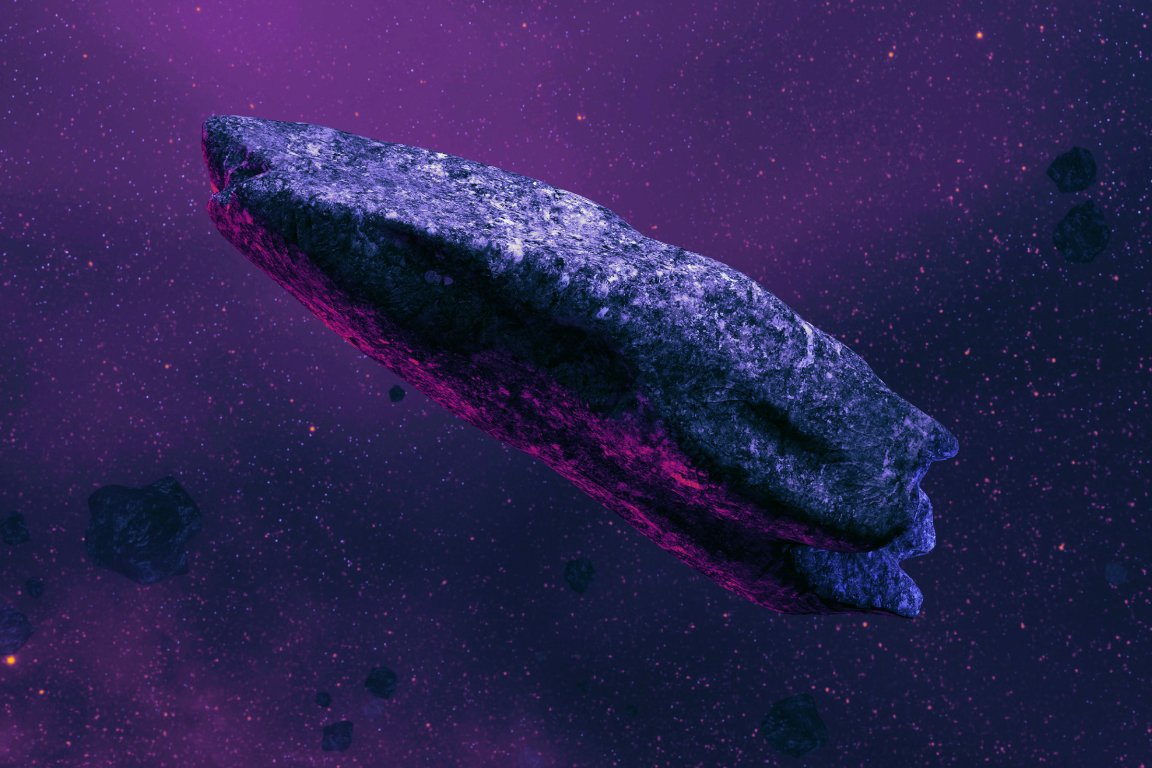
An illustration of 3I ATLAS, an interstellar comet that has passed through our Solar System

Shutterstock / Futurism

Sign up to see the future, today

Can’t-miss innovations from the bleeding edge of science and tech

A small group of scientists have long suggested that the seeds of life may have been distributed across the vast distances of space via cosmic dust, asteroids, or comets — a theory known as panspermia.

Some, including late astronomer and planetary scientist Carl Sagan, have gone as far as to raise the possibility that those seeds may have been deliberately spread to distant planets by intelligent civilizations.

It’s an intriguing albeit far-fetched hypothesis that most recently caught the interest of Harvard astronomer Avi Loeb. Following months of observations of mysterious interstellar object 3I/ATLAS, which came surprisingly close to a number of solar system planets during its brief visit last year, Loeb proposed that it could’ve been shedding the building blocks of life during its journey — or even have been designed to seed planets like our own intentionally.

In a recent blog post, Loeb suggested that extrasolar life could’ve survived the journey by being embedded inside the comet’s ice reservoirs, before being released near other planets in the solar system, likening it to a “dandelion flower shedding its seeds to be carried by wind towards a fertile ground.”

“In addition to natural origins, there is the possibility of directed panspermia, whereby an interstellar gardener seeded 3I/ATLAS on a fertilization mission targeting the habitable planets in the Solar System,” he wrote. “This would explain the rare alignment between the trajectory of 3I/ATLAS and the orbital plane of the habitable planets around the Sun, as well as the sunward jet with large fragments that plowed through the solar radiation and wind.”

Loeb previously painstakingly built a case around his widely disputed hypothesis that 3I/ATLAS may have been an alien spacecraft that was sent to visit us. His latest blog post suggests that the wealth of observational data strongly suggesting it was a comet made up of ice and rock has yet to fully weaken his resolve when it comes to the possibility that aliens are behind the interstellar visitor.

That’s not to say his new idea is a slam dunk. Panspermia itself remains a hotly debated subject among scientists, with many arguing that building blocks of life may have always been present on Earth. How such a process could play out in far more hostile environments in other parts of the solar system is an even bigger question.

Still, it’s a fascinating thought experiment with some vast implications — and should inspire us to actively seek answers by intercepting objects like 3I/ATLAS, Loeb argues.

“By directing a probe on a crash course towards the surface of these icebergs, we can diagnose the composition of the material they shed and infer whether it carries extrasolar life,” he wrote in his latest blog. “In case it does, the most pressing question is whether extrasolar life resembles life-as-we-know-it.”

“If so, perhaps life on Earth was seeded by an interstellar gardener,” he added.

More on 3I/ATLAS: Astronomers Discover Major Clue About 3I/ATLAS’ Origins