

惯性聚合 高效追踪和阅读你感兴趣的博客、新闻、科技资讯
阅读原文 在惯性聚合中打开

推荐订阅源

Google DeepMind News
B
Blog RSS Feed
The GitHub Blog
The GitHub Blog
Recent Announcements
A
About on SuperTechFans
G
Google Developers Blog
aimingoo的专栏
aimingoo的专栏
U
Unit 42
WordPress大学
WordPress大学
Y
Y Combinator Blog
罗磊的独立博客
J
Java Code Geeks
Microsoft Azure Blog
腾讯CDC
博客园 - 叶小钗
Stack Overflow Blog
Stack Overflow Blog
Engineering at Meta
Engineering at Meta
Microsoft Security Blog
GbyAI
GbyAI
V
V2EX
雷峰网
雷峰网
H
Hackread – Cybersecurity News, Data Breaches, AI and More
S
SegmentFault 最新的问题
酷 壳 – CoolShell
酷 壳 – CoolShell

Futurism

China Deploys Rare Type of Space Junk That Pollutes Orbit for Hundreds of Years Researchers Alarmed as GPS Readings Suddenly Veer Off by 33 Feet, Enough to Crash Self-Driving Cars NASA's Powerful New Space Telescope, Just Cleared for Launch, Was Developed by an Intelligence Agency to "Spy on America's Adversaries" NASA Set Up a Major Test of Its New Strategy Under Trump by Hiring a Startup to Launch a Daring Mission to Rescue a Dying Space Telescope in Orbit. The Unfortunate Result Will Have Long-Ranging Repercussions. NASA Rescue Mission Spirals Into Crisis Boeing's Starliner Is Such a Disaster That We Don't Even Have Words NASA Has a Major Problem Threatening Its Entire Moon Plans NASA Rover Finds "Complex Organic Matter" on Mars Experts Concerned About Plan to Destroy International Space Station Saturn's Icy Moon Is the Perfect Place to Settle, NASA Scientist Argues Tension Flared on Space Station as Russia Threatened to Drill and Saw Into Wall, Prompting NASA Astronauts to Take Shelter Elon Musk's Conflicts of Interest With the Trump Administration Regulating SpaceX Are So Profound That They Have Grim Implications for Society NASA Loads Moon Rocket onto Giant Trump-Branded Train NASA’s Next Moon Mission Is a Rube Goldberg Machine of Corporate Failure Points NASA’s James Webb Discovers That 3I/ATLAS Let One Rip as It Passed Through Solar System ISS Astronauts Ordered to Enter Evacuation Mode Jeff Bezos’ Rocket Explodes Into Mushroom Cloud, Dealing Massive Blow to NASA’s Moon Plans NASA Releases Sweeping Plans for Moon Base Sun Suddenly Blasts Powerful Radio Transmission for 19 Continuous Days Visitor Approaches From the Edge of the Solar System NASA Rover Gets Arm Stuck Inside Mars Rock, Struggles to Break Free Jeff Bezos’ Moon Lander Just Completed a Key Test Scientists and Lawmakers Horrified at Trump’s Brutal Budget for NASA NASA’s Moon Landing Schedule Slipping Horrendously Under Trump NASA Fires Up Futuristic Plasma Thruster Designed to Take Us to Mars Head of NASA Calls for Pluto to Be Made a Planet Again Video Shows NASA Astronaut Struggling to Walk After Journey Around the Moon Jeff Bezos’ Botched Space Launch Was So Bad It Could Threaten NASA’s Entire Moon Program Guess What This Creepy Underwater Thing Is That Was Photographed by US Navy Divers for NASA NASA Shuts Down Voyager 1 Instrument as Its Life Force Fades
NASA Prepping to Launch Extremely Risky Rescue Mission
Victor Tangermann · 2026-06-29 · via Futurism

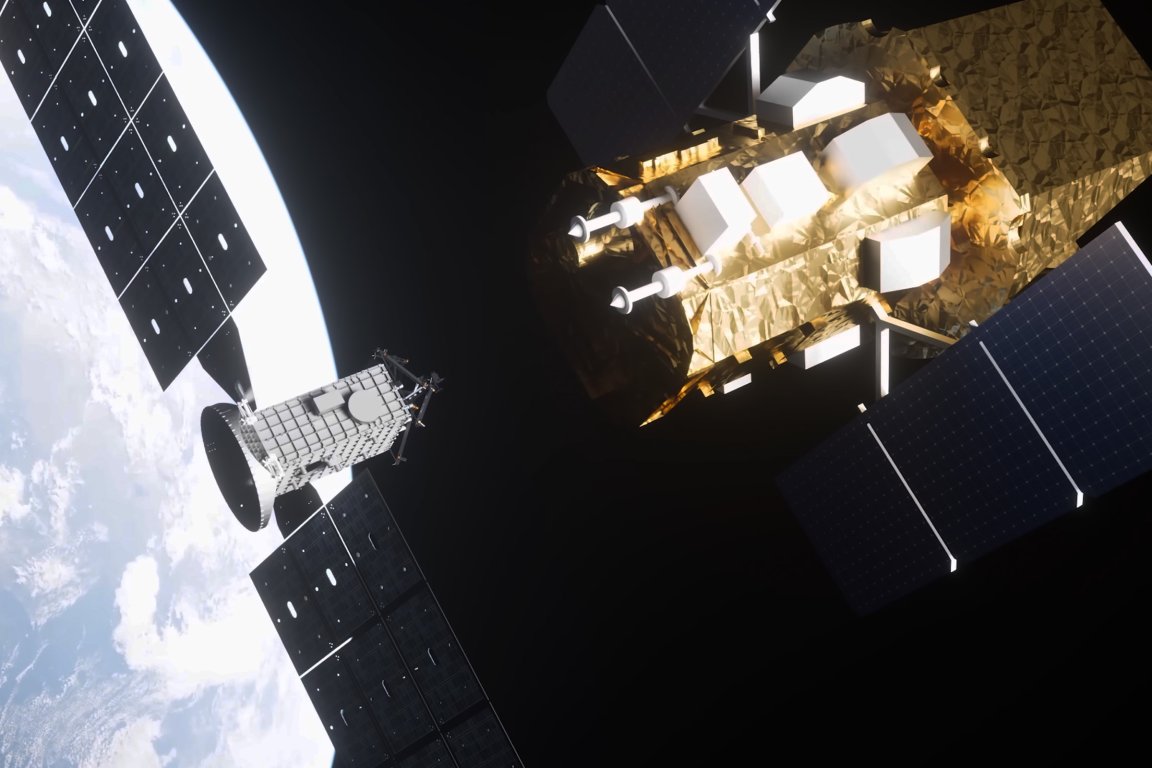
A screenshot from NASA's video about the Swift Boost Mission depicting the Katalyst approaching the Observatory

NASA via YouTube

Sign up to see the future, today

Can’t-miss innovations from the bleeding edge of science and tech

NASA’s Swift observatory, designed to study the most powerful explosions in the universe, launched into orbit over two decades ago.

Since then, it has provided scientists with a constant stream of invaluable multi-wavelength observations of gamma-ray bursts, which are extremely energetic events that rock our and distant galaxies, providing groundbreaking insights into the earliest days of the universe billions of years ago.

But the observatory is really starting to show its age. The most pressing issue is that thanks to intense solar activity, its orbit has been decaying, pushing it ever close to reentering the atmosphere and burning up.

Now, as part of an unprecedented and risky rescue mission, NASA is launching an autonomous robotic spacecraft, dubbed “Link” and developed by contractor Katalyst Space Technologies, to give it a boost and prolong its life, the Associated Press reports.

NASA's Swift Mission Gets a Boost thumbnail

NASA's Swift Mission Gets a Boost

While China successfully used its Shijian-21 robotic spacecraft to push a satellite into a higher graveyard orbit in 2022, the Swift rescue mission is a major step up in complexity. For one, the observatory wasn’t designed with this kind of rescue mission in mind.

“This is the first American space robot to go up and do anything like this,” Katalyst Space CEO Ghonhee Lee told the AP.

The startup is also looking to give NASA’s Hubble Space Telescope a much-needed boost.

“NASA has all these big senior observatories… all of them can benefit from a service like this,” Lee added. “So what we’re proving with this mission is this is a new play in the playbook that’s available.”

The current head of NASA, Jared Isaacman, proposed a similar mission to rescue the Hubble back before he was appointed to head the space agency — but NASA’s researchers ultimately passed on the plan.

The mini-fridge-sized Link spacecraft is set to launch later this week. Once in orbit, it will spend about a month chasing down the Swift observatory, then give it a boost from an orbit of 224 miles all the way up to 373 miles over the subsequent months.

The spacecraft is outfitted with two gripper-like arms that will grapple the 1.6-ton observatory before firing its thrusters.

Katalyst Space Technologies can’t guarantee the rescue mission will pan out as planned. But given the enormous scientific value Swift has provided — not to mention the enormous cost to replace it wholesale — it’s worth a shot.

“If we let Swift reenter, we would lose that telescope,” NASA’s science mission chief Nicky Fox told the AP. “We would lose a lot of capability.”

“We don’t currently have the budget to build another one to replace that,” she added.

More on gamma ray bursts: Astronomers Say Star Self-Destructed So Catastrophically That It Left Behind No Trace of Its Existence