


惯性聚合 高效追踪和阅读你感兴趣的博客、新闻、科技资讯
阅读原文 在惯性聚合中打开

推荐订阅源

aimingoo的专栏
aimingoo的专栏
B
Blog RSS Feed
Recent Announcements
Vercel News
Vercel News
M
MIT News - Artificial intelligence
阮一峰的网络日志
阮一峰的网络日志
L
LangChain Blog
Cyber Security Advisories - MS-ISAC
Microsoft Security Blog
H
Help Net Security
T
The Blog of Author Tim Ferriss
Y
Y Combinator Blog
G
Google Developers Blog
罗磊的独立博客
爱范儿
爱范儿
宝玉的分享
宝玉的分享
奇客Solidot–传递最新科技情报
奇客Solidot–传递最新科技情报
酷 壳 – CoolShell
酷 壳 – CoolShell
博客园_首页
S
SegmentFault 最新的问题
WordPress大学
WordPress大学
月光博客
月光博客
人人都是产品经理
人人都是产品经理
Apple Machine Learning Research

Futurism

China Deploys Rare Type of Space Junk That Pollutes Orbit for Hundreds of Years Researchers Alarmed as GPS Readings Suddenly Veer Off by 33 Feet, Enough to Crash Self-Driving Cars NASA's Powerful New Space Telescope, Just Cleared for Launch, Was Developed by an Intelligence Agency to "Spy on America's Adversaries" NASA Set Up a Major Test of Its New Strategy Under Trump by Hiring a Startup to Launch a Daring Mission to Rescue a Dying Space Telescope in Orbit. The Unfortunate Result Will Have Long-Ranging Repercussions. NASA Rescue Mission Spirals Into Crisis NASA Prepping to Launch Extremely Risky Rescue Mission Boeing's Starliner Is Such a Disaster That We Don't Even Have Words NASA Has a Major Problem Threatening Its Entire Moon Plans NASA Rover Finds "Complex Organic Matter" on Mars Experts Concerned About Plan to Destroy International Space Station Saturn's Icy Moon Is the Perfect Place to Settle, NASA Scientist Argues Tension Flared on Space Station as Russia Threatened to Drill and Saw Into Wall, Prompting NASA Astronauts to Take Shelter Elon Musk's Conflicts of Interest With the Trump Administration Regulating SpaceX Are So Profound That They Have Grim Implications for Society NASA Loads Moon Rocket onto Giant Trump-Branded Train NASA’s Next Moon Mission Is a Rube Goldberg Machine of Corporate Failure Points NASA’s James Webb Discovers That 3I/ATLAS Let One Rip as It Passed Through Solar System ISS Astronauts Ordered to Enter Evacuation Mode Jeff Bezos’ Rocket Explodes Into Mushroom Cloud, Dealing Massive Blow to NASA’s Moon Plans NASA Releases Sweeping Plans for Moon Base Sun Suddenly Blasts Powerful Radio Transmission for 19 Continuous Days Visitor Approaches From the Edge of the Solar System NASA Rover Gets Arm Stuck Inside Mars Rock, Struggles to Break Free Jeff Bezos’ Moon Lander Just Completed a Key Test Scientists and Lawmakers Horrified at Trump’s Brutal Budget for NASA NASA’s Moon Landing Schedule Slipping Horrendously Under Trump NASA Fires Up Futuristic Plasma Thruster Designed to Take Us to Mars Head of NASA Calls for Pluto to Be Made a Planet Again Video Shows NASA Astronaut Struggling to Walk After Journey Around the Moon Jeff Bezos’ Botched Space Launch Was So Bad It Could Threaten NASA’s Entire Moon Program Guess What This Creepy Underwater Thing Is That Was Photographed by US Navy Divers for NASA
Moon Astronaut Captures Shot of Earth That Lets You See I...
2026-04-08 · via Futurism

NASA astronaut and Artemis 2 mission commander Reid Wiseman took a moment to snap a breathtaking photo of the full Earth.

NASA

Sign up to see the future, today

Can’t-miss innovations from the bleeding edge of science and tech

On December 7, 1972, NASA astronaut and Apollo 17 crew member Harrison Schmitt took a stunning photo of the entirety of the Earth, an image later dubbed “The Blue Marble.”

The iconic shot was made possible by the mission’s unusual trajectory, which brought much of our world’s south pole into view. The astonishing perspective changed the “way we look at our home planet,” as the space agency notes on its website.

And while Apollo 17 was the last time we set foot on the Moon’s surface, we finally have a non-satellite-image-based update to the photo over half a century later.

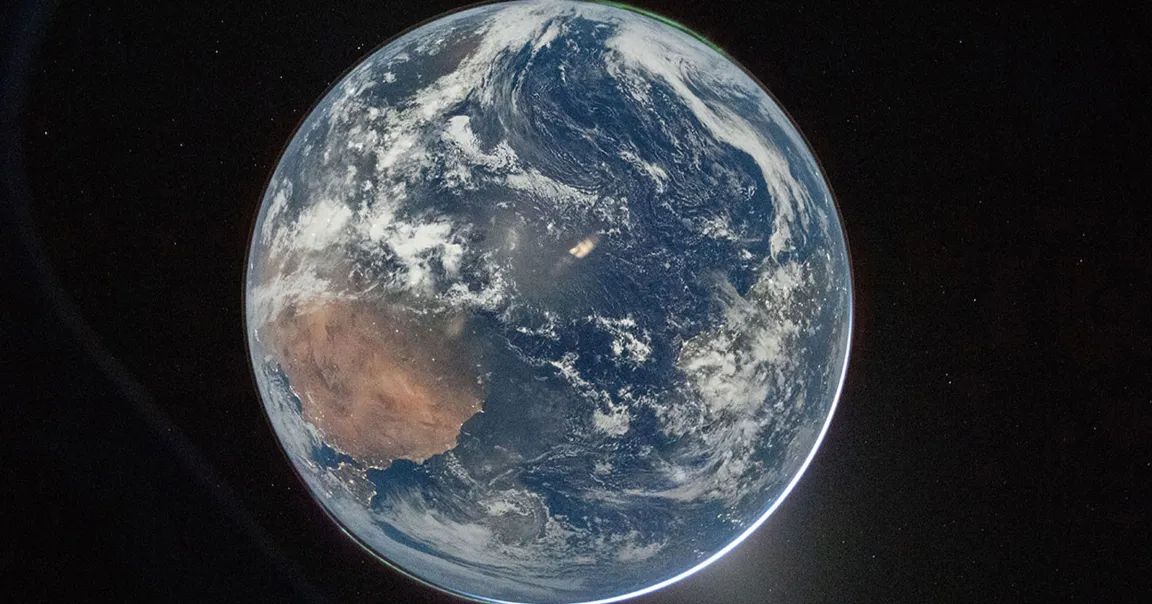
After their Orion spacecraft fired its thrusters to take the crew of NASA’s ongoing Artemis 2 mission away from Earth on April 2, NASA astronaut and commander Reid Wiseman took a moment to snap a breathtaking photo of our world .

The image, titled “Hello, World,” even shows the boundary of Earth’s atmosphere in remarkable detail — including not just one but two auroras visible in the top right and bottom left, they appear as faint green hues.

It’s a stark reminder of the frail layer of gases that allows life to exist on Earth, a feature that may — or may not — make us unique in the universe.
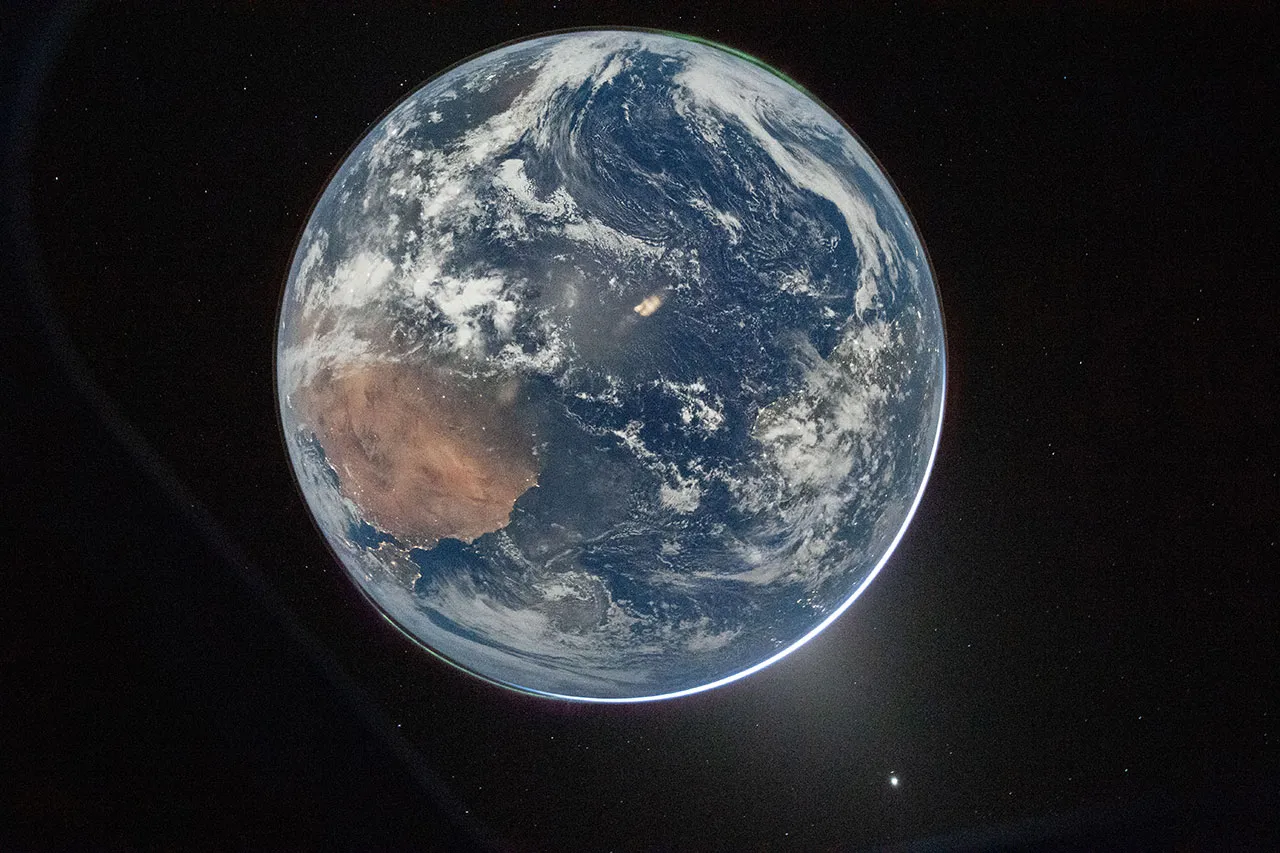
The image, titled "Hello, World," shows the Earth's atmosphere in remarkable detail, including not just one, but two auroras, visible in the top right and bottom left, appearing as faint green hues.

The glow on the bottom right of the image is “zodiacal light,” a faint glow also referred to as “false dawn,” that appears due to rays of light being scattered by interplanetary dust as the Earth eclipses the Sun.

The photo, alongside another stunning image showing the Earth peeking through one of the Orion spacecraft’s windows after completing the translunar injection burn, were the two first images the Artemis 2 astronauts sent back to Earth.

Since then, the team has sent back a treasure chest of astonishing views from their lunar flyby, including dramatic scenes of the lunar surface and the Earth setting and rising behind it.

Considering the amazing photos we’ve already seen, there’s no doubt the memory cards they’ll be bringing back to Earth on Friday evening will contain an even greater collection of out-of-this-world views.

More on Artemis photos: We’re In Utter Disbelief About the Photos the Moon Astronauts Just Sent Back