

惯性聚合 高效追踪和阅读你感兴趣的博客、新闻、科技资讯
阅读原文 在惯性聚合中打开

推荐订阅源

罗磊的独立博客
L
LangChain Blog
aimingoo的专栏
aimingoo的专栏
IT之家
IT之家
B
Blog
博客园_首页
博客园 - 司徒正美
有赞技术团队
有赞技术团队
博客园 - 聂微东
I
InfoQ
美团技术团队
GbyAI
GbyAI
阮一峰的网络日志
阮一峰的网络日志
H
Help Net Security
大猫的无限游戏
大猫的无限游戏
MyScale Blog
MyScale Blog
WordPress大学
WordPress大学
The GitHub Blog
The GitHub Blog
A
About on SuperTechFans
人人都是产品经理
人人都是产品经理
Microsoft Azure Blog
Engineering at Meta
Engineering at Meta
钛媒体:引领未来商业与生活新知
钛媒体:引领未来商业与生活新知
The Cloudflare Blog

Futurism

China Deploys Rare Type of Space Junk That Pollutes Orbit for Hundreds of Years Researchers Alarmed as GPS Readings Suddenly Veer Off by 33 Feet, Enough to Crash Self-Driving Cars NASA's Powerful New Space Telescope, Just Cleared for Launch, Was Developed by an Intelligence Agency to "Spy on America's Adversaries" NASA Set Up a Major Test of Its New Strategy Under Trump by Hiring a Startup to Launch a Daring Mission to Rescue a Dying Space Telescope in Orbit. The Unfortunate Result Will Have Long-Ranging Repercussions. NASA Rescue Mission Spirals Into Crisis NASA Prepping to Launch Extremely Risky Rescue Mission Boeing's Starliner Is Such a Disaster That We Don't Even Have Words NASA Has a Major Problem Threatening Its Entire Moon Plans NASA Rover Finds "Complex Organic Matter" on Mars Experts Concerned About Plan to Destroy International Space Station Saturn's Icy Moon Is the Perfect Place to Settle, NASA Scientist Argues Tension Flared on Space Station as Russia Threatened to Drill and Saw Into Wall, Prompting NASA Astronauts to Take Shelter Elon Musk's Conflicts of Interest With the Trump Administration Regulating SpaceX Are So Profound That They Have Grim Implications for Society NASA Loads Moon Rocket onto Giant Trump-Branded Train NASA’s Next Moon Mission Is a Rube Goldberg Machine of Corporate Failure Points NASA’s James Webb Discovers That 3I/ATLAS Let One Rip as It Passed Through Solar System ISS Astronauts Ordered to Enter Evacuation Mode Jeff Bezos’ Rocket Explodes Into Mushroom Cloud, Dealing Massive Blow to NASA’s Moon Plans NASA Releases Sweeping Plans for Moon Base Sun Suddenly Blasts Powerful Radio Transmission for 19 Continuous Days Visitor Approaches From the Edge of the Solar System NASA Rover Gets Arm Stuck Inside Mars Rock, Struggles to Break Free Jeff Bezos’ Moon Lander Just Completed a Key Test Scientists and Lawmakers Horrified at Trump’s Brutal Budget for NASA NASA’s Moon Landing Schedule Slipping Horrendously Under Trump NASA Fires Up Futuristic Plasma Thruster Designed to Take Us to Mars Head of NASA Calls for Pluto to Be Made a Planet Again Video Shows NASA Astronaut Struggling to Walk After Journey Around the Moon Jeff Bezos’ Botched Space Launch Was So Bad It Could Threaten NASA’s Entire Moon Program Guess What This Creepy Underwater Thing Is That Was Photographed by US Navy Divers for NASA
We’re In Utter Disbelief About the Photos the Moon Astron...
2026-04-07 · via Futurism

Here are some of the most spectacular snapshots NASA recently received from the crew of its Artemis 2 mission.

NASA

Sign up to see the future, today

Can’t-miss innovations from the bleeding edge of science and tech

On Monday, the four crew members of NASA’s Artemis 2 mission made history, officially breaking the record for the farthest any human has ever traveled from Earth, at an astonishing 252,752 miles from home.

At the time, the crew’s capsule was swinging around the Moon before starting its multi-day return journey, offering the astronauts some truly astonishing views. The team spent many hours using both professional-grade photography equipment — as well as their iPhones — to capture the exceedingly rare moment, from a dazzling “Earthset” to a total solar eclipse that lasted nearly an entire hour.

The team was extensively coached on how to take these pictures and what to look out for as they gazed at the rugged surface of the Moon through Orion’s windows. It was a highly organized “seven-hour lunar observation period,” as NASA notes, with the crew dividing into pairs. Two crew members observed for 55 to 85 minutes at a time, “while the other pair exercises or works on other tasks.”

Here are some of the most spectacular snapshots NASA recently received from the historic flyby.

Earthset

One particularly impressive image shows the Earth, half plunged into nighttime, peeking out from behind the cratered lunar surface. It’s essentially the equivalent of a sunset as seen from Earth, except that it’s the entire Earth setting below the horizon of the Moon, hence NASA’s use of the word “Earthset.”
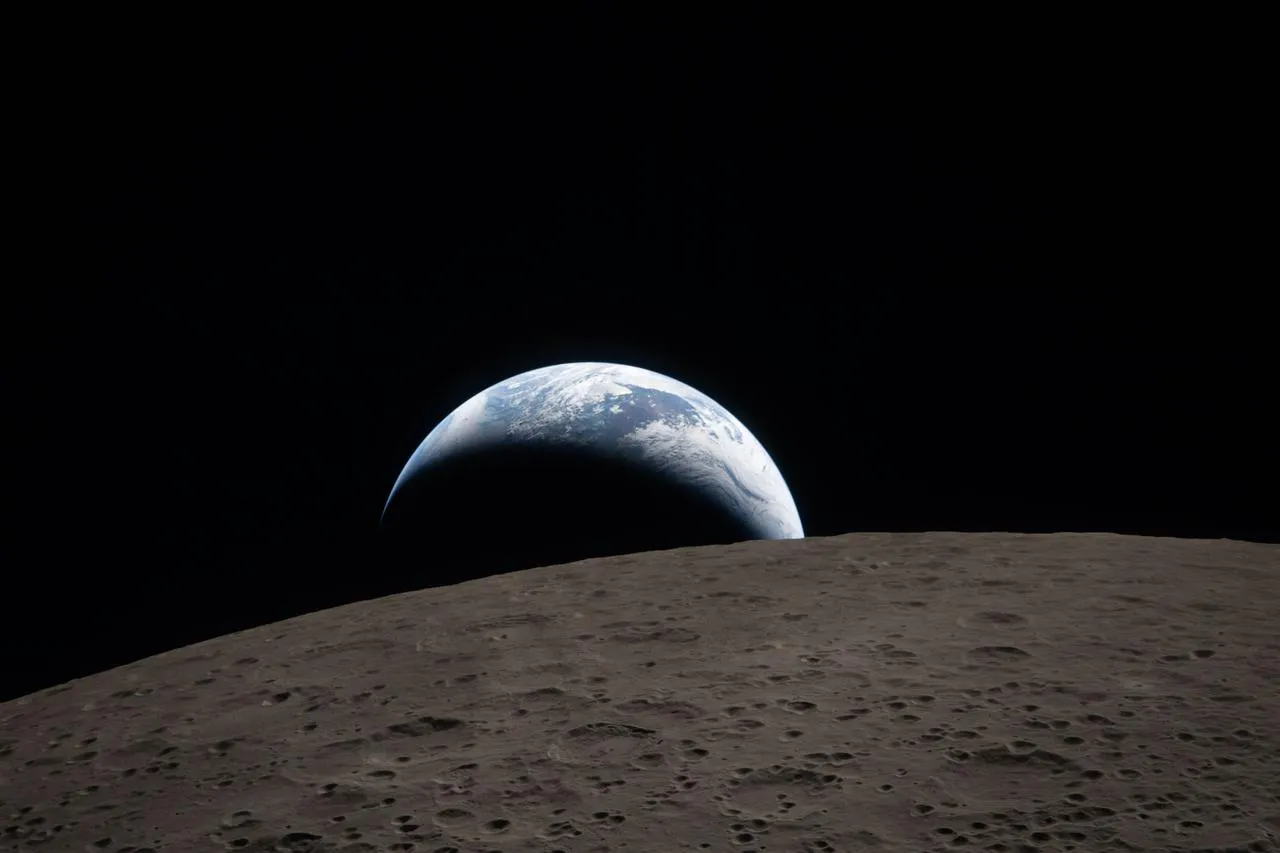
Earthset captured through the Orion spacecraft window at 6:41 p.m. EDT, April 6, 2026, during the Artemis II crew’s flyby of the Moon.

Total Solar Eclipse

Another photo captures the total solar eclipse the crew was beholden to for a stunning 54 minutes as the Moon fully eclipsed the Sun from their perspective. The image shows the Sun’s corona in the form of a “halo around the dark lunar disk,” as NASA explains.
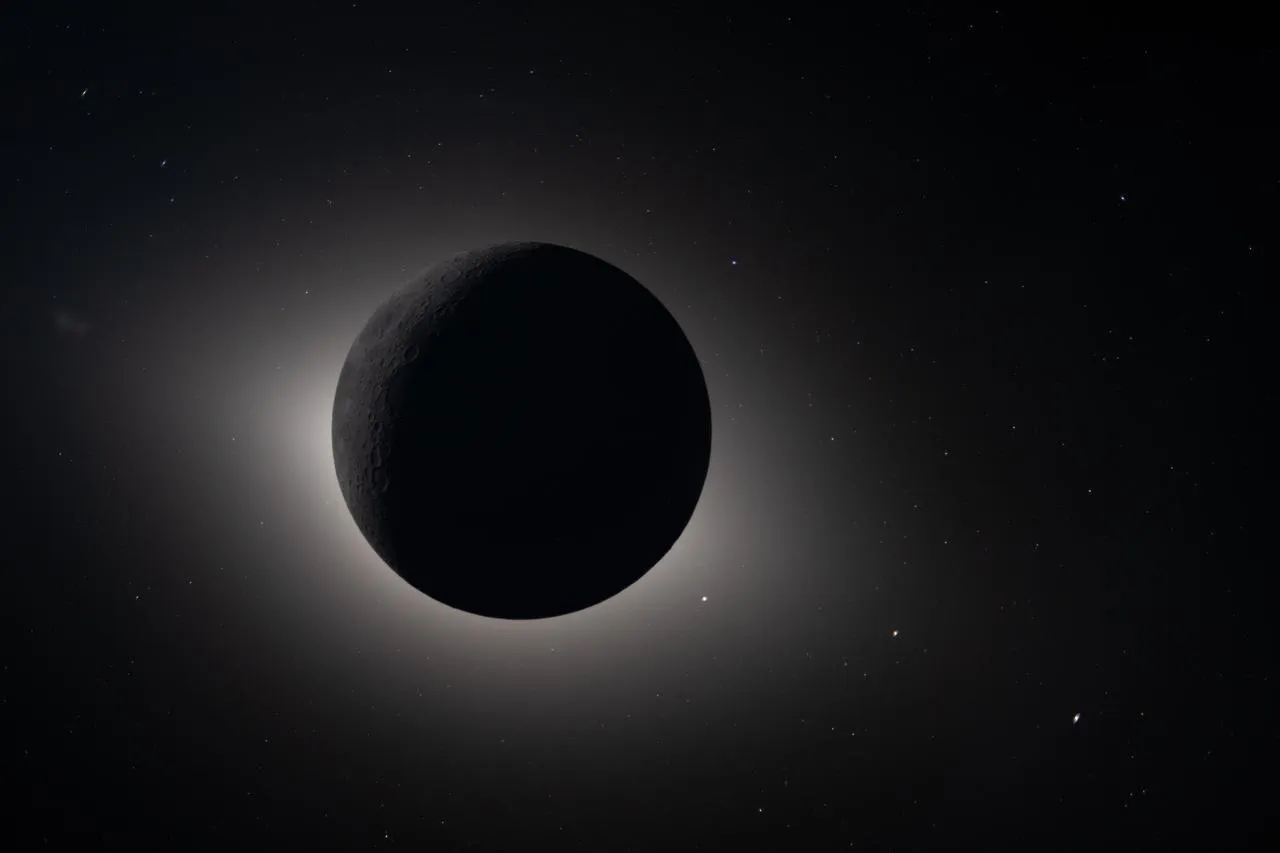
The total solar eclipse the crew of NASA's Artemis 2 mission was beholden to for a stunning 54 minutes as the Moon fully eclipsed the Sun from their perspective.

Eclipse Selfie

The prolonged eclipse forced the crew to don eclipse glasses, much like the ones we wear during the (much shorter) total solar eclipses on Earth, as seen in an iPhone 17 Pro selfie seemingly taken by NASA astronaut and mission commander Reid Wiseman.
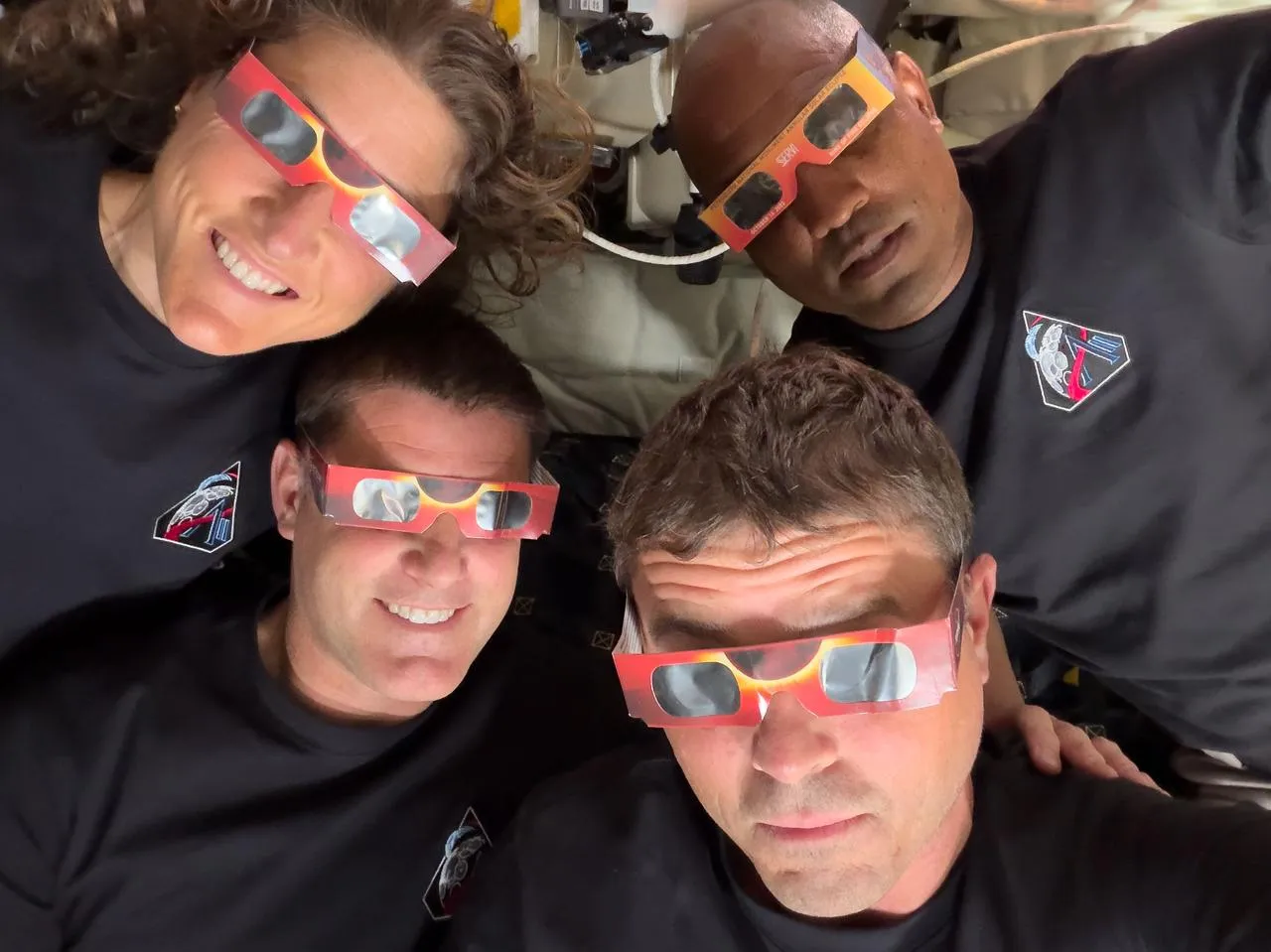
The prolonged eclipse forced the crew to don eclipse glasses, much like the ones we wear during total solar eclipses on Earth, as seen in an iPhone 17 Pro selfie.

South Pole

The crew were also treated to an extremely close view of the eastern edge of the Moon’s South Pole-Aitken basin, a region of particular interest as NASA is eyeing it as a place to land during its first crewed mission to the lunar surface. The Aitken basin is the largest impact crater on the far side of the Moon, measuring around 1,600 miles in diameter.
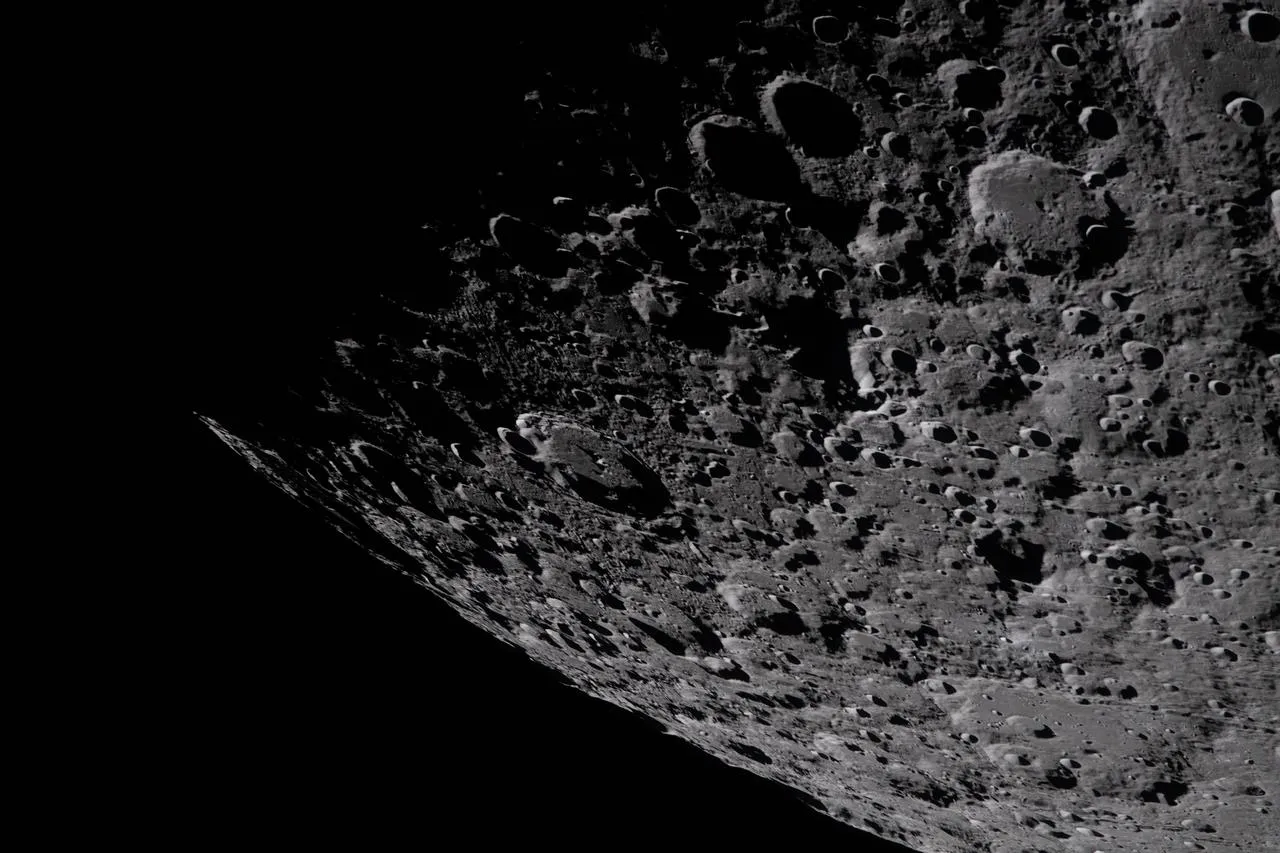
An extremely close view of the Moon's south pole, a region of particular interest as NASA is eyeing it as a place to land during its first crewed mission to the lunar surface.

Orientale Basin

The crew also got a perfect look at the Orientale Basin, a “black patch of ancient lava in the center that punched through the Moon’s crust in an eruption billions of years ago,” per NASA. It measures roughly 600 miles across and lies in the transition between the Moon’s far and near sides.
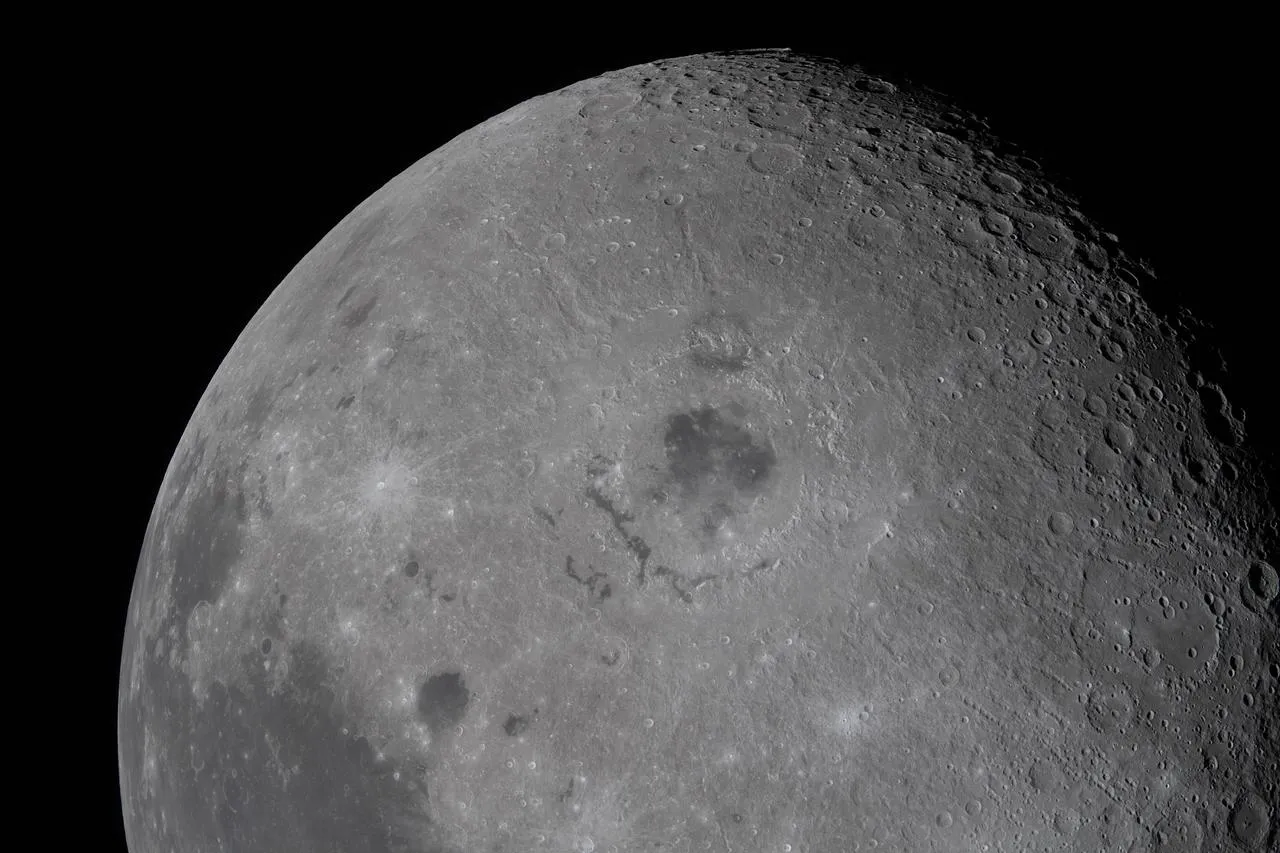
The crew got a perfect look at the Orientale basin, a "black patch of ancient lava in the center that punched through the Moon’s crust in an eruption billions of years ago," per NASA.

Earthrise

At 7:22 pm Eastern time, the crew saw the Earth emerging once more from behind the Moon, an otherworldly “Earthrise” that few will ever get to experience in their lifetimes.
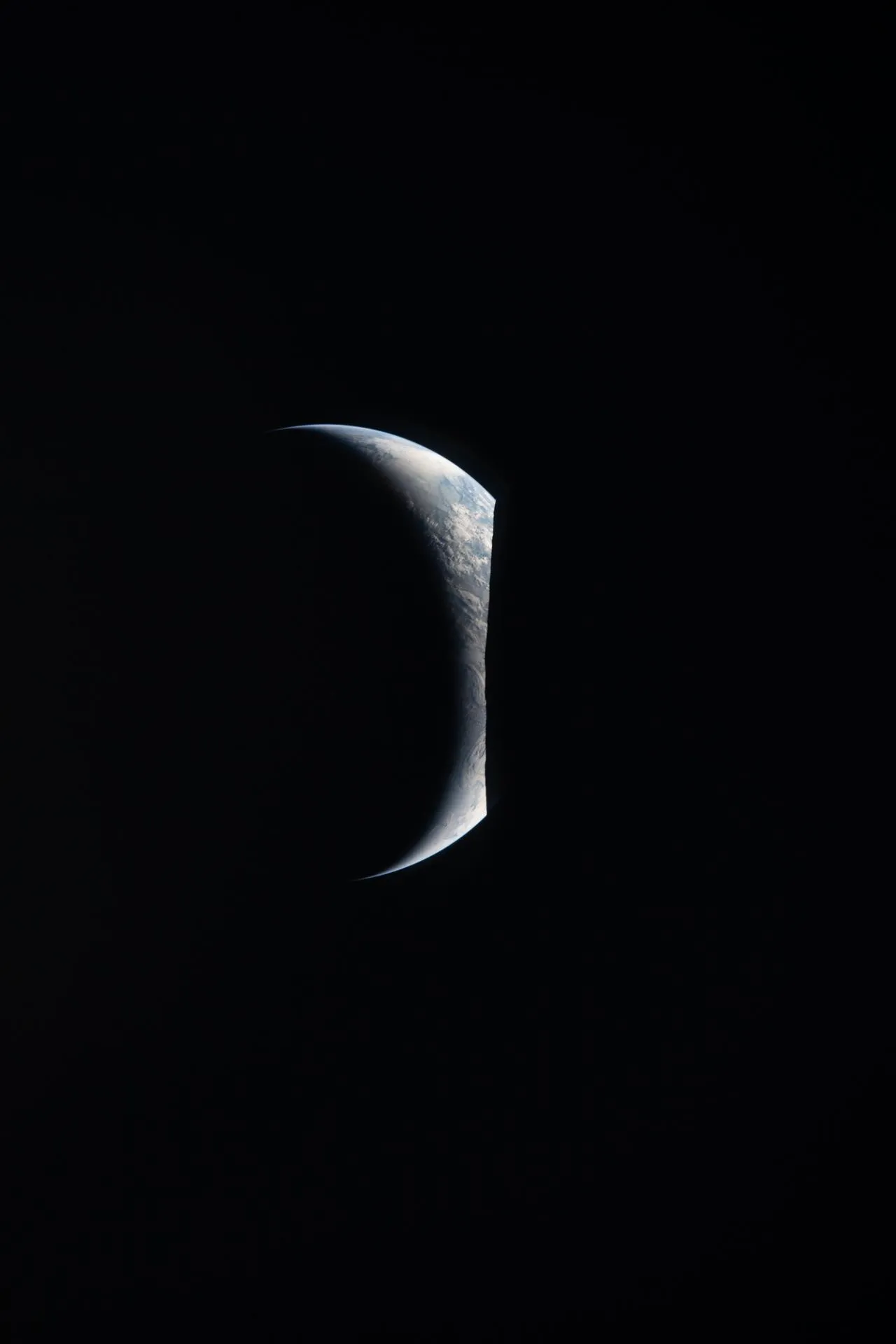
At 7:22 pm Eastern time, the crew saw the Earth emanating once more from behind the lunar surface, an otherworldly "Earthrise" that few will ever get to experience in their lifetimes.

Total Eclipse Redux

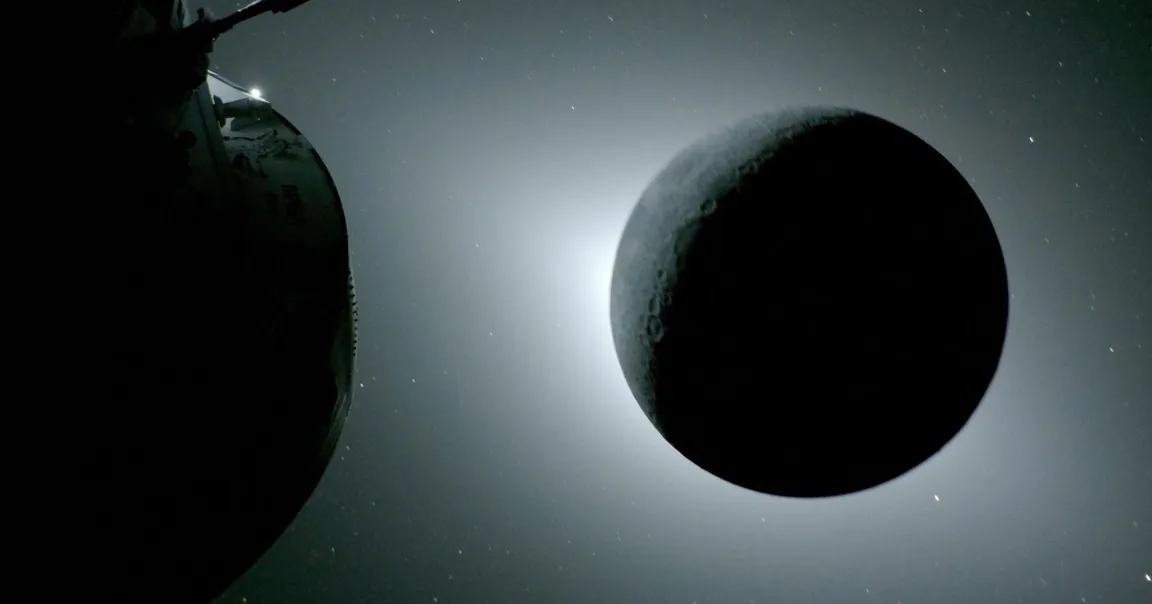
The Orion capsule’s exterior camera, which is attached to the spacecraft’s solar array wings, snapped an equally impressive shot of the total solar eclipse, as seen in this eerie photo.

“The bright spot visible just below the Moon’s bottom right edge is Saturn,” NASA notes.
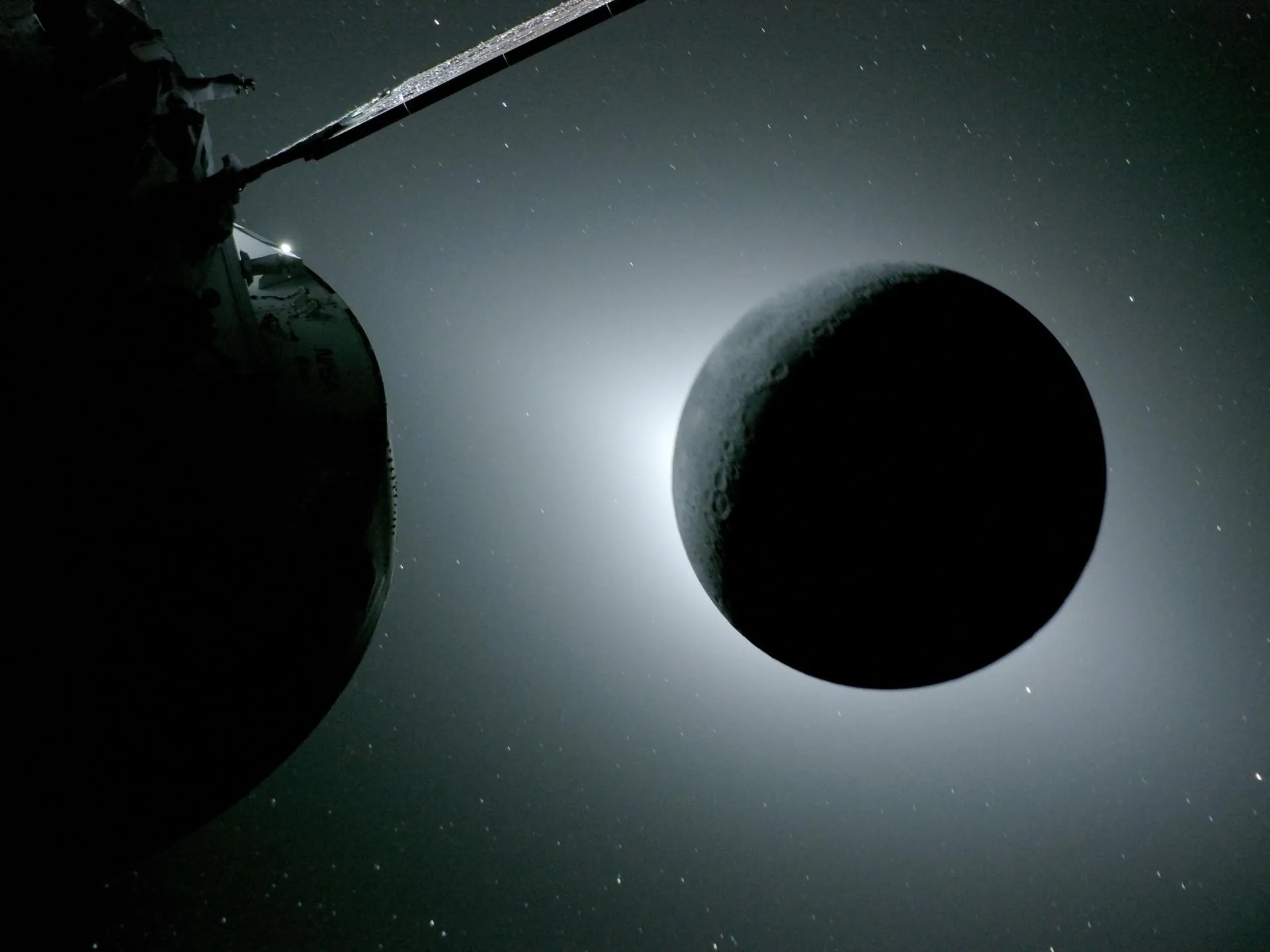
The Orion capsule's exterior camera, which is attached to the spacecraft's solar array wings, snapped an equally impressive shot of the total solar eclipse, as seen in this eerie photo.

Return Journey

The team is expected to reenter the Earth’s atmosphere on Friday evening, a harrowing maneuver that will involve it crashing into our planet’s protective layer at a speed of 25,000 mph, while Orion’s heat shield reaches temperatures over 3,000 degrees Fahrenheit.

If all goes well, the crew will splash down in the Pacific Ocean, concluding one of the best and rarest photo opp journeys in human history.

More on the mission: The Moon Astronauts Just Broke the Record for the Farthest Any Human Has Ever Traveled From Earth