

惯性聚合 高效追踪和阅读你感兴趣的博客、新闻、科技资讯
阅读原文 在惯性聚合中打开

推荐订阅源

U
Unit 42
S
Security Affairs
Engineering at Meta
Engineering at Meta
MongoDB | Blog
MongoDB | Blog
Microsoft Security Blog
让小产品的独立变现更简单 - ezindie.com
美团技术团队
月光博客
月光博客
Cyber Security Advisories - MS-ISAC
有赞技术团队
有赞技术团队
博客园 - 叶小钗
Hugging Face - Blog
Hugging Face - Blog
Microsoft Azure Blog
V
V2EX
Vercel News
Vercel News
阮一峰的网络日志
阮一峰的网络日志
腾讯CDC
C
Cisco Blogs
T
Tor Project blog
The Hacker News
The Hacker News
雷峰网
雷峰网
MyScale Blog
MyScale Blog
博客园 - 司徒正美
AWS News Blog
AWS News Blog
GbyAI
GbyAI
Y
Y Combinator Blog
D
DataBreaches.Net
Simon Willison's Weblog
S
Securelist
The GitHub Blog
The GitHub Blog
S
SegmentFault 最新的问题
T
Tenable Blog
L
LangChain Blog
M
MIT News - Artificial intelligence
N
Netflix TechBlog - Medium
The Cloudflare Blog
A
About on SuperTechFans
IT之家
IT之家
F
Fortinet All Blogs
Security Latest
Security Latest
Threat Intelligence Blog | Flashpoint
NISL@THU
NISL@THU
爱范儿
爱范儿
钛媒体:引领未来商业与生活新知
钛媒体:引领未来商业与生活新知
cs.AI updates on arXiv.org
freeCodeCamp Programming Tutorials: Python, JavaScript, Git & More
W
WeLiveSecurity
A
Arctic Wolf
I
Intezer
Application and Cybersecurity Blog

Futurism

NASA Prepping to Launch Extremely Risky Rescue Mission Boeing's Starliner Is Such a Disaster That We Don't Even Have Words NASA Has a Major Problem Threatening Its Entire Moon Plans NASA Rover Finds "Complex Organic Matter" on Mars Experts Concerned About Plan to Destroy International Space Station Saturn's Icy Moon Is the Perfect Place to Settle, NASA Scientist Argues Tension Flared on Space Station as Russia Threatened to Drill and Saw Into Wall, Prompting NASA Astronauts to Take Shelter Elon Musk's Conflicts of Interest With the Trump Administration Regulating SpaceX Are So Profound That They Have Grim Implications for Society NASA Loads Moon Rocket onto Giant Trump-Branded Train NASA’s Next Moon Mission Is a Rube Goldberg Machine of Corporate Failure Points NASA’s James Webb Discovers That 3I/ATLAS Let One Rip as It Passed Through Solar System ISS Astronauts Ordered to Enter Evacuation Mode Jeff Bezos’ Rocket Explodes Into Mushroom Cloud, Dealing Massive Blow to NASA’s Moon Plans NASA Releases Sweeping Plans for Moon Base Sun Suddenly Blasts Powerful Radio Transmission for 19 Continuous Days Visitor Approaches From the Edge of the Solar System NASA Rover Gets Arm Stuck Inside Mars Rock, Struggles to Break Free Jeff Bezos’ Moon Lander Just Completed a Key Test Scientists and Lawmakers Horrified at Trump’s Brutal Budget for NASA NASA’s Moon Landing Schedule Slipping Horrendously Under Trump NASA Fires Up Futuristic Plasma Thruster Designed to Take Us to Mars Head of NASA Calls for Pluto to Be Made a Planet Again Video Shows NASA Astronaut Struggling to Walk After Journey Around the Moon Jeff Bezos’ Botched Space Launch Was So Bad It Could Threaten NASA’s Entire Moon Program Guess What This Creepy Underwater Thing Is That Was Photographed by US Navy Divers for NASA NASA Shuts Down Voyager 1 Instrument as Its Life Force Fades There’s Something Extremely Shady About Trump’s Disastrous New NASA Budget Moon Denialists Are So Pathetic That They’re Using AI to Fake Artemis Footage Space Scientists Wince as Astronauts’ Lives Depend on Artemis 2’s Controversial Heat Shield During Plunge Back to Earth The Moon Astronauts Have Been Working Out With a NASA Rowing Machine in Space As Astronauts Visit the Moon, NASA Insider Says Agency Is in Shambles Behind the Scenes Moon Astronaut Captures Shot of Earth That Lets You See Its Razor-Thin Atmosphere Perfectly The Moon Spacecraft’s $30 Million Toilet Has Been a Bit of a Disaster We’re In Utter Disbelief About the Photos the Moon Astronauts Just Sent Back Trump Has Call With Moon Astronauts So Awkward That They May Turn Around and Disappear Into the Void of Space Lone Jar of Nutella Drifts Around Cabin of Moon Spacecraft The Moon Astronauts Just Broke the Record for the Farthest Any Human Has Ever Traveled From Earth Moon Astronauts Forced to Do It in Bags as “Burning Odor” Emanates From Toilet The White House Is Still Desperately Trying to Slash NASA’s Budget Trump Fans Furious That NASA Is Allowing a Canadian on the Moon Mission The Moon Astronauts Brought Along USB Stick-Sized Living Samples of Their Own Tissue NASA Spacecraft’s Toilet Fails Hours Into Ten-Day Journey to Moon Conspiracy Theorists Are Going to Have a Field Day as NASA Gears Up to Launch Historic Moon Mission on April Fools’ Day
NASA Scientists Screamed With Delight When They Saw Something Smashing Into the Moon
2026-04-09 · via Futurism

NASA scientists let loose "screams of delight" amazement as they saw micrometeorites impact the far side of the Moon.

NASA

Sign up to see the future, today

Can’t-miss innovations from the bleeding edge of science and tech

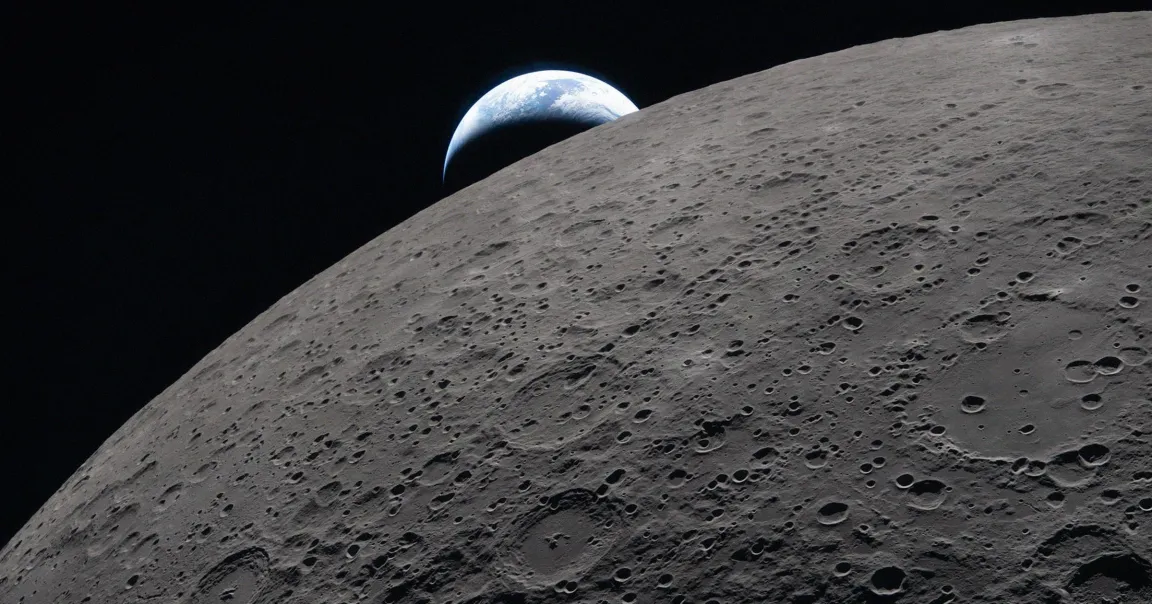
As NASA’s Artemis 2 crew careened around the far side of the Moon earlier this week — breaking the record for how far humans have ever traveled from Earth in the process — they were treated to an incredible view.

As they cruised past the Moon’s heavily-crated far side, the astronauts watched in amazement as micrometeorites impacted the lunar surface, catching both them and mission control off guard. The mission’s crew said they witnessed at least six impacts on the lunar far side during the almost-one-hour-long total solar eclipse as the Sun went out of view behind the Earth from their perspective.

There were “audible screams of delight” at Mission Control in Houston, as mission science lead Kelsey Young recalled during a Tuesday press conference.

“There was a little giddiness,” NASA astronaut and commander Reid Wiseman told Houston during the observation period. “We have seen three impact flashes so far. I saw two, and [mission specialist Jeremy Hansen] has seen one.”

“Undoubtedly quick impact flashes,” he said, adding that “it was not Sun glint off a particulate from the thrusters or the burns tanks.”

“And Jeremy just saw another one,” Wiseman added.

The face on Young said it all. The livestream showed her jaw hitting the floor as she looked around the room at Mission Control in disbelief.

“I don’t know if I expected to have the crew see any on this mission, so you probably saw the surprise and shock on my face,” she later recalled.

While the team said that they already got what they came for — astonishing close-up views of the lunar surface and its unusual geographical features — the constant bombardment of tiny meteorites was unexpected.

“This is absolutely everything we hoped for by integrating science into flight operations,” Young told reporters. “Science enables exploration, and exploration enables science.”

“They were really high-priority science for us, so the fact that they saw four or five was just outstanding,” Canadian backup astronaut Jenni Gibbons told Agence France-Presse.

Micrometeorites are already a major point of discussion as the United States continues to push for the establishment of a permanent settlement on the Moon. Besides “moonquakes” and massive amounts of space radiation, future astronauts will need to have sufficient shelter to protect them from these errant space rocks.

Without a protective atmosphere like the Earth’s, which acts as a shield and causes most meteorites to burn up, the Moon is largely exposed, as evidenced in its crater-riddled appearance.

Even if the fragments are extremely small, they can still impact the surface with a huge amount of force while traveling tens of miles per second. In other words, future lunar habitats will quite literally be bulletproof.

In a 2025 study, scientists used NASA’s Meteoroid Engineering Model to calculate impact rates for a hypothetical lunar base the size of the International Space Station. They found that between 15,000 and 23,000 particles, ranging from a millionth of a gram to ten grams, could strike such a habitat per year. (It’s unclear whether the latest first-hand observations could influence their findings.)

However, the researchers identified some areas — including the lunar south pole, which NASA is eyeing for its first Artemis base — as being less battered.

Another possibility is to seek shelter inside deeper craters or caves left behind by lava tubes to shield both from meteorites and space radiation, an idea we’ve only begun to explore.

More on the mission: We’re In Utter Disbelief About the Photos the Moon Astronauts Just Sent Back