





惯性聚合 高效追踪和阅读你感兴趣的博客、新闻、科技资讯
阅读原文 在惯性聚合中打开

推荐订阅源

V
Visual Studio Blog
T
The Exploit Database - CXSecurity.com
The GitHub Blog
The GitHub Blog
量子位
S
SegmentFault 最新的问题
小众软件
小众软件
酷 壳 – CoolShell
酷 壳 – CoolShell
P
Proofpoint News Feed
Exploit-DB.com RSS Feed
T
Threat Research - Cisco Blogs
I
Intezer
Hugging Face - Blog
Hugging Face - Blog
Spread Privacy
Spread Privacy
Microsoft Security Blog
P
Proofpoint News Feed
Know Your Adversary
Know Your Adversary
人人都是产品经理
人人都是产品经理
G
Google Developers Blog
Cyberwarzone
Cyberwarzone
L
LINUX DO - 热门话题
让小产品的独立变现更简单 - ezindie.com
H
Hackread – Cybersecurity News, Data Breaches, AI and More
J
Java Code Geeks
cs.CL updates on arXiv.org
T
Tenable Blog
Jina AI
Jina AI
A
About on SuperTechFans
freeCodeCamp Programming Tutorials: Python, JavaScript, Git & More
OSCHINA 社区最新新闻
OSCHINA 社区最新新闻
MyScale Blog
MyScale Blog
AWS News Blog
AWS News Blog
宝玉的分享
宝玉的分享
WordPress大学
WordPress大学
T
Threatpost
大猫的无限游戏
大猫的无限游戏
I
InfoQ
T
Tor Project blog
Project Zero
Project Zero
F
Full Disclosure
L
Lohrmann on Cybersecurity
P
Palo Alto Networks Blog
G
GRAHAM CLULEY
B
Blog
Apple Machine Learning Research
The Hacker News
The Hacker News
S
Securelist
Threat Intelligence Blog | Flashpoint
V
V2EX
The Cloudflare Blog
D
Darknet – Hacking Tools, Hacker News & Cyber Security

Futurism

NASA Prepping to Launch Extremely Risky Rescue Mission Boeing's Starliner Is Such a Disaster That We Don't Even Have Words NASA Has a Major Problem Threatening Its Entire Moon Plans NASA Rover Finds "Complex Organic Matter" on Mars Experts Concerned About Plan to Destroy International Space Station Saturn's Icy Moon Is the Perfect Place to Settle, NASA Scientist Argues Tension Flared on Space Station as Russia Threatened to Drill and Saw Into Wall, Prompting NASA Astronauts to Take Shelter Elon Musk's Conflicts of Interest With the Trump Administration Regulating SpaceX Are So Profound That They Have Grim Implications for Society NASA Loads Moon Rocket onto Giant Trump-Branded Train NASA’s Next Moon Mission Is a Rube Goldberg Machine of Corporate Failure Points NASA’s James Webb Discovers That 3I/ATLAS Let One Rip as It Passed Through Solar System ISS Astronauts Ordered to Enter Evacuation Mode Jeff Bezos’ Rocket Explodes Into Mushroom Cloud, Dealing Massive Blow to NASA’s Moon Plans NASA Releases Sweeping Plans for Moon Base Sun Suddenly Blasts Powerful Radio Transmission for 19 Continuous Days NASA Rover Gets Arm Stuck Inside Mars Rock, Struggles to Break Free Jeff Bezos’ Moon Lander Just Completed a Key Test Scientists and Lawmakers Horrified at Trump’s Brutal Budget for NASA NASA’s Moon Landing Schedule Slipping Horrendously Under Trump NASA Fires Up Futuristic Plasma Thruster Designed to Take Us to Mars Head of NASA Calls for Pluto to Be Made a Planet Again Video Shows NASA Astronaut Struggling to Walk After Journey Around the Moon Jeff Bezos’ Botched Space Launch Was So Bad It Could Threaten NASA’s Entire Moon Program Guess What This Creepy Underwater Thing Is That Was Photographed by US Navy Divers for NASA NASA Shuts Down Voyager 1 Instrument as Its Life Force Fades There’s Something Extremely Shady About Trump’s Disastrous New NASA Budget Moon Denialists Are So Pathetic That They’re Using AI to Fake Artemis Footage Space Scientists Wince as Astronauts’ Lives Depend on Artemis 2’s Controversial Heat Shield During Plunge Back to Earth The Moon Astronauts Have Been Working Out With a NASA Rowing Machine in Space As Astronauts Visit the Moon, NASA Insider Says Agency Is in Shambles Behind the Scenes NASA Scientists Screamed With Delight When They Saw Something Smashing Into the Moon Moon Astronaut Captures Shot of Earth That Lets You See Its Razor-Thin Atmosphere Perfectly The Moon Spacecraft’s $30 Million Toilet Has Been a Bit of a Disaster We’re In Utter Disbelief About the Photos the Moon Astronauts Just Sent Back Trump Has Call With Moon Astronauts So Awkward That They May Turn Around and Disappear Into the Void of Space Lone Jar of Nutella Drifts Around Cabin of Moon Spacecraft The Moon Astronauts Just Broke the Record for the Farthest Any Human Has Ever Traveled From Earth Moon Astronauts Forced to Do It in Bags as “Burning Odor” Emanates From Toilet The White House Is Still Desperately Trying to Slash NASA’s Budget Trump Fans Furious That NASA Is Allowing a Canadian on the Moon Mission The Moon Astronauts Brought Along USB Stick-Sized Living Samples of Their Own Tissue NASA Spacecraft’s Toilet Fails Hours Into Ten-Day Journey to Moon Conspiracy Theorists Are Going to Have a Field Day as NASA Gears Up to Launch Historic Moon Mission on April Fools’ Day
Visitor Approaches From the Edge of the Solar System
Victor Tangermann · 2026-05-10 · via Futurism

Comet C/2025 R3 PANSTARRS, which was only discovered last year, has been visible to stargazers in the northern hemisphere for weeks now.

Getty Images

Sign up to see the future, today

Can’t-miss innovations from the bleeding edge of science and tech

For thousands of years, astronomers have watched Halley’s Comet come and go, becoming visible to the naked eye every 72 to 80 years. That makes it a short-period comet, whose highly elliptical orbit takes it beyond Neptune before making its decades-long return. (The last time we caught a glimpse of the comet was in 1986, while its next appearance is slated for mid-2061.)

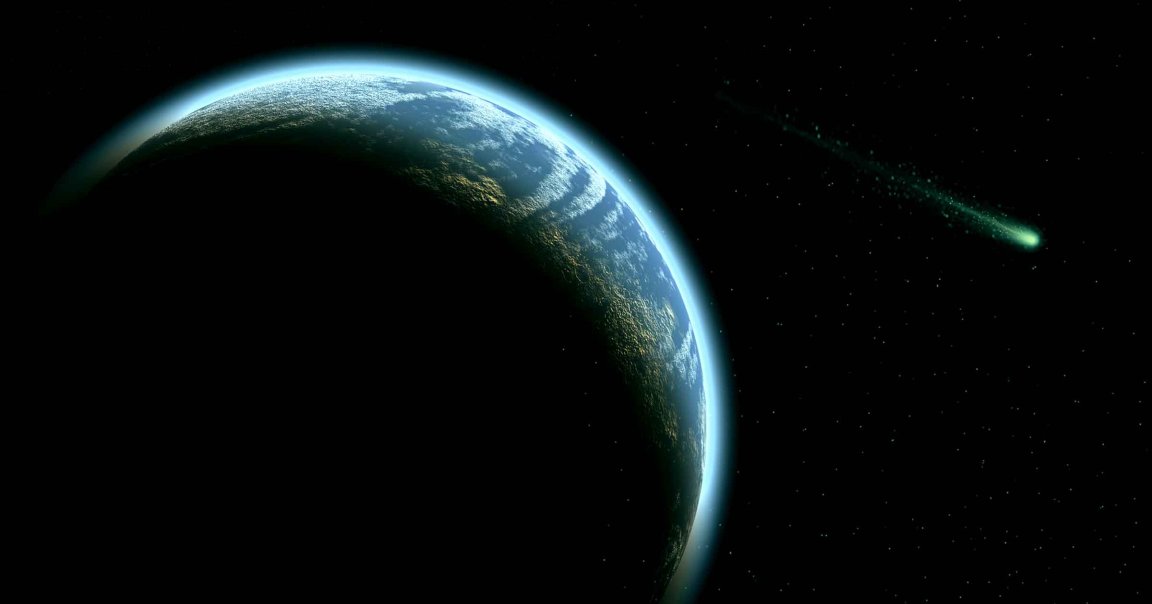
Other comets take far longer to orbit the Sun. As the New York Times reports, comet C/2025 R3 PANSTARRS, which was only discovered last year, has been visible to stargazers in the northern hemisphere for weeks now. However, once it’s on its way out, it’s not expected to return for another 170,000 years.

It’s origin is of particular interest to astronomers, who believe it came from the Oort Cloud, a giant spherical shell that blankets the solar system, representing the outermost edge of our star’s gravitational influence. Researchers believe it’s chock full of icy and rocky objects like C/2025 R3 PANSTARRS.

Long-period comets are an exceedingly rare sight — and an exciting opportunity to get a precious glimpse of the furthest reaches of the solar system.

“Whenever we spot them, it’s the first time we’ve seen them, and it’s also the only time that we will see them in our lifetimes,” Te Whatu Stardome in New Zealand resident astronomer Josh Aoraki told the NYT.

Whether future civilizations will be able to see the visitor again isn’t guaranteed. As the Perth Observatory’s Matt Woods points out in a recent guide, gravitational interactions with the solar system’s planets can eject comets form our star system altogether.

Given its suspected origins, studying a “dirty snowball” comet like C/2025 R3 PANSTARRS could provide us with tantalizing clues about the earliest days of the solar system. Current theories suggest that tiny chunks of leftover planet-making material dating back billions of years, called planetesimals, were driven away from the Sun when the planets formed. While some left the system entirely, others were trapped between a region where galactic influences balanced out with the Sun’s gravity, a region that’s now known as the Oort cloud.

The movement of these objects may have even played a role in delivering the necessary building blocks that allowed life on Earth to form, according to Woods.

In other words, there are plenty of reasons to get out the telescope before C/2025 R3 PANSTARRS is too distant to be visible to amateur astronomers.

“So while C/2025 R3 PANSTARRS might appear as little more than a faint, fuzzy patch through binoculars, it represents something far more significant,” Woods wrote. “It is a relic from the birth of the Solar System, a frozen archive of cosmic history, and for a brief moment, it’s visible from right here on Earth.”

“Not bad for something you can spot just after sunset,” he added.

More on comets: Please Resist the Urge to Drink the Melted Sludge From 3I/ATLAS